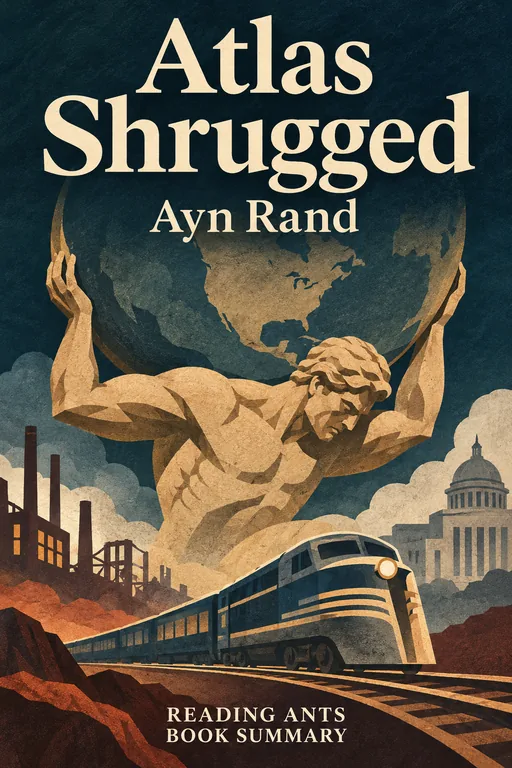
Atlas Shrugged
In a near-future America sinking under government control, the most talented people vanish one by one on a mysterious "strike," and a railroad executive, Dagny Taggart, tries to hold the country together and finds who is behind it.
Overview
Atlas Shrugged is a very long novel by Ayn Rand, published in 1957, and it is her most ambitious work. It is set in a United States where industries are collapsing, and the government passes ever more regulations. The story begins with the question “Who is John Galt?”, a phrase people use as a shrug. The title refers to the Greek Titan Atlas, popularly pictured holding up the world (in the myth itself he holds up the heavens), and imagines what would happen if he stopped. Rand uses the story to present her philosophy, called Objectivism, which holds that reason, individual rights and the pursuit of one’s own happiness are moral, and that sacrifice, which Rand defines as giving up a greater value for a lesser one, is not. The book has about a thousand pages, and it has remained a bestseller.
Main Characters
- Dagny Taggart: the operating vice president of Taggart Transcontinental, a brilliant, determined railroad executive.
- Hank Rearden: a self-made steel magnate who develops a new alloy, Rearden Metal.
- John Galt: the mysterious inventor and philosopher who leads the strike.
- Francisco d’Anconia: a wealthy copper heir, Dagny’s former love, who seems to be a playboy.
- James Taggart: Dagny’s weak, envious brother, the president of the railroad.
- Ragnar Danneskjöld: a philosopher turned pirate who seizes government relief ships.
- Dr. Floyd Ferris and Wesley Mouch: officials who push the government’s controls.
Full Summary
The Shrug
Dagny Taggart runs the day-to-day work of Taggart Transcontinental, which is declining under her brother James’s poor leadership. She decides to use a bridge made of a new metal, Rearden Metal, developed by Hank Rearden. The government and public criticize it, but Dagny and Rearden prove it works by running a train over the bridge. All around, businesses are failing, and talented people are disappearing, retiring suddenly or vanishing without explanation. The phrase “Who is John Galt?” is used as a slogan of resignation.
Controls
The government introduces laws that restrict production and punish success, in the name of fairness, such as a law forcing everyone to share patents and limits on production. Rearden, who is married to a clingy wife, begins an affair with Dagny. He is forced to sell his metal under a law, and his fortune is raided. Dagny and Rearden see that bureaucrats and favor-seekers, the “looters,” are using the language of public good to take from the productive.
The Search for the Motor
Dagny finds the abandoned design of a revolutionary motor in a ruined factory, which was meant to draw usable energy from static electricity in the air. She sets out to find the inventor, who has vanished. She and Hank travel through the country, seeing it fall apart: trains stop, industry shuts down, and people are increasingly afraid. The government passes Directive 10-289, which freezes every worker and business in place, prohibiting anyone from quitting or changing.
Galt’s Gulch
Dagny crashes her plane in a hidden valley in Colorado, Galt’s Gulch, where she discovers that the missing industrialists, scientists and artists live. John Galt, an engineer, who once worked at a company that tried to pay people by need and not by output, has convinced them that such a society punishes talent, and persuaded them to go on strike and withdraw their talent from a society that exploits them. Dagny falls in love with Galt but cannot yet leave her railroad and rejects the idea of giving up.
Collapse
Back in the world, the economy collapses. A tunnel disaster kills hundreds, and a state-run scientific project, Project X, is destroyed. Government agents provoke a riot at Rearden’s steel mills, and members of the strike come to rescue him. When Galt takes over the airwaves to broadcast a three-hour speech, he explains the philosophy of the strike and calls on the rest of the world to stop accepting guilt for their talents. The officials arrest him and try to force him to become the country’s economic dictator.
Rescue and the New World
Galt refuses, and he is tortured by an official, Dr. Ferris, in a failed attempt. Dagny, Rearden, Francisco and the others rescue him. As the country plunges into darkness, with New York losing power, Galt and his allies leave to rebuild, and the book ends with Galt tracing the sign of the dollar in the air, a symbol of free trade, and saying that the road is cleared and that they are going back to a world they will make.
Why It Matters
Atlas Shrugged is one of the most influential novels in American conservative and libertarian thinking, and has been called one of the most influential books in the United States in some reader surveys. It has sold millions of copies, and it is still bought by new readers each year. The book has influenced politicians, business leaders and activists, and it has inspired a three-part film series in 2011 to 2014.
It is also a work of philosophy in novel form, and a central text in debates about the roles of government and the individual.
Key Takeaways
- Individual achievement drives progress. Rand praises creative producers.
- Reason is the basis of morality. The characters follow logic over feeling.
- Rights and freedom matter. The novel argues against forced sacrifice.
- Power and envy can damage societies. The “looters” thrive on resentment.
- Withdrawal can be a form of protest. The strike dramatizes this.
What We Can Learn
The novel invites us to think about the contributions of those who create wealth and ideas, and about the effects of regulation and redistribution. Whether or not one agrees with Rand, the book encourages debate about how to reward effort.
It also challenges the common view that sacrifice is always virtuous. It asks readers to consider when helping others is a free choice and when it is demanded.
At the same time, readers can learn to examine philosophical claims critically, noting what the book ignores, such as the roles of luck, community and public goods.
Criticism and Counterpoints
Many critics describe the book as preachy and unrealistic, with flat characters who serve as mouthpieces and speeches that go on for pages. Its division of humanity into heroic producers and parasitic “looters” is seen as a caricature that ignores poverty, disability and the role of cooperation. Philosophers have criticized Objectivism for weak arguments.
Economists point out that real economies do not work as depicted, and that many industrial achievements depended on public support. Some also find the book’s attitudes toward sex and women troubling. Still, it has many fervent admirers.
Who Should Read It
This book suits mature readers who are interested in politics and philosophy. It is extremely long and strongly ideological, with a long speech. Readers should balance it with other views.
Want the whole book?
A summary is a taste, not the meal. Here is where to find the full book.
You reached the end 🎉
Nicely done. Mark this one as read, and we will suggest what to read next.
Read this next
The Fountainhead
Ayn Rand
Howard Roark, an uncompromising young architect, refuses to bend his designs to popular taste, and the novel follows his struggle against a society that rewards conformity and betrays those who create.
📜 Classics
The Road to Serfdom
Friedrich A. Hayek
Friedrich Hayek argues that when governments try to plan the whole economy from the center, they must gradually limit personal and political freedom, and that the road leads toward a dictatorship that nobody intended.
💰 Money & Economics
Brave New World
Aldous Huxley
In a future world where people are made in factories, programmed for their roles and kept happy with drugs and entertainment, a man raised outside the system discovers that this perfect comfort comes at the cost of everything that makes us human.
📜 Classics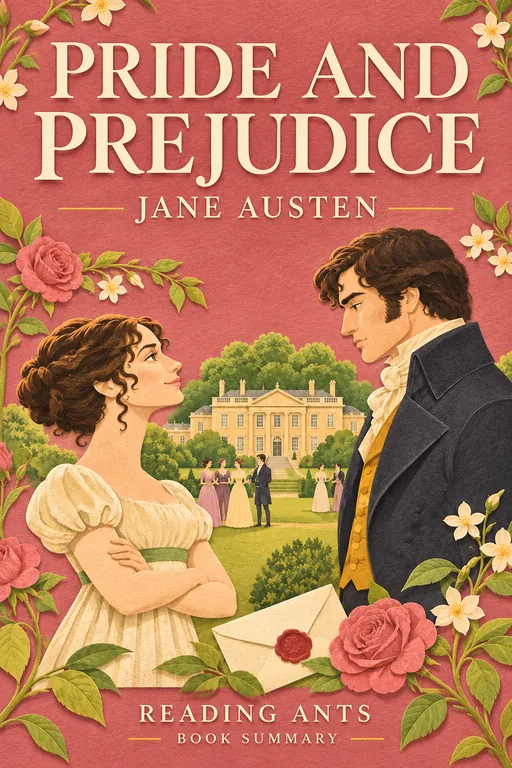
Pride and Prejudice
Jane Austen
Quick-witted Elizabeth Bennet and the proud, wealthy Mr. Darcy badly misjudge each other, and only by facing their own faults do they find their way to love.
📜 Classics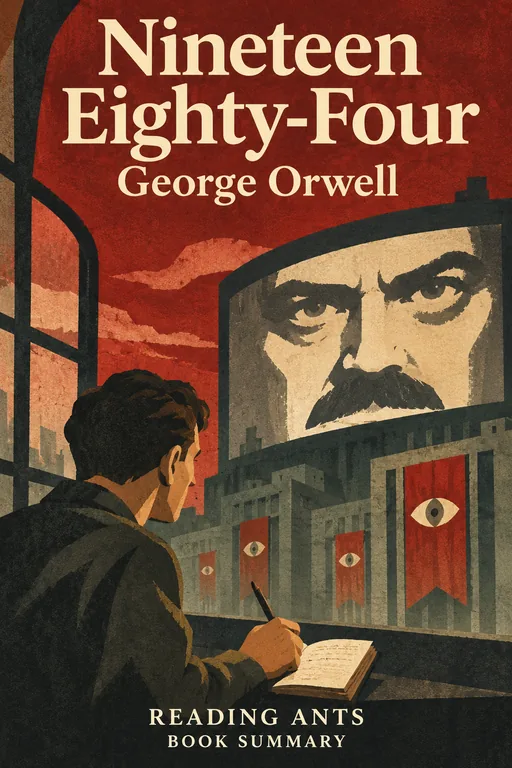
Nineteen Eighty-Four
George Orwell
In a future Britain ruled by an all-seeing Party, one man secretly rebels by keeping a diary and falling in love, and discovers just how completely a totalitarian state can crush the human mind.
📜 Classics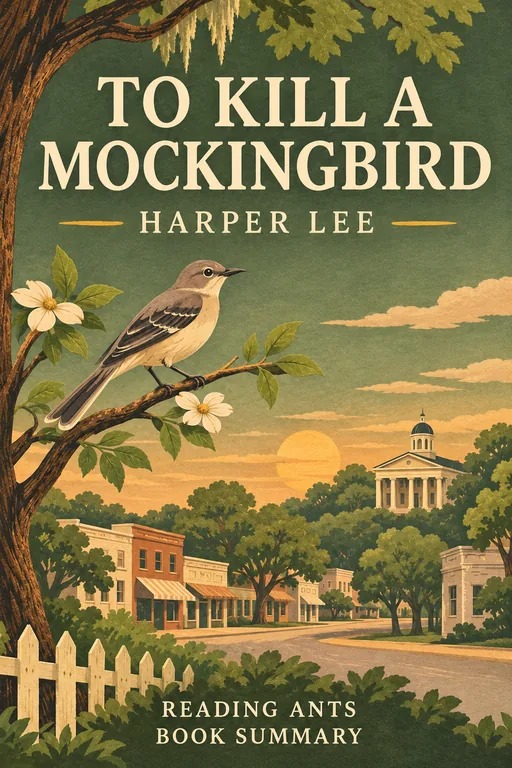
To Kill a Mockingbird
Harper Lee
In a small Alabama town in the 1930s, young Scout Finch watches her father, a lawyer, defend a Black man falsely accused of a crime, and learns hard lessons about prejudice, courage and seeing the world through other people's eyes.
📜 ClassicsWant something different?
Pick another topic and we will show you three books to start with.