 Reading Ants
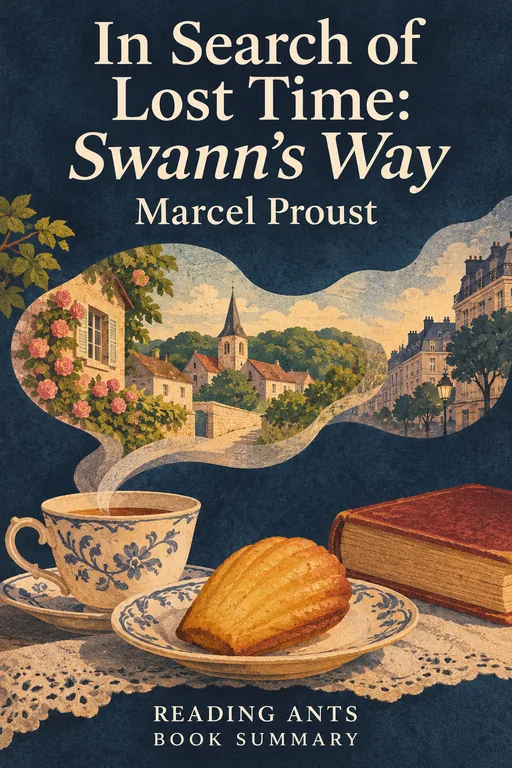
In Search of Lost Time: Swann's Way
Original title: À la recherche du temps perdu
A narrator remembers his childhood in a French village and the great, painful love of a man named Swann, showing how memory can bring back lost time.
Overview
Swann’s Way is the first volume of In Search of Lost Time, the huge seven-part novel by the French writer Marcel Proust. It was first published in 1913. This summary covers only the first volume, not the whole seven-volume work. The book is set in France in the late nineteenth century, partly in the village of Combray and partly in Paris. It follows a narrator who looks back on his past. The novel is famous for its long, flowing sentences and for its subject: memory, time and the way ordinary moments can contain a whole world. This is one of the great books of the twentieth century, and it rewards slow reading.
Main Characters
- The narrator: a sensitive boy, later a man, who remembers his past.
- The narrator’s mother and grandmother: loving women who shape his early life.
- Charles Swann: a rich, cultured man and a family friend, who is hopelessly in love.
- Odette de Crecy: a woman of doubtful reputation, the object of Swann’s obsession.
- Gilberte Swann: Swann’s daughter, with whom the narrator falls in love.
- Aunt Leonie: the narrator’s aunt, who rarely leaves her room.
Full Summary
The Bedtime Kiss
The narrator, an adult, lies awake and recalls how as a boy he would lie awake in his bedroom in Combray, longing for his mother’s good-night kiss. When Swann, a family friend, comes to dinner, his mother stays downstairs and the boy is sent to bed without her kiss. In desperation, he waits up for her, and his father, to everyone’s surprise, tells her to stay with the boy, and she spends the night in his room, reading to him. The scene shows how deeply a child’s feelings can be shaped.
For many years, this memory is the only one from Combray that the narrator can recall.
The Taste of the Madeleine
One winter day, the narrator, now a grown man, dips a small cake called a madeleine into a cup of tea. As the taste fills his mouth, he is flooded with joy and an unexpected memory: the Sunday mornings in Combray, when his aunt Leonie gave him a bit of madeleine dipped in her tea. In an instant, the entire village comes back to him, with its streets, houses and gardens.
The narrator realizes that involuntary memory, brought by a sense such as taste or smell, can preserve the past better than any effort to remember.
Two Ways of Walking
The narrator recalls his summers in Combray, where his family took two walks. One went by Swann’s house, and the other toward the estate of the noble Guermantes family. The two walks seem to him like two different worlds. He dreams of the people who live in each of them, and of the beauty of the countryside, with its hawthorn flowers, church steeple and river.
He also remembers early moments of awakening, such as seeing a young girl and being struck by her, and discovering writers and art.
Swann in Love
The book then steps back in time to tell the story of Swann’s love for Odette, years before the narrator was born. Swann is introduced to Odette at the theater by an old friend, and at first she does not interest him. He then keeps meeting her among the Verdurins, a close-knit bourgeois circle of friends. Then a little phrase of music, from a sonata by a composer named Vinteuil, becomes the tune of their love.
He falls in love with her, and he grows jealous and obsessive. He spies on her, he questions her, and he suffers terribly. He realizes that she lies to him and that she is not the person he imagined, though he cannot stop. In the end, the love fades, and he wonders how he could have given years of his life to a woman who did not really suit him.
Place-Names
In the last part, the narrator is a young boy in Paris, and he is in love with Gilberte, Swann’s daughter, whom he meets in the park. He is fascinated by her and by the things connected with her, and the very name “Gilberte” has a magic to him. He dreams of the cities that he hopes one day to see, such as Venice and Florence, though he does not visit them in this volume.
The book ends years later, in the Bois de Boulogne, where he walks in a park that has changed and finds that the fashionable world he once knew has vanished. It closes with a reflection on how the places of memory and imagination cannot be recovered, and how time changes both places and people.
Why It Matters
In Search of Lost Time is often called one of the greatest novels ever written. Proust changed how fiction could depict consciousness, memory and time, and his influence on later writers is huge. The “madeleine moment” has entered everyday language as a way of describing a sudden rush of memory. Reading it, many people discover that Proust has described their own feelings of love, jealousy, shyness and longing with unusual accuracy. Swann’s Way is also an accessible starting point, since it is the first volume and the one most readers meet first.
Key Takeaways
- Memory is alive. A taste or a smell can recover the past more fully than effort.
- Love distorts. Swann’s passion makes him see what he wants to see.
- Time changes everything. Places and people are never the same when we return.
- Art holds meaning. A small piece of music can come to carry a whole love story.
- Attention is a gift. Noticing small details enriches ordinary life.
What We Can Learn
Proust encourages us to slow down and pay attention to what we feel and notice. A walk, a meal or a song can carry great meaning, if we are open to it. The book also invites us to be gentle with ourselves when we remember the past, since memory is not always accurate but can still be rich and comforting.
It also shows how jealousy and obsession can trap a person, and how love based on fantasy can hurt. It is a reminder to try to see others as they are. Finally, it suggests that writing, music and art can help us keep what we love from being lost.
Criticism and Counterpoints
Many readers find Proust’s long sentences and slow pace very difficult, and some give up in the first fifty pages. The narrator can seem self-absorbed and the world of the book is limited to the wealthy. Some critics also dislike the long digressions about society, and the book was famously rejected by a publisher before it appeared. Others say that it is worth the effort, and that the language is part of its beauty.
Who Should Read It
This book is for patient readers who like language, ideas and psychological depth. It is not a plot-driven book, and it can be read in short sessions. Younger readers may find it slow, but older teenagers and adults who enjoy slow, rich books will find it deeply rewarding.
Want the whole book?
A summary is a taste, not the meal. Here is where to find the full book.
You reached the end 🎉
Nicely done. Mark this one as read, and we will suggest what to read next.
Read this next
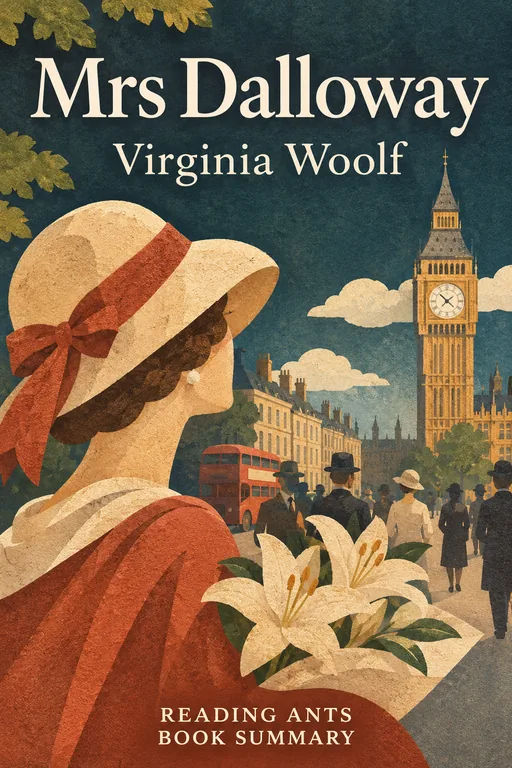
Mrs Dalloway
Virginia Woolf
On a June day in 1923, Clarissa Dalloway prepares to host a party in London, while the shell-shocked war veteran Septimus Smith moves toward a crisis, and the two lives touch only at the story's end.
📜 Classics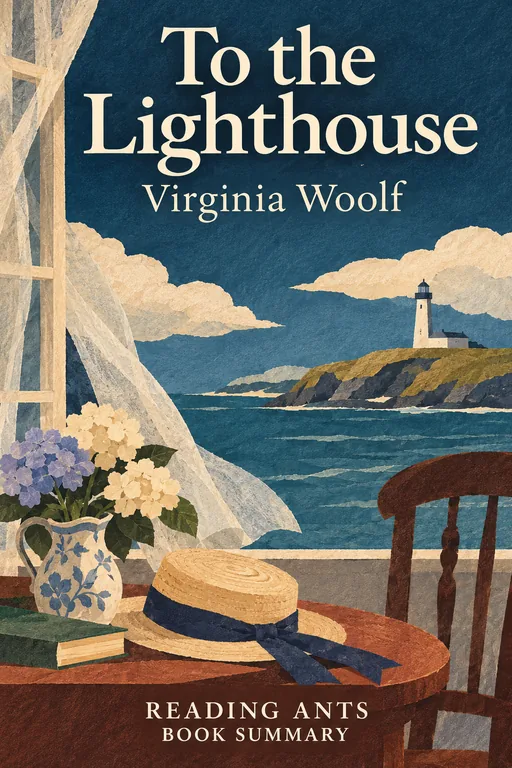
To the Lighthouse
Virginia Woolf
A family spends a summer holiday on the Isle of Skye, a planned trip to a lighthouse is canceled, and ten years later, after a war and several deaths, some of them finally make the journey.
📜 Classics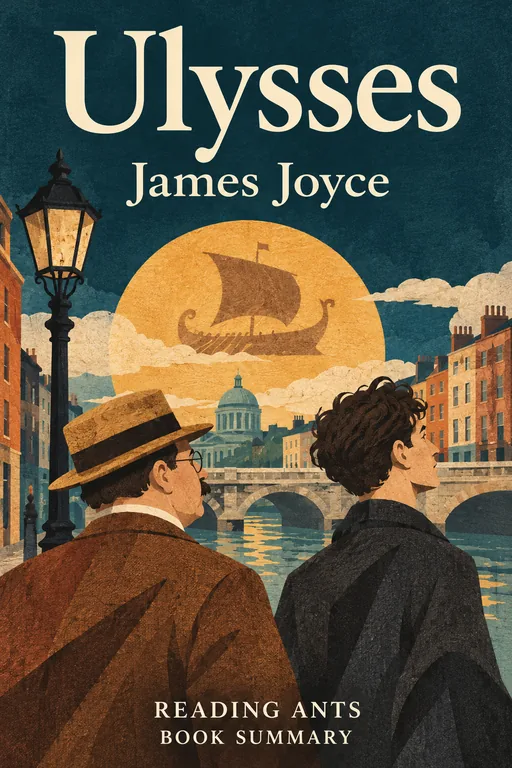
Ulysses
James Joyce
On a single day in Dublin, 16 June 1904, an advertising salesman named Leopold Bloom and a young teacher named Stephen Dedalus wander the city, and their paths finally cross in a novel that recasts Homer's *Odyssey* in everyday life.
📜 Classics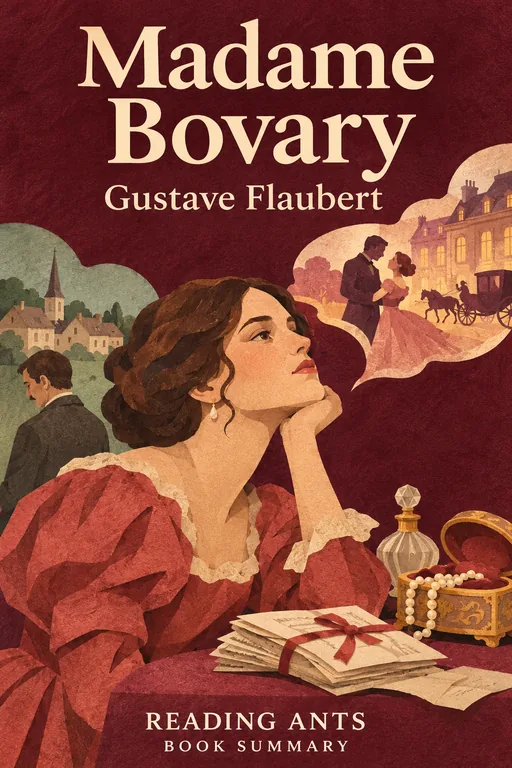
Madame Bovary
Gustave Flaubert
A romantic young woman, bored by her provincial marriage to a kind but dull doctor, seeks excitement in love affairs and luxury, and is crushed by debt and disillusion.
🌍 World Literature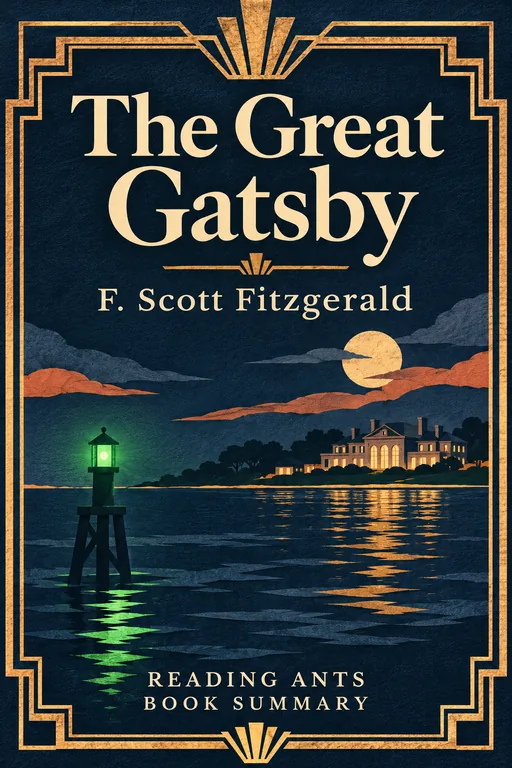
The Great Gatsby
F. Scott Fitzgerald
A mysterious millionaire throws lavish parties on Long Island in the hope of winning back the woman he loved years ago, but his dream collides with the careless cruelty of the rich.
📜 Classics
The Little Prince
Antoine de Saint-Exupery
A pilot stranded in the desert meets a small boy from a tiny planet, who teaches him that the most important things in life, like love and friendship, can only be seen with the heart.
🌍 World LiteratureWant something different?
Pick another topic and we will show you three books to start with.