 Reading Ants
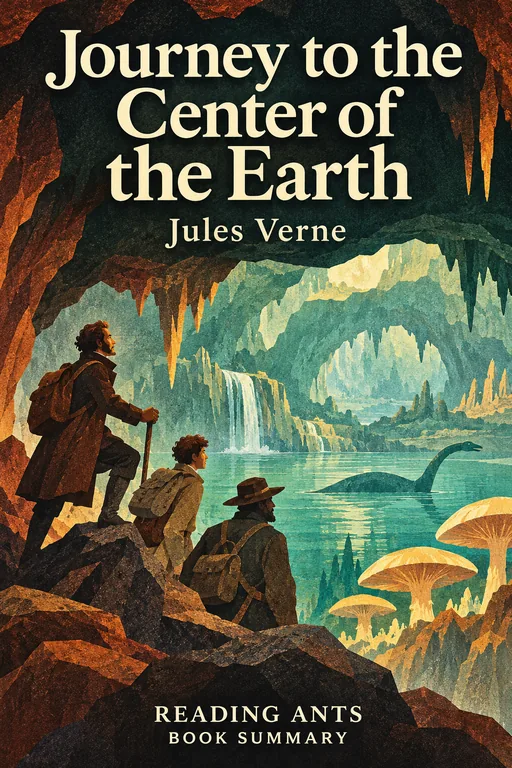
Journey to the Center of the Earth
Original title: Voyage au centre de la Terre
A stubborn professor, his nervous nephew and a calm guide climb down into an Icelandic volcano and find an enormous hidden world beneath the surface of the Earth.
Overview
Journey to the Center of the Earth is an adventure novel by the French writer Jules Verne, first published in 1864. The version most readers know is the expanded edition of 1867, which added further episodes, such as the glimpse of a giant figure. It is set in the mid-nineteenth century, in Germany and Iceland, and then deep underground. It was one of the first books in Verne’s series of “Extraordinary Journeys,” and it helped to define the adventure and science fiction genres. The story is told by a young man who is frightened by the whole idea, and who is pulled along by his uncle’s boundless confidence. The question that drives it is a classic: what lies beneath our feet?
Main Characters
- Professor Otto Lidenbrock: a German geologist, impatient, brilliant and stubborn.
- Axel: Lidenbrock’s nephew, a cautious young man who tells the story.
- Hans Bjelke: an Icelandic hunter and guide, calm and very dependable.
- Grauben: Axel’s fiancee, who encourages him to go.
- Arne Saknussemm: a sixteenth-century Icelandic scholar whose secret message sets off the quest.
Full Summary
The Secret Message
Professor Lidenbrock buys an old book in a shop in Hamburg, and a piece of parchment falls out of it. It is written in strange runic letters. After a lot of work, the professor and Axel decipher a coded message by Arne Saknussemm, an Icelandic scholar. The message says that Saknussemm found a way to reach the center of the Earth, by descending through the crater of a volcano in Iceland.
Lidenbrock is overjoyed and decides at once to follow the route. Axel is horrified, but his fiancee, Grauben, tells him that he should go, and he is too afraid of his uncle to refuse.
To Iceland
Uncle and nephew travel to Iceland, where they meet Hans, a quiet hunter who becomes their guide. The three of them walk to the volcano Snaefells, which is the one mentioned in the message. The message says to enter the crater when the shadow of a nearby peak touches it, on a certain day.
On the last day that the shadow can be seen, they find the right opening, and they step down into the crater.
Going Down
The descent is long, and the explorers must lower themselves by ropes through narrow passages. At first the journey is dangerous but exciting. They go past layers of rock that tell the history of the Earth, and Lidenbrock explains them with delight.
Then problems arise. They are running low on water, and Hans, with his skill, finds a spring just in time. Later, Axel is separated from the others in the dark, and is lost for a time. He hears his uncle’s voice through the rock, and in the end, they are reunited.
The Underground Sea
At last, they come out into an enormous cavern with a lit sky and a vast sea, which Lidenbrock names the Lidenbrock Sea. There are forests of giant mushrooms, and strange animals of a bygone age. They build a raft and set out across the water.
On the raft, they witness a terrifying fight between two giant sea reptiles, an ichthyosaurus and a plesiosaurus. A storm blows them off course, and they land on a shore covered in the bones of extinct creatures. Axel believes that he glimpses a giant figure guarding a herd of huge animals, but he cannot be sure it was real.
Blocked
Following the traces of Saknussemm, they find a passage, but it is blocked by a huge rock. Lidenbrock decides to blast it with an explosive charge. The explosion opens the way, but it also makes the sea rush into the passage, sweeping the raft into a great shaft.
They are carried up on the rising waters, and the raft shoots upward through a volcano, as it fills with lava and smoke.
Back to the Surface
The travelers are thrown out of a volcano onto a hillside. To their surprise, the mountain is not in Iceland. It is Stromboli, a volcano in the Mediterranean, far to the south. They are alive.
Back in Germany, Lidenbrock is hailed as a great scientist, and Axel marries Grauben. Hans quietly returns to Iceland, having done his duty.
Why It Matters
The book is a classic of science fiction and a model for countless later adventure stories. It combined real geology, then a young and exciting science, with imagination, and it helped to make people curious about the Earth’s history. It inspired many films and books, including a famous 1959 film and later movies. It also shows Verne’s central idea that science and exploration can be thrilling. Axel’s fear and his uncle’s boldness have become a favorite pair in storytelling. The novel also helped to spread the idea that the ground under our feet has its own long history, written in rock, which was an exciting thought for readers in the nineteenth century.
Key Takeaways
- Curiosity drives discovery. Lidenbrock’s passion pushes the journey forward.
- Courage and caution work together. Axel’s care balances his uncle’s daring.
- Skill and calm are valuable. Hans solves problems quietly.
- Nature is vast. The underground world shows how little we know.
- Teamwork saves lives. The three travelers depend on one another.
What We Can Learn
The book teaches that curiosity is a powerful force, but that it needs to be paired with preparation. Lidenbrock is often reckless, and the team survives because Hans and Axel plan and adapt. When we try something new, we can benefit from both boldness and care.
It also reminds us that fear is a normal feeling, and that we can act in spite of it. Axel is afraid for much of the story, but he keeps going, and he turns out to be very useful. Finally, the book shows the value of quiet, reliable people, who do their work without fuss and make success possible for everyone.
Criticism and Counterpoints
Some readers find the early chapters, with their lists of rocks and geological terms, slow. The science of the story is also very dated: we now know that the Earth’s interior is extremely hot and could not be entered like a cave. Lidenbrock can seem comically bossy and Axel’s complaints may wear on readers. The book also has very few female characters. Still, it is generally read as a fun adventure, and not as a scientific guide.
Who Should Read It
This book is for readers aged about ten and up who like adventure, caves, dinosaurs and a classic quest. It is shorter and faster than Twenty Thousand Leagues Under the Seas, and it is a good starting point for Verne. Those who want realistic science may be disappointed, but those who love imagination will have fun.
Want the whole book?
A summary is a taste, not the meal. Here is where to find the full book.
You reached the end 🎉
Nicely done. Mark this one as read, and we will suggest what to read next.
Read this next
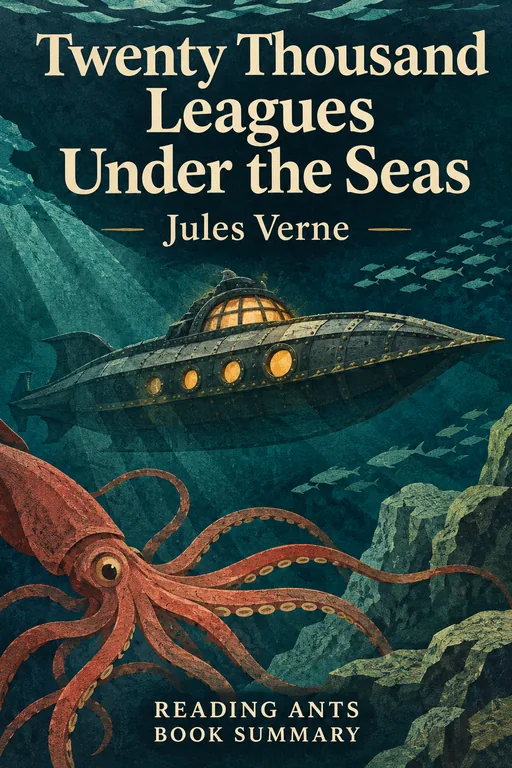
Twenty Thousand Leagues Under the Seas
Jules Verne
Three men are captured by the mysterious Captain Nemo and carried around the world in his marvelous submarine, the Nautilus, learning about the wonders of the ocean and the sorrow of its master.
🌍 World Literature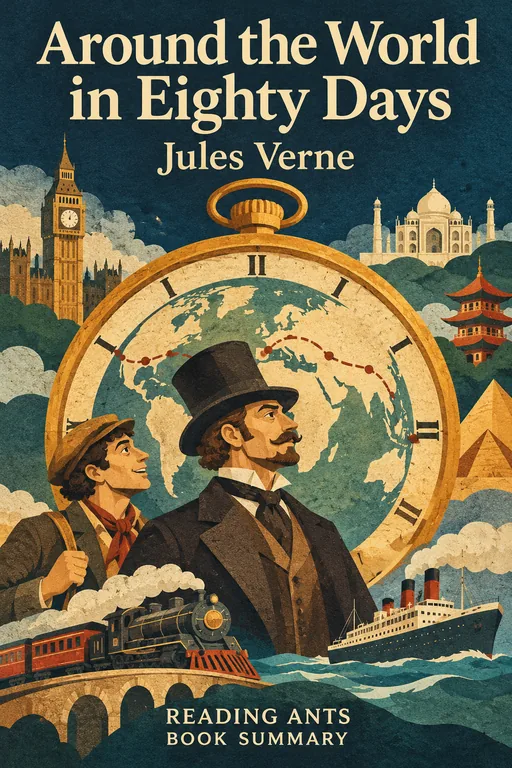
Around the World in Eighty Days
Jules Verne
A precise English gentleman wagers that new railways and steamships can carry him around the world in eighty days, while delays, rescues and a mistaken detective threaten his schedule.
🌍 World Literature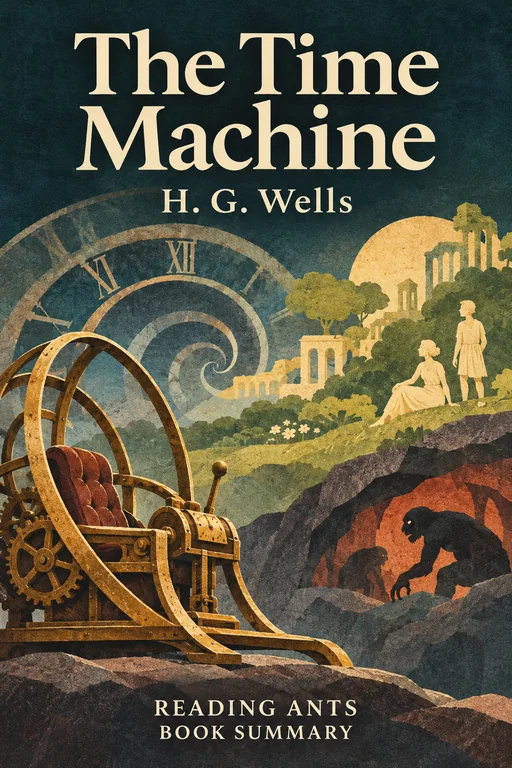
The Time Machine
H. G. Wells
A Victorian inventor, known only as the Time Traveller, builds a machine that carries him to the year 802,701, where he finds humanity split into two species, the gentle Eloi and the monstrous Morlocks, and then to a dying Earth.
🚀 Sci-Fi & Fantasy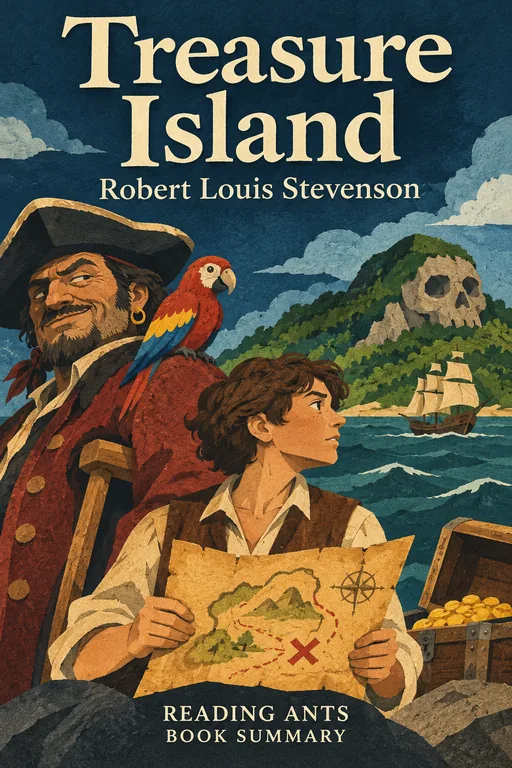
Treasure Island
Robert Louis Stevenson
A boy who finds a pirate's treasure map sails to a distant island, only to discover that the ship's charming one-legged cook is the leader of a band of pirates who want the gold for themselves.
🧸 Children's Books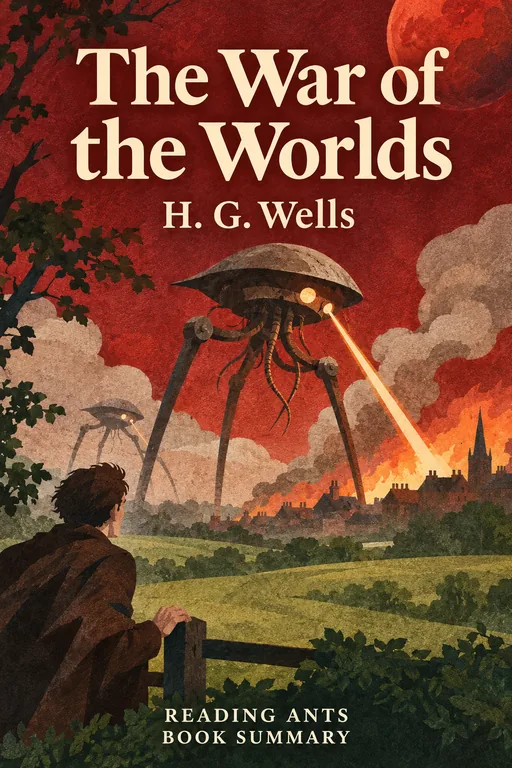
The War of the Worlds
H. G. Wells
Martians land in the English countryside with war machines and heat-rays that overwhelm human armies, until the invaders are brought down by the one thing humans never expected: Earth's smallest germs.
🚀 Sci-Fi & Fantasy
The Little Prince
Antoine de Saint-Exupery
A pilot stranded in the desert meets a small boy from a tiny planet, who teaches him that the most important things in life, like love and friendship, can only be seen with the heart.
🌍 World LiteratureWant something different?
Pick another topic and we will show you three books to start with.