 Reading Ants
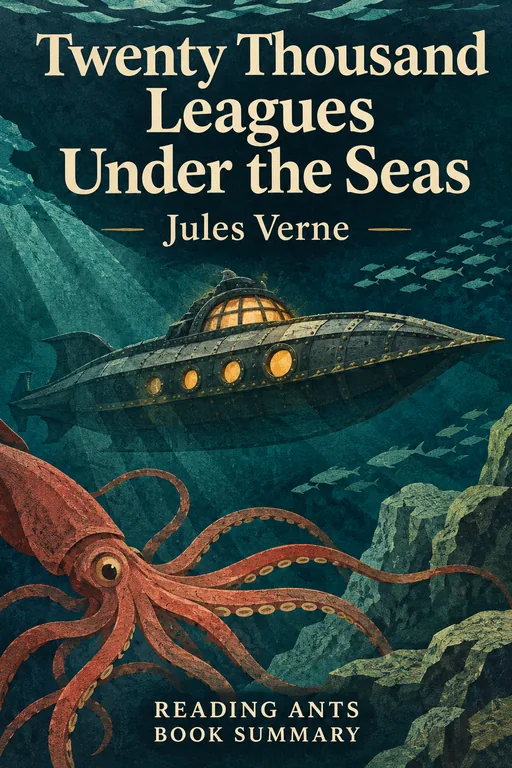
Twenty Thousand Leagues Under the Seas
Original title: Vingt mille lieues sous les mers
Three men are captured by the mysterious Captain Nemo and carried around the world in his marvelous submarine, the Nautilus, learning about the wonders of the ocean and the sorrow of its master.
Overview
Twenty Thousand Leagues Under the Seas is an adventure novel by the French writer Jules Verne, published in 1870. It is set between 1866 and 1868. It begins when sailors across the world report a giant sea monster. Verne wrote it at a time when submarines were still new, and his book imagined a vessel far ahead of anything that existed. A “league” is an old measure of distance, and the title refers to the length of the journey, not to the depth. The book is a thrilling tour of the sea, and it also asks what a person might do if he left human society behind.
Main Characters
- Professor Pierre Aronnax: a French scientist and the narrator of the story.
- Conseil: Aronnax’s loyal, calm servant, who loves to classify animals.
- Ned Land: a Canadian harpooner, strong, direct and always eager to escape.
- Captain Nemo: the mysterious, brilliant commander of the Nautilus.
Full Summary
The Monster
In 1866, ships begin to report an enormous creature in the oceans, and some are damaged by a strong blow. Professor Aronnax, who is in New York, joins an expedition on an American warship to find and destroy it. With him are his servant Conseil, and Ned Land, a famous harpooner.
After a long search, the ship at last meets the monster, and is struck. Aronnax, Conseil and Ned Land are thrown into the sea. They discover that the “monster” is not an animal at all, but a metal vessel, a submarine.
Prisoners of the Nautilus
The three men are taken aboard by the vessel’s commander, who calls himself Captain Nemo, a name that means “no one” in Latin. He tells them that they may live on the Nautilus, but they may never leave. He wants no one to know about his ship, and he has cut his ties with the world.
Aronnax is amazed by the Nautilus, which is powered by electricity, and filled with a library, a museum and a great organ. Nemo is polite, learned and sad. Ned Land, though, hates being a prisoner, and he looks for any chance to escape.
Wonders of the Deep
The Nautilus takes its guests on an astonishing journey. They walk on the sea floor in diving suits and hunt in an underwater forest. They see coral reefs and pearl fisheries. In the Indian Ocean, Nemo rescues a pearl diver from a shark, with help from Ned Land’s harpoon, and he gives the man a gift of pearls. The submarine passes through the Red Sea, and by an underwater passage reaches the Mediterranean. Later, in the Atlantic, they see ruins on the ocean bed that Nemo says belong to Atlantis.
Aronnax takes careful notes, and Conseil names every fish they see. The beauty of the ocean makes Aronnax almost forget that he is a prisoner.
Ice and Danger
The Nautilus travels to the far south, and Nemo reaches the South Pole and plants a flag there. On the way back the ship is trapped under the ice, and the crew nearly runs out of air before it breaks free. Later, in the Atlantic, the ship is attacked by a swarm of giant squid, and the crew fights them with axes. One crewman is seized and killed.
Nemo weeps for the man, and Aronnax sees, for the first time, the depth of the captain’s grief.
The Escape
As the voyage continues, Aronnax learns that Nemo hates a certain country, and that the captain’s wife and children, he suggests, have been lost to it. When a warship attacks them, Nemo rams and sinks it, and Aronnax is horrified at the violence. He decides that he can no longer stay.
Aronnax, Conseil and Ned Land slip away in a small boat as the Nautilus is caught in a giant whirlpool off the coast of Norway. They are swept away, and wake in a fisherman’s hut. They are safe.
What Became of Nemo
Aronnax never learns what happened to Nemo and the Nautilus. He hopes that the captain survived, and that he found peace, and that one day his hatred might end. The book closes with this wish, and with the thought that the sea still holds many secrets.
Why It Matters
Verne’s novel is one of the foundations of science fiction. It was written before the invention of modern submarines, but it anticipated many ideas, and later inventors, including some who built early submarines, said they had been inspired by the book. Captain Nemo is one of the great figures of adventure fiction: a genius, an outlaw and a tragic hero. The book has inspired many films, comics and rides, such as the 1954 Disney film, and its title is still used for sea stories. It also encouraged readers to love the ocean and its life.
Key Takeaways
- Science can inspire wonder. The novel presents knowledge as an adventure.
- The sea is full of life. The book describes the variety of ocean creatures with joy.
- Freedom matters. Ned Land’s longing shows how hard it is to be confined.
- Power and isolation are dangerous. Nemo’s genius and his bitterness cut him off from others.
- Revenge poisons. Nemo’s anger has made him a prisoner too.
What We Can Learn
The book encourages curiosity about nature, and it shows how knowledge and wonder can go together. Looking closely at the natural world, as Aronnax and Conseil do, can make life more interesting. It also reminds us how much of the ocean is still unexplored and in need of protection.
Nemo’s story is also a warning. He is brilliant, but he has turned away from other people, and his anger shapes his life. When we are hurt, it can be tempting to withdraw or to seek revenge, but the book suggests that this leaves us lonely and sad. Finally, the friendship of Aronnax, Conseil and Ned Land shows the strength of loyalty in hard times.
Criticism and Counterpoints
Some readers find the long lists of fish and sea creatures tedious, since Verne often stops the story to give scientific detail. Some of the science is also out of date. Nemo’s character is not fully explained, and some feel that the story ends without resolving his history. Modern readers may also object that the translations of the book into English, especially early ones, cut or changed many passages. Others see the sinking of the warship as a moral problem that the book does not fully face.
Who Should Read It
This book is for readers aged about ten and up who love adventure, the sea and early science fiction. It is long, and the lists of facts can slow it down, so it may suit those who enjoy learning along with the story. A modern, complete translation is best, since some older versions are shortened.
Want the whole book?
A summary is a taste, not the meal. Here is where to find the full book.
You reached the end 🎉
Nicely done. Mark this one as read, and we will suggest what to read next.
Read this next
Journey to the Center of the Earth
Jules Verne
A stubborn professor, his nervous nephew and a calm guide climb down into an Icelandic volcano and find an enormous hidden world beneath the surface of the Earth.
🌍 World Literature
Around the World in Eighty Days
Jules Verne
A precise English gentleman wagers that new railways and steamships can carry him around the world in eighty days, while delays, rescues and a mistaken detective threaten his schedule.
🌍 World Literature
Moby-Dick
Herman Melville
A young sailor joins a whaling voyage and discovers that its captain is obsessed with hunting down the giant white whale that bit off his leg, a quest for revenge that leads the whole crew to destruction.
📜 Classics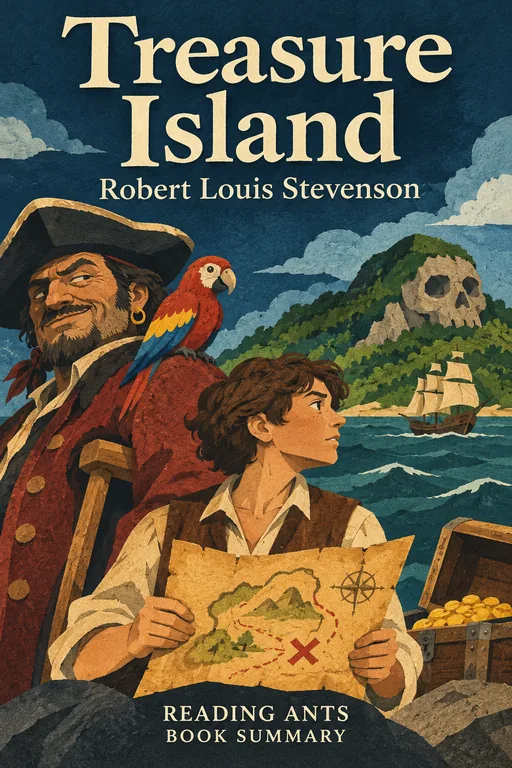
Treasure Island
Robert Louis Stevenson
A boy who finds a pirate's treasure map sails to a distant island, only to discover that the ship's charming one-legged cook is the leader of a band of pirates who want the gold for themselves.
🧸 Children's Books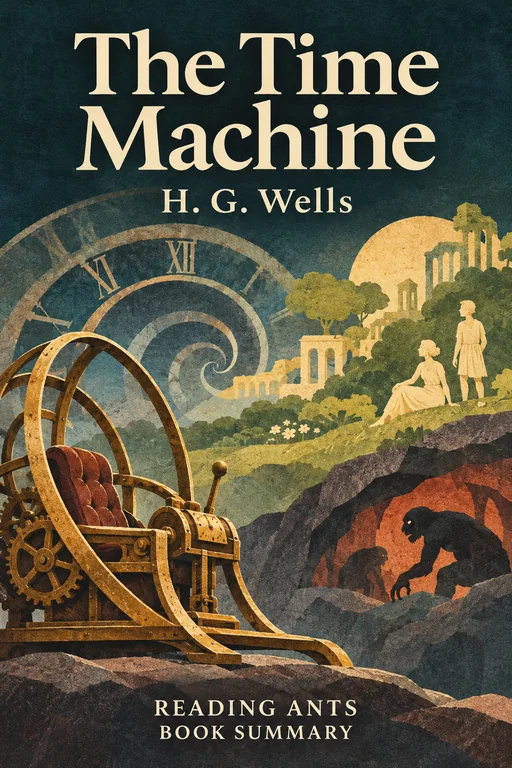
The Time Machine
H. G. Wells
A Victorian inventor, known only as the Time Traveller, builds a machine that carries him to the year 802,701, where he finds humanity split into two species, the gentle Eloi and the monstrous Morlocks, and then to a dying Earth.
🚀 Sci-Fi & Fantasy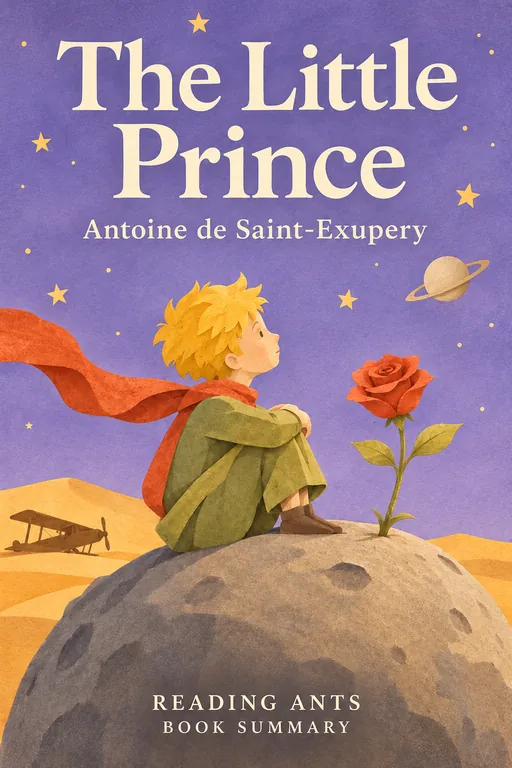
The Little Prince
Antoine de Saint-Exupery
A pilot stranded in the desert meets a small boy from a tiny planet, who teaches him that the most important things in life, like love and friendship, can only be seen with the heart.
🌍 World LiteratureWant something different?
Pick another topic and we will show you three books to start with.