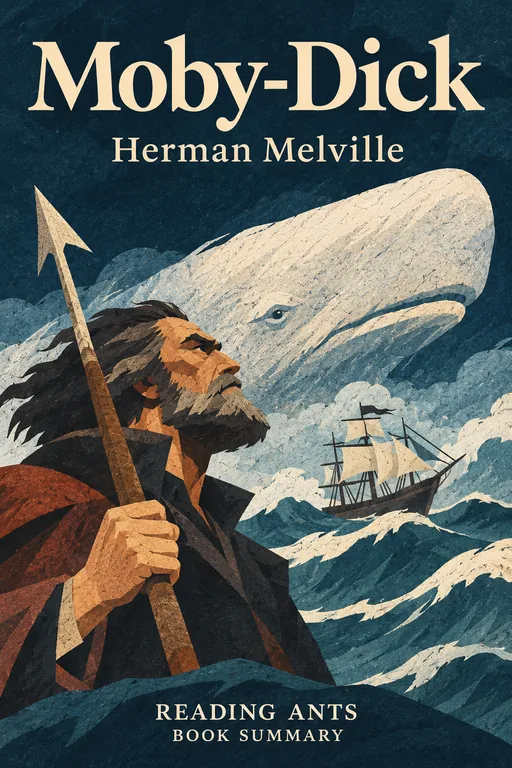
Moby-Dick
A young sailor joins a whaling voyage and discovers that its captain is obsessed with hunting down the giant white whale that bit off his leg, a quest for revenge that leads the whole crew to destruction.
Overview
Moby-Dick; or, The Whale, published in 1851, is one of the great American novels. It is narrated by a young man who introduces himself with the famous line “Call me Ishmael.” Restless and gloomy, Ishmael signs up for a voyage on the Pequod, a whaling ship sailing from Nantucket, Massachusetts, in the 1840s, when whale oil lit lamps across the world. The ship’s captain, Ahab, has a terrible secret: on an earlier voyage, a huge white sperm whale called Moby Dick destroyed his boat and tore off his leg. Ahab is determined to find and kill the whale, whatever the cost. The novel mixes adventure, philosophy, humor and detailed descriptions of whaling, and asks deep questions about obsession, nature and fate.
Main Characters
- Ishmael: the thoughtful narrator, a young sailor.
- Captain Ahab: the obsessed, commanding captain of the Pequod.
- Moby Dick: the enormous, legendary white sperm whale.
- Queequeg: a harpooner from a South Sea island who becomes Ishmael’s close friend.
- Starbuck: the cautious, honorable first mate.
- Stubb: the cheerful, easygoing second mate.
- Flask: the third mate, aggressive toward whales.
- Pip: a young Black cabin boy.
- Fedallah: a mysterious harpooner and prophet who serves Ahab.
Full Summary
Ishmael and Queequeg
Ishmael decides to go to sea whenever he feels gloomy. He travels to New Bedford, Massachusetts, where, at a crowded inn, he must share a bed with a stranger: Queequeg, a tattooed harpooner from a Pacific island. At first Ishmael is frightened, but he quickly discovers that Queequeg is kind, dignified and generous. The two become close friends, and they travel to the island of Nantucket together to find a ship.
The Pequod
They sign on with the Pequod, an old whaling ship decorated with whale bones and teeth. A strange man named Elijah warns them about the ship’s captain, Ahab, but they ignore him. Ahab stays hidden in his cabin for the first days of the voyage. When he finally appears on deck, he is a grim, scarred figure who stands on a leg carved from a whale’s jawbone.
Ahab’s Oath
Ahab gathers the crew and nails a gold coin to the mast. He promises it to whoever first spots a white whale with a wrinkled forehead and a crooked jaw: Moby Dick, the whale that took his leg. The crew cheers wildly and swears to hunt the whale. Only Starbuck, the first mate, objects, saying it is madness to seek revenge on a dumb animal, and that their job is to hunt whales for oil, not for vengeance. Ahab replies that he sees something evil behind the whale’s mask and will strike through it.
Life on a Whaling Ship
Much of the novel describes life aboard the ship and the work of whaling. Ishmael explains in great detail the different kinds of whales, how sailors chase them in small boats, throw harpoons, kill them, cut up their blubber and boil it into oil in huge pots on deck. These chapters mix science, history, humor and philosophy, as Ishmael reflects on the whale’s mystery and the meaning of whiteness.
The Pequod meets other ships at sea and asks each one whether they have seen the white whale. Some have tragic stories: crewmen lost, a captain who lost an arm to Moby Dick and wants nothing more to do with him.
Omens
Strange events trouble the voyage. Pip, the young cabin boy, jumps from a whaleboat in panic and is left alone in the vast ocean for a time before being rescued, and he loses his mind. Queequeg falls seriously ill and has a coffin made for himself, but then recovers; the coffin becomes the ship’s life buoy. Fedallah, Ahab’s mysterious harpooner, prophesies that Ahab will see two hearses on the sea before his death, and that only hemp, rope, can kill him. Ahab believes these prophecies mean he cannot die at sea.
Starbuck, horrified by Ahab’s obsession, even considers killing him to save the crew, but cannot bring himself to do it.
The Chase
Finally, in the Pacific, the white whale is sighted. Over three days, the crew chases Moby Dick. On the first day, the whale smashes Ahab’s boat. On the second day, more boats are destroyed and Fedallah disappears. Starbuck begs Ahab to give up, but Ahab refuses. On the third day, Fedallah’s body is seen tied to the whale’s back by harpoon ropes, fulfilling part of the prophecy.
Ahab hurls his harpoon into the whale, but the rope catches around his neck and he is dragged into the sea. Moby Dick then rams and sinks the Pequod, which goes down in a great whirlpool, taking nearly all of the crew with it.
The Survivor
Only Ishmael survives. Thrown from a whaleboat, he clings to Queequeg’s coffin, which bursts up from the sinking ship. For a day and a night he floats alone, until another whaling ship, the Rachel, which has been searching for its own lost crewmen, rescues him. He lives to tell the tale.
Why It Matters
Moby-Dick sold poorly and received mixed reviews when it was published, and Melville died in 1891 largely forgotten. In the twentieth century, critics rediscovered the novel, and it is now considered one of the greatest works of American literature, often called a candidate for the “Great American Novel.”
Its opening line is one of the most famous in literature, and Captain Ahab has become a symbol of destructive obsession; “white whale” now means any goal pursued obsessively. The novel has influenced countless writers, films and artists, and even the name of the Starbucks coffee chain comes from the first mate. It is also an important historical record of the nineteenth-century whaling industry.
Key Takeaways
- Obsession destroys. Ahab’s need for revenge leads everyone to ruin.
- Nature is vast and mysterious. The whale represents forces beyond human control.
- Friendship crosses boundaries. Ishmael and Queequeg’s bond defies prejudice.
- Leadership carries responsibility. Ahab sacrifices his crew for his personal quest.
- Knowledge has limits. Despite all his study, Ishmael cannot fully understand the whale.
What We Can Learn
Moby-Dick warns us about letting anger or obsession take over our lives. Ahab is willing to sacrifice everything for revenge. When we feel consumed by a grudge or a single goal, it can help to step back and remember what truly matters.
It also teaches openness to people who are different. Ishmael’s fear of Queequeg turns to deep friendship once he gets to know him, showing that prejudice often comes from ignorance.
Finally, the novel encourages curiosity. Ishmael explores every aspect of whales, science and philosophy. Even when we can’t find all the answers, the search itself enriches us.
Criticism and Counterpoints
Many readers find Moby-Dick difficult, mainly because of the long chapters on whale biology, whaling methods and philosophy that interrupt the story. Some readers skip these sections, and abridged editions often remove them. Its old-fashioned language and many references to the Bible and Shakespeare can also be challenging.
Modern readers may be troubled by its detailed descriptions of killing whales, an industry that drove some whale species close to extinction. Critics have also noted that, apart from a few brief mentions, there are no women in the story. Others argue that its depth, humor and ambition make the effort worthwhile.
Who Should Read It
This novel suits patient teenagers and adults who enjoy adventure, philosophy and challenging classics. Readers who want only the story can start with an abridged version. Those willing to explore its digressions will find one of the richest books ever written.
Want the whole book?
A summary is a taste, not the meal. Here is where to find the full book.
You reached the end 🎉
Nicely done. Mark this one as read, and we will suggest what to read next.
Read this next
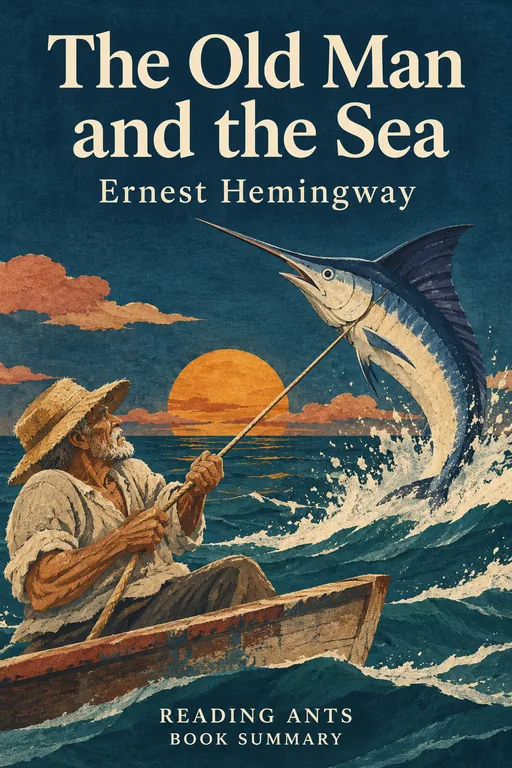
The Old Man and the Sea
Ernest Hemingway
An old Cuban fisherman who has gone eighty-four days without a catch hooks a giant marlin far out at sea and fights it for three days, only to lose it to sharks, yet he returns home undefeated in spirit.
📜 Classics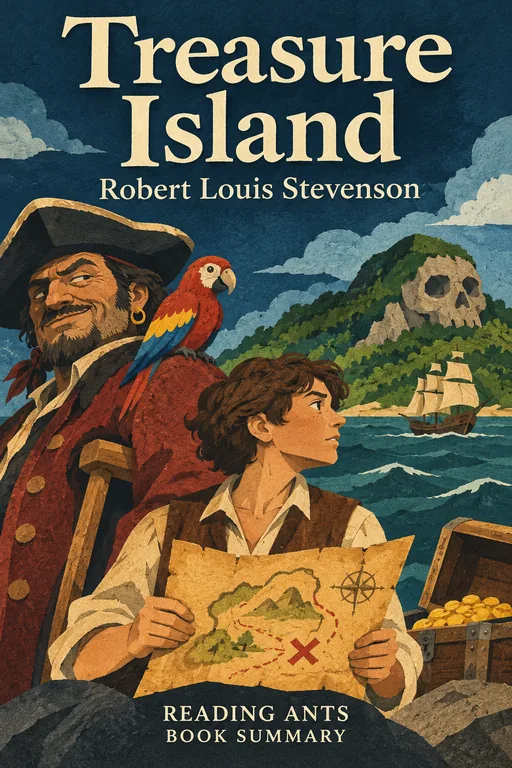
Treasure Island
Robert Louis Stevenson
A boy who finds a pirate's treasure map sails to a distant island, only to discover that the ship's charming one-legged cook is the leader of a band of pirates who want the gold for themselves.
🧸 Children's Books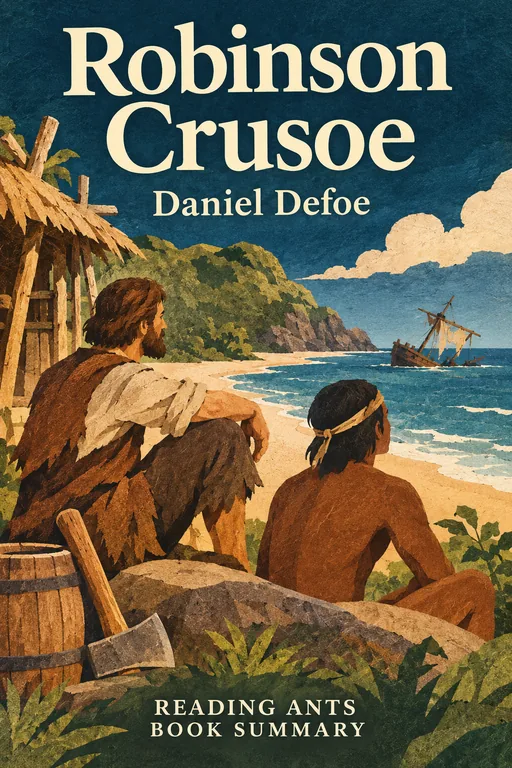
Robinson Crusoe
Daniel Defoe
After a shipwreck, an English sailor named Robinson Crusoe survives for twenty-eight years on a remote island, building a life with his own skill and faith, and eventually befriending a man he calls Friday.
📜 Classics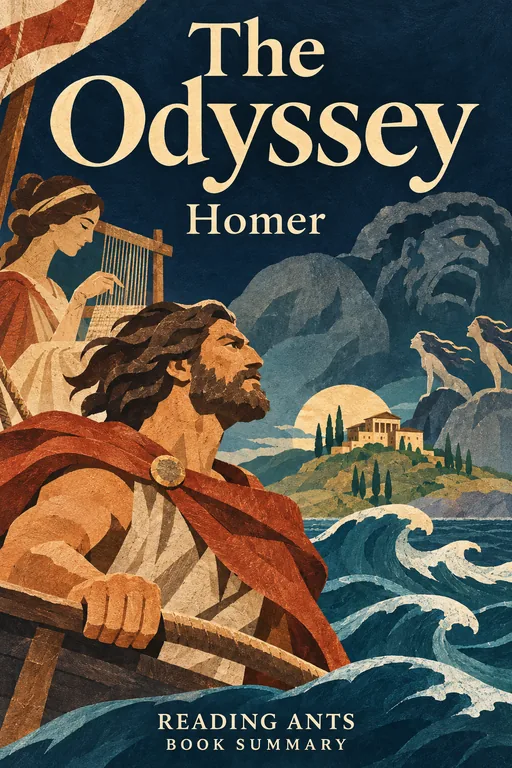
The Odyssey
Homer
After the Trojan War, the clever hero Odysseus struggles for ten years against monsters, gods and temptations to return home to his faithful wife and son, then must win back his house from the men trying to steal it.
🎭 Epics, Drama & Poetry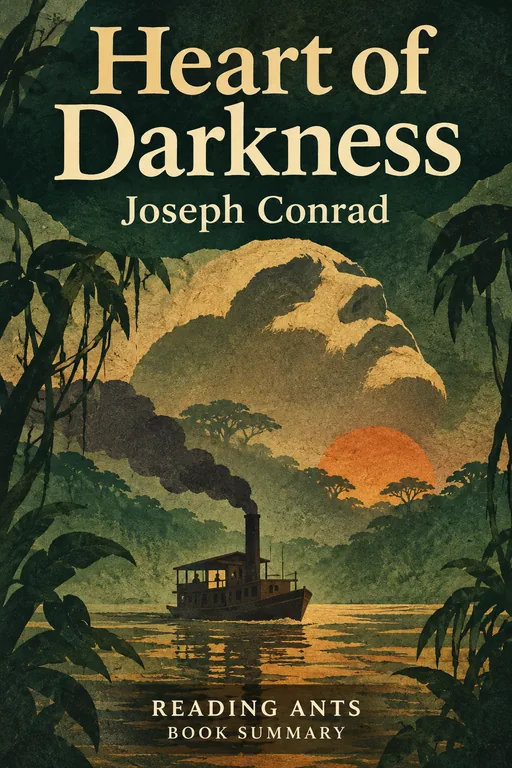
Heart of Darkness
Joseph Conrad
A sailor named Marlow tells his friends of a journey up the Congo River to find a mysterious ivory trader named Kurtz, and of the horror and moral darkness he finds at the end of it.
📜 Classics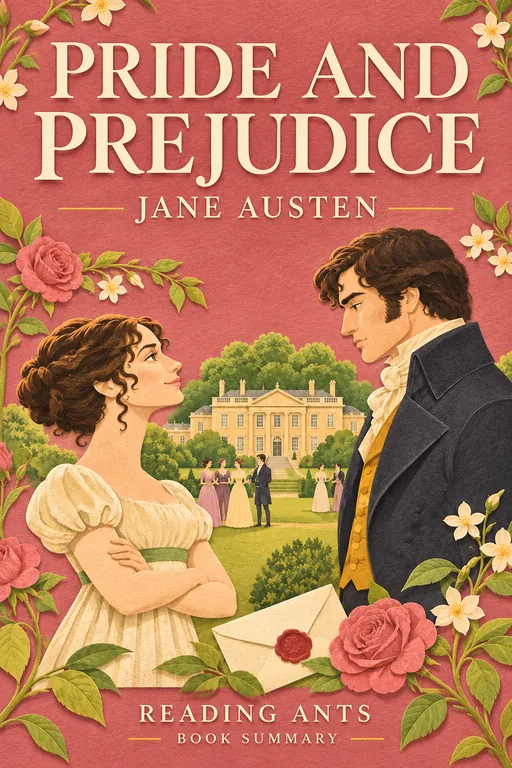
Pride and Prejudice
Jane Austen
Quick-witted Elizabeth Bennet and the proud, wealthy Mr. Darcy badly misjudge each other, and only by facing their own faults do they find their way to love.
📜 ClassicsWant something different?
Pick another topic and we will show you three books to start with.