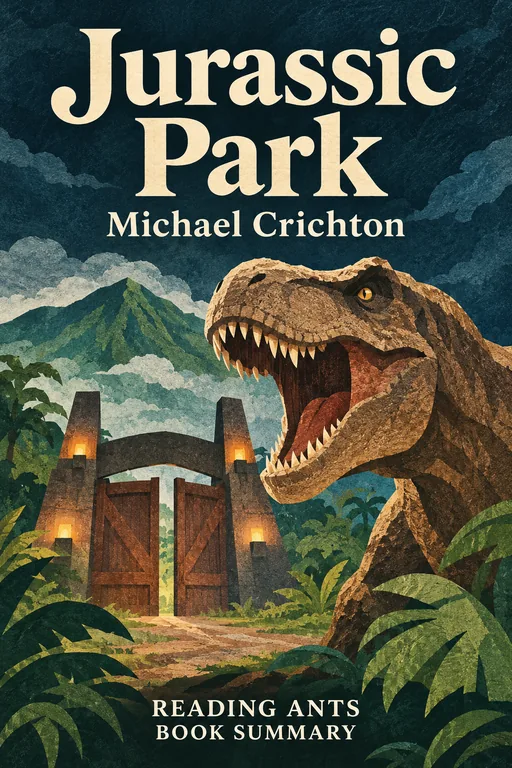
Jurassic Park
On a remote island, a billionaire's theme park of cloned dinosaurs spirals out of control when a power failure, a corrupt employee and the creatures' own nature turn the attraction into a nightmare.
Overview
Jurassic Park, by Michael Crichton, was published in 1990 and became a global bestseller. It tells of John Hammond, an ambitious entrepreneur who has used genetic engineering to bring dinosaurs back to life from DNA found in mosquitoes preserved in amber. Before opening his park on Isla Nublar, off the coast of Costa Rica, Hammond invites a group of scientists to inspect it, including a paleontologist, a paleobotanist and a mathematician who studies chaos theory. At first, the visitors are amazed. But the park’s security systems have been sabotaged, and the dinosaurs escape. Crichton, a trained doctor and a master of the techno-thriller, uses the story to warn about the dangers of playing with nature.
Main Characters
- Dr. Alan Grant: a paleontologist who studies dinosaur fossils.
- Dr. Ellie Sattler: a paleobotanist and Grant’s graduate student.
- Dr. Ian Malcolm: a mathematician who studies chaos theory.
- John Hammond: the park’s founder and owner.
- Dennis Nedry: the park’s computer programmer, who sabotages the system.
- Tim and Lex Murphy: Hammond’s grandchildren.
- Robert Muldoon: the park’s game warden.
- Henry Wu: the chief geneticist.
Full Summary
The Prologue
The novel begins with an accident at a construction site on Isla Nublar, which leaves a worker mauled by a mysterious creature. Later, in Costa Rica, a small lizard-like creature bites a child, and a doctor suspects that it may be a dinosaur.
Hammond’s investors, worried about safety, insist on an inspection, and Hammond invites a group of experts to visit the park.
The Visitors
Alan Grant and Ellie Sattler, who are on a dig in Montana, are invited by Hammond. Ian Malcolm, a mathematician, warns that complex systems like the park cannot be controlled, because chaos theory predicts that small changes lead to unpredictable results. A lawyer for the investors, Donald Gennaro, joins them. Hammond’s grandchildren, Tim and Lex, arrive.
On Isla Nublar, the group is stunned to see live apatosaurs, huge plant-eating dinosaurs, beside a lake. They tour the facility, learning how scientists extracted dinosaur DNA from mosquitoes in amber and filled in gaps with frog DNA. All the dinosaurs are female, so they cannot breed.
The Storm
During a tour, a tropical storm strikes. Dennis Nedry, who has been paid by a rival company to steal frozen dinosaur embryos, takes the opportunity to shut off the park’s security systems, which also disables the electric fences. Nedry, trying to reach the boat, gets lost in the storm, and is killed by a Dilophosaurus, a small dinosaur that spits venom.
The Tyrannosaurus rex breaks out of its paddock and attacks the stalled tour vehicles. Grant, Tim and Lex are left stranded in the park, while Malcolm is badly injured.
Escape
Grant, who likes children and is good with them, becomes their protector. They climb down a tree, hide from the tyrannosaur and cross the park on foot, pursued by the dinosaurs. They discover that the dinosaurs are breeding in the wild, because the frog DNA used to fill gaps in their genetic code allowed some of the females to change sex, so that the park’s animals are reproducing.
Meanwhile, Ellie and the game warden, Muldoon, search for survivors and eventually find Malcolm, badly hurt but alive.
The Raptors
The most dangerous animals in the park are the velociraptors, smart, fast pack hunters. They escape from their enclosure and kill several people. The survivors struggle to restart the park’s power and control systems while the raptors hunt them: Grant and Tim eventually restart the main generators and regain control of the park’s systems.
The Visitor Center
Back at the visitor center, the survivors regroup in the dark. The park’s computers are damaged, the phones are down and a supply boat has already left the island, with raptors stowed aboard, so that it must be recalled urgently. Hammond, shocked, insists that the park only needs minor repairs, while Malcolm, who is hurt, reminds him that his creation was designed to be impossible to control. The group begins to realize that the dinosaurs are no longer confined to their enclosures, and that the animals have been behaving in ways the designers never planned.
The End
Most of the survivors escape from the island. Hammond dies after a fall, attacked by small dinosaurs. The Costa Rican military later destroys the island with incendiary bombs, and the survivors are held in Costa Rica for a time. The novel ends with Grant learning that dinosaurs have already reached the mainland, and that they may be out in the jungle, a hint that the problem is not over.
Why It Matters
Jurassic Park was an enormous bestseller, selling many millions of copies, and inspired Steven Spielberg’s 1993 film, which was a worldwide sensation and set records for special effects. The success launched a franchise of sequels, novels, games and theme-park attractions, and renewed public interest in dinosaurs.
The book popularized chaos theory, genetic engineering and cloning in a thrilling story, and it touched a nerve about the risks of technology and corporate ambition. Phrases from the story and its film about scientists who were so preoccupied with whether they could do something that they did not stop to ask whether they should have entered everyday conversation about science and ethics.
Key Takeaways
- Complex systems can fail. Chaos theory shows that unpredictability is built in.
- Science needs ethics. Technology without responsibility is dangerous.
- Nature finds a way. The dinosaurs adapt and breed despite human controls.
- Greed can cause disaster. Profit-driven decisions lead to cut corners.
- Respect the power of nature. Humans cannot easily control it.
What We Can Learn
Jurassic Park encourages us to think about the consequences of new technologies before using them. Cloning, artificial intelligence and gene editing have enormous potential, but also risks that must be understood.
It also shows the value of humility. The park’s creators believe they have everything under control, but nature surprises them. Admitting what we don’t know is an important part of science.
Finally, it reminds us that profit and safety can conflict. When companies cut corners, it can put people in danger.
Criticism and Counterpoints
Some scientists have said that the science in the novel is unrealistic: DNA does not survive for millions of years, as studies suggest it breaks down in far less time, and cloning a dinosaur from fragments would not work. Paleontologists have also noted that the portrayal of dinosaurs, such as velociraptors, is inaccurate: real velociraptors were much smaller and covered in feathers.
Critics have also said that the characters are less memorable than in the film, and some find the book’s long explanations of chaos theory heavy. The story’s critique of capitalism and unchecked science is widely discussed. Many readers find the book darker and more detailed than the film.
Who Should Read It
This novel suits teens and adults who enjoy thrillers and science fiction. It has frightening scenes and some graphic violence. Readers who have only seen the movie will find the book more detailed and more disturbing.
Want the whole book?
A summary is a taste, not the meal. Here is where to find the full book.
You reached the end 🎉
Nicely done. Mark this one as read, and we will suggest what to read next.
Read this next
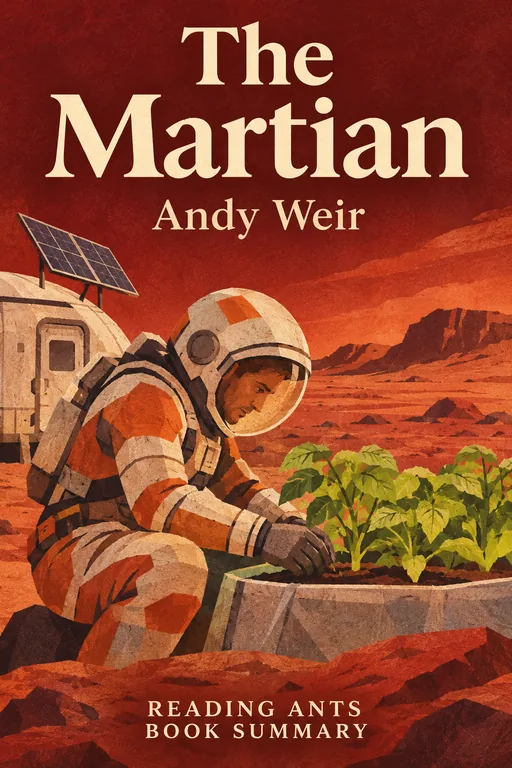
The Martian
Andy Weir
When a sandstorm forces his crew to abandon him on Mars, believing he is dead, astronaut Mark Watney must use science, ingenuity and humor to survive for more than a year until rescue can arrive.
🚀 Sci-Fi & Fantasy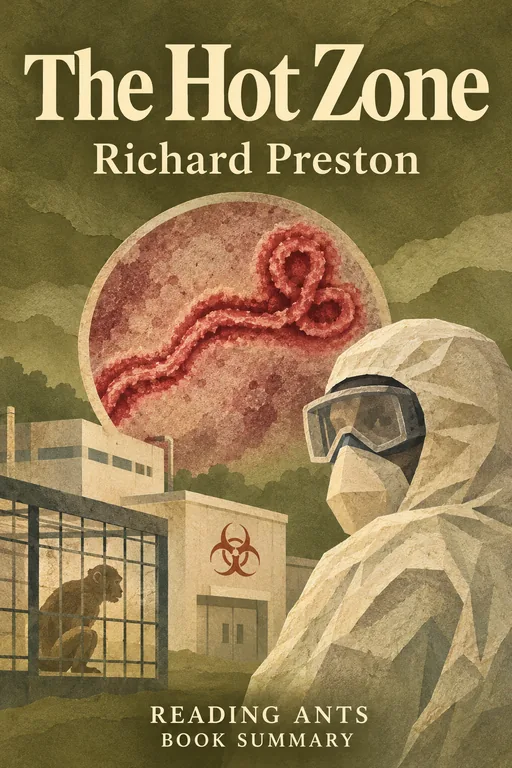
The Hot Zone
Richard Preston
Richard Preston tells, in the style of a thriller, the true story of the Ebola virus, from its appearance in Africa to a frightening outbreak among monkeys at a laboratory facility in Virginia, and the scientists and soldiers who fought to contain it.
🔬 Science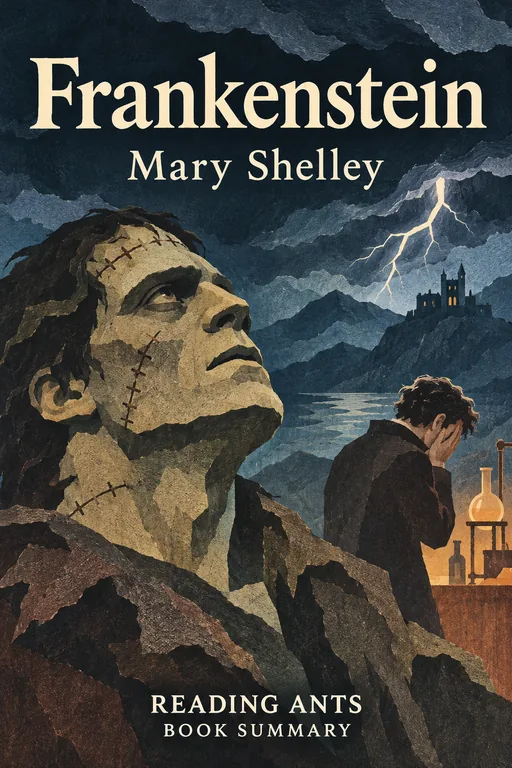
Frankenstein
Mary Shelley
A young scientist creates a living being from dead body parts, then abandons it in horror, and his rejected creation, longing for love, turns to revenge.
🚀 Sci-Fi & Fantasy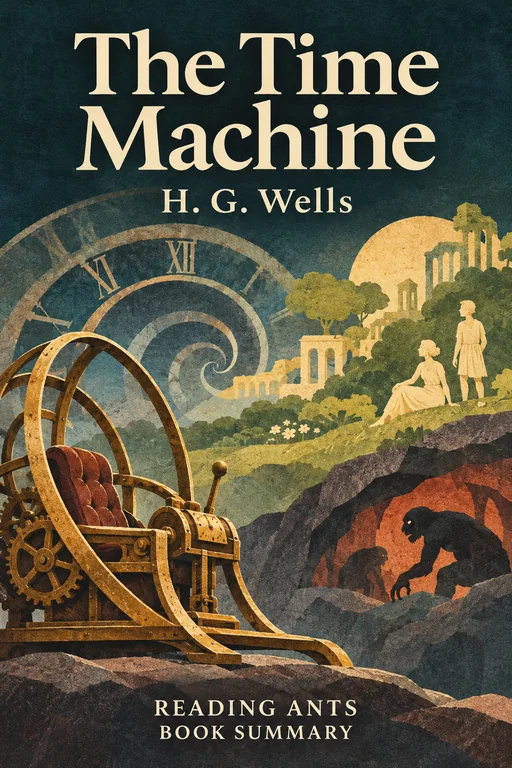
The Time Machine
H. G. Wells
A Victorian inventor, known only as the Time Traveller, builds a machine that carries him to the year 802,701, where he finds humanity split into two species, the gentle Eloi and the monstrous Morlocks, and then to a dying Earth.
🚀 Sci-Fi & Fantasy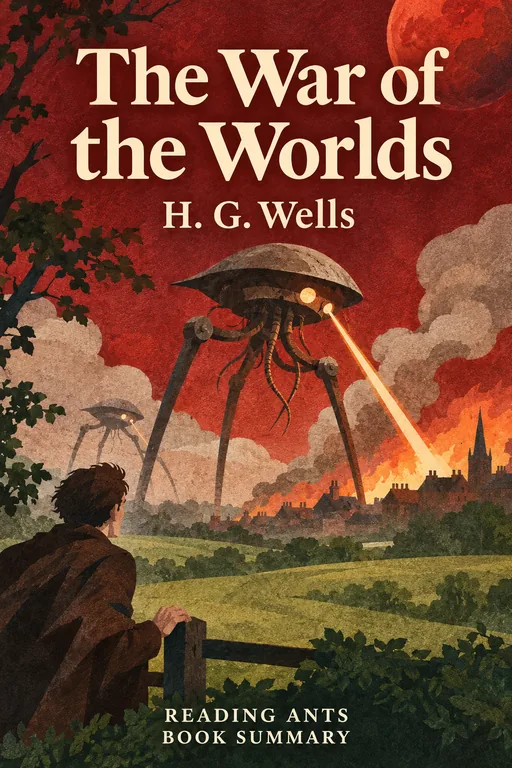
The War of the Worlds
H. G. Wells
Martians land in the English countryside with war machines and heat-rays that overwhelm human armies, until the invaders are brought down by the one thing humans never expected: Earth's smallest germs.
🚀 Sci-Fi & Fantasy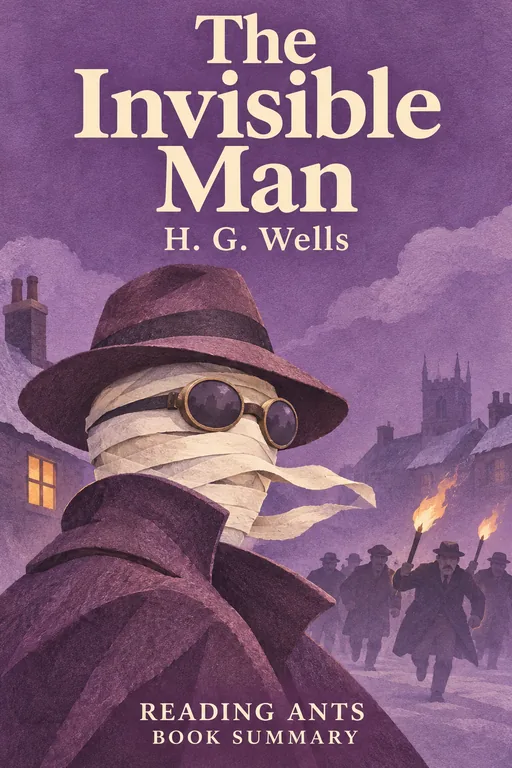
The Invisible Man
H. G. Wells
A brilliant scientist who has discovered how to make himself invisible finds that the power isolates him and drives him toward cruelty, until a frightened community hunts him down.
🚀 Sci-Fi & FantasyWant something different?
Pick another topic and we will show you three books to start with.