 Reading Ants
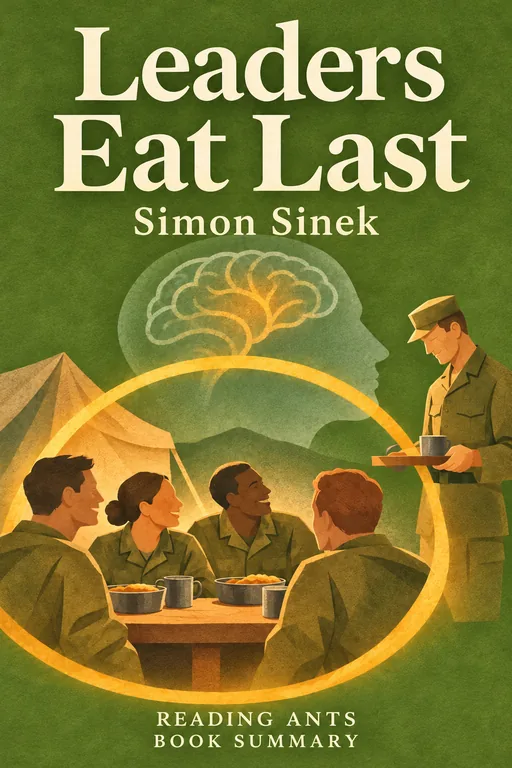
Leaders Eat Last: Why Some Teams Pull Together and Others Don't
A book that argues that great leaders create a "circle of safety" for their people, and that trust and cooperation come from the way that our bodies and brains respond to feeling safe.
Overview
Leaders Eat Last is a book by the author and speaker Simon Sinek, published in 2014. It is a follow-up to his first book, Start with Why. The title comes from a custom in the US Marine Corps, in which officers eat after their troops have been served. Sinek combines stories from the military and business with ideas from biology, particularly about the chemicals in our bodies that affect how we feel and behave. He argues that the best organizations are those in which leaders look after their people.
Full Summary
1. The circle of safety
The idea: Humans have evolved to live in groups, and we feel best when we feel safe among our own. In a workplace, leaders must create a “circle of safety,” where people feel protected from dangers inside the group, such as office politics and the fear of being fired, so that they can focus on the outside threats and opportunities.
From the book: Sinek compares organizations with a culture of trust to those where people are worried about each other, and says that the first group works better together.
In real life: A sports team in which players are not afraid of being punished for a mistake is more likely to take risks and to learn.
2. Four chemicals that shape our behavior
The idea: Sinek describes four chemicals in our bodies that influence how we feel and act. In Sinek’s account, endorphins help us to push through pain and exertion, and dopamine drives the satisfaction of progress and reward, so that both drive individual achievement. Serotonin and oxytocin are linked to pride, trust and social bonds, and they drive cooperation. A healthy organization balances both sets. This four-chemical account is Sinek’s simplified framework, not a full biology of motivation and trust.
From the book: He explains that in a performance-driven organization where the main reward is hitting a goal and getting paid, people can become hooked on “making the numbers,” much as they can on gambling, while the social chemicals that build trust and loyalty are neglected. He calls endorphins and dopamine the “selfish” chemicals and serotonin and oxytocin the “selfless” ones, and says a leader’s goal is to find a balance between them.
In real life: When you finish a to-do list, you feel a small thrill. When a friend thanks you, you feel something warmer. Both matter.
3. Stress and the harm of an unsafe workplace
The idea: When people feel under threat, their bodies release a stress chemical, called cortisol, which signals danger. If a workplace is a source of constant stress, such as the fear of layoffs, relationships weaken and people become less cooperative and less healthy.
From the book: Sinek says that when people do not feel a circle of safety, because of office politics, fear of layoffs or a boss they distrust, cortisol keeps seeping into their systems. He argues that this makes people more selfish, since cortisol inhibits the release of oxytocin, and that over the long term it harms health, including the immune system.
In real life: A classroom in which a teacher is always angry may produce students who do what they must to avoid trouble, but who do not enjoy learning.
4. The danger of abstraction and numbers
The idea: When leaders are far from the people that they affect, and see them only as numbers on a spreadsheet, it becomes easier to make harsh decisions. Sinek argues that leaders should stay close to their people, and see them as human beings.
From the book: He points to the famous obedience experiment by Stanley Milgram, in which people were more willing to give apparent electric shocks when the person receiving them was far away, as a sign of how distance makes harm seem less real.
In real life: A manager who visits the shop floor, or a school head who talks to students, will understand problems better than one who reads only reports.
5. Leaders go first, and take care of their people
The idea: The core of the book is that true leadership means taking responsibility for the care of those in your charge. Leaders are the ones who sacrifice their own comfort, so that their people may be safe, and who “eat last.” In return, people will give their loyalty and their best effort.
From the book: Sinek tells of Bob Chapman, the chief executive of the manufacturing company Barry-Wehmiller. When orders fell sharply after the 2008 crash, Chapman chose a company-wide furlough, with every employee from the chief executive down taking four weeks of unpaid time off, instead of layoffs. Sinek says employees responded by helping each other, for example by trading time off, and that the company’s people repaid the protection with loyalty. In another story from one of the company’s plants, workers chose to transfer their own paid vacation days to a colleague whose wife was seriously ill.
In real life: A team captain who makes sure that everyone has water before taking their own earns respect.
6. Trust is built in small, human moments
The idea: Sinek says that trust cannot be demanded or ordered; it is a result of people feeling safe. It grows through consistent, kind behavior, through giving others our time and our full attention, and through patience, since it takes time to build. He stresses empathy, and the willingness to listen.
From the book: He argues that leaders set the culture, but that leadership is a choice to serve others, with or without formal rank, and that members of a group also have a responsibility to look out for their leaders and for each other.
In real life: Ask a classmate or colleague how they are, and listen to the answer. Small acts like this build the habit of trust.
Why It Matters
Leaders Eat Last was widely read, and it made Sinek one of the most popular speakers on leadership. It helped to popularize the idea that organizations should be seen as human communities, and not as machines. It continues the debate over how companies can create environments in which people can do their best work. Sinek’s earlier talk about starting with “why” had already made him well known, and this book brought his ideas from purpose to people. His message that leadership is a responsibility, and not a privilege, has been repeated in business and military circles.
Key Takeaways
- Safety enables trust. People work best when they feel secure.
- Leaders serve. The best leaders put their people first.
- Numbers are not people. Stay close to those you lead.
- Balance achievement and connection. Both matter for a healthy culture.
- Small acts build trust. Daily kindness adds up.
What We Can Learn
Anyone who leads, even in a small way, such as a team captain, a parent or a club organizer, can apply the idea of the circle of safety. It begins with making people feel that they are valued, and that they will not be punished for honest mistakes. In turn, they are likely to cooperate more.
The book also encourages us to think about how our own work and school environments affect our feelings and health, and what we can do to make them better. Finally, it reminds us that a leader’s job is to serve, and not to be served.
Criticism and Counterpoints
Some scientists say that Sinek simplifies the biology, and that the way that he describes the chemicals in the brain is not fully accurate, since each has many roles. Others feel that some of the stories used as examples are selective, and that they do not prove his claims. Critics also note that the book offers few practical steps, and that it is a series of inspirational stories more than a research study. Some of the military examples may not apply to a business setting.
Who Should Read It
This book is for managers, team leaders, teachers and anyone who is interested in how to build a good team. It is easy to read, with many stories. Those who want detailed research or a step-by-step method may find it light, but those who want inspiration will enjoy it.
Want the whole book?
A summary is a taste, not the meal. Here is where to find the full book.
You reached the end 🎉
Nicely done. Mark this one as read, and we will suggest what to read next.
Read this next
Start with Why
Simon Sinek
The leaders and companies that inspire people begin by explaining why they exist, their purpose or belief, and only then talk about how and what they do.
💼 Business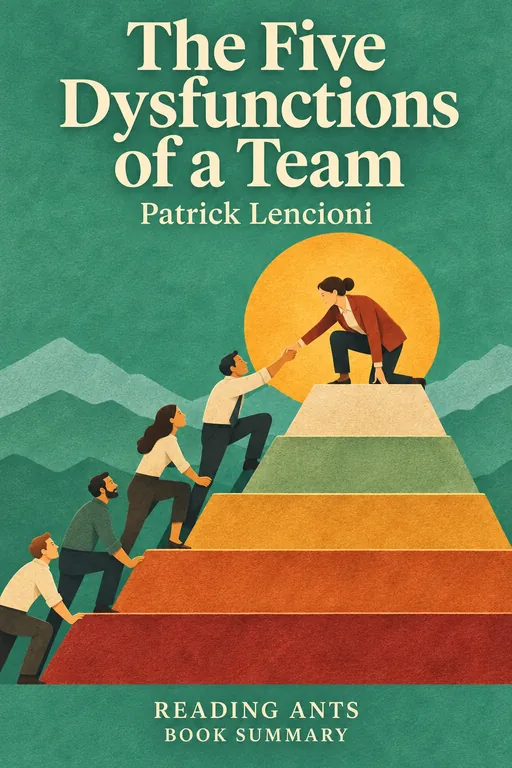
The Five Dysfunctions of a Team
Patrick Lencioni
Teams fail for five connected reasons, starting with a lack of trust, and the way to build a strong team is to fix them in order from the bottom of the pyramid up.
💼 Business
The 7 Habits of Highly Effective People
Stephen R. Covey
Lasting success in life and work comes not from quick tricks or a charming personality but from good character, built through seven habits that move us from depending on others, to standing on our own, to working well with others.
🌱 Self-Improvement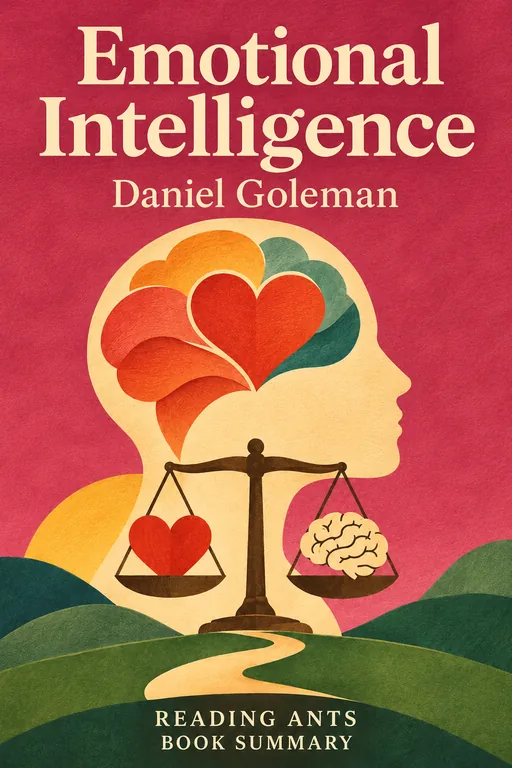
Emotional Intelligence
Daniel Goleman
Daniel Goleman argues that the ability to understand and manage emotions, our own and others', matters as much as IQ for success, relationships and well-being, and that it can be learned.
🌱 Self-Improvement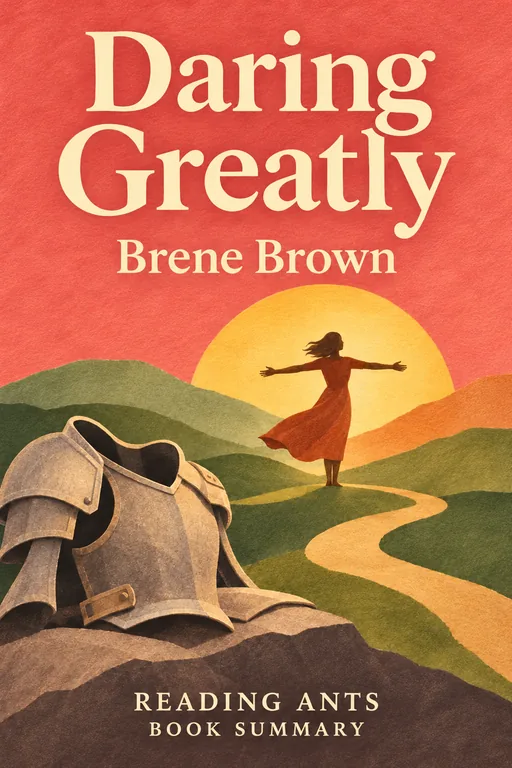
Daring Greatly
Brene Brown
Researcher Brené Brown argues that vulnerability, the willingness to show up and be seen when outcomes are uncertain, is not weakness but the foundation of courage, connection and creativity.
🌱 Self-Improvement
The Lean Startup
Eric Ries
Startups succeed not by following a detailed plan but by quickly testing their ideas with real customers, learning from the results and changing direction when needed.
💼 BusinessWant something different?
Pick another topic and we will show you three books to start with.