 Reading Ants
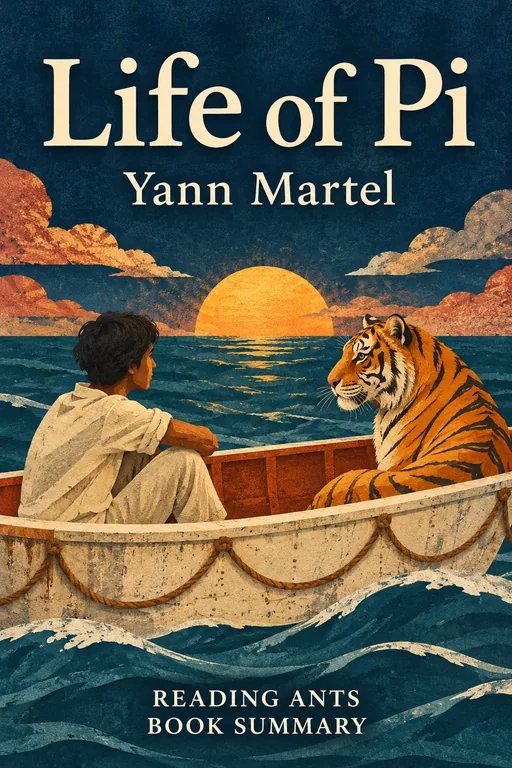
Life of Pi
A teenage boy from India survives 227 days adrift in a lifeboat with a Bengal tiger, then tells two versions of what happened and asks which one we prefer to believe.
Overview
Life of Pi, by Yann Martel, published in 2001, won the Booker Prize. Its narrator, Piscine Molitor Patel, known as Pi, grows up in Pondicherry, India, where his father runs a zoo. Curious about faith, Pi follows Hinduism, Christianity and Islam all at once. When he is sixteen, his family decides to move to Canada and ships its zoo animals along on a Japanese cargo ship. The ship sinks in the Pacific Ocean, and Pi is left alone in a lifeboat with a hyena, a zebra, an orangutan and a Bengal tiger named Richard Parker. The story of his survival is one of the most imaginative adventure novels of recent decades, and it raises deep questions about truth, faith and storytelling.
Main Characters
- Pi Patel: a thoughtful, resourceful and deeply religious Indian boy.
- Richard Parker: the large, dangerous Bengal tiger.
- Pi’s father (Santosh Patel): the practical zoo owner.
- Pi’s mother (Gita): a gentle woman who loves books.
- Ravi: Pi’s older brother.
- Mr. Kumar: a teacher who is an atheist.
- The author: a fictional writer who interviews the adult Pi.
- Mr. Okamoto and Mr. Chiba: Japanese officials who investigate the shipwreck.
Full Summary
A Boy and His Gods
The novel begins with a fictional author who is told he will hear a story that will make him believe in God. He goes to meet Pi Patel, now a middle-aged man living in Canada. Pi recalls his childhood in Pondicherry, India, where his father ran the zoo and he learned about animals. As a boy, he asked to be baptized, studied the Quran and prayed in temples. When the three priests, a pandit, an imam and a priest, find out, each demands that he choose one religion. Pi answers that he only wants to love God.
The Voyage
In 1977, because of political instability in India, Pi’s father decides to sell the zoo and emigrate with his family to Canada. They board the Japanese ship Tsimtsum with a number of animals, which they plan to sell in North America. Several days later, in the middle of the Pacific Ocean, in a storm, the ship sinks. Pi is thrown into a lifeboat with a zebra with a broken leg, an orangutan called Orange Juice, and a hyena. A huge tiger, Richard Parker, is hidden under the tarpaulin.
The Lifeboat
The hyena attacks and kills the zebra and then the orangutan. Then, to Pi’s shock, Richard Parker emerges and kills the hyena. Pi finds himself in a small boat with a hungry tiger. He builds a small raft out of life jackets and ties it to the boat to keep distance. Gradually he realizes that the only way to survive is to tame the tiger. Using the survival manual, whistles and fear tactics, he establishes that the boat is his territory, and Richard Parker is cowed.
For months they drift. Pi catches fish and turtles, collects rainwater and feeds the tiger to keep him alive and calm. He prays and keeps a diary. Pi realizes that Richard Parker is helping him survive, because caring for the tiger gives him a purpose.
The Island
After many weeks, Pi, weak and temporarily blind, meets another blind castaway, a Frenchman, who tries to kill him and is killed by Richard Parker; Pi’s sight then returns. Soon after, the boat reaches a strange floating island made of algae and filled with meerkats. At night, the ground and pools turn acidic, killing the fish, while the meerkats survive by sleeping in the trees. Pi realizes the island is carnivorous, and he and Richard Parker flee back to sea after finding human teeth in a tree fruit.
Landfall
After 227 days, the boat lands on a beach in Mexico. Richard Parker walks into the jungle without looking back, and Pi weeps over the lack of a goodbye. Local people rescue Pi, and he is taken to a hospital.
Two Stories
Two Japanese officials investigating the sinking of the Tsimtsum interview Pi in the hospital. They find the story of the tiger impossible and ask for the truth. Pi gives them a second story, with no animals: in the lifeboat, he was with his mother, a sailor with a broken leg and a cruel cook. The cook killed the sailor, used his flesh as bait, and then killed Pi’s mother. Pi eventually killed the cook. In this version, the zebra, the orangutan, the hyena and the tiger correspond to the sailor, his mother, the cook, and Pi himself.
Pi asks the officials which story they prefer. They agree that the story with the tiger is the better one. In their report, they write that Pi is the only known castaway to have survived with a Bengal tiger. Pi smiles: so it goes with God.
Why It Matters
Life of Pi won the 2002 Booker Prize and became an international bestseller, selling over ten million copies and being translated into dozens of languages. It was adapted into a 2012 film directed by Ang Lee, which won four Academy Awards, including Best Director, for its extraordinary visual effects.
The novel is admired as both an adventure and a philosophical fable. Its ending raises deep questions: which story is true, and does it matter? It suggests that stories, like religions, help people make sense of suffering. A dispute over how much it borrowed from a novella by the Brazilian writer Moacyr Scliar, which Martel acknowledged as an inspiration, drew attention to its origins.
Key Takeaways
- Faith and stories help us survive. Pi endures through belief and imagination.
- Fear can be turned into strength. Pi’s relationship with the tiger keeps him alert.
- Truth can be complicated. The two versions offer different comforts.
- Respect for all faiths is possible. Pi embraces three religions.
- Survival requires adaptation. Pi learns new skills to stay alive.
What We Can Learn
Life of Pi shows that hope and purpose can keep us going in extreme hardship. Pi never gives up, in part because he has a responsibility, to keep Richard Parker alive.
It also invites tolerance. Pi’s openness to different religions challenges the idea that we must choose only one way of understanding the world.
Finally, the ending encourages us to think about the stories we choose to believe. We can ask ourselves what stories give our lives meaning, and whether they help us live well.
Criticism and Counterpoints
Some readers found the final twist frustrating or manipulative, since it makes them question everything they’ve read. Others consider the long opening sections about Pi’s religious life slow compared with the lifeboat adventure.
The question of how closely the book resembles Moacyr Scliar’s Max and the Cats, about a boy who shares a lifeboat with a jaguar, has also been debated. Martel said he read about Scliar’s book in a review and acknowledged him. Some scientists have also pointed out that elements, such as the algae island, are scientifically unlikely, but supporters argue the book is a fable, not a manual.
Who Should Read It
This novel suits teens and adults who like adventure, philosophy and imaginative storytelling. It has some violent scenes. Fans of the film will find the book’s ending even more thought-provoking.
Want the whole book?
A summary is a taste, not the meal. Here is where to find the full book.
You reached the end 🎉
Nicely done. Mark this one as read, and we will suggest what to read next.
Read this next
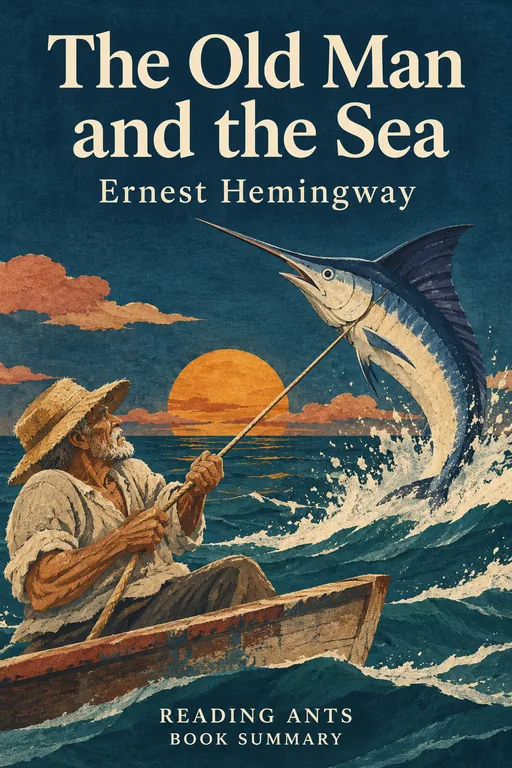
The Old Man and the Sea
Ernest Hemingway
An old Cuban fisherman who has gone eighty-four days without a catch hooks a giant marlin far out at sea and fights it for three days, only to lose it to sharks, yet he returns home undefeated in spirit.
📜 Classics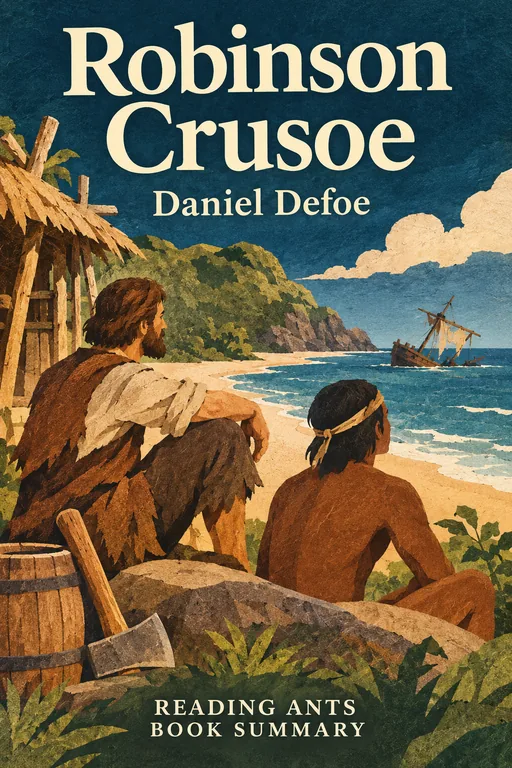
Robinson Crusoe
Daniel Defoe
After a shipwreck, an English sailor named Robinson Crusoe survives for twenty-eight years on a remote island, building a life with his own skill and faith, and eventually befriending a man he calls Friday.
📜 Classics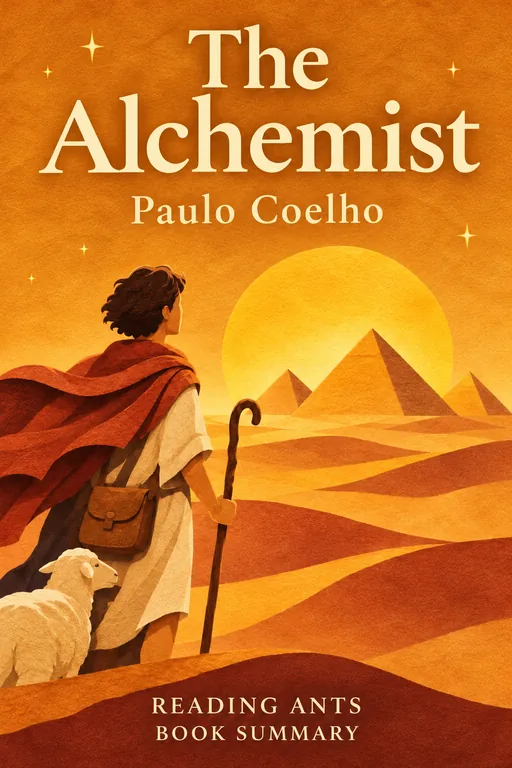
The Alchemist
Paulo Coelho
A young Spanish shepherd follows a recurring dream across the desert to the Egyptian pyramids in search of treasure, and learns that the journey toward one's dream is itself the greatest treasure.
🌍 World Literature
The Little Prince
Antoine de Saint-Exupery
A pilot stranded in the desert meets a small boy from a tiny planet, who teaches him that the most important things in life, like love and friendship, can only be seen with the heart.
🌍 World Literature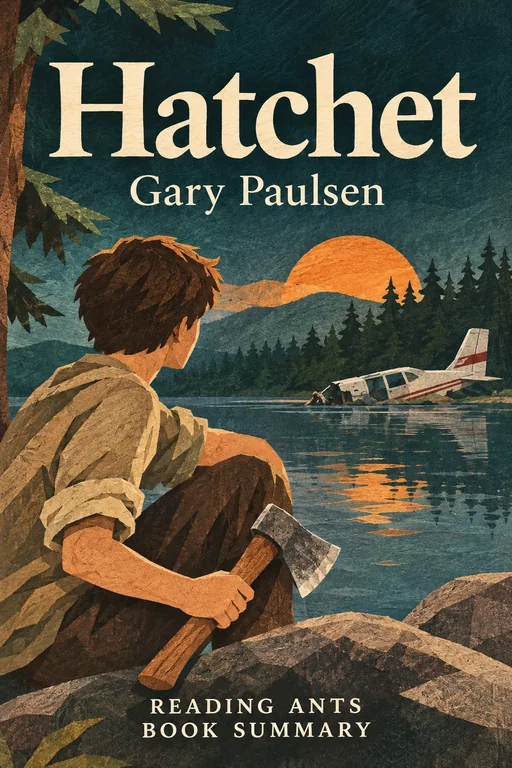
Hatchet
Gary Paulsen
After a plane crash leaves him alone in the Canadian wilderness with only a hatchet, a thirteen-year-old boy must learn to survive, and grows from a frightened city kid into a patient, resourceful young man.
🧸 Children's Books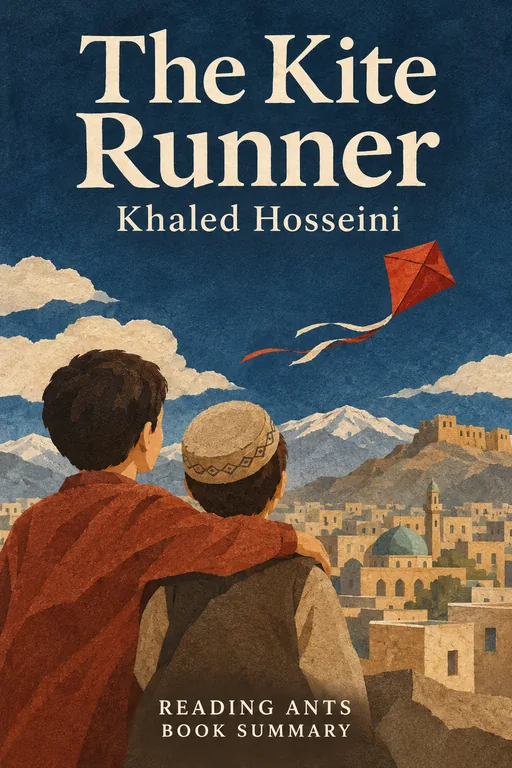
The Kite Runner
Khaled Hosseini
A wealthy boy in Kabul betrays his loyal best friend on the day of a kite tournament, and decades later, after fleeing to America, he returns to a Taliban-ruled Afghanistan to try to make things right.
✨ Modern FictionWant something different?
Pick another topic and we will show you three books to start with.