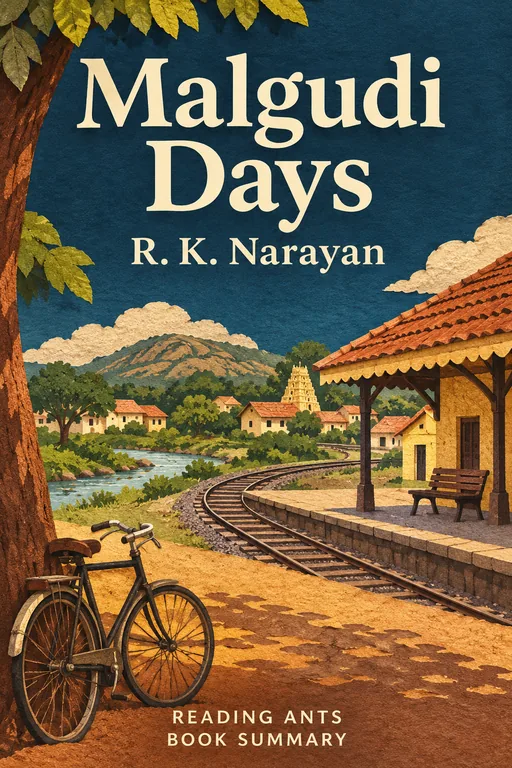
Malgudi Days
A collection of gentle, funny stories about the ordinary people of the imaginary South Indian town of Malgudi, with their hopes, tricks and small tragedies.
Overview
Malgudi Days is a collection of short stories by the Indian writer R. K. Narayan, first published in 1943, and expanded in later editions, so that the contents of a modern edition may differ from the original. All of the stories take place in Malgudi, an imaginary small town in South India, which Narayan used as the setting for most of his novels. The town has a river, a railway station, a market, a post office and a school. The stories are about small events and everyday people, told with a light touch, humor and warmth. A television series based on the stories made them well known in India.
Main Characters
- Swami: a lively, mischievous schoolboy, the best-known child of Narayan’s Malgudi.
- The astrologer: a man who earns his living by telling fortunes, and who has a past that he hides.
- The astrologer’s customer: a stranger from the astrologer’s past.
- Townspeople: shopkeepers, clerks, teachers and farmers, who make up the world of Malgudi.
Full Summary
The Town of Malgudi
Narayan’s stories give us a picture of a town in the early twentieth century, when India was still ruled by the British. The people are Hindu, Muslim and Christian, rich and poor, and they live side by side. The town has a market square, a river called the Sarayu, and a main road with a statue of an English official.
The stories are not about great events, but about the small ups and downs of ordinary life: a boy trying to avoid his homework, a clerk who wants a promotion, a man who has a strange idea. Narayan looks at them with affection and a gentle sense of humor.
An Astrologer’s Day
In one of the best-known stories, an astrologer sets up his stall every day under a tree, with his shells, charts and a few props. He is not a real astrologer: he has no special gift, but he is clever, and he knows how to read people. One evening, a man comes to ask him a question, and the astrologer realizes that he is someone from his past.
In his youth, he had left his village after a fight, in which he believed that he had killed a man. The customer turns out to be that man, who had survived. The customer, whose name is Guru Nayak, does not recognize the astrologer, who calms him by falsely telling him that the man who attacked him is dead, and that he can stop searching. The astrologer then goes home to his wife, and tells her that he is relieved, because the man he thought he had killed is alive.
Letters and Waiting
Several stories deal with the small world of the post office and its customers, and with the way that people in a small town are connected. A letter that does or does not arrive can matter a great deal to the one who waits for it. The tone is humorous, and there is also sadness underneath it.
Boys of Malgudi
Children appear throughout Narayan’s Malgudi, and the best known of them is Swami, a schoolboy who is bright, but who hates school and is scared of his teachers. Swami is the hero of Narayan’s first novel, Swami and Friends, and he is closely linked to the television version of the stories. In such tales, children get into mischief, form clubs and try to escape their lessons, and the writing shows how children see the world, with its rules and its unfairness.
Narayan is very good at capturing a child’s point of view. The stories are funny, but they also show the pressure placed on children by a strict system of education.
A Changing World
Some stories deal with the changes brought by independence and modernization. In “Lawley Road,” the town council decides to rename a road named after an English official, and a statue of him is removed, which causes great confusion and argument over who he was and what the statue is worth.
These stories poke fun at bureaucracy, politics and the clash between old and new.
Small Lessons
Other stories show the quiet drama of human nature. Shopkeepers, clerks, teachers and farmers are all objects of Narayan’s interest. Many of the stories end with a twist or a gentle irony, and not a moral.
The collection ends with a sense of the endless variety of life in an ordinary place.
Why It Matters
R. K. Narayan was one of the first Indian writers in English to be admired around the world, and he is regarded as one of the founders of Indian literature in English. His friend, the English novelist Graham Greene, helped to get his first novel published. Malgudi has become one of the best-known imaginary places in literature, often compared to William Faulkner’s Yoknapatawpha or Thomas Hardy’s Wessex. The stories have been read by generations of schoolchildren in India and elsewhere. A television series made in the 1980s, with the actor and director Shankar Nag, gave the town a face and a theme tune that many Indians still remember, and brought the stories to people who had never opened the book. Narayan’s plain English and gentle comedy are still held up as a model for writers.
Key Takeaways
- Ordinary life is rich. Small moments carry humor and meaning.
- People are more than they seem. Everyone has a past and a secret.
- Change comes slowly. Tradition and modernity live side by side.
- Humor helps us to bear life. Narayan’s gentle jokes soften the sadness.
- Place shapes people. The town is a character in itself.
What We Can Learn
The stories remind us to pay attention to the ordinary, since that is where most of life happens. They also teach us to see other people with kindness, and to remember that everyone has hopes and fears.
They show the value of humor in difficult moments, and that we can laugh at ourselves. Finally, they encourage us to value our own communities, and to find stories in the places where we live. If you try writing about your own street, school or neighbors, as Narayan did about Malgudi, you may find that ordinary people are more interesting than they seem.
Criticism and Counterpoints
Some critics say that Narayan avoids the bigger political and social problems of India, such as caste and poverty, and that his picture of life is too gentle. Others find his style simple and the plots slight. The female characters are often seen from a male point of view. Some readers also think that the stories lack variety, with a similar tone throughout. Still, the simplicity is also a major reason for his popularity.
Who Should Read It
This book is for readers aged ten and up, who enjoy gentle, humorous stories about daily life. The stories are short, so it is easy to read a little at a time. It is a good introduction to Indian literature in English.
Want the whole book?
A summary is a taste, not the meal. Here is where to find the full book.
You reached the end 🎉
Nicely done. Mark this one as read, and we will suggest what to read next.
Read this next
The God of Small Things
Arundhati Roy
In Kerala, India, a pair of twins grows up in a divided family where a forbidden love across caste lines leads to a tragedy that haunts them for the rest of their lives.
✨ Modern Fiction
Midnight's Children
Salman Rushdie
Born at the exact moment India became independent, a boy named Saleem Sinai discovers that his life is mysteriously linked to the nation's history, and tells his story as a wild mix of family saga, politics and magic.
✨ Modern Fiction
The White Tiger
Aravind Adiga
Balram Halwai, the son of a poor rickshaw puller, escapes his fate as a servant by murdering his master and becoming a successful entrepreneur, and tells his story in one long letter, written over seven nights, to the Chinese premier.
✨ Modern Fiction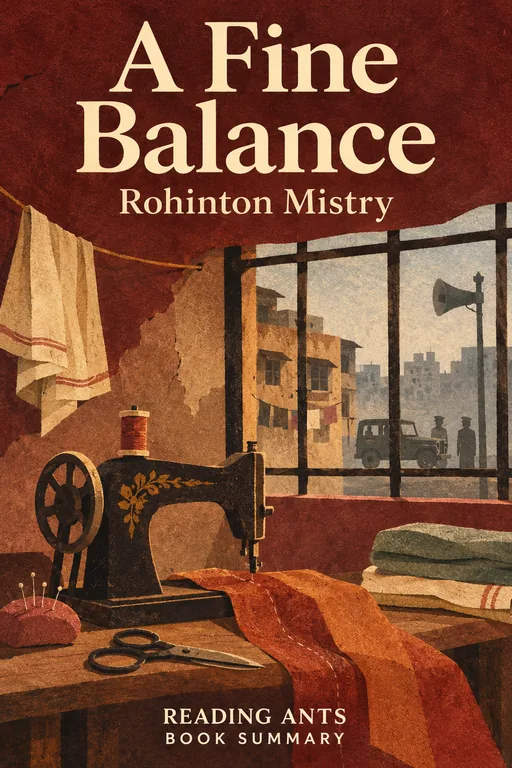
A Fine Balance
Rohinton Mistry
Four people from different backgrounds share a small apartment in India during the Emergency of 1975, and their friendship is tested by poverty, politics and cruelty.
🌍 World Literature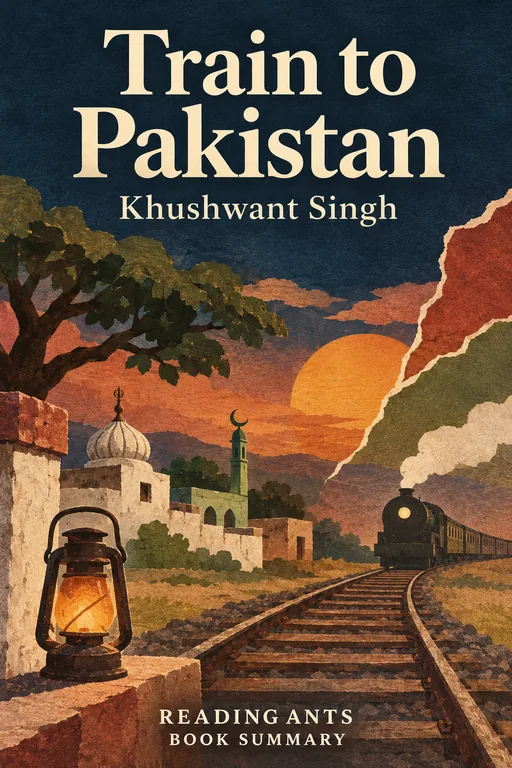
Train to Pakistan
Khushwant Singh
In a small border village in the summer of 1947, as India is divided, neighbors who have lived in peace for generations are pushed toward violence, and one man makes a choice that decides the fate of a train.
🌍 World Literature
The Little Prince
Antoine de Saint-Exupery
A pilot stranded in the desert meets a small boy from a tiny planet, who teaches him that the most important things in life, like love and friendship, can only be seen with the heart.
🌍 World LiteratureWant something different?
Pick another topic and we will show you three books to start with.