 Reading Ants
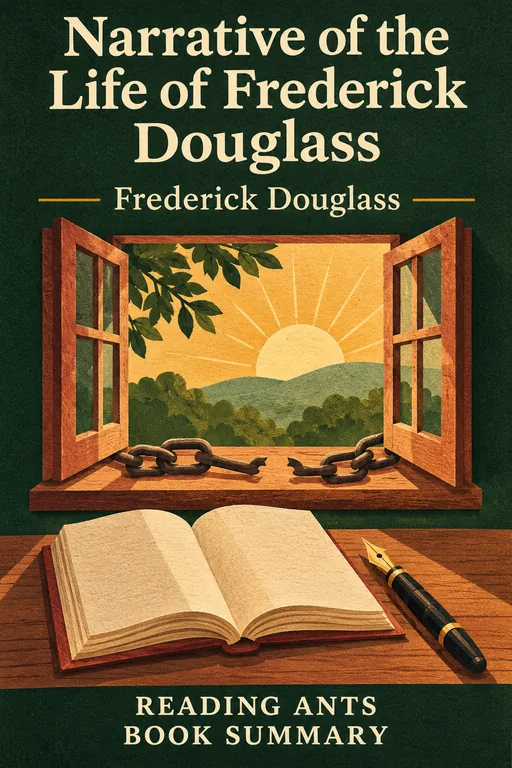
Narrative of the Life of Frederick Douglass
Frederick Douglass tells how he was born into slavery, taught himself to read, resisted a brutal master and escaped to freedom, showing that literacy and courage are weapons against injustice.
Overview
Narrative of the Life of Frederick Douglass, an American Slave was published in 1845 by Frederick Douglass, a man who had escaped from slavery in Maryland in 1838 and had become an abolitionist speaker. He wrote the book himself, which was important because many doubted that a formerly enslaved person could write so well. It describes his childhood and youth in Maryland, the cruelty he saw and suffered, and his path to freedom. It became a bestseller and one of the most influential of the slave narratives, helping to turn public opinion against slavery in the United States and abroad.
Full Summary
1. Birth and the cruelty of slavery
Douglass was born around 1818 in Talbot County, Maryland, and does not know his exact birth date, as slaveholders often kept enslaved people from knowing such details. He was separated from his mother when he was an infant and saw her only a few times before she died. He believes his father was a white man, possibly his master. As a child, he witnesses the whipping of his Aunt Hester, which he calls his first awareness of the horror of slavery. He also describes how slavery was made to seem normal, and how enslaved people were taught to sing and appear contented.
2. Baltimore and the road to literacy
At about eight, Douglass is sent to Baltimore to live with the family of Hugh Auld. Sophia Auld, his new mistress, begins teaching him the alphabet, but her husband forbids it, saying that learning would make a slave unfit to be a slave. Douglass realizes at that moment that reading is the path from slavery to freedom. He keeps learning in secret, tricking white boys in the street into teaching him, and buying a book called The Columbian Orator, which includes speeches about liberty. With reading comes pain: he understands the injustice more deeply.
3. Return to the countryside and Covey
After the death of his old master, Captain Anthony, and the division of the estate, Douglass returns to Baltimore for a time. Some years later, after a quarrel between the brothers Hugh and Thomas Auld, Thomas takes him to St. Michael’s in the countryside, finds him unsuitable and hires him out to Edward Covey, a farmer known as a “slave breaker” for his harsh methods. Covey works and whips him so much that Douglass feels broken in body and spirit. After a particularly harsh day, Douglass fights back and defeats Covey in a two-hour struggle, and Covey never lays a hand on him again. Douglass describes this as the turning point of his life, when he was reborn in spirit and resolved to be free.
4. Religion and hypocrisy
Throughout the book, Douglass criticizes the hypocrisy of slaveholders who claimed to be Christian. He observes that some of the cruelest masters were religious and used the Bible to justify slavery. In an appendix, he distinguishes between “the Christianity of Christ,” which he respects, and “the Christianity of this land,” which he condemns as corrupt. This part of the book is among its most powerful, and it led some critics to attack him.
5. Plans for escape
Douglass attempts to escape with a group of friends, but the plan is discovered, and they are arrested. He is eventually sent back to Baltimore, where he works as a caulker in the shipyards and earns wages that he must give to his master. He becomes increasingly eager to seek freedom. In 1838, he escapes to the North and reaches New York. He deliberately gives few details about his escape to protect others still using such routes.
6. Freedom and a new name
In New York, Douglass feels both joy and fear, and he is helped by an abolitionist, David Ruggles. His future wife, Anna Murray, a free Black woman, joins him, and they marry and move to New Bedford, Massachusetts. To avoid being caught, he changes his name from Frederick Bailey to Frederick Douglass. In New Bedford he finds work and sees that free Black people live better than he had imagined. He begins attending antislavery meetings, reading The Liberator, and one day is asked to speak at a meeting, which begins his career as an orator.
Why It Matters
Douglass’s Narrative was an immediate success and helped to turn many readers against slavery. It was widely read in the United States and in Britain, where Douglass later lectured, and it proved that a formerly enslaved man could be a gifted writer and thinker. Because he named people and places, he had to flee to Britain for a time for his safety.
The book is a cornerstone of American literature and history and is widely taught in schools. Douglass went on to become one of the most prominent Black leaders of the nineteenth century, an adviser to Abraham Lincoln and a lifelong fighter for equal rights.
Key Takeaways
- Literacy is liberation. Learning to read changed Douglass’s life.
- Slavery harms everyone. It corrupted masters as well as the enslaved.
- Resistance can transform. Fighting back restored his sense of self.
- Hypocrisy deserves exposure. He challenged religious excuses for cruelty.
- Telling your story has power. Personal testimony changed minds.
What We Can Learn
The book shows how much education matters. Douglass risked punishment to learn, and he saw that those who control access to knowledge hold power over others. It reminds us not to take our schooling for granted.
It also teaches the importance of standing up for oneself and for others. Douglass’s struggle with Covey was a decisive moment, and his later life was a long effort to help others gain freedom.
Finally, it encourages us to be honest about injustice and to look critically at those who excuse it. Douglass’s clear, direct writing is a model of how to speak the truth.
Criticism and Counterpoints
Some early readers doubted the authenticity of the book, since few believed that an escaped slave could write so well, which was why the book includes statements from white abolitionists vouching for it. Later, historians have checked many of the details and found them accurate. Douglass himself revised his story in later autobiographies, adding details that he had omitted for safety.
Some modern readers note that the book is brief and reveals little about his inner life or the practical details of his escape, and that its style reflects nineteenth-century rhetoric. Others point out that the narrative focuses on his own experience and does not cover the many people who remained enslaved. Even so, it is considered a landmark.
Who Should Read It
This book suits teenagers and adults and is short enough to read in a few sittings. It includes scenes of violence and cruelty. It is a good starting point for studying American history and the fight against slavery.
Want the whole book?
A summary is a taste, not the meal. Here is where to find the full book.
You reached the end 🎉
Nicely done. Mark this one as read, and we will suggest what to read next.
Read this next
Twelve Years a Slave
Solomon Northup
Solomon Northup, a free Black man from New York, tells how he was kidnapped in 1841, sold into slavery in Louisiana and kept there for twelve years until he was rescued and returned to his family.
👤 Real Lives
The Autobiography of Malcolm X
Malcolm X and Alex Haley
Malcolm X tells, with the help of the writer Alex Haley, how he moved from a troubled childhood and a life of crime to leadership in the Nation of Islam, and then to a broader view of race and faith before his death.
👤 Real Lives
Uncle Tom's Cabin
Harriet Beecher Stowe
A devout, gentle enslaved man named Tom is sold from owner to owner and finally dies at the hands of a brutal master, while other enslaved people try to escape, in a novel that shocked America into facing the cruelty of slavery.
📜 Classics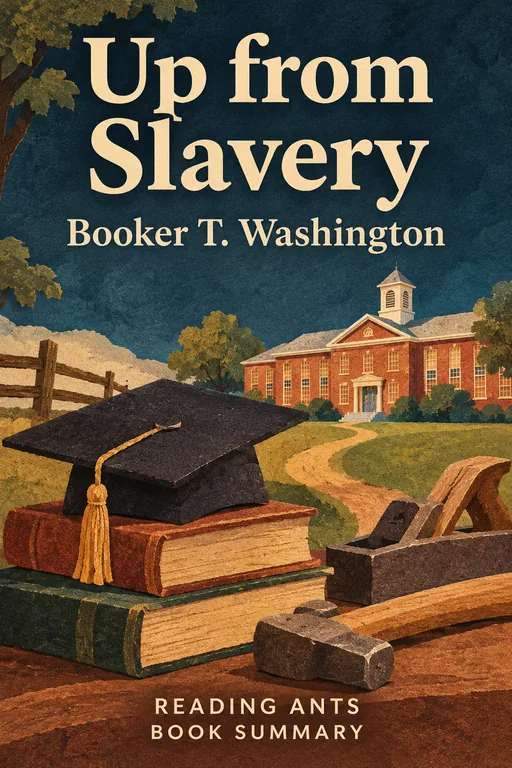
Up from Slavery
Booker T. Washington
Booker T. Washington tells how he rose from an enslaved childhood in Virginia to found the Tuskegee Institute in Alabama, and explains his belief that education, hard work and practical skills offered the best path to progress for Black Americans.
👤 Real Lives
Man's Search for Meaning
Viktor E. Frankl
A psychiatrist who survived the Nazi concentration camps explains that even in the worst suffering, people can choose their attitude, and that finding a reason to live is what gives us the strength to endure.
👤 Real Lives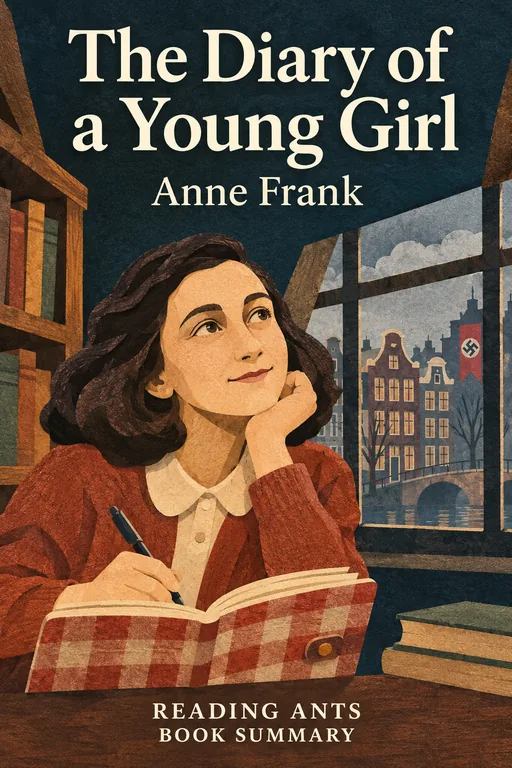
The Diary of a Young Girl
Anne Frank
A Jewish teenage girl hiding from the Nazis in a secret apartment in Amsterdam records two years of fear, family quarrels, first love and big dreams in a diary that became one of the most famous books in the world.
👤 Real LivesWant something different?
Pick another topic and we will show you three books to start with.