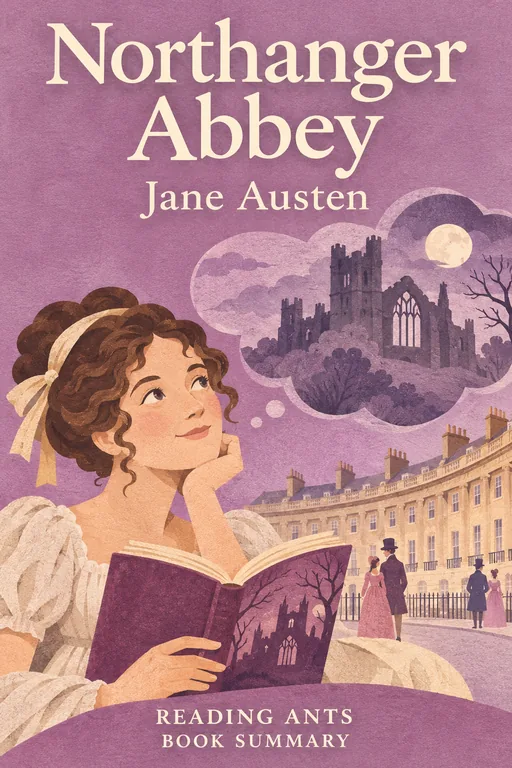
A young woman who loves Gothic horror novels goes to Bath and then to a mysterious old abbey, where her overactive imagination leads her into embarrassing mistakes, and she learns to tell fiction from real life.
Overview
Northanger Abbey is a novel by Jane Austen, written in the late 1790s, revised later, but published only in 1817, after her death, together with Persuasion. It is a comic and affectionate parody of the Gothic novels that were popular in her time, such as those of Ann Radcliffe, with their haunted castles and villains. Its heroine, Catherine Morland, is an ordinary, good-natured girl, and the book follows her first experiences of society, friendship and love. It is light and funny, and it also contains serious thoughts about novels and about honesty.
Main Characters
- Catherine Morland: a seventeen-year-old clergyman’s daughter, innocent, curious and fond of Gothic novels.
- Henry Tilney: a witty, kind and clever young clergyman, who becomes Catherine’s friend.
- Eleanor Tilney: Henry’s gentle and sensible sister.
- General Tilney: their father, a stern, domineering man who is obsessed with wealth.
- Isabella Thorpe: a flirtatious and self-seeking friend of Catherine.
- John Thorpe: Isabella’s brother, a boastful and rude young man.
- James Morland: Catherine’s brother, who is attracted to Isabella.
Full Summary
Catherine goes to Bath
Catherine Morland is a lively, unexceptional girl, who is invited to spend several weeks in Bath with her neighbors, Mr. and Mrs. Allen. In the fashionable city, she knows no one at first, and she feels lonely. She meets Henry Tilney, a charming young clergyman, who dances with her and teases her, and she is delighted. She also becomes friends with Isabella Thorpe, who shares her love of Gothic novels, such as The Mysteries of Udolpho, and the two girls discuss their favorites with enthusiasm.
False friends
Isabella’s brother John Thorpe, a vain man, pays Catherine unwanted attention, boasts constantly, and keeps pressing her to join outings, even when she has already promised to walk with the Tilneys. Catherine’s brother James arrives, and he and Isabella become engaged. Isabella flirts openly with Captain Tilney, Henry’s older brother, and breaks her promise to James. Catherine sees through her, and she is hurt by Isabella’s dishonesty. In addition, John Thorpe boasts to General Tilney that Catherine’s family is wealthy and that she will inherit from the Allens, a lie that will have consequences later.
An invitation to the abbey
General Tilney, who has been told that Catherine is an heiress, invites her to stay at Northanger Abbey, his family home. Catherine is thrilled, imagining a gloomy building with secret passages and dark mysteries, like those in her favorite books. She travels there with the Tilneys, and on part of the journey Henry drives her in his light open carriage and teases her by describing the sort of horrors that she might find. When she arrives, she is disappointed to find that the abbey is modern and comfortable, though she still hopes for adventure.
Gothic imaginings
Catherine’s imagination runs wild. She finds a large old chest in her bedroom and, thinking it holds a secret, forces it open, only to find a folded cotton bedspread. On a stormy night she finds a roll of papers in an old cabinet, and in the morning it turns out to be a laundry list. Worst of all, she begins to suspect that General Tilney murdered or imprisoned his wife, who died some years earlier, because he seems cold and gloomy. She tries to investigate the dead woman’s room.
Henry’s rebuke
Henry meets Catherine just as she slips out of the late Mrs. Tilney’s room, which turns out to be perfectly ordinary, and he realizes what she has been thinking. He gently but firmly reproves her, reminding her that she lives in a country of law, of newspapers and neighbors, where such horrors are unlikely. Catherine is mortified, and she sees how foolish she has been. She resolves to be more sensible and to judge people by their real behavior. Henry forgives her, and he is touched by her honesty. They draw closer.
Disgrace and happy ending
General Tilney, who has since heard from an angry John Thorpe, after Catherine has refused him, that her family is poor, becomes furious, and abruptly sends her home alone, with little explanation, in a hired post-chaise. Catherine is humiliated, but Henry follows her, and, defying his father, proposes. Her parents say that they will not allow the marriage without the General’s consent. After a time, when his daughter Eleanor makes a very good marriage and he learns that Catherine’s family is respectable and she will have a portion of her own, he gives his consent, and they marry. The general’s real faults were greed and pride, which proved to be a different kind of villainy.
Why It Matters
Northanger Abbey is an early example of a novel that is about reading novels, and a humorous defense of fiction itself, in a period when many people looked down on it. It is famous for gently mocking the clichés of Gothic literature, while showing that real life can contain a quieter kind of villainy, as in General Tilney’s greed. The book provides a lively picture of Bath society, and of friendships and flirtations among young people. It has been adapted for television and film, and it is a favorite among Austen readers who enjoy her wit.
Key Takeaways
- Imagination needs judgment. Catherine’s fantasies lead her astray.
- Real villains are ordinary. The General is greedy, not a murderer.
- True friends are honest. Isabella’s flattery hides selfishness.
- Reading is a pleasure, not a danger. The book defends novels.
- Good character matters more than money. Henry loves Catherine for who she is.
What We Can Learn
You can enjoy stories without confusing them with real life, and you can learn from Catherine to check your suspicions against evidence before accusing anyone. The novel shows that flattery is not the same as friendship, and that people who are always praising you may have other motives. It also reminds us that money and status are poor measures of a person. Try noticing which characters in a story are honest, and which are only charming, and see whether that helps you to judge people in life.
Criticism and Counterpoints
Some readers feel that the novel is uneven, with a delightful first half in Bath but a slower, more rushed second half, and that the parody of Gothic fiction is too long for those who have not read the books it mocks. Others find that the heroine is naive, and that the speed of the final reconciliation is unconvincing. A few critics point out that Austen’s own revisions were incomplete, since she did not publish it herself. However, the wit of the narrator, and the sympathy with which she treats Catherine, remain admired.
Who Should Read It
This book is for readers from about twelve who enjoy comedy and classic novels, and for those who like to read about reading. It is a good, short place to start with Austen. Readers who know a little about Gothic novels will enjoy the jokes more, but it is not necessary.
Want the whole book?
A summary is a taste, not the meal. Here is where to find the full book.
You reached the end 🎉
Nicely done. Mark this one as read, and we will suggest what to read next.
Read this next
Pride and Prejudice
Jane Austen
Quick-witted Elizabeth Bennet and the proud, wealthy Mr. Darcy badly misjudge each other, and only by facing their own faults do they find their way to love.
📜 Classics
Persuasion
Jane Austen
Eight years after being persuaded to break her engagement to a poor naval officer, Anne Elliot meets him again, now rich and successful, and must find out whether their love can be won a second time.
📜 Classics
Emma
Jane Austen
A clever, rich and rather spoiled young woman named Emma Woodhouse believes she is a gifted matchmaker, makes a series of embarrassing mistakes and finally learns to see herself and her own heart clearly.
📜 Classics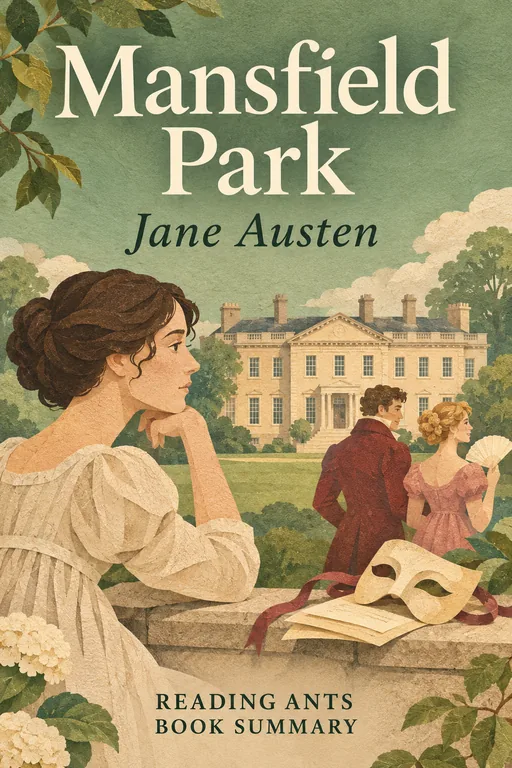
Mansfield Park
Jane Austen
A shy, poor girl raised among her wealthy relatives at Mansfield Park holds to her principles while charming newcomers disturb the household, and in the end her quiet integrity is shown to be right.
📜 Classics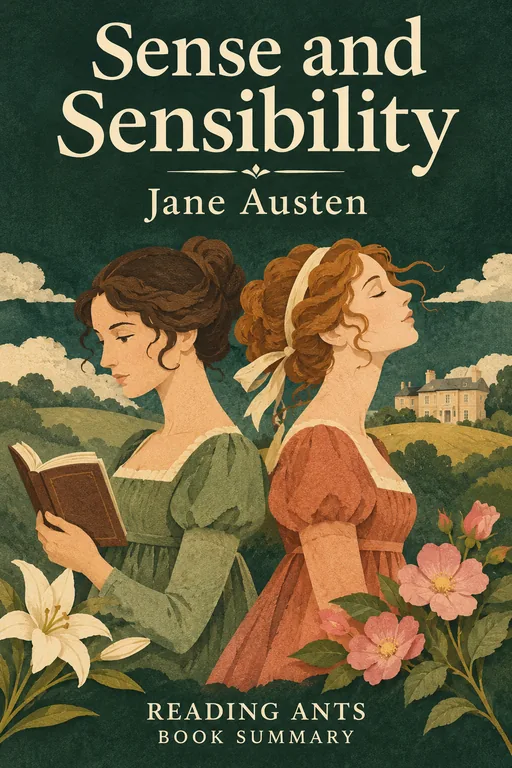
Sense and Sensibility
Jane Austen
Two sisters, one sensible and reserved and one passionate and romantic, face heartbreak and the limits placed on women without money in Regency England, and learn from each other.
📜 Classics
Nineteen Eighty-Four
George Orwell
In a future Britain ruled by an all-seeing Party, one man secretly rebels by keeping a diary and falling in love, and discovers just how completely a totalitarian state can crush the human mind.
📜 ClassicsWant something different?
Pick another topic and we will show you three books to start with.