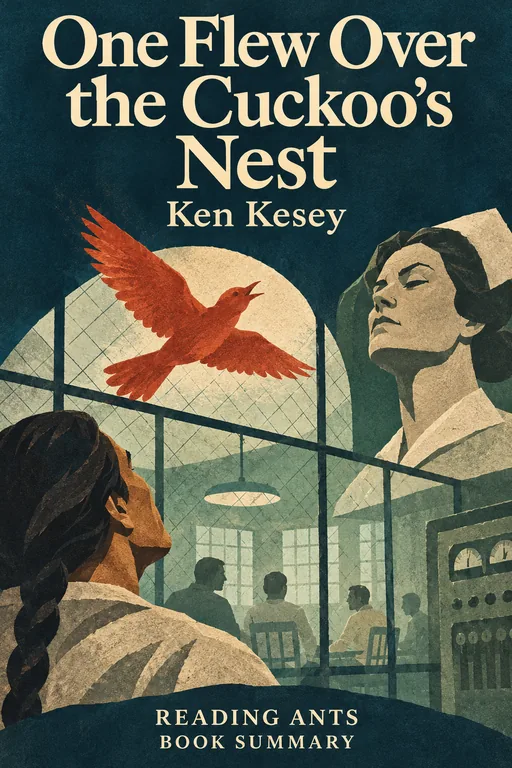
One Flew Over the Cuckoo's Nest
A rebellious con man named McMurphy fakes insanity to escape prison work, and his clash with the controlling Nurse Ratched transforms the lives of the patients, as seen by a silent patient, Chief Bromden.
Overview
One Flew Over the Cuckoo’s Nest is a novel by Ken Kesey, published in 1962. Kesey worked nights as an aide in a psychiatric ward in California, and took part in drug experiments, which gave him a background for the story. It is narrated by Chief Bromden, a huge Native American man who pretends to be deaf and mute and who sees the hospital as a machine, the “Combine,” that controls people. The novel is a satire about conformity, authority and freedom, and it was a landmark of the counterculture of the 1960s. It was adapted into the Oscar-winning 1975 film starring Jack Nicholson.
Main Characters
- Chief Bromden: the narrator, a patient who is believed to be deaf and mute but who observes everything.
- Randle Patrick McMurphy: a boisterous, charming con man who is transferred from a prison farm.
- Nurse Ratched: the cold, controlling head nurse of the ward, who uses subtle power.
- Billy Bibbit: a shy, stuttering young patient who is dominated by his mother.
- Dale Harding: an educated, anxious patient who becomes McMurphy’s friend.
- Cheswick, Martini and Scanlon: other patients on the ward.
- The doctor: a weak supervising physician who defers to Ratched.
Full Summary
The Ward
Chief Bromden, who has been in the hospital for years, tells the story from his perspective. He believes that the ward is controlled by the Combine, a vast machine that molds people into what society wants, and that Nurse Ratched is its agent, who maintains order by calm, soft control. The patients follow strict routines, take their medications and attend group therapy, where Ratched encourages them to expose each other’s weaknesses. They are afraid, and docile.
McMurphy Arrives
Randle McMurphy is transferred from a work farm, where he has been serving a sentence for assault. He fakes mental illness to take advantage of an easier life, and expects to enjoy it. He quickly sees that the ward is oppressive, and he starts to challenge Ratched, to make the men laugh and to organize games of cards. He bets that he can make Ratched lose her temper. He insists that the men be allowed to watch the World Series on television, and when she refuses, he sits in front of the blank screen and describes an imaginary game.
The patients have never seen anyone like him. He laughs loudly, tells jokes, and treats the staff as equals, and the men, who have learned to be quiet, are both frightened and delighted. Chief notices that McMurphy seems to grow larger every time he stands up to Ratched, while the nurse, in her starched white uniform, never loses her calm.
A Spirit of Rebellion
McMurphy’s confidence starts to change the patients. Harding, Cheswick and others begin to speak up, and the patients vote about having their schedule changed. Chief begins to speak, first to McMurphy, and reveals that he can talk. McMurphy then learns that Nurse Ratched, not a court, controls how long he will be kept, and he holds himself back for a time; after Cheswick, who had counted on him, drowns in the pool, he returns to open resistance. He takes the men on a fishing trip, which the doctor permits and which restores their confidence. Ratched fights back with small acts of control, and punishes those who disobey.
The fishing trip, in which McMurphy takes a group of patients out on a chartered boat, with his woman friend Candy coming along, is a high point. For one day, the men feel like ordinary people. They catch fish, tell stories and are treated as customers, not patients. Billy Bibbit is proud, and Chief, for the first time in years, feels that he is real and strong.
Learning the Truth
McMurphy discovers that most of the patients are not committed at all, and could leave whenever they wanted, though they stay out of fear. After a fight with the ward aides, in which Chief joins him, both men are sent for electroshock treatment, but McMurphy returns jovial. He grows more aware that his rebellion has consequences.
The Party and the Tragedy
Shortly before he is to escape, McMurphy arranges a party on the ward, smuggling in alcohol and two women. The patients have a joyous time, and Billy Bibbit spends the night with one of them. In the morning, Nurse Ratched finds out and threatens to tell Billy’s mother. Terrified, Billy takes his own life. McMurphy, enraged, tries to strangle Ratched, tearing her uniform.
The Escape
As punishment, McMurphy is given a lobotomy, and he returns a vegetable-like shell of himself. Chief, seeing that McMurphy would not want to live like this, smothers him with a pillow. Then, using a hydraulic control panel that McMurphy had once tried to lift, Chief breaks a window and escapes into the night, heading for freedom. Others, inspired by McMurphy, leave the hospital as well; some had already left after Ratched’s loss of power.
Why It Matters
One Flew Over the Cuckoo’s Nest was an important book for the 1960s counterculture and for the movement to reform psychiatric institutions. It contributed to public debate about the treatment of the mentally ill and the use of lobotomy and electroshock, and helped to encourage deinstitutionalization. The 1975 film won five major Academy Awards, including Best Picture, and is regarded as a classic.
The book is also regarded as a major work of American fiction about individualism and the threat of conformity. Its characters, particularly McMurphy and Nurse Ratched, have become cultural archetypes.
Key Takeaways
- Authority can be oppressive. Ratched controls through gentle but firm power.
- Laughter and spirit are acts of resistance. McMurphy brings joy.
- Fear keeps people in place. Many patients are free to leave but do not.
- Individuals can inspire others. McMurphy changes the ward.
- Freedom has a price. His rebellion costs him his life.
What We Can Learn
The novel invites us to think about how institutions treat the vulnerable. It encourages us to ask whether rules and routines serve people or only the system.
It also shows the power of humor and friendship to restore dignity. McMurphy’s presence helps the patients see themselves as men, not as cases.
Finally, it asks what we are afraid of, and what we might do if we were not. The patients’ fear, not locked doors, is what keeps most of them where they are.
Criticism and Counterpoints
Many critics have said that the book is unfair to women, since Nurse Ratched is depicted as a cruel, castrating figure, and many female characters are either villains or prostitutes. Kesey’s portrayal of mental illness has also been criticized as romanticizing it, and as presenting the ward as an unrealistic or one-sided picture of psychiatry. Some mental health professionals argue that the book contributed to stigma or fear of treatment.
Others say that the Native American character is a stereotype in some ways, and that the idea of the sane rebel and the oppressive system is too simple. Still, the novel is regarded as a classic.
Who Should Read It
This book suits mature readers. It contains strong language, violence, a suicide and a lobotomy. It raises questions about mental health care, so it is best read with context about how treatment has changed.
Want the whole book?
A summary is a taste, not the meal. Here is where to find the full book.
You reached the end 🎉
Nicely done. Mark this one as read, and we will suggest what to read next.
Read this next

The Bell Jar
Sylvia Plath
A talented young woman named Esther Greenwood, who seems to be on the path to success in 1950s America, sinks into depression and a suicide attempt, and slowly begins to recover.
📜 Classics
Catch-22
Joseph Heller
A bombardier named Yossarian tries to survive World War II by pretending to be crazy, but he is trapped by a military rule, Catch-22, that makes every escape impossible.
📜 Classics
Slaughterhouse-Five
Kurt Vonnegut
Billy Pilgrim, a World War II soldier who survived the firebombing of Dresden, becomes "unstuck in time," bouncing between his past, present and future, and finds meaning in the idea that all moments exist forever.
📜 Classics
Fahrenheit 451
Ray Bradbury
In a future America where books are illegal and firemen start fires instead of putting them out, one fireman begins to read the books he is supposed to burn, and discovers what his society has lost.
🚀 Sci-Fi & Fantasy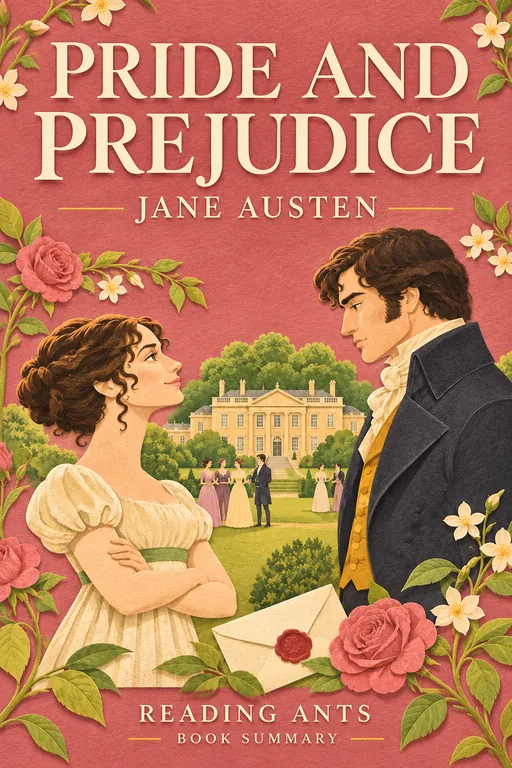
Pride and Prejudice
Jane Austen
Quick-witted Elizabeth Bennet and the proud, wealthy Mr. Darcy badly misjudge each other, and only by facing their own faults do they find their way to love.
📜 Classics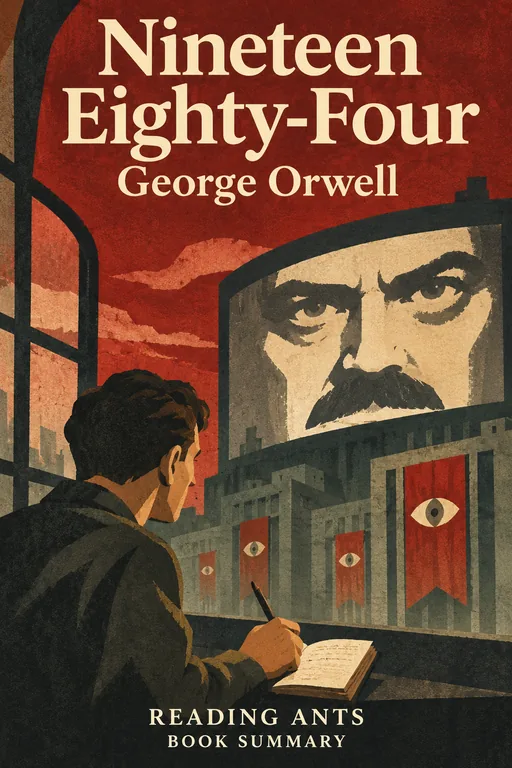
Nineteen Eighty-Four
George Orwell
In a future Britain ruled by an all-seeing Party, one man secretly rebels by keeping a diary and falling in love, and discovers just how completely a totalitarian state can crush the human mind.
📜 ClassicsWant something different?
Pick another topic and we will show you three books to start with.