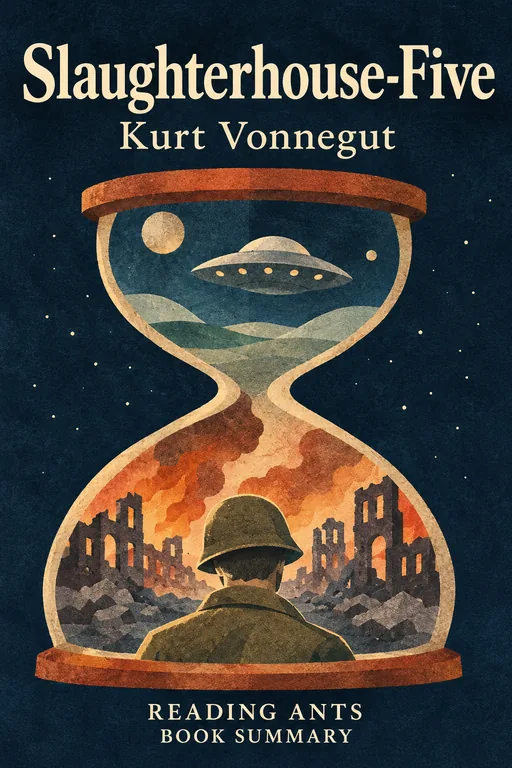
Slaughterhouse-Five
Billy Pilgrim, a World War II soldier who survived the firebombing of Dresden, becomes "unstuck in time," bouncing between his past, present and future, and finds meaning in the idea that all moments exist forever.
Overview
Slaughterhouse-Five; or, The Children’s Crusade is a novel by Kurt Vonnegut, published in 1969. Vonnegut was an American prisoner of war in Dresden, Germany, in February 1945, when Allied bombers destroyed the city, killing tens of thousands of civilians. He survived by being held in an underground meat locker called Slaughterhouse Five. It took him over twenty years to write about the experience. The novel has an unusual structure: the first chapter is the author’s own story, and the rest follows Billy Pilgrim, who travels through time and is abducted by aliens. It is both a comic fantasy and a serious book about the horror and absurdity of war.
Main Characters
- Billy Pilgrim: a quiet, unremarkable American soldier and optometrist, who experiences time out of order.
- Kurt Vonnegut: the narrator in the opening and closing chapters, who appears briefly as a fellow soldier.
- Edgar Derby: an older American POW who is a schoolteacher.
- Roland Weary: a cruel young soldier who attaches himself to Billy.
- Valencia Merble: Billy’s wife.
- Montana Wildhack: a film star taken to the alien zoo.
- The Tralfamadorians: aliens who see time as a whole.
- Kilgore Trout: a failed science fiction writer whom Billy admires.
Full Summary
The Author’s Prelude
In the first chapter, Vonnegut explains how he has wanted to write about Dresden for years but could not find the words. He tells of talking to an old war friend, Bernard V. O’Hare, whose wife is irritated that they are going to write a glorified war story, which will use boys as heroes. Vonnegut promises to call it “The Children’s Crusade,” and to portray the soldiers as babies. The book, he says, is short and jumbled, because there is nothing intelligent to say about a massacre.
Unstuck in Time
Billy Pilgrim has no control over time: he jumps from one moment of his life to another, from childhood to old age, and relives his wartime experiences, his marriage, and his later years. He announces that he has been kidnapped by aliens from the planet Tralfamadore, who keep him in a zoo, together with Montana Wildhack, a movie star, and who teach him that time is not a line but a landscape, and that all moments exist forever. Whenever someone dies, the narrator repeats the refrain “So it goes,” which he presents as the Tralfamadorian way of shrugging at death.
The War
In World War II, Billy is an American infantry soldier, a chaplain’s assistant, who is lost behind enemy lines during the Battle of the Bulge. He is captured by the Germans, and moved by train with other prisoners. A vicious fellow soldier, Roland Weary, who despises Billy and bullies him, is captured with him and later dies of gangrenous wounds from wooden clogs. The prisoners are taken to Dresden, where they are put to work in a malt-syrup factory, and are quartered in a slaughterhouse. There is little food, and the Germans are also exhausted.
The Bombing of Dresden
On the night of February 13, 1945, British and American planes drop bombs on Dresden, causing a firestorm. Billy and the prisoners are safe underground in the meat locker, and when they emerge, the city is a moonscape of ashes and ruins. They are made to dig out corpses and burn them. The horror is described in simple, plain words, with an emphasis on the lack of meaning. Edgar Derby is later shot for taking a teapot from the ruins, an execution that Vonnegut presents as absurd. (The novel repeats a very high estimate of the Dresden death toll, a figure that later historians have revised downward.)
After the War
After the war, Billy returns to the United States, marries Valencia, the daughter of a wealthy optometrist, and becomes a successful optometrist himself. He seems to have an ordinary life, but he is troubled. He survives a plane crash in Vermont, in which only he and the copilot live, and then his wife, rushing to see him, has a minor car accident and dies of carbon monoxide poisoning from her damaged exhaust. He begins to tell people about the Tralfamadorians, and is thought to be mad.
The Ending
In the final chapters, we learn that Billy will be shot in 1976 by a killer arranged by Paul Lazzaro, a fellow prisoner who had sworn revenge for the death of Roland Weary, a death that Billy has foreseen and accepts. The book ends with Vonnegut’s own experience: after the war, he sees the aftermath, and hears a bird that says “Poo-tee-weet?” The closing lines suggest that there is nothing to be said in the face of death, except the sound of a bird.
Why It Matters
Slaughterhouse-Five is one of the most celebrated American anti-war novels. It made Vonnegut a literary star, and the phrase “So it goes” became widely known. It was adapted into a 1972 film directed by George Roy Hill. The novel is a landmark of postmodern fiction because of its mixture of science fiction, memoir and satire.
It has also been frequently challenged and banned in schools in the United States, for language and sexual content, which has increased its fame. In 1973, copies were even burned in a school furnace in Drake, North Dakota, an episode Vonnegut answered in public with a letter defending the freedom to read.
Key Takeaways
- War is senseless. The destruction of Dresden has no clear purpose.
- Time can be viewed as a whole. The Tralfamadorian view offers consolation.
- Trauma can fragment life. Billy’s time travel can be seen as a response to shock.
- Ordinary people suffer most. Soldiers and civilians are caught up.
- Humor and tragedy can coexist. Vonnegut uses comedy to face horror.
What We Can Learn
The novel suggests that some experiences cannot be explained or made sense of. Vonnegut’s simple, direct style shows that when something is truly horrible, plain words may be best.
It also invites us to think about how people cope with trauma. Billy’s time travel and his belief in the aliens can be read either as science fiction or as a way of surviving what he has seen.
Finally, it reminds us to treasure good moments, since they exist whether or not we remember them.
Criticism and Counterpoints
Some critics say that the book is simplistic or nihilistic, and that the Tralfamadorian philosophy, which treats all events as fixed, can be seen as an excuse for passivity. Others argue that its treatment of women is shallow, such as the fantasy of Montana Wildhack, and that its use of science fiction trivializes real suffering.
Others have criticized the way the book treats the bombing, since it has been argued that it ignores the responsibility of Nazi Germany. Because of its adult themes, it has been challenged in many school libraries. Still, it is considered a classic.
Who Should Read It
This book suits mature teenagers and adults. It is short and very readable, but it deals with war, death and trauma, and includes brief sexual content and strong language. It is a good book for discussion about war and memory.
Want the whole book?
A summary is a taste, not the meal. Here is where to find the full book.
You reached the end 🎉
Nicely done. Mark this one as read, and we will suggest what to read next.
Read this next
Catch-22
Joseph Heller
A bombardier named Yossarian tries to survive World War II by pretending to be crazy, but he is trapped by a military rule, Catch-22, that makes every escape impossible.
📜 Classics
All Quiet on the Western Front
Erich Maria Remarque
A young German soldier discovers that modern war destroys not only bodies but also the beliefs, relationships and futures of those forced to fight it.
🌍 World Literature
The Book Thief
Markus Zusak
Death narrates how a foster child in Nazi Germany steals books, learns the power of words and forms loving bonds that war eventually destroys.
🎒 Young Adult
Pride and Prejudice
Jane Austen
Quick-witted Elizabeth Bennet and the proud, wealthy Mr. Darcy badly misjudge each other, and only by facing their own faults do they find their way to love.
📜 Classics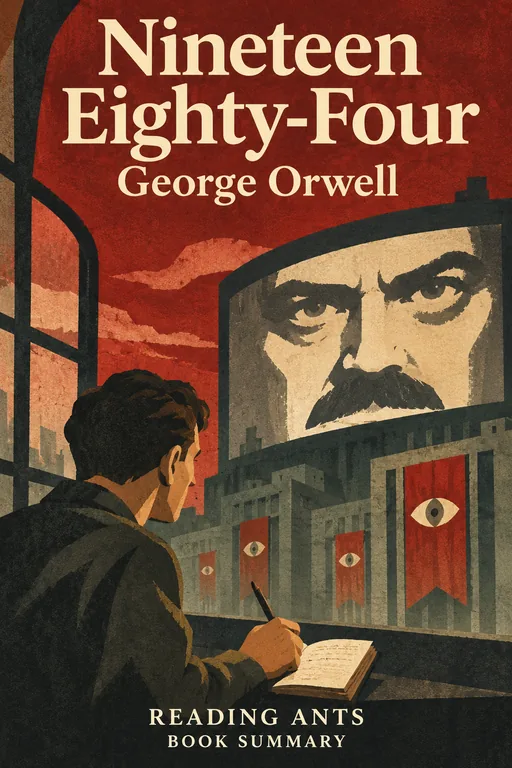
Nineteen Eighty-Four
George Orwell
In a future Britain ruled by an all-seeing Party, one man secretly rebels by keeping a diary and falling in love, and discovers just how completely a totalitarian state can crush the human mind.
📜 Classics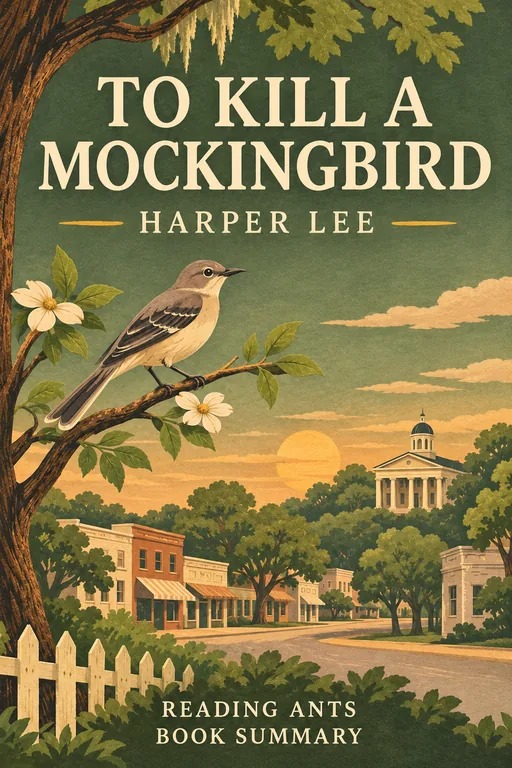
To Kill a Mockingbird
Harper Lee
In a small Alabama town in the 1930s, young Scout Finch watches her father, a lawyer, defend a Black man falsely accused of a crime, and learns hard lessons about prejudice, courage and seeing the world through other people's eyes.
📜 ClassicsWant something different?
Pick another topic and we will show you three books to start with.