Paradise Lost
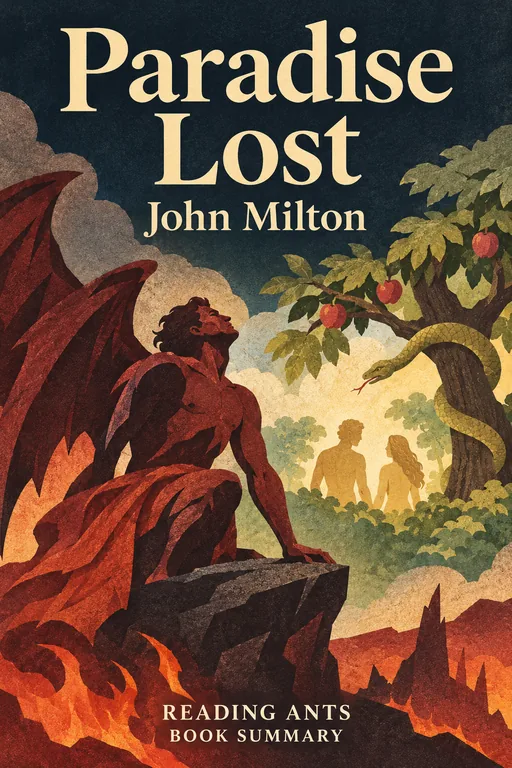
Milton's epic poem tells how Satan rebelled against God, was cast into hell, tempted Adam and Eve to disobey, and caused humanity's expulsion from the Garden of Eden.
Overview
Paradise Lost is an epic poem in blank verse by the English poet John Milton, first published in 1667 in ten books and revised in 1674 into twelve. Milton was blind when he composed it, and dictated it to helpers. He aimed to write an English epic on the scale of Homer and Virgil, and to explain and defend the ways of God to human beings, as he says in the opening lines. The poem retells the story of the Fall from the Book of Genesis, adding a great deal of invention about angels, the war in heaven and the character of Satan. It is considered one of the greatest poems in the English language, and a very difficult one.
Main Characters
- Satan: the fallen archangel, proud, brilliant and tormented, who leads the rebel angels.
- Adam: the first man, who loves Eve and wishes to be wise.
- Eve: the first woman, curious, intelligent and eager to learn.
- God the Father and the Son: who foresee the Fall and plan humanity’s redemption.
- The angels Raphael, Michael, Gabriel and Abdiel: heavenly messengers and warriors.
- Sin and Death: Satan’s daughter and their son, at the gates of hell.
- Beelzebub, Moloch and the fallen angels: Satan’s lieutenants.
Full Summary
Hell
The poem begins in medias res, with Satan and his followers lying stunned in a burning lake in hell, after they were defeated in a war against heaven. Satan, defiant, urges his followers to rise and says that it is better to reign in hell than to serve in heaven. They build a palace, Pandemonium, and hold a council. Some, like Moloch, call for open war, while others, like Belial and Mammon, prefer to avoid war and make the best of hell. Beelzebub then puts forward a plan, prearranged with Satan: to corrupt God’s new creation, humankind, and Satan volunteers to make the journey.
Milton gives the fallen angels memorable speeches. Satan, in particular, speaks with courage and charm, which is why many readers have found him the most vivid figure in the poem, though Milton shows that his defiance is rooted in pride and self-deception.
Satan’s Journey
Satan leaves hell, passing the gates guarded by Sin and Death, and crosses chaos to the new world. He disguises himself as a lesser angel to deceive Uriel, the guardian of the sun, and then reaches Eden. From a tree, he looks on Adam and Eve with a mixture of envy, pity and malice. He overhears that they are forbidden to eat the fruit of the Tree of Knowledge, and he decides to use that command to trap them.
Heaven and the War
In a scene that the poem places before Satan reaches Eden, God sees what will happen, and tells the Son that humans will fall because of free will, but that they could be redeemed. The Son offers to sacrifice himself for their sake. Later, after Satan has entered Eden, God sends the angel Raphael to warn Adam. At Adam’s request, Raphael tells the story of how Satan rebelled out of pride and led a third of the angels in a war, which was ended when the Son drove the rebels out of heaven. He also tells of the creation of the world in six days.
Adam and Eve
In Eden, Adam and Eve are happy, working in the garden and loving each other. Eve has a disturbing dream, planted by Satan, in which she eats the fruit. Soon afterward, Adam talks with Raphael about love, knowledge and astronomy, and is warned not to be too curious. Later, Eve and Adam argue about whether to work separately, and Eve, feeling confident, insists on going alone, which gives Satan his chance.
The Fall
Satan, in the form of a serpent, flatters Eve and tells her that the fruit will make her like the gods. She eats it, and takes the fruit to Adam. Adam, who realizes that she has fallen, chooses to eat too, since he cannot bear to lose her. Their innocence is gone: they feel shame, quarrel bitterly, and cover themselves. Satan returns to hell in triumph, but he and his followers are turned into serpents.
In their sorrow, Adam blames Eve, and Eve blames the serpent, and they begin to see the first signs of the discord that sin has brought. Yet at the end, they find themselves able to ask forgiveness, and to hope.
Expulsion and Hope
God sends Michael to drive them from Eden. First, however, Michael shows Adam a vision of the future, including the flood and the story of humanity’s suffering, but also the promise of a savior who will defeat sin. Adam is comforted, and Eve, who has been sleeping, wakes with hope. The poem ends with the couple leaving the garden hand in hand, with the world before them and providence as their guide.
Why It Matters
Paradise Lost is among the most influential poems in English. It shaped how generations imagined heaven, hell and the story of the Fall, and gave Satan a vivid presence that later writers, from Blake to Mary Shelley, took up. The Romantic poets read Satan as a rebel hero, and a long debate has followed on whether Milton meant him to be admired.
The poem also influenced political thought, since Milton was a defender of liberty and wrote it after the failure of the English republic. Its sound and grandeur make it one of the great achievements of English poetry.
Key Takeaways
- Pride leads to ruin. Satan’s refusal to serve brings his fall.
- Free will carries responsibility. Adam and Eve choose to disobey.
- Love can be tested by loyalty. Adam eats the fruit for Eve.
- Good can come from evil. The poem ends with hope of redemption.
- Freedom and obedience are in tension. The poem wrestles with it.
What We Can Learn
The poem invites us to think about the choices that shape our lives, and the way that pride, envy and flattery can lead people to harm themselves. Satan’s speeches are persuasive, a warning that evil can sound reasonable.
It also invites us to think about freedom. Milton believes that goodness only has meaning if it is freely chosen, and the poem asks readers to take responsibility for their choices.
Finally, it presents a hopeful image of two imperfect people leaving the garden, who must start again together.
Criticism and Counterpoints
Many readers find the poem very difficult, with long sentences, classical references and complex theology. Others feel that Satan is more interesting than God, and that Milton’s God comes across as cold and arbitrary, which some read as a failure and others as a sign of the poem’s complexity. The portrayal of Eve as subordinate to Adam, and the idea that her weakness caused the Fall, are criticized from a modern viewpoint.
The poem also assumes a literal reading of Genesis, which many readers do not share. Some find its theological arguments dry. Yet, its poetic power remains acknowledged.
Who Should Read It
This poem suits mature teenagers and adults who enjoy challenging literature. It is long, so many readers start with Books 1, 2, 4 and 9. An annotated edition and a reading aloud are helpful.
Want the whole book?
A summary is a taste, not the meal. Here is where to find the full book.
You reached the end 🎉
Nicely done. Mark this one as read, and we will suggest what to read next.
Read this next
The Aeneid
Virgil
After the fall of Troy, the hero Aeneas leads a band of refugees across the sea to Italy, where he is fated to found the line that will build Rome, at great personal cost.
🎭 Epics, Drama & Poetry
The Divine Comedy
Dante Alighieri
Lost in a dark wood in the middle of his life, the poet Dante journeys through Hell, Purgatory and Heaven, guided first by the poet Virgil and then by his beloved Beatrice, on a quest to understand sin, redemption and divine love.
🎭 Epics, Drama & Poetry
The Odyssey
Homer
After the Trojan War, the clever hero Odysseus struggles for ten years against monsters, gods and temptations to return home to his faithful wife and son, then must win back his house from the men trying to steal it.
🎭 Epics, Drama & Poetry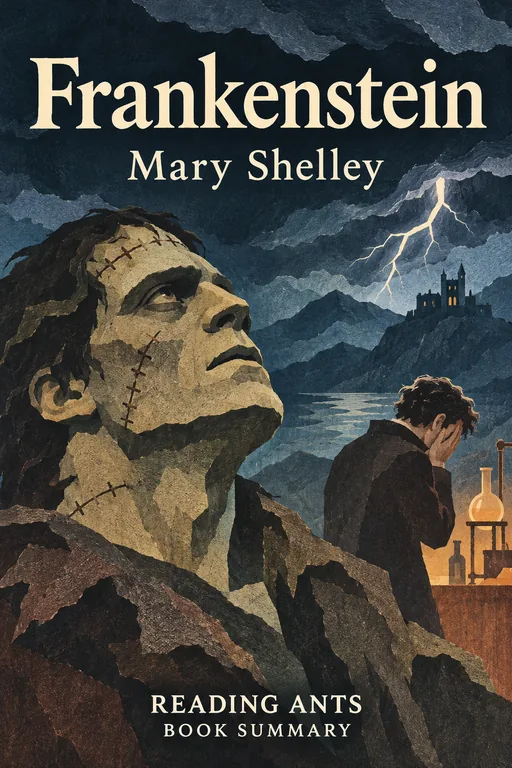
Frankenstein
Mary Shelley
A young scientist creates a living being from dead body parts, then abandons it in horror, and his rejected creation, longing for love, turns to revenge.
🚀 Sci-Fi & Fantasy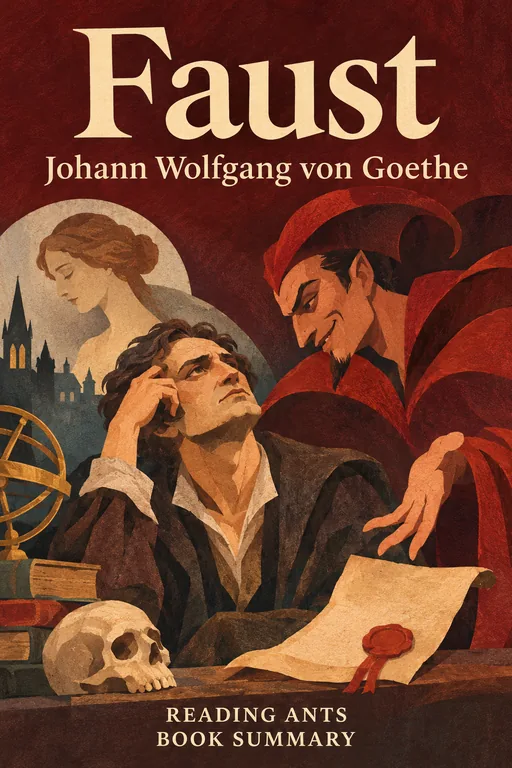
Faust
Johann Wolfgang von Goethe
A brilliant but restless scholar, frustrated that all his learning has not brought him true understanding or happiness, makes a bargain with the devil Mephistopheles, setting off a journey through love, tragedy and ambition that tests whether any human life can find lasting fulfillment.
🎭 Epics, Drama & Poetry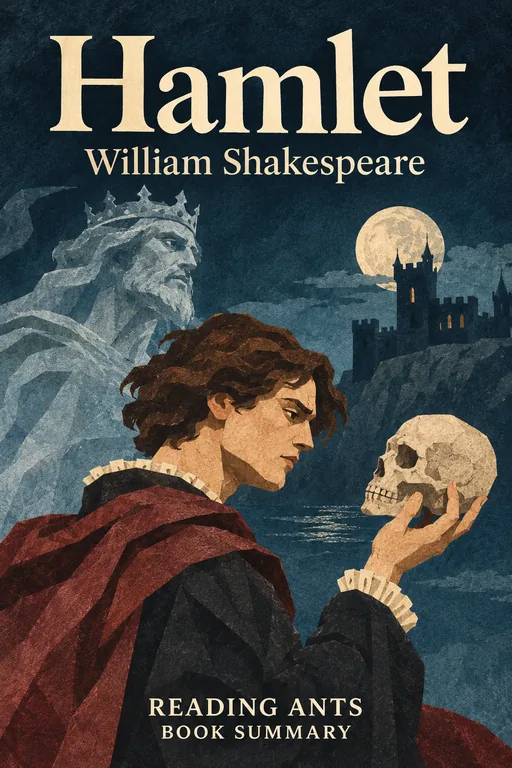
Hamlet
William Shakespeare
A grieving prince of Denmark learns from his father's ghost that his uncle murdered the king to take the throne, and his struggle to decide whether and how to take revenge leads to madness and death.
🎭 Epics, Drama & PoetryWant something different?
Pick another topic and we will show you three books to start with.