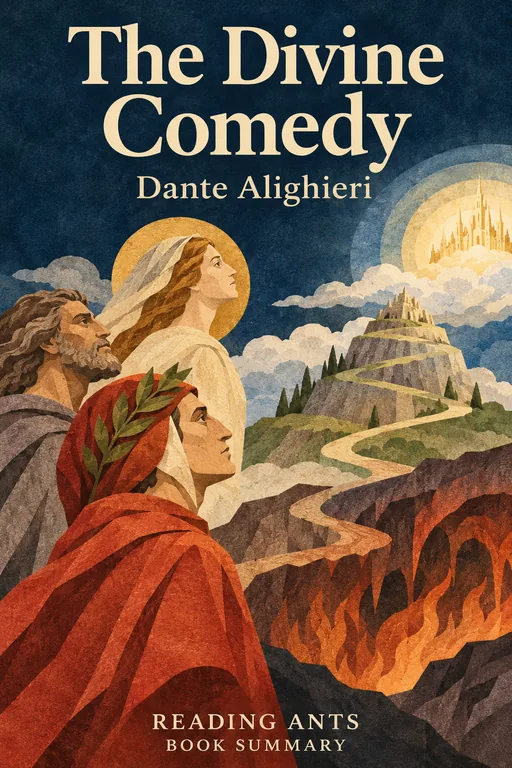
The Divine Comedy
Original title: Divina Commedia
Lost in a dark wood in the middle of his life, the poet Dante journeys through Hell, Purgatory and Heaven, guided first by the poet Virgil and then by his beloved Beatrice, on a quest to understand sin, redemption and divine love.
Overview
The Divine Comedy is a long narrative poem by the Italian poet Dante Alighieri, completed shortly before his death in 1321. It is divided into three parts, Inferno (Hell), Purgatorio (Purgatory) and Paradiso (Heaven), with thirty-three cantos each, plus one introductory canto at the start of Inferno, for one hundred in total. Dante himself is the main character. In the year 1300, at the age of thirty-five, he finds himself lost and afraid. The ghost of the Roman poet Virgil leads him down through the circles of Hell and up the mountain of Purgatory, and Beatrice, a woman Dante loved who died young, guides him through the heavens. Along the way, he meets famous figures from history, mythology and his own city of Florence. The poem is considered one of the greatest works of world literature.
Main Characters
- Dante: the poet and pilgrim on the journey.
- Virgil: the ancient Roman poet who guides Dante through Hell and Purgatory.
- Beatrice: Dante’s beloved, now in Heaven, who guides him through Paradise.
- Francesca da Rimini and Paolo: lovers punished in Hell.
- Count Ugolino: a traitor in the frozen depths of Hell.
- Ulysses (Odysseus): the Greek hero, punished for deception.
- Satan (Lucifer): trapped in ice at the center of Hell.
- St. Bernard: the saint who guides Dante at the end.
Full Summary
Lost in the Dark Wood
The poem begins with one of the most famous openings in literature. Midway through the journey of his life, Dante finds himself lost in a dark forest, having strayed from the right path. He tries to climb a sunlit hill but is blocked by three beasts: a leopard, a lion and a she-wolf. Then the ghost of Virgil appears. He explains that Beatrice, from Heaven, has sent him to guide Dante on a journey through the afterlife, so that he can find his way back to God.
The Gates of Hell
They pass through the gates of Hell, which bear an inscription warning all who enter to abandon hope. Hell is a huge funnel-shaped pit with nine circles, each lower circle holding worse sinners. Punishments match the sins: this idea is called contrapasso. In the second circle, the lustful are blown endlessly by a violent wind, as they were swept by passion in life. There, Dante meets Francesca da Rimini, who tells how she and her husband’s brother, Paolo, fell in love while reading a romance together and were murdered. Dante faints with pity.
Deeper into Hell
As they descend, Dante sees the gluttons lying in freezing mud, the greedy and wasteful pushing heavy weights against each other, and the angry fighting in a filthy swamp. Inside the city of Dis, heretics burn in tombs. Further down are the violent, who are punished according to their victims: those who harmed others in a river of boiling blood, those who harmed themselves turned into trees, and others on burning sand.
The eighth circle, for fraud, is divided into ten ditches, holding flatterers, corrupt priests, fortune-tellers, hypocrites, thieves and others. Dante meets Ulysses, wrapped in flame, who tells of his last voyage beyond the known world, which ended in shipwreck.
The Frozen Center
At the bottom of Hell, in the ninth circle, traitors are frozen in a lake of ice. Count Ugolino, who betrayed his city, gnaws on the head of the archbishop who imprisoned him and his sons and let them starve. At the very center is Satan, a gigantic, three-faced monster, weeping and chewing on the three worst traitors in history: Judas, who betrayed Jesus, and Brutus and Cassius, who betrayed Julius Caesar. Dante and Virgil climb down Satan’s body, pass through the center of the earth and emerge on the other side, where they see the stars again.
Purgatory
Purgatory is a great mountain on an island in the southern hemisphere, where souls who repented before death are purified so they can enter Heaven. Unlike Hell, it is a place of hope. Souls climb its seven terraces, each dedicated to cleansing one of the seven deadly sins: pride, envy, wrath, sloth, greed, gluttony and lust. The proud carry heavy stones, the envious have their eyes sewn shut, and the lustful walk through flames. An angel marks Dante’s forehead with seven letters, and one is erased at each terrace.
At the top of the mountain lies the Earthly Paradise, the Garden of Eden. Here Virgil, as a pagan who lived before Christianity, can go no further, and he disappears. Beatrice arrives in a magnificent procession. She scolds Dante for having strayed from the right path after her death. Dante, filled with shame and repentance, is washed in two rivers, one that removes the memory of sin and another that restores the memory of good deeds.
Paradise
Beatrice leads Dante upward through the nine heavenly spheres, each associated with a planet or the stars, where blessed souls appear to him. He meets wise philosophers and theologians, warriors for the faith, just rulers and contemplative saints, and he discusses questions of faith, hope and love. Beatrice grows more beautiful at each level, and Dante’s vision becomes stronger.
In the highest heaven, the Empyrean, Dante sees the souls of the blessed arranged like the petals of a vast white rose. Beatrice takes her place among them, and St. Bernard guides Dante in his final vision. He sees God as three circles of light, and for a moment understands the mystery of the divine. His words fail, but he feels his whole will and desire turning in harmony with the divine love that sets the sun and all the stars in motion.
Why It Matters
The Divine Comedy is one of the greatest poems ever written and the most important work of Italian literature. Dante wrote it in the Tuscan dialect of Italian, not Latin, which was then the language of serious writing, and this helped make Tuscan the basis of the modern Italian language. He is often called the father of the Italian language.
The poem shaped the Western imagination of the afterlife, especially Hell, and has inspired artists, writers and composers for centuries, from Botticelli’s illustrations to Rodin’s sculpture The Gates of Hell and countless novels, films and games. Its phrases, such as the warning to abandon all hope, are known worldwide. It also offers a vast picture of medieval science, philosophy, politics and theology.
Key Takeaways
- Our choices shape our destiny. Each soul’s fate reflects the life they lived.
- Punishments fit the sins. Hell’s torments mirror wrongdoing.
- Repentance brings hope. Purgatory shows that change and forgiveness are possible.
- Love guides us upward. Beatrice leads Dante toward the divine.
- Wisdom needs guides. Dante needs Virgil and Beatrice to find his way.
What We Can Learn
Dante’s journey begins with admitting that he is lost. In our own lives, recognizing when we have strayed from the path we want to follow is the first step toward change.
The poem also shows the value of mentors. Dante cannot make the journey alone; he relies on Virgil’s wisdom and Beatrice’s love. Teachers, parents and friends can guide us through difficult times.
Finally, Purgatory’s message of hope reminds us that mistakes are not the end. Through effort, humility and patience, we can grow and become better people.
Criticism and Counterpoints
Many readers find the Divine Comedy challenging because it is full of references to medieval politics, Florentine figures, theology and classical mythology that require notes to understand. Inferno is by far the most read part, while Paradiso, with its abstract theology, is often seen as the hardest.
Critics have also pointed out that Dante used the poem to settle personal and political scores, placing his enemies, including living popes, in Hell. Its strict medieval Christian worldview, its punishment of non-Christians and its portrayal of Muhammad among the sinners in Hell have been criticized as intolerant. Nonetheless, its poetic power and imagination are widely admired.
Who Should Read It
This poem suits older teens and adults interested in literature, religion, history or philosophy. A good translation with notes, such as those by Robert and Jean Hollander or Allen Mandelbaum, is essential. Many readers begin with Inferno before continuing the journey.
Want the whole book?
A summary is a taste, not the meal. Here is where to find the full book.
You reached the end 🎉
Nicely done. Mark this one as read, and we will suggest what to read next.
Read this next
Paradise Lost
John Milton
Milton's epic poem tells how Satan rebelled against God, was cast into hell, tempted Adam and Eve to disobey, and caused humanity's expulsion from the Garden of Eden.
🎭 Epics, Drama & Poetry
The Aeneid
Virgil
After the fall of Troy, the hero Aeneas leads a band of refugees across the sea to Italy, where he is fated to found the line that will build Rome, at great personal cost.
🎭 Epics, Drama & Poetry
The Odyssey
Homer
After the Trojan War, the clever hero Odysseus struggles for ten years against monsters, gods and temptations to return home to his faithful wife and son, then must win back his house from the men trying to steal it.
🎭 Epics, Drama & Poetry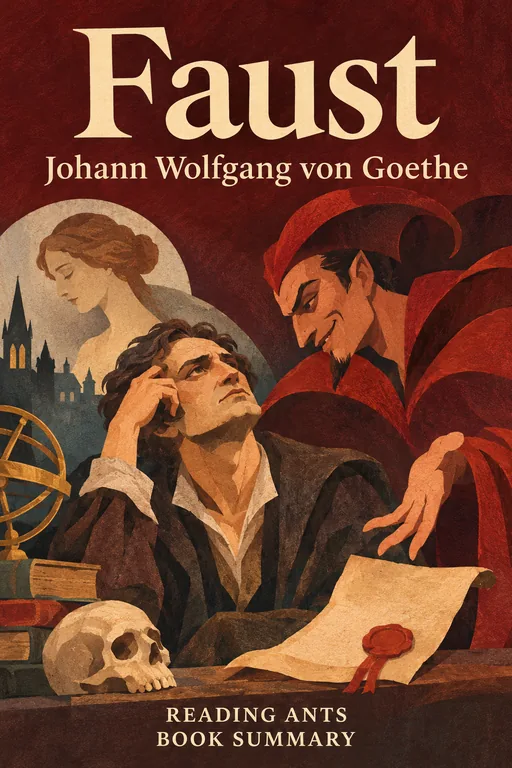
Faust
Johann Wolfgang von Goethe
A brilliant but restless scholar, frustrated that all his learning has not brought him true understanding or happiness, makes a bargain with the devil Mephistopheles, setting off a journey through love, tragedy and ambition that tests whether any human life can find lasting fulfillment.
🎭 Epics, Drama & Poetry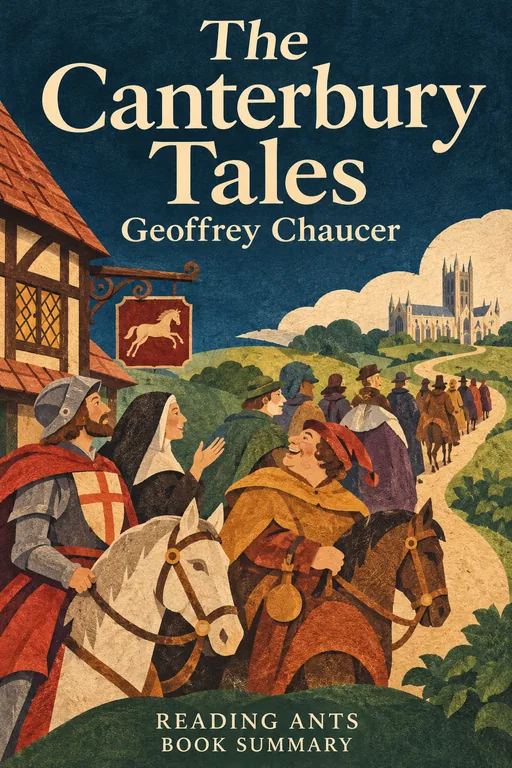
The Canterbury Tales
Geoffrey Chaucer
A group of about thirty pilgrims on the road from London to Canterbury pass the time by telling stories, in a poem that paints a lively picture of English society in the late fourteenth century.
🎭 Epics, Drama & Poetry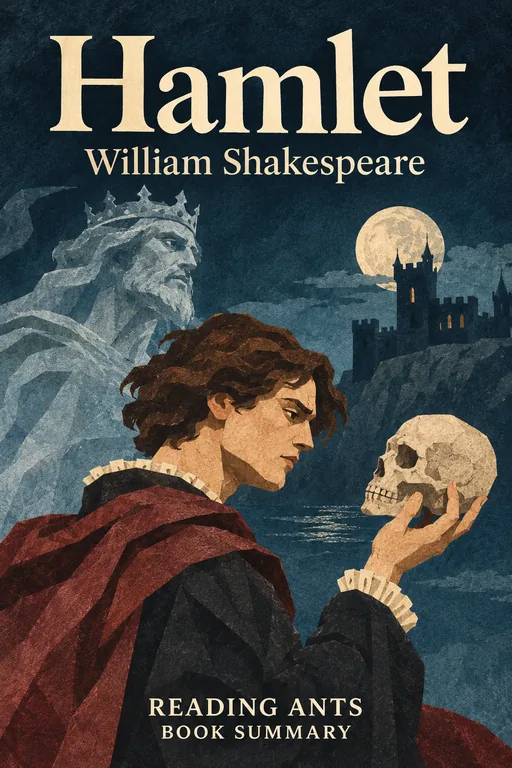
Hamlet
William Shakespeare
A grieving prince of Denmark learns from his father's ghost that his uncle murdered the king to take the throne, and his struggle to decide whether and how to take revenge leads to madness and death.
🎭 Epics, Drama & PoetryWant something different?
Pick another topic and we will show you three books to start with.