 Reading Ants
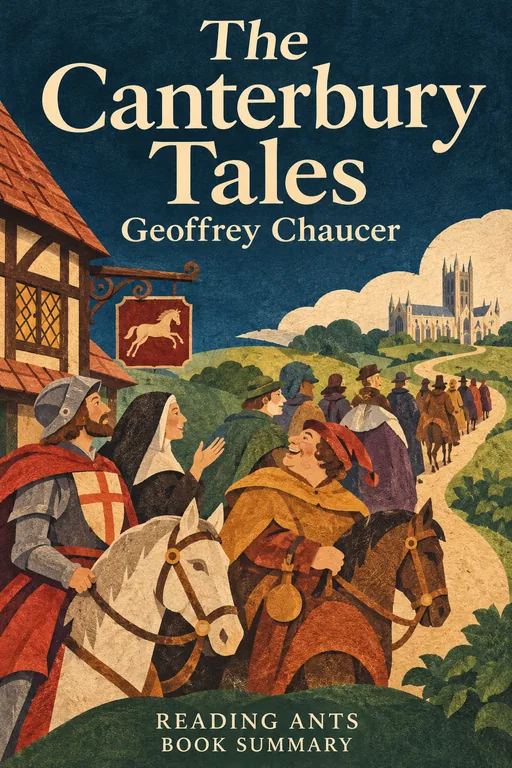
The Canterbury Tales
A group of about thirty pilgrims on the road from London to Canterbury pass the time by telling stories, in a poem that paints a lively picture of English society in the late fourteenth century.
Overview
The Canterbury Tales is a collection of stories in verse and prose by Geoffrey Chaucer, written mostly between about 1387 and his death in 1400, and left unfinished. It is in Middle English, the language of Chaucer’s time. In the General Prologue, the narrator describes meeting a group of pilgrims at the Tabard Inn in Southwark, who are going to the shrine of Saint Thomas Becket in Canterbury. The innkeeper, Harry Bailly, proposes a contest: each pilgrim will tell two tales on the way there and two on the way back, and whoever tells the best will win a free dinner. In the end, Chaucer wrote only about twenty-four of the planned hundred and twenty tales. The result is a funny, humane portrait of medieval people, from knights to cooks.
Main Characters
- The Narrator (Chaucer): a modest, observant pilgrim who describes the others.
- The Knight: a noble, honorable soldier who tells a story of chivalry.
- The Miller: a loud, rowdy man who tells a bawdy tale.
- The Wife of Bath: a worldly, much-married woman who loves to talk about marriage.
- The Pardoner: a seller of pardons and relics, who is a rogue but a fine preacher.
- The Prioress, the Monk and the Friar: members of the church, treated with gentle satire.
- The Host (Harry Bailly): the innkeeper, who organizes and judges the contest.
- The Clerk, the Franklin, the Reeve, the Cook and the Nun’s Priest: other pilgrims with their own tales.
Full Summary
The General Prologue
On an April evening, the narrator is at the Tabard Inn, where he meets a company of pilgrims, who are going to Canterbury. He describes each in turn, in a few lines. The Knight is honorable and humble. His son, the Squire, is a lively young man in love. The Prioress is delicate and sentimental, and the Monk loves hunting. The Wife of Bath is deaf in one ear and has had five husbands, and the Pardoner has a high voice and sells fake relics. The portraits show Chaucer’s sharp eye for human type and his gentle irony.
The Knight’s Tale and the Miller’s Tale
The Host asks the Knight to tell the first tale, a story of chivalry set in ancient Athens, in which two knights, Palamon and Arcite, fall in love with the same woman, Emily, and fight for her. It ends with a tournament, Arcite’s death and Palamon’s marriage. The drunken Miller interrupts and tells a vulgar tale of a carpenter, his young wife and two clerks who woo her, with an ending involving a hot poker. The contrast between the noble and the low tale sets a pattern for the book.
The Wife of Bath
The Wife of Bath’s Prologue is among the most famous parts of the work. She speaks at length about her five marriages, and argues that women should have mastery over their husbands. She boasts of her experience and defends the pleasures of marriage. Her tale, set in King Arthur’s court, tells of a knight who has raped a young woman and must find out what women most desire to save his life, and learns that the answer is sovereignty, or control over their own lives. The story ends with a happy marriage.
The Pardoner’s Tale
The Pardoner admits openly that he is a fraud, that he preaches against greed but is greedy himself, and that he tricks poor people out of money. He then tells a powerful moral tale of three rioters who set out to kill Death, and who find a pile of gold under a tree. They plot to cheat each other, and in the end all three die, poisoned or stabbed. The tale is chilling, and the contrast between teller and tale makes it one of Chaucer’s most complex stories.
Other Tales
The other tales are very varied. The Nun’s Priest tells a comic fable about a proud rooster, Chanticleer, who is tricked by a fox. The Clerk tells the story of Griselda, a patient wife. The Franklin tells of a promise made by a lady, and the generosity of those involved. The Reeve, offended by the Miller’s tale about a carpenter, answers with a tale about a cheating miller, and the Cook’s tale breaks off unfinished. The Prioress tells a pious tale of a murdered child, which has been criticized for its antisemitism. The Tale of Sir Thopas, told by Chaucer himself, is so bad that the Host interrupts him.
The End of the Journey
The work breaks off before the pilgrims reach Canterbury. Chaucer’s last piece is the Parson’s Tale, a long prose sermon on repentance, followed by a “Retraction” in which he asks forgiveness for his worldly writings. The pilgrimage, which is both a journey to a shrine and a social gathering, remains unfinished, and so the book’s picture of human variety is left open-ended.
Why It Matters
The Canterbury Tales is considered the greatest work of English literature of the Middle Ages. It helped to establish English, instead of French or Latin, as a literary language. It shows the whole range of medieval society and has been adapted into plays, films and modern retellings. Many of its characters, the Wife of Bath above all, have become literary icons.
The poem is also a valuable record of the way that people spoke, joked and judged each other in the fourteenth century.
Chaucer is often called the father of English literature, and the Wife of Bath, the Pardoner and the Miller are still discussed in classrooms. Readers also value the work as a window into medieval pilgrimage, humor and social life.
Key Takeaways
- Society is a mix of voices. The pilgrims come from every class.
- Storytelling reveals character. Each tale reflects its teller.
- Hypocrisy is a target. Chaucer mocks corrupt clergy.
- Marriage and power are debated. The Wife of Bath challenges norms.
- Humor and seriousness live together. Tales range from bawdy to devout.
What We Can Learn
The poem teaches that people are complicated: the Pardoner is a crook who preaches a true moral, and the Wife of Bath is both comic and wise. We can learn to avoid quick judgments.
It also shows the value of listening to many voices. In the contest, every pilgrim has a chance to speak, and the reader learns about the diversity of views.
Finally, it demonstrates that humor can be a way to discuss serious topics, such as faith, marriage and honesty.
Criticism and Counterpoints
Many readers find Middle English difficult, and need a translation or glossary. The work is incomplete, and the order of the tales varies in manuscripts. Some tales are bawdy and offend modern tastes, and some, such as the Prioress’s Tale, contain anti-Jewish attitudes.
Feminist critics debate whether the Wife of Bath is a figure of liberation or a satire of women, since Chaucer, a man, wrote her. Some find that his portraits are more stereotypes than real people. Still, it remains highly regarded.
Who Should Read It
This book suits mature teenagers and adults. A modern verse or prose translation helps, and many readers begin with the General Prologue and the tales of the Miller, the Wife of Bath and the Pardoner. Some tales have crude content.
Want the whole book?
A summary is a taste, not the meal. Here is where to find the full book.
You reached the end 🎉
Nicely done. Mark this one as read, and we will suggest what to read next.
Read this next
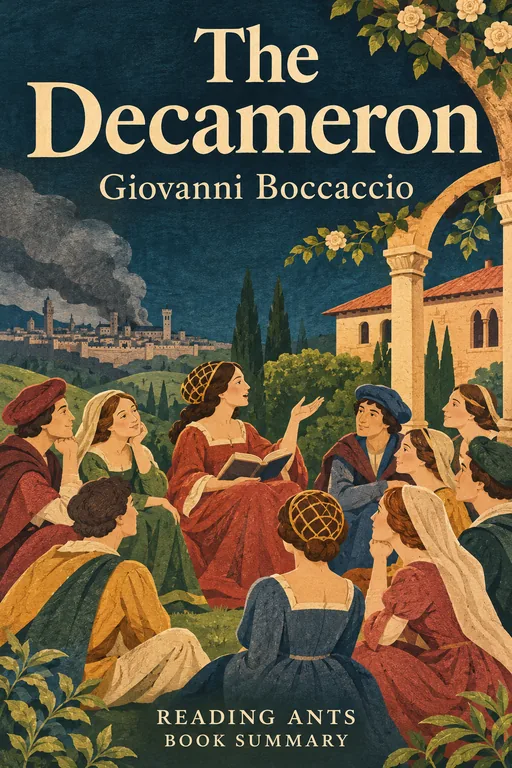
The Decameron
Giovanni Boccaccio
While the Black Death ravages Florence in 1348, ten young people retreat to a country villa and pass the time by each telling a story a day, making a hundred tales of love, wit, trickery and fate.
🎭 Epics, Drama & Poetry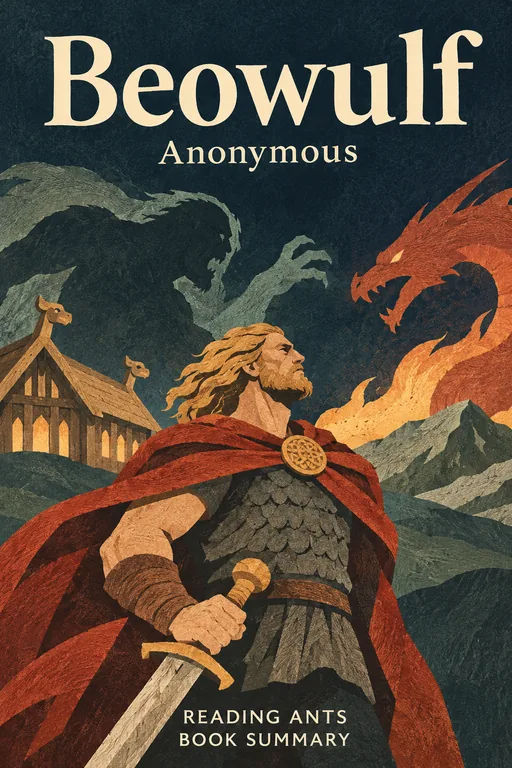
Beowulf
Anonymous
A mighty young warrior sails to Denmark to defeat a monster terrorizing a king's great hall, then battles the monster's vengeful mother, and decades later, as an old king, gives his life fighting a dragon.
🎭 Epics, Drama & Poetry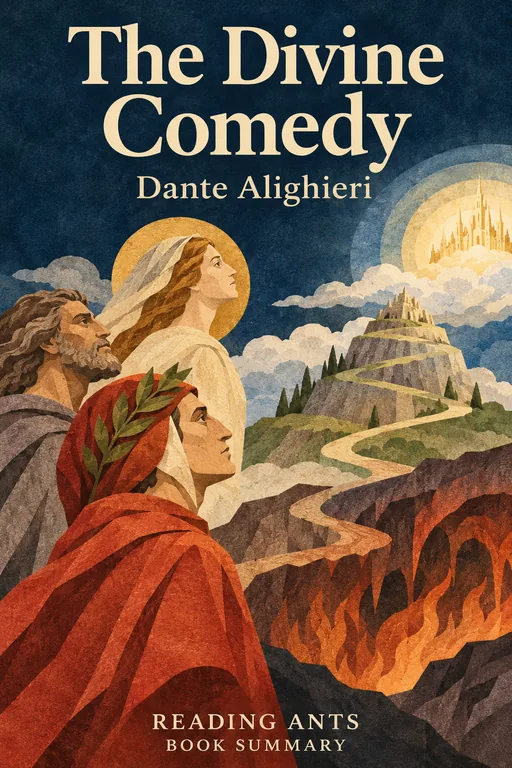
The Divine Comedy
Dante Alighieri
Lost in a dark wood in the middle of his life, the poet Dante journeys through Hell, Purgatory and Heaven, guided first by the poet Virgil and then by his beloved Beatrice, on a quest to understand sin, redemption and divine love.
🎭 Epics, Drama & Poetry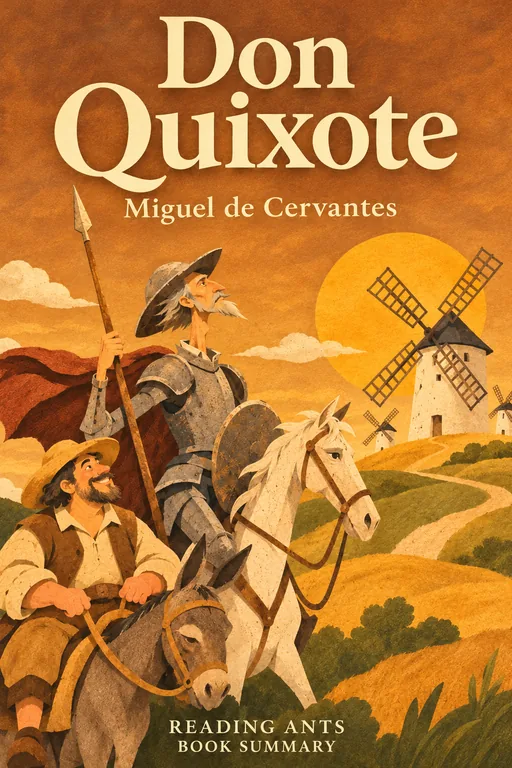
Don Quixote
Miguel de Cervantes
An aging Spanish gentleman reads so many tales of knights that he loses his mind, sets out to become a knight himself with a down-to-earth farmer as his squire, and turns every adventure into glorious, comic disaster.
🌍 World Literature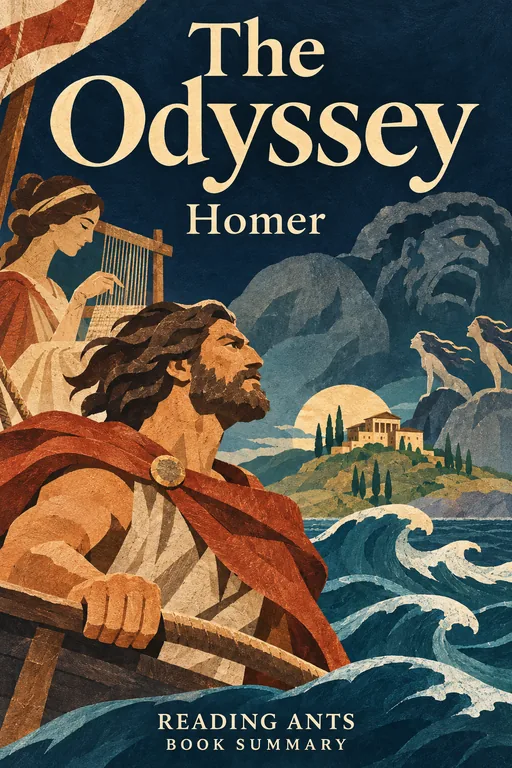
The Odyssey
Homer
After the Trojan War, the clever hero Odysseus struggles for ten years against monsters, gods and temptations to return home to his faithful wife and son, then must win back his house from the men trying to steal it.
🎭 Epics, Drama & Poetry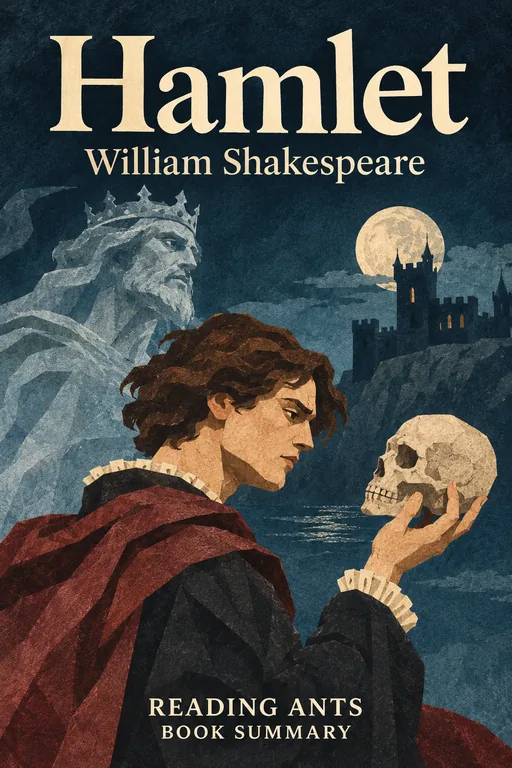
Hamlet
William Shakespeare
A grieving prince of Denmark learns from his father's ghost that his uncle murdered the king to take the throne, and his struggle to decide whether and how to take revenge leads to madness and death.
🎭 Epics, Drama & PoetryWant something different?
Pick another topic and we will show you three books to start with.