The Decameron
Original title: Decameron
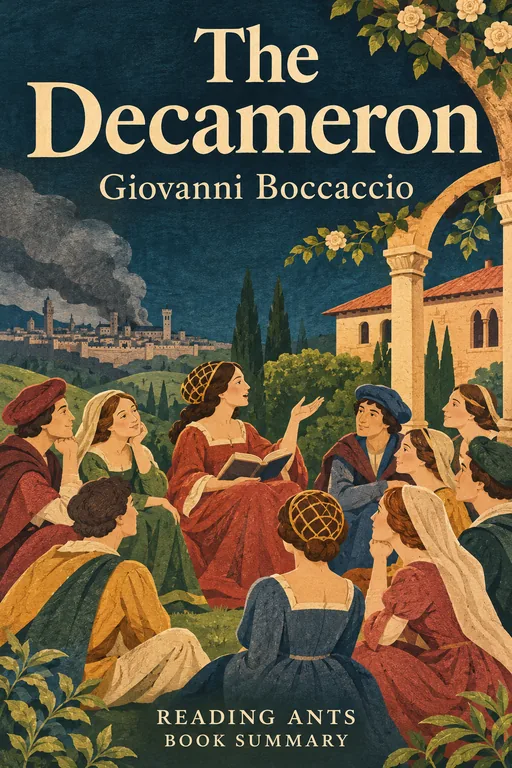
While the Black Death ravages Florence in 1348, ten young people retreat to a country villa and pass the time by each telling a story a day, making a hundred tales of love, wit, trickery and fate.
Overview
The Decameron is a collection of one hundred tales by the Italian writer Giovanni Boccaccio, written between about 1349 and 1353. It begins with a vivid description of the plague that struck Florence, which Boccaccio witnessed, and then moves to a “frame” story. Seven young women and three young men leave the city, to live in a villa in the countryside, and agree to entertain each other with stories on ten storytelling days during a retreat of about two weeks, hence the title, which means “ten days.” On each day, a “king” or “queen” chooses a theme. The stories range from comedy to tragedy, and show a wide picture of medieval Italian life, from merchants to monks. The book was hugely influential on later literature.
Main Characters
- The ten storytellers: Pampinea, Fiammetta, Filomena, Emilia, Lauretta, Neifile and Elissa, and the young men Panfilo, Filostrato and Dioneo, who are friends from well-off Florentine families.
- Griselda: a patient peasant wife who endures her husband’s cruelty.
- Ser Ciappelletto: a scoundrel who tricks a priest on his deathbed.
- Federigo degli Alberighi: a nobleman who sacrifices his falcon for the lady he loves.
- Frate Cipolla: a monk with a trick involving a relic.
- Calandrino: a gullible painter who is a frequent victim of tricks.
Full Summary
The Plague and the Retreat
The book begins with Boccaccio’s description of the plague, in which Florence’s laws and customs fall apart, as people are afraid of contact with one another. Bodies are left in the streets, families abandon the sick, and some people give themselves over to pleasure while others lock themselves in. One day, seven young women meet in a church, and decide to leave for the countryside, taking three young men and their servants. They live in a beautiful villa with gardens, where they sing, dance and tell stories, trying to keep a sense of order and civility.
Stories of Fortune and Wit
In the stories, many are about fortune, for good or ill. A man named Landolfo loses everything at sea, and then finds a chest of jewels. Other tales show how quick wit saves people from danger, such as a merchant who talks his way out of a trap. Ser Ciappelletto, the worst of men, makes a false confession, and is revered as a saint after his death, an example of how appearances deceive and how God works in strange ways.
Tales of Love
Some of the most moving stories are about love. Federigo, who has spent his wealth wooing a lady, is reduced to a small farm and a falcon. When she visits, hoping to ask for the falcon for her sick son, he serves it to her as a meal, not knowing why she has come. The boy dies, and the lady, touched by Federigo’s devotion, later marries him. Another tragic tale tells of Tancredi’s daughter Ghismonda, whose lover is killed by her father, and who dies by poison. There are also cases of love that end happily, to balance the sorrow.
Trickery and Satire
Many stories poke fun at hypocrisy, particularly among priests, monks and nuns, who appear as lustful, greedy or foolish. Frate Cipolla promises to show the people a relic, a feather of the angel Gabriel, but when pranksters replace it with coals, he cleverly improvises a story that they are relics from Saint Lawrence. Calandrino is tricked into thinking he is pregnant or that he has found a magic stone that makes him invisible. These tales are comic and often bawdy.
Patience and Virtue
Near the end, the stories turn to examples of virtue, including the famous tale of Griselda. A marquis marries a poor girl, and then, to test her, takes away her children, pretends that he has had them killed, and dismisses her in her shift. She bears everything without complaint. When the cruelty is revealed to be a test, she is restored. The story has been admired and criticized, and was retold by Petrarch in Latin, whose version Chaucer later used for the Clerk’s Tale in The Canterbury Tales.
The Return
At the end of ten days, the group decides to go back to Florence, having kept their spirits and order during a time of death. Boccaccio then writes a defense of his stories, saying that they are not meant to harm anyone, and that readers may choose whether to take wisdom or only amusement from them.
The hundred tales are arranged in ten days, and some days have set themes, such as people who gain something they wished for, or people who escape by clever answers. Dioneo, the most lighthearted of the group, is allowed to choose his own subject, and often tells the funniest or cruelest stories.
Why It Matters
The Decameron is a cornerstone of Italian prose and of European storytelling. It influenced Chaucer’s Canterbury Tales, Shakespeare, Cervantes and countless later writers, and it set a model for the short story and the framed collection. It is also a valuable record of life in the fourteenth century, showing the effects of the plague.
The book has gained new readers in times of epidemic, as people recognize in Boccaccio’s description of the plague and his characters’ response, a record of how people cope with fear, isolation and grief by telling stories.
Key Takeaways
- Stories help in hard times. The storytellers use narrative to cope with plague.
- Fortune is unpredictable. Many tales turn on luck and reversals.
- Wit can save the day. Clever characters escape trouble.
- Hypocrisy deserves mockery. The book satirizes false piety.
- Love is a force. Tales of love show both joy and heartbreak.
What We Can Learn
The frame story shows that, in a crisis, shared routines and storytelling can help people to keep their spirits. The group’s careful rules and their commitment to civil conversation are a model for coping with fear.
It also shows that human nature has not changed: people were tricked, in love, jealous and clever in the fourteenth century as they are now, which can make history feel close.
Finally, the book encourages us to look critically at those who claim moral authority.
Criticism and Counterpoints
Many modern readers are bothered by the treatment of women in some stories, such as the fate of Griselda, which seems to praise a woman’s endless submission, and by tales that treat sexual violence lightly. Some stories are cruel or crude. Others find the hundred tales uneven, with some being dull or repetitive.
Church authorities in later centuries condemned the book as obscene, and it was censored in many editions. Readers need good translations, and some find the style of older versions stiff. Even so, many consider it a masterpiece of comedy and observation.
Who Should Read It
This book suits mature readers. It contains sexual jokes, adultery and violence in some tales. Readers can begin with a selection of the best-known stories, such as those of Federigo, Ser Ciappelletto and Griselda.
Want the whole book?
A summary is a taste, not the meal. Here is where to find the full book.
You reached the end 🎉
Nicely done. Mark this one as read, and we will suggest what to read next.
Read this next
The Canterbury Tales
Geoffrey Chaucer
A group of about thirty pilgrims on the road from London to Canterbury pass the time by telling stories, in a poem that paints a lively picture of English society in the late fourteenth century.
🎭 Epics, Drama & Poetry
Don Quixote
Miguel de Cervantes
An aging Spanish gentleman reads so many tales of knights that he loses his mind, sets out to become a knight himself with a down-to-earth farmer as his squire, and turns every adventure into glorious, comic disaster.
🌍 World Literature
The Plague
Albert Camus
When plague seals an Algerian city off from the world, ordinary people must choose between denial, private escape and the patient shared work of resisting suffering.
🌍 World Literature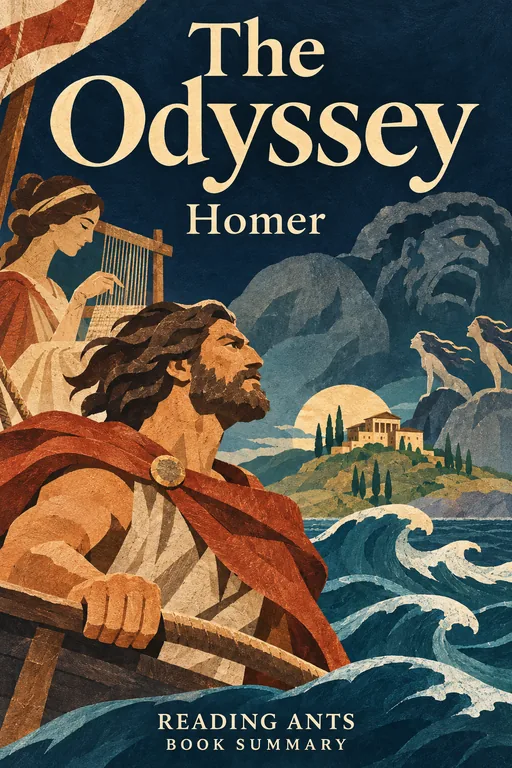
The Odyssey
Homer
After the Trojan War, the clever hero Odysseus struggles for ten years against monsters, gods and temptations to return home to his faithful wife and son, then must win back his house from the men trying to steal it.
🎭 Epics, Drama & Poetry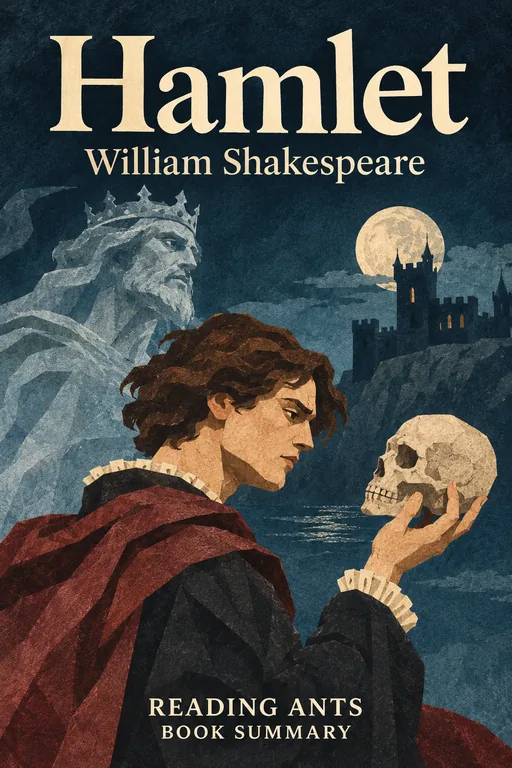
Hamlet
William Shakespeare
A grieving prince of Denmark learns from his father's ghost that his uncle murdered the king to take the throne, and his struggle to decide whether and how to take revenge leads to madness and death.
🎭 Epics, Drama & Poetry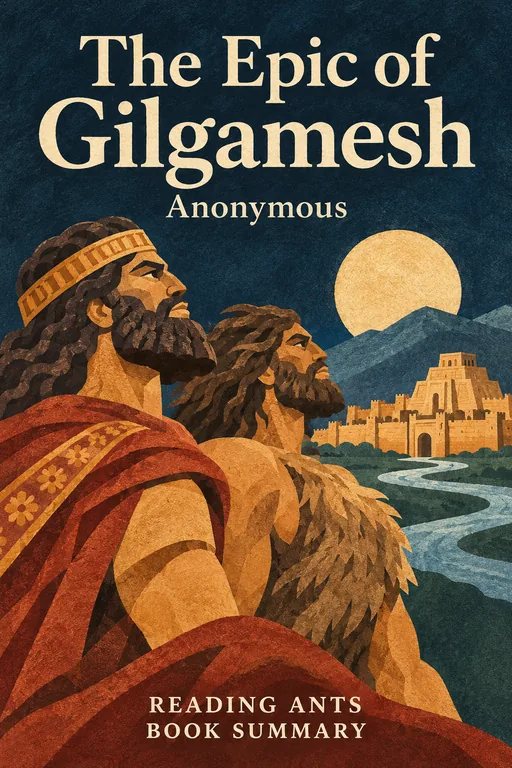
The Epic of Gilgamesh
Anonymous
A proud, powerful king of ancient Mesopotamia gains a true friend, loses him to death, and journeys to the edge of the world in search of eternal life, only to learn that what lasts is the life and legacy we leave behind.
🎭 Epics, Drama & PoetryWant something different?
Pick another topic and we will show you three books to start with.