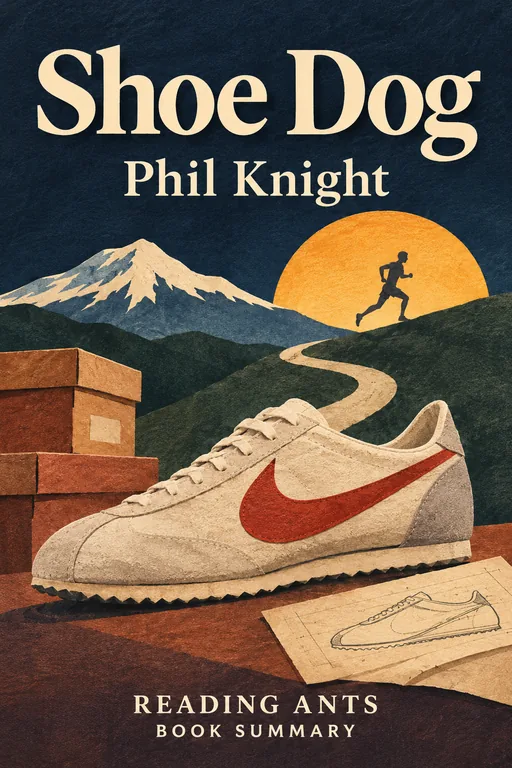
Shoe Dog
The founder of Nike tells how a young runner with a borrowed idea and almost no money built a small shoe-importing business, through crisis after crisis, into one of the most famous brands in the world.
Overview
Shoe Dog is the memoir of Phil Knight, who co-founded Nike. Published in 2016, it covers the early years, from about 1962, when Knight was a young runner and Stanford business school student, soon to graduate, with an idea about importing running shoes from Japan, to the company’s public offering in 1980. The title is an old term for someone who is obsessed with shoes. Knight writes honestly and without polish about near-bankruptcy, lawsuits, broken partnerships and the loyal, eccentric group of misfits who helped him. It is less a business manual than a story about stubbornness, friendship and the fear of failing.
Full Summary
1. A crazy idea
The idea: While still a student at Stanford, Knight wrote a paper suggesting that Japanese running shoes could do to German shoes what Japanese cameras had done to German cameras: offer good quality at a lower price. After graduating in 1962, he traveled around the world, with an early stop in Japan, where he visited the makers of Onitsuka Tiger shoes. Pressed to say who he represented, he invented a company name, Blue Ribbon Sports, on the spot. He was impressed by the shoes and persuaded the company to let him sell them in the United States.
In real life: Many big projects start as a half-formed idea followed by a bold step, like asking for something before you are fully ready.
2. The partnership with Bill Bowerman
The idea: Knight’s former track coach at the University of Oregon, Bill Bowerman, became his partner. Bowerman was a legendary coach who loved experimenting to make shoes lighter and better, and he saw that Knight’s idea could give him better shoes for his athletes. They each put in a small amount of money, and Knight began selling shoes from the trunk of his car at track meets, while holding a day job as an accountant.
From the book: Bowerman’s constant tinkering later led to inventions like the famous waffle sole, which he created by pouring rubber into a waffle iron.
In real life: A partner who is a master of the craft and a partner who handles the business can be stronger together than either alone.
3. Always short of cash
The idea: The business grew quickly, and that was the problem. To buy more shoes, Knight needed more money, which he had to borrow, and growth consumed cash faster than it earned it. Banks were nervous about lending to a tiny company, and Knight often relied on a Japanese trading company, Nissho Iwai, to help him get through. He writes of many nights of fear that he would lose everything.
In real life: A business can be successful and still run out of money, which is why careful planning of cash matters.
4. The breakup with Onitsuka
The idea: As Blue Ribbon grew, Knight discovered that his Japanese supplier was probably planning to cut him out and give the American market to someone else. Knight had to decide whether to fight, and a legal battle began. He also realized that he should stop depending on one supplier and make his own shoes under his own brand, which meant a leap into the unknown.
In real life: Relying on a single supplier or a single customer is risky, and people who build something of their own are harder to push aside.
5. A name, a Swoosh and a team
The idea: The company needed a brand. Jeff Johnson, the company’s first full-time employee, suggested the name Nike, after the Greek goddess of victory, and the company adopted it. The logo, the “Swoosh,” was designed by a Portland State University student named Carolyn Davidson, who was paid a small fee, and it later became one of the most recognized symbols in the world. Knight also describes his team of unusual people, runners, accountants and lawyers, whom he came to call his family.
In real life: A name and symbol that people remember can be as valuable as the product.
6. Race, risk and a first big gamble
The idea: Nike began making its own shoes and signing athletes to wear them. Bowerman’s waffle trainer was a hit, and runners like Steve Prefontaine became friends of the company. At the same time, Knight faced one financial emergency after another, including banks that tried to restrict his credit. He kept finding a way through, often by working harder and relying on people who believed in him.
In real life: The people closest to a project often decide whether it survives its worst months.
7. Don’t stop
The idea: The main story ends with Nike’s public offering in 1980, followed by a short reflective closing section that looks back on later events, including the death of Knight’s son Matthew. The offering made Knight and many early employees wealthy, but his tone is not triumphant. He reflects that the real reward was the journey and the people he met. Throughout the book, his message is simple: when the work is hard, keep going, and let the work, the team and the mission carry you.
In real life: Sticking with a difficult goal long enough, and with good people around you, often matters more than being the smartest person in the room.
Why It Matters
Shoe Dog became a bestseller and one of the most admired business memoirs of recent years. Bill Gates and many others recommended it. Part of its appeal is its honesty: Knight does not present himself as a genius but as a nervous, stubborn man who nearly lost everything several times.
The story also explains the origins of one of the world’s best-known brands, and it shows how culture, loyalty and storytelling shaped the company. It has inspired many young entrepreneurs, especially those starting with very little. Many readers also say it comforts them, because it shows that even someone who built a famous company spent years afraid and uncertain.
Key Takeaways
- Start with a bold idea. Many companies begin as an unproven hunch.
- Partnerships matter. Knight and Bowerman combined business and craft.
- Growth needs cash. Success can be dangerous without enough money.
- Build your own brand. Relying on a supplier left Knight exposed.
- Persistence and people carry you. The team often decides the outcome.
What We Can Learn
Shoe Dog shows that you do not need to be fully ready to begin. Knight had little money and no experience importing shoes, but he started anyway, learning as he went. Taking a first step, even a small one, can reveal a path.
It also teaches the value of loyal, trusted people. Many of Nike’s early employees were friends who shared Knight’s love of running and his willingness to work hard for little pay. Choosing teammates with character and passion is often more important than choosing those with the best qualifications.
Finally, Knight’s honesty about fear is helpful. Even a famous founder spent years worried he would fail, which reminds us that doubt is normal and does not mean we must stop.
Criticism and Counterpoints
Critics point out that Shoe Dog is a flattering account by the founder, and that it says little about topics that later damaged Nike’s reputation, such as the factory conditions and low wages of workers who made its shoes overseas. Its main story ends in 1980, so it covers little of Nike’s later growth, its famous athlete deals or controversies.
Some readers find the story slow in places, with many details about shipments, bank loans and meetings. Others feel that Knight’s description of events is selective and that he gives himself and his friends more credit than others. Even so, most readers find it a gripping, honest story.
Who Should Read It
This book suits teenagers and adults, especially those interested in business, running, sports or starting a project. It is told as a story, so no background is needed. Readers looking for step-by-step business advice may find it more inspiring than practical.
Want the whole book?
A summary is a taste, not the meal. Here is where to find the full book.
You reached the end 🎉
Nicely done. Mark this one as read, and we will suggest what to read next.
Read this next
Steve Jobs
Walter Isaacson
The authorized biography of Apple's co-founder follows a brilliant, demanding and often cruel perfectionist whose focus on beautiful design transformed computers, music, phones and animated movies.
💼 Business
The Everything Store
Brad Stone
Brad Stone tells the story of how Jeff Bezos built Amazon from an online bookstore into a giant that sells almost everything, and shows the ambition, the relentless drive and the human costs behind it.
💼 Business
Creativity, Inc.
Ed Catmull with Amy Wallace
Ed Catmull, a co-founder of Pixar, explains how the studio built a culture of honest feedback and trust, so that creative people could make great films, and why leaders must protect that culture from fear.
💼 Business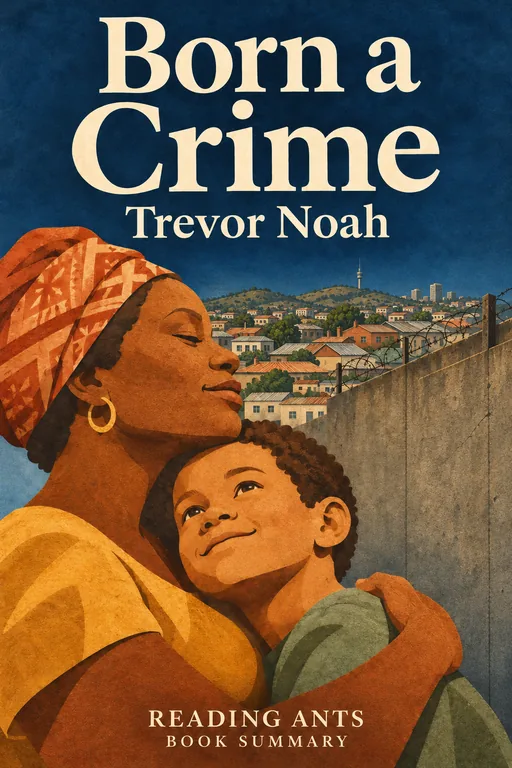
Born a Crime
Trevor Noah
Trevor Noah, the comedian, recounts growing up in South Africa as the child of a Black mother and a white father at a time when their relationship was a crime, and pays tribute to the mother who raised him.
👤 Real Lives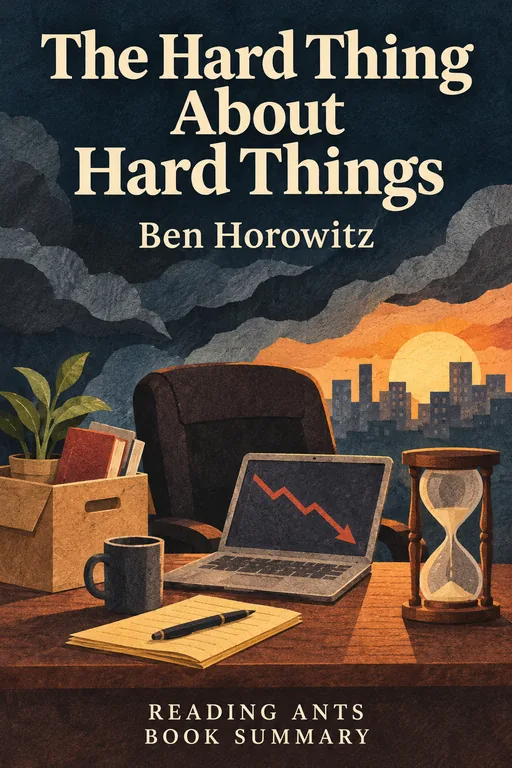
The Hard Thing About Hard Things: Building a Business When There Are No Easy Answers
Ben Horowitz
A veteran Silicon Valley entrepreneur shares honest lessons from the worst times of building and running a technology company, when there are no easy answers.
💼 Business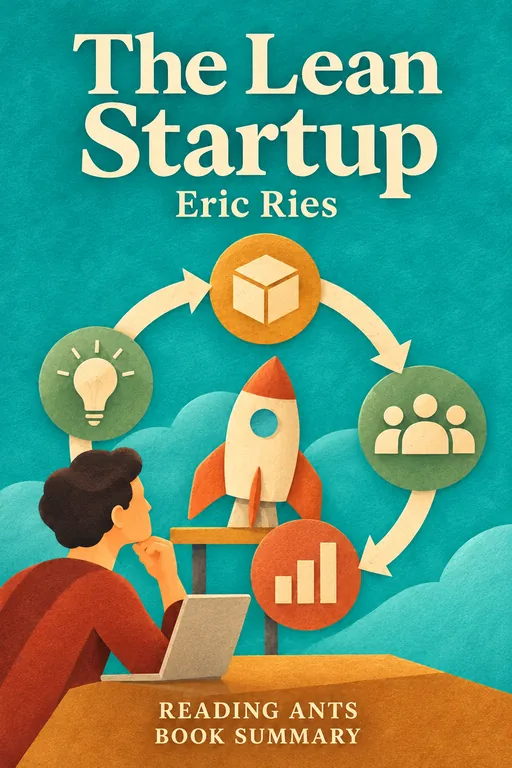
The Lean Startup
Eric Ries
Startups succeed not by following a detailed plan but by quickly testing their ideas with real customers, learning from the results and changing direction when needed.
💼 BusinessWant something different?
Pick another topic and we will show you three books to start with.