 Reading Ants
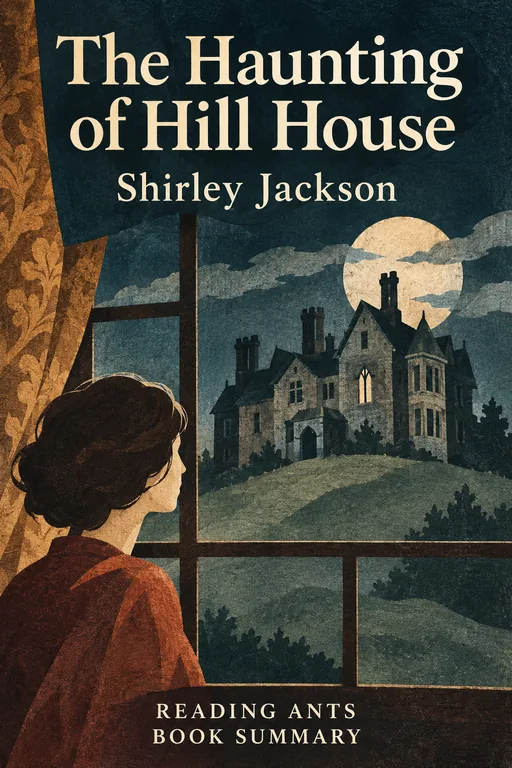
The Haunting of Hill House
Four people stay at a notorious mansion, Hill House, to investigate its supernatural reputation, and the house works on the fragile mind of Eleanor Vance, a lonely woman who has never belonged anywhere.
Overview
The Haunting of Hill House is a novel by Shirley Jackson, published in 1959, and is often named as one of the greatest ghost stories of the twentieth century. It begins with a famous opening paragraph that sets out, in a calm, measured voice, the idea that the house is somehow unsound, and stands alone against its hills. The book is told in close third person, mostly from Eleanor’s viewpoint, and is as much about her psychology as about the house. It was adapted into the 1963 film The Haunting and, much more loosely, a 2018 Netflix series, and has influenced generations of horror writers.
Main Characters
- Eleanor Vance: a shy, lonely woman in her thirties who has spent years caring for her mother.
- Dr. John Montague: an anthropologist who wants to prove that the house is haunted.
- Theodora: a bold, bohemian woman who has psychic ability, and becomes Eleanor’s friend.
- Luke Sanderson: the heir to Hill House, a charming young man.
- Mrs. Dudley: the sour housekeeper.
- Mrs. Montague: the doctor’s overbearing wife.
- Arthur: a friend of Mrs. Montague.
Full Summary
The Invitation
Dr. John Montague, a scholar who studies the supernatural, wants to rent Hill House, an eighty-year-old mansion with a history of tragedy, to investigate. He invites people who have had psychic experiences, and only two accept: Eleanor Vance, who as a child was the focus of a poltergeist, and Theodora, a bright young woman. Luke Sanderson, the heir, also joins them. Eleanor, who is lonely, takes the car that she owns jointly with her sister, without her sister’s consent, and drives to the house, daydreaming of a new life.
Dr. Montague hopes to produce the first scientific proof of a haunting, and he chooses his guests for their sensitivity to such events rather than for their stability.
The House
Hill House stands in a remote valley, and is a place of strange angles, narrow corridors and cold spots. Mrs. Dudley, the housekeeper, serves meals and then leaves before dark. Dr. Montague explains that the house has a history, in which several people died, including the first Mrs. Crain, and a young companion who, in a later generation, took her own life in the library tower. The visitors share stories, and begin to feel at ease, though Eleanor senses that the house watches her.
Night
On the first nights, the guests are woken by loud bangs, as if someone is pounding on the doors, and hear laughter in the hall. They find a message scrawled on a wall in chalk: “Help Eleanor come home.” Eleanor is both frightened and thrilled, since she feels that the house has chosen her. Theodora and Eleanor become close, but also quarrel, in a tension that is part friendship and part rivalry.
The Hunt
Dr. Montague, who is delighted by the phenomena, begins to measure and record. The strange events escalate: Eleanor hears voices, a cold spot appears by the nursery door, and Eleanor, in a dangerous moment, climbs the rickety library stairs and has to be rescued, which alarms Dr. Montague. The house seems to be focused on her, and she begins to feel that she belongs. Her mental state grows more fragile, and she is jealous of Theodora’s closeness to the others.
Mrs. Montague
Dr. Montague’s wife and her friend Arthur arrive, and try to contact spirits using a planchette, to the doctor’s annoyance. The incident is comic, but also reveals the house’s power. Dr. Montague, worried about Eleanor, decides that she should leave, and tells her that she must go home. Eleanor refuses, and says that she has nowhere to go.
The End
Forced to leave, Eleanor drives away in her car, but, as she approaches the end of the drive, she suddenly speeds up and drives into a tree, killing herself. In her last thought, she wonders why no one is stopping her. The novel ends with the description of the house, which stands unchanged, silent, as before. The final paragraph repeats the opening, suggesting that the house will continue to wait.
Many readers see the final pages as the heart of the book, because they leave open whether Eleanor was driven by the house, by her own loneliness, or by both. The house itself is described as unchanged, which makes the loss feel even colder. The other guests leave shaken, and the house is left to wait for whoever comes next.
Why It Matters
The Haunting of Hill House is widely considered among the best horror novels ever written, and it was a finalist for the National Book Award. Many later horror writers, including Stephen King, have praised it and cited it as an influence. Its restraint, its focus on ambiguity and its sympathetic portrait of a lonely woman have made it a model.
The book also raises the question of whether the haunting is real, or a result of Eleanor’s mind, a question that has fascinated readers.
Later ghost stories and films have borrowed its central idea, that a place can seem to want something from the people inside it.
Key Takeaways
- Loneliness makes us vulnerable. Eleanor longs to belong.
- Fear can come from within. The house may reflect her mind.
- Ambiguity increases dread. We never know what is real.
- Home can be a place of danger. Hill House is a perverse home.
- Belonging at any price is dangerous. Eleanor’s longing leads to tragedy.
What We Can Learn
The novel invites us to notice how deeply a person can need to belong, and how this need can be exploited. It encourages us to be kind to those who are lonely.
It also shows how an atmosphere can have power over our minds, and how we can be influenced by suggestion and expectation.
Finally, it reminds us that stories of the supernatural often tell us about the human heart.
It is also a quiet lesson in listening to people who seem to be doing fine on the surface: Eleanor’s friends miss how much she has come to depend on the house, and the story shows how easily that kind of need goes unnoticed.
Criticism and Counterpoints
Some readers find the novel slow, since much of it is conversation and atmosphere, with few events, and the ending is abrupt. Others find that the ambiguity frustrates them, as the question of whether the ghosts are real is never answered. A few feel that Eleanor’s fate is predetermined, and that the portrayal of a lonely, mentally fragile woman as a victim is problematic.
Some also find the dialogue stylized. Still, the book is widely regarded as a masterpiece.
Who Should Read It
This book suits mature teenagers and adults. It is short, but disturbing in its mood, and includes a suicide. It is a good choice for readers who like psychological horror and gothic atmosphere.
Want the whole book?
A summary is a taste, not the meal. Here is where to find the full book.
You reached the end 🎉
Nicely done. Mark this one as read, and we will suggest what to read next.
Read this next
Rebecca
Daphne du Maurier
A shy young woman marries a wealthy widower and moves to his great estate, Manderley, where she is haunted by the memory of his first wife, Rebecca, and slowly learns the truth about her death.
📜 Classics
The Turn of the Screw
Henry James
A young governess at a remote English country house becomes convinced that two dead servants are trying to possess the children in her care, but the story leaves it unclear whether the ghosts are real or in her mind.
📜 Classics
Carrie
Stephen King
A shy, bullied teenage girl named Carrie White, raised by a fanatically religious mother, discovers that she has telekinetic powers, and a cruel prank at her high school prom leads to a night of catastrophic revenge.
🔍 Mystery & Thriller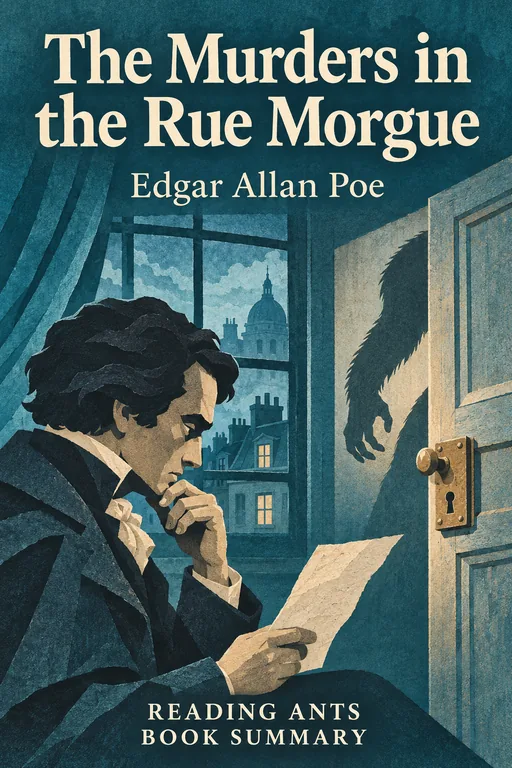
The Murders in the Rue Morgue
Edgar Allan Poe
In Paris, a brilliant amateur detective, C. Auguste Dupin, solves the baffling murder of a mother and daughter in a locked room by thinking carefully about what the evidence really shows, and reaches a startling conclusion.
🔍 Mystery & Thriller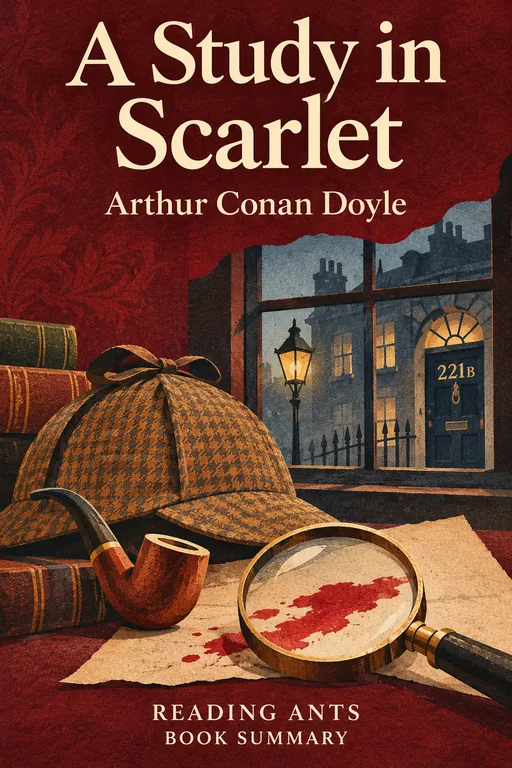
A Study in Scarlet
Arthur Conan Doyle
Dr. John Watson meets the eccentric consulting detective Sherlock Holmes and shares his rooms at 221B Baker Street, and together they investigate a mysterious murder in an empty London house, in the first Sherlock Holmes story.
🔍 Mystery & Thriller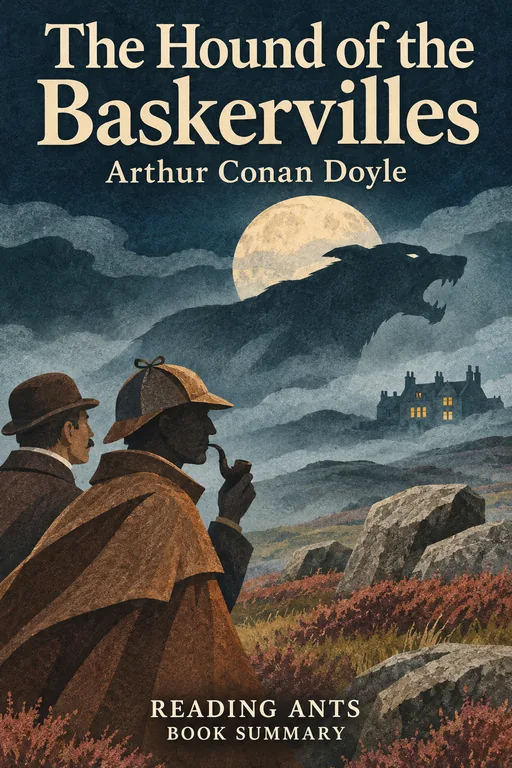
The Hound of the Baskervilles
Arthur Conan Doyle
Sherlock Holmes and Dr. Watson investigate a family curse involving a monstrous spectral dog on the dark, foggy moors of Devon, and discover that the legend is being used to cover a very human crime.
🔍 Mystery & ThrillerWant something different?
Pick another topic and we will show you three books to start with.