 Reading Ants
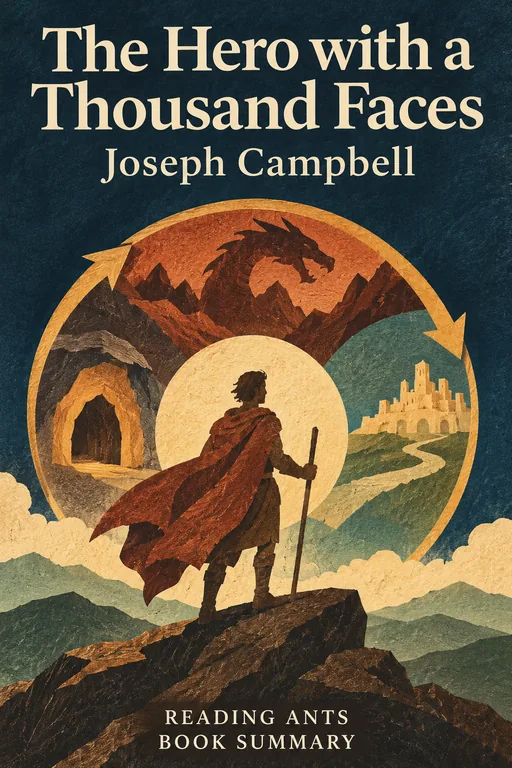
The Hero with a Thousand Faces
Joseph Campbell argues that hero myths from around the world share one basic pattern, the monomyth, a journey of departure, initiation and return that reflects the stages of human growth.
Overview
The Hero with a Thousand Faces was written by Joseph Campbell, an American professor of literature and scholar of mythology, and published in 1949. Drawing on stories from many cultures, including Greek, Hindu, Buddhist, Native American, African and Christian traditions, as well as the psychology of Sigmund Freud and Carl Jung, Campbell argued that hero stories follow a common structure that he called the monomyth, a term he borrowed from James Joyce. The book has two main parts, “The Adventure of the Hero” and “The Cosmogonic Cycle,” and has had a powerful influence on storytellers, especially filmmakers.
Full Summary
1. The monomyth and why myths matter
The idea: Campbell begins by explaining that myths are not just old stories but symbolic expressions of deep human experience. They guide people through life’s changes, such as birth, adulthood, marriage and death, and they tend to take similar forms across the world because they arise from shared human fears and hopes. A hero myth, in his words, shows a person leaving the ordinary world, entering a realm of wonder, winning a victory and returning with a gift for others.
In real life: Stories of growing up, from fairy tales to modern movies, often follow the pattern of leaving home, facing a challenge and coming back changed.
2. Departure
The idea: The first stage of the hero’s journey is departure. It begins with a call to adventure, a sign that the ordinary life is not enough. The hero may hesitate, which Campbell calls the refusal of the call. Then a guide or helper, often an old wise figure, offers aid or a charm. The hero then crosses the threshold into the unknown, where rules are different, and passes a test sometimes symbolized by being swallowed, in the “belly of the whale,” a moment of apparent death and rebirth.
In real life: Many people experience a version of this when leaving home for school or work: excitement, fear, a mentor’s help and a first big test.
3. Initiation
The idea: In the second stage, initiation, the hero goes through a road of trials, a series of tests that build strength and character. The hero meets allies and enemies, and may encounter powerful figures, such as a goddess figure whose meeting stands for the hero’s final test of winning the gift of all-encompassing love, a temptress who tests his resolve, and a father figure with whom he must reconcile. In a climactic moment, the hero experiences a kind of transformation or enlightenment, and wins the boon, a treasure, knowledge or power that can help the community.
In real life: Learning a difficult skill often involves repeated failures, helpers and a breakthrough moment that changes how we see ourselves.
4. Return
The idea: The third stage is the return. Sometimes the hero is reluctant to leave the wonderful place, or is chased as he flees with the boon. A rescue from outside may be needed. Then the hero crosses back over the threshold and must share what has been learned with a world that may not understand. A successful return makes the hero “master of two worlds,” able to live in the ordinary world with the wisdom gained in the other, and free of fear of death.
In real life: Students who come back from a year abroad often find it hard to explain what they learned to people at home.
5. The cosmogonic cycle
The idea: The second half of the book looks at myths of the universe’s creation, how it unfolds and how it ends. Campbell finds in stories from many cultures similar patterns, such as the emergence of the world from a cosmic egg or from the body of a god, the virgin birth of a savior and the idea that things dissolve and are reborn. He suggests that the hero’s journey mirrors the story of the whole world, and that each person’s life takes part in that cycle.
In real life: The idea that endings lead to new beginnings is a theme in many traditions, from seasons to religious festivals.
6. The hero today
The idea: In the final chapters, Campbell considers what these myths mean for modern readers. He suggests that modern society has lost many of its shared myths, leaving individuals to find their own, and that the hero’s journey is now an inner one, a path toward understanding oneself. He holds that the journey is not only for the great but also for everyone, and that each of us has our own chance to answer the call.
In real life: Choosing a hard but meaningful path, such as caring for a family member or learning a new craft, can be seen as a small hero’s journey.
Why It Matters
Campbell’s book has had an outsized influence on popular storytelling. Filmmaker George Lucas has said that it helped shape Star Wars, and the structure was later popularized for Hollywood screenwriters in guides such as Christopher Vogler’s The Writer’s Journey. His later television interviews with Bill Moyers, The Power of Myth, brought his ideas to millions.
The book also helped revive interest in comparative mythology and contributed to discussions about how stories shape identity, with writers, therapists and educators using the “hero’s journey” as a way to think about personal growth.
Key Takeaways
- One pattern appears often. Many hero stories follow departure, initiation and return.
- Myths express human truths. They symbolize growth and change.
- Challenge transforms. Trials and failures build the hero.
- The gift is shared. The return brings wisdom to others.
- Everyone has a journey. Personal growth can follow the same arc.
What We Can Learn
The book helps us recognize patterns in the stories we love and in our own lives. When we face a big change, thinking of it as a journey with stages can make it feel less random and more meaningful.
It also encourages us to treat difficulties as part of growth. In the hero’s story, the hardest trials are not detours but the way to a deeper strength.
Finally, it invites us to study stories from many cultures. Seeing how similar themes appear in different places can increase our respect and curiosity for other traditions.
Criticism and Counterpoints
Many scholars of mythology argue that Campbell overgeneralizes. By collecting examples from very different cultures and fitting them into one pattern, he may ignore important differences, and some stories simply do not follow his model. Critics have also said that his approach is too influenced by Jung and by European viewpoints, and that he chose examples that fit.
Feminist writers have pointed out that his hero is mostly male and that women often appear as helpers, temptresses or goals, rather than as heroes themselves. Others note that the “hero’s journey” has become a formula in films, which can make stories predictable. Even so, the book remains a stimulating starting point.
Who Should Read It
This book suits teenagers and adults who enjoy myths, movies and ideas about stories. It is dense and sometimes academic, so readers may want to begin with The Power of Myth, a more accessible book of interviews. It is useful for writers and anyone curious about storytelling.
Want the whole book?
A summary is a taste, not the meal. Here is where to find the full book.
You reached the end 🎉
Nicely done. Mark this one as read, and we will suggest what to read next.
Read this next
The Power of Myth
Joseph Campbell with Bill Moyers
In a series of conversations with journalist Bill Moyers, the mythologist Joseph Campbell explains how the myths of the world express shared human experiences, and how they can still guide us toward the experience of being alive and help us follow our own path.
🕊️ Philosophy & Religion
Man and His Symbols
Carl G. Jung
Carl Jung and four of his followers explain, for general readers, how dreams and symbols express the unconscious mind, and how paying attention to them can help a person grow into a more whole self.
🧩 Mind & Psychology
The Odyssey
Homer
After the Trojan War, the clever hero Odysseus struggles for ten years against monsters, gods and temptations to return home to his faithful wife and son, then must win back his house from the men trying to steal it.
🎭 Epics, Drama & Poetry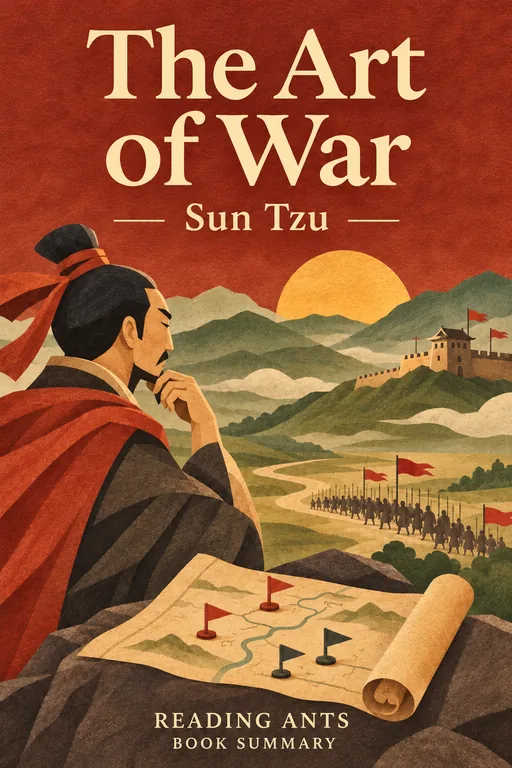
The Art of War
Sun Tzu
The greatest victory is the one won without fighting, achieved through careful planning, knowing both yourself and your opponent, and using deception, flexibility and timing.
🕊️ Philosophy & Religion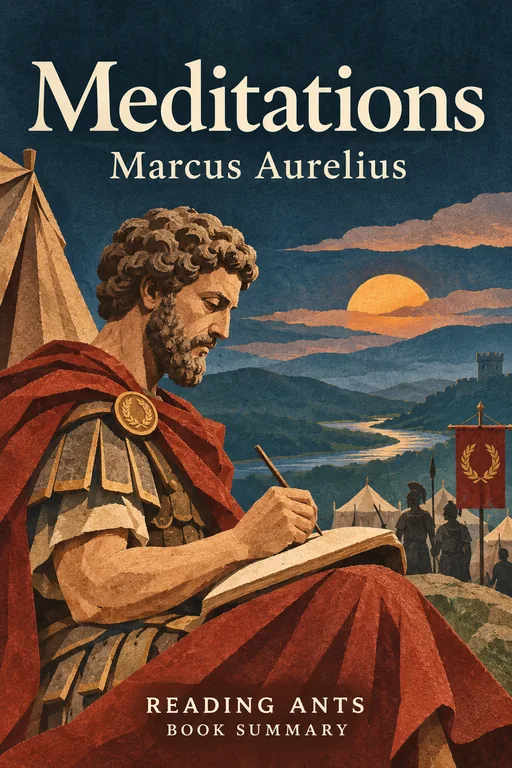
Meditations
Marcus Aurelius
The private notebook of a Roman emperor, reminding himself daily to accept what he cannot control, to act with justice and kindness, and to remember that life is short.
🕊️ Philosophy & Religion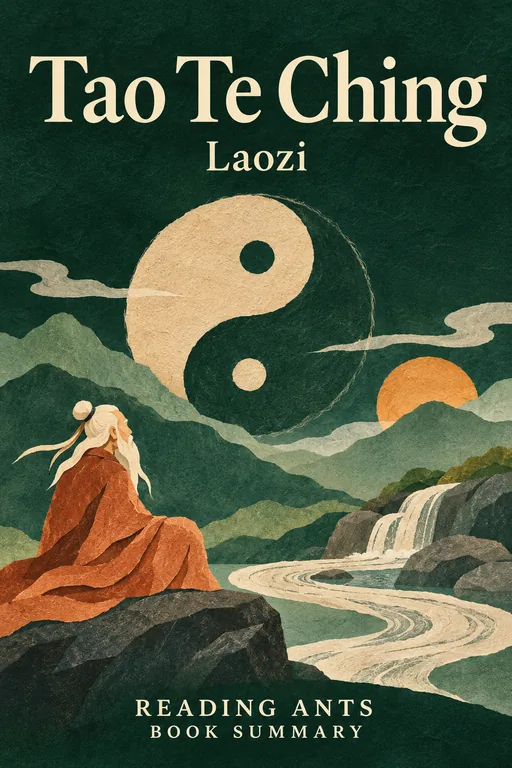
Tao Te Ching
Laozi
The deepest wisdom is to live in harmony with the Tao, the natural way of the universe, by being humble, gentle and simple, and by acting without force.
🕊️ Philosophy & ReligionWant something different?
Pick another topic and we will show you three books to start with.