The Jungle
A Lithuanian immigrant family comes to Chicago hoping for a better life and is crushed by the brutal conditions of the meatpacking industry, until the father discovers socialism as a possible hope.
Overview
The Jungle is a novel by Upton Sinclair, published in 1906, and it is one of the best-known works of muckraking journalism and social fiction in American history. It follows Jurgis Rudkus and his family in the stockyards of Chicago, in the district called Packingtown. Sinclair, a committed socialist, wanted to expose the exploitation of workers, but what shocked the public most were his descriptions of unsanitary food production. The outcry contributed to the passage of food safety laws. Sinclair later said that he aimed at the public’s heart, and hit its stomach.
Main Characters
- Jurgis Rudkus: a young, strong, hopeful Lithuanian immigrant, who works in the stockyards.
- Ona Lukoszaite: his young wife, gentle and frail, who is exploited at work.
- Marija Berczynskas: Ona’s strong, loyal cousin, who works with the family.
- Teta Elzbieta: Ona’s stepmother, who looks after the household.
- Antanas: Jurgis and Ona’s baby son.
- Connor: a boss at Ona’s workplace, who abuses his power.
- Mr. Ostrinski and the socialists: people who introduce Jurgis to political ideas.
Full Summary
A wedding and a dream
The story begins at the wedding feast of Jurgis and Ona, in a Lithuanian community near the Chicago stockyards. The couple, with Ona’s family, have come to America in search of a better life, having heard stories of high wages and opportunity. Jurgis is strong and confident, and believes that anyone who is willing to work hard will succeed. The feast is a heavy expense for people so poor, and the family has already lost much of its savings to swindlers on the way, so they are short of money from the start.
The stockyards
Jurgis finds work in a slaughterhouse, where he sees animals killed and processed with machine-like speed. The pace is murderous, and workers are used up and replaced. The family buys a house, thinking that they will own it, but they are the victims of a swindle: the contract has hidden costs, and they are quickly burdened by payments. The women and children also go to work, in jobs that are dangerous or dirty. Sinclair describes, in detail, how the meat is handled, with disease, filth and adulterated products.
Injury and decline
Jurgis hurts his ankle at work, and he cannot earn for months. The family falls further into debt. When he returns, he finds that his job has been taken, and he must take work in a fertilizer plant, which is far worse. His wife Ona, who has been pressed into a sexual relationship by her boss, Connor, on threat of losing her job, is ashamed, and confesses. In rage, Jurgis attacks Connor, and is sent to jail for thirty days. During this time, the family loses their home.
Death and flight
When Jurgis is freed, he finds the family evicted and back in a crowded boarding house, where Ona is in premature labor because the family has no money for a doctor. The midwife that Jurgis fetches comes too late: the baby dies, and Ona dies soon after. Not long after, his little son, Antanas, drowns when he falls from a rotting wooden sidewalk into the muddy street. These tragedies break Jurgis’s spirit. He leaves the city and becomes a tramp, wandering through the countryside, working on farms and sleeping in the open. He experiences the freedom of nature for a time, but when the weather turns cold in the fall he returns to Chicago.
Back in the city
In Chicago, Jurgis is jailed again after a brawl in a bar, and in the jail he meets again a thief from his first jail term, Jack Duane. He then falls in with Duane and joins the criminal underworld for a time and takes part in political corruption, fixing votes for a powerful local boss and working as a strike-breaker. When he meets Connor again and attacks him, he finds that Connor is protected by the same political machine, and Jurgis has to flee. He sinks back into begging, and then finds Marija, who has become a prostitute and tells him how the rest of the family has fared. He is left without hope.
The discovery of socialism
One night, by chance, Jurgis wanders into a political meeting to get out of the cold, and he hears a speaker describe a political answer to the system that has crushed him. He is moved. A socialist worker takes him home and explains the movement to him, and Jurgis then finds a job at a small hotel run by a socialist and a place among the socialists, with a sense of purpose. He also tells Elzbieta about his new beliefs. The novel ends with an election-night rally, where a speaker urges the crowd to organize and promises that Chicago will one day belong to the workers by the vote. Jurgis, who has lost nearly everything, finds new hope in the idea of collective action.
Why It Matters
The Jungle had an immediate and extraordinary impact. After it was published, public outrage over the conditions in the meatpacking industry led President Theodore Roosevelt to send investigators to Chicago, and Congress passed the Meat Inspection Act and the Pure Food and Drug Act in 1906. The novel became a symbol of the power of literature to bring about reform. It also gave a vivid picture of the life of immigrants and workers in the early twentieth century. Although Sinclair’s socialist message was less successful, the book remains a landmark of social criticism.
Key Takeaways
- Exploitation harms individuals. The family is crushed by an unfair system.
- Information can drive reform. Public outrage led to new laws.
- Immigrant dreams meet hard realities. Jurgis’s hopes are broken.
- Corruption spreads. Politics and business are intertwined.
- Collective action offers hope. Sinclair presents organizing as a solution.
What We Can Learn
You can learn from the book how the conditions of work and the safety of food are connected to law and public attention, and why it matters to ask where products come from and how people are treated. It shows how vulnerable people, such as immigrants and the poor, can be exploited. It also reminds us that writers and citizens can make a difference when they reveal injustice. Consider how you might learn about the working conditions behind the things that you buy, and support fair treatment.
Criticism and Counterpoints
Some readers find the novel’s characters flat and the plot melodramatic, and feel that Sinclair is more interested in making a case than in telling a story. The final chapters, in which the book turns into a socialist lecture, are often criticized as heavy-handed and unconvincing. Others say that Sinclair exaggerated some details of the industry’s conditions, though investigations found much to confirm. A few modern readers note that its portrayal of different ethnic groups reflects the prejudices of its time. Still, its historical importance is unquestioned.
Who Should Read It
This book is for mature readers from about fourteen or fifteen who are interested in history, labor and social reform. It contains disturbing scenes, and it is long. Students of American history will find it valuable, and those who like it may read The Grapes of Wrath.
Want the whole book?
A summary is a taste, not the meal. Here is where to find the full book.
You reached the end 🎉
Nicely done. Mark this one as read, and we will suggest what to read next.
Read this next
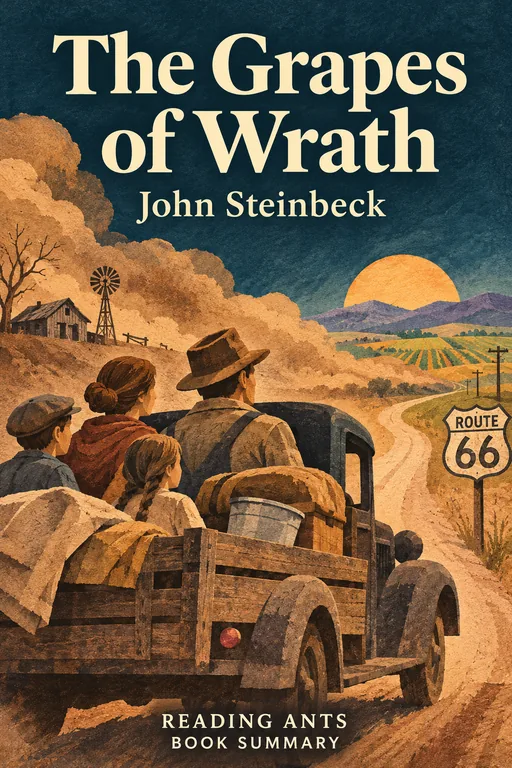
The Grapes of Wrath
John Steinbeck
Driven off their Oklahoma farm by drought and the banks during the Great Depression, a poor family travels west to California in search of work, only to find exploitation and hunger, yet they hold on to their dignity and compassion.
📜 Classics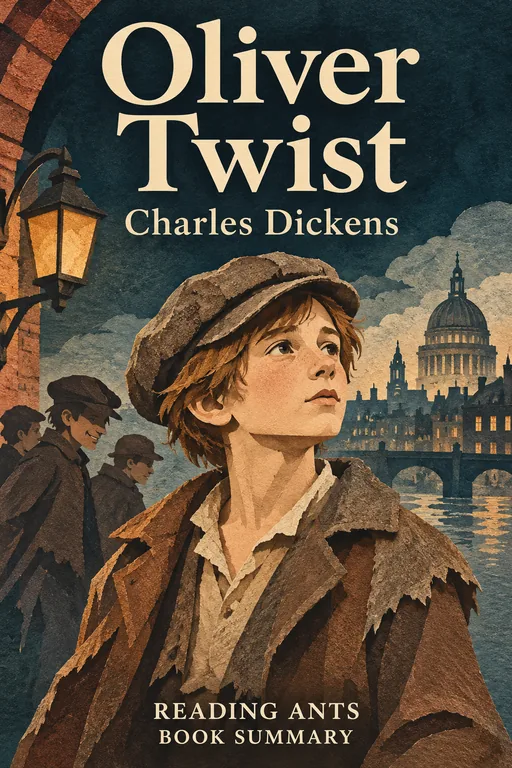
Oliver Twist
Charles Dickens
An orphan boy born in a workhouse escapes to London, where he falls into a gang of child thieves, and despite cruelty and crime around him, his goodness survives until he finds a loving home and learns the secret of his birth.
📜 Classics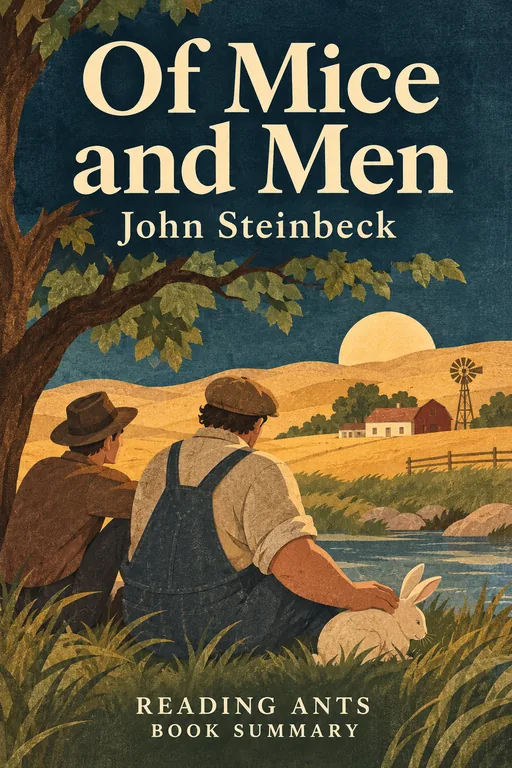
Of Mice and Men
John Steinbeck
Two traveling farmworkers during the Great Depression, quick-witted George and the huge, gentle but mentally disabled Lennie, dream of owning their own small farm, but their dream ends in tragedy.
📜 ClassicsBleak House
Charles Dickens
In a vast, slow lawsuit that has swallowed generations of a family, a young woman named Esther Summerson discovers the secret of her birth, while Dickens attacks the courts, poverty and neglect that blight Victorian London.
📜 Classics
Pride and Prejudice
Jane Austen
Quick-witted Elizabeth Bennet and the proud, wealthy Mr. Darcy badly misjudge each other, and only by facing their own faults do they find their way to love.
📜 Classics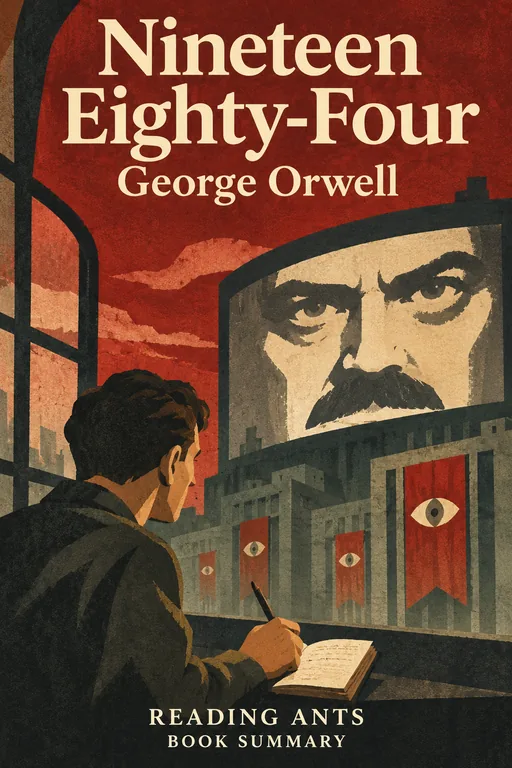
Nineteen Eighty-Four
George Orwell
In a future Britain ruled by an all-seeing Party, one man secretly rebels by keeping a diary and falling in love, and discovers just how completely a totalitarian state can crush the human mind.
📜 ClassicsWant something different?
Pick another topic and we will show you three books to start with.