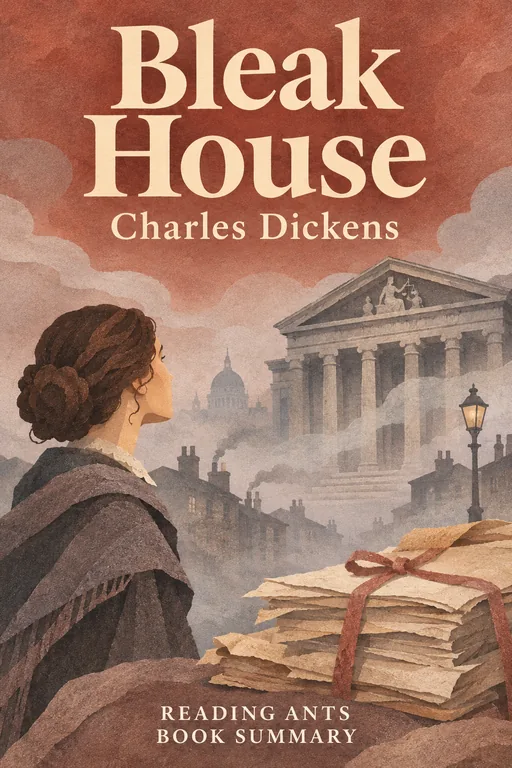
Bleak House
In a vast, slow lawsuit that has swallowed generations of a family, a young woman named Esther Summerson discovers the secret of her birth, while Dickens attacks the courts, poverty and neglect that blight Victorian London.
Overview
Bleak House is a novel by Charles Dickens, published in monthly parts in 1852 and 1853. It has two narrators: Esther Summerson, a gentle, modest young woman who tells her own story in the past tense, and an anonymous narrator who describes the wider world in the present tense, and who is often angry and satirical. The book is a mixture of mystery, social criticism and comedy, with dozens of characters. Its target is the Court of Chancery, a legal system that dragged cases on for years, and the many people it ruined.
Main Characters
- Esther Summerson: an orphan raised in hardship, kind, hardworking and unaware of her parentage.
- John Jarndyce: a generous, gruff guardian who hates the fuss of the lawsuit.
- Richard Carstone and Ada Clare: two young wards, cousins, who fall in love.
- Lady Dedlock: a proud, cold aristocrat with a hidden past.
- Sir Leicester Dedlock: her older, honorable husband.
- Mr. Tulkinghorn: the Dedlocks’ secretive lawyer.
- Inspector Bucket: a shrewd detective who investigates the case.
Full Summary
The case and the wards
The novel opens in a fog-bound London, where the Court of Chancery is considering the case of Jarndyce and Jarndyce, a dispute over a will that has lasted so long that no one remembers its beginning. John Jarndyce, who has no wish to benefit from it, takes in two young cousins, Richard Carstone and Ada Clare, as wards, and he hires Esther Summerson, who was raised by a harsh godmother, as a companion for Ada. They go to his house, Bleak House, in the country, which is far more cheerful than its name.
Lady Dedlock’s secret
At the same time, the story follows the aristocratic Dedlocks. Lady Dedlock sees the handwriting on a legal document and is suddenly faint. Mr. Tulkinghorn, the family lawyer, notices her reaction and begins to investigate. The handwriting belongs to a poor copyist known as Nemo, who dies of an overdose. Lady Dedlock secretly visits his grave, with the help of a poor crossing sweeper, Jo. Tulkinghorn watches her, seeing that she is hiding something that could ruin her and her husband.
Richard and the lawsuit
Richard Carstone, restless and unable to settle on a career, becomes obsessed with the lawsuit, hoping that it will make him rich. He drifts from one profession to another, and he spends his money. Despite John Jarndyce’s warnings, he becomes bitter and suspicious. Ada, who loves him, eventually marries him in secret and tries to support him. Earlier in the story, Esther fell seriously ill: she and Charley took the sick boy Jo into Bleak House, Charley fell ill first and Esther caught the illness from her, and it left her face scarred. She is afraid that she will no longer be loved, but she is cheerful and brave, and those around her stay loyal.
Esther’s parentage
Esther gradually learns the truth: Lady Dedlock is her mother, and Nemo, the copyist, was her father, Captain Hawdon, a former lover. Lady Dedlock had been told that her baby died. When Esther and Lady Dedlock meet, they share a tender and painful scene, but Lady Dedlock says that they can never acknowledge each other, as she must protect her position. The secret is a threat, and Tulkinghorn uses his knowledge to tighten his grip, at last threatening to reveal everything to Sir Leicester.
Murder and flight
Tulkinghorn is found murdered, and suspicion falls on several people, including Lady Dedlock. Inspector Bucket investigates, and he reveals that the killer was Hortense, Lady Dedlock’s French maid, who had a grudge. In the meantime, Sir Leicester learns the truth about his wife, and he forgives her, but she has already left, thinking that she is disgraced. Esther joins Bucket in a desperate search for her mother, through winter streets, but when they find her, Lady Dedlock has died at the gate of the graveyard where Hawdon is buried.
The end of the case
The suit of Jarndyce and Jarndyce at last comes to an end, when a later will is found, but the legal costs have eaten the whole estate. Richard, broken in health and spirit, dies soon afterward, asking forgiveness of Jarndyce and of Ada and leaving her expecting their child. John Jarndyce, who had planned to marry Esther, instead releases her to marry the kind doctor Allan Woodcourt. He gives them a new home, also called Bleak House. The novel ends with Esther’s quiet happiness, and a note of hope.
Why It Matters
Bleak House is considered by many to be Dickens’s masterpiece, and one of the great English novels. It is admired for its opening description of London in the fog, its range of characters, its use of two narrators, and its early use of a detective in Inspector Bucket. Dickens used the book to criticize the legal system, which was slow and ruinous, and the indifference of the wealthy to the poor, as in the story of the outcast Jo. The novel influenced later crime fiction and social novels, and it was adapted for the BBC and for film several times.
Key Takeaways
- Institutions can destroy lives. The endless lawsuit ruins people’s health and fortunes.
- Neglect is a form of cruelty. Jo’s death shows what society ignores.
- Secrets have consequences. Lady Dedlock’s past drives the plot.
- Goodness can be quiet. Esther’s humble kindness changes those around her.
- Obsession can consume. Richard’s hope in the case leads him to ruin.
What We Can Learn
You can learn from the book how institutions that seem distant can hurt real people, and why it matters to ask whether systems are fair and efficient. The novel also encourages compassion for those at the edge of society, as in Jo’s story, and shows how a person like Esther can behave with grace under hardship. Richard’s obsession warns against pinning hopes on a distant windfall. If you read it, notice how Dickens uses details, humor and anger to make readers care about people they might otherwise ignore.
Criticism and Counterpoints
Some readers find the novel too long, too crowded with characters and subplots, and slow in its first chapters. Esther’s narrative has been criticized as too sweet and self-deprecating, and some find it hard to believe in her modesty. Critics also note that some plot developments, such as the case’s end and the coincidences of identity, depend on convenience. The portrayal of Jo, and of some other characters, is sentimental to modern tastes. In addition, the satire of Chancery was aimed at a system that was already being reformed. Even so, the novel is widely admired.
Who Should Read It
This book is for readers from about thirteen or fourteen who enjoy long classic novels, mysteries and social history. It is a long book and rewards patience. Readers new to Dickens might prefer Oliver Twist or A Christmas Carol first, but those who are ready will find a rich and powerful story.
Want the whole book?
A summary is a taste, not the meal. Here is where to find the full book.
You reached the end 🎉
Nicely done. Mark this one as read, and we will suggest what to read next.
Read this next
Great Expectations
Charles Dickens
A poor orphan boy suddenly receives a fortune from a secret benefactor and becomes a gentleman in London, but he learns that wealth and status mean nothing without loyalty, kindness and gratitude.
📜 Classics
Oliver Twist
Charles Dickens
An orphan boy born in a workhouse escapes to London, where he falls into a gang of child thieves, and despite cruelty and crime around him, his goodness survives until he finds a loving home and learns the secret of his birth.
📜 Classics
David Copperfield
Charles Dickens
From a sad childhood of cruelty and poverty to adult success as a writer, David Copperfield tells his own life story, with unforgettable friends and villains along the way.
📜 Classics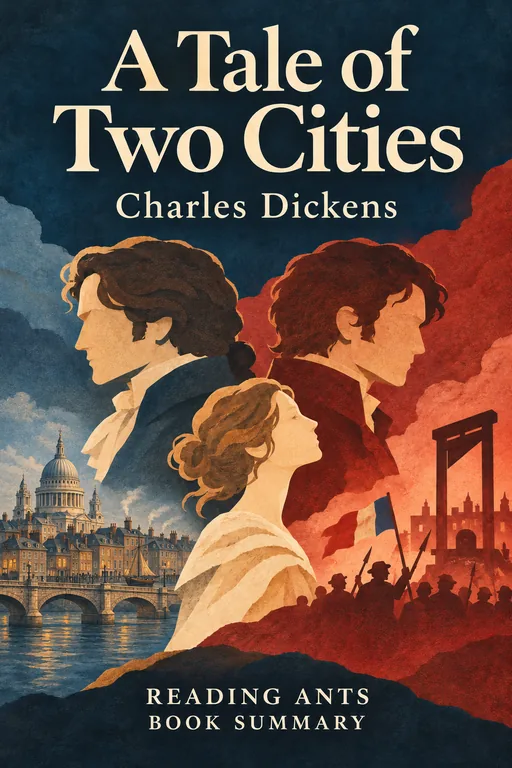
A Tale of Two Cities
Charles Dickens
During the French Revolution, the lives of a French aristocrat who rejects his family, the woman he loves and a brilliant but wasted English lawyer become entangled, until one man makes the ultimate sacrifice for love.
📜 Classics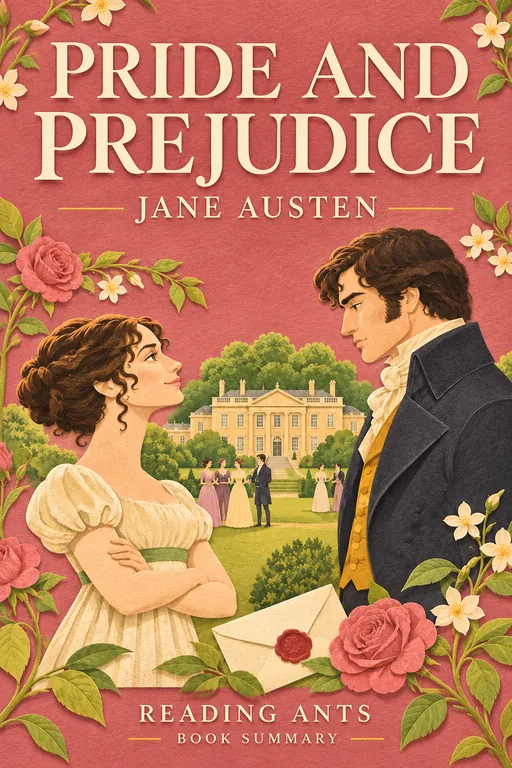
Pride and Prejudice
Jane Austen
Quick-witted Elizabeth Bennet and the proud, wealthy Mr. Darcy badly misjudge each other, and only by facing their own faults do they find their way to love.
📜 Classics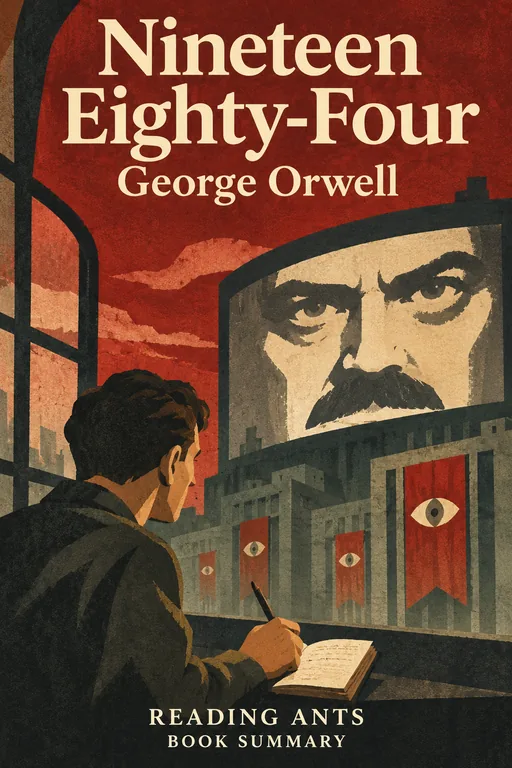
Nineteen Eighty-Four
George Orwell
In a future Britain ruled by an all-seeing Party, one man secretly rebels by keeping a diary and falling in love, and discovers just how completely a totalitarian state can crush the human mind.
📜 ClassicsWant something different?
Pick another topic and we will show you three books to start with.