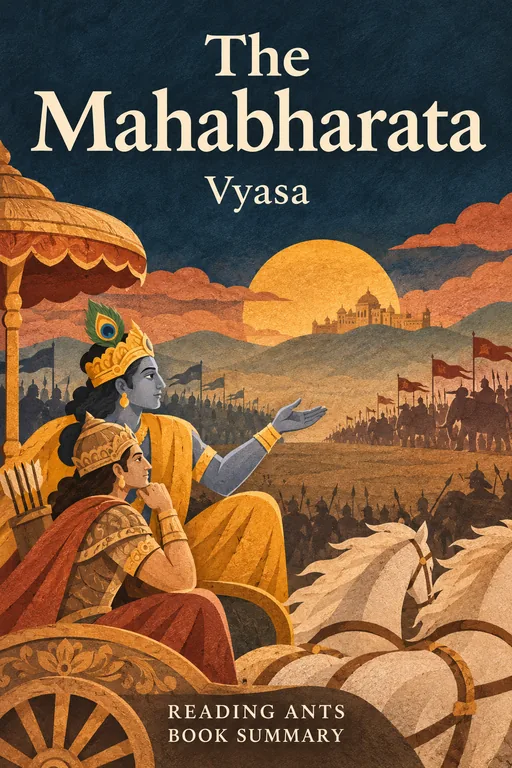
The Mahabharata
Original title: महाभारत
Two branches of a royal family, the five righteous Pandava brothers and their hundred cousins the Kauravas, fight over the throne of an ancient Indian kingdom, leading to a catastrophic war that raises deep questions about duty, justice and the meaning of life.
Overview
The Mahabharata is one of the two great epics of ancient India, along with the Ramayana, and one of the longest poems ever composed, with about one hundred thousand verses in its fullest versions. It is traditionally credited to the sage Vyasa, who also appears in the story, and it developed over many centuries, roughly between 400 BCE and 400 CE. At its center is a dynastic struggle between cousins for the throne of Hastinapura, culminating in an eighteen-day war at Kurukshetra. Woven into the story are countless other tales, debates on philosophy and ethics, and the Bhagavad Gita, one of the most important texts of Hinduism. The epic has shaped the religion, culture and imagination of South and Southeast Asia for thousands of years.
Main Characters
- Yudhishthira: the eldest Pandava, devoted to truth and righteousness (dharma).
- Bhima: the second Pandava, enormously strong.
- Arjuna: the third Pandava, a peerless archer.
- Nakula and Sahadeva: the youngest Pandava twins.
- Draupadi: the brave, proud wife of all five Pandavas.
- Kunti: the Pandavas’ mother.
- Duryodhana: the eldest Kaurava, jealous and ambitious.
- Krishna: an incarnation of the god Vishnu, friend and guide to the Pandavas.
- Karna: a great warrior who fights for the Kauravas, the Pandavas’ secret elder brother, born to Kunti before her marriage.
- Bhishma: the wise great-uncle of both families, sworn to serve the throne.
Full Summary
Two Families
The kingdom of Hastinapura is ruled by the Kuru dynasty. The elder prince, Dhritarashtra, is born blind and so cannot inherit the throne, and his younger brother, Pandu, becomes king. Pandu has five sons, the Pandavas, born through divine blessings: Yudhishthira, Bhima, Arjuna, and the twins Nakula and Sahadeva, sons of his second wife, Madri. Dhritarashtra and his wife, Gandhari, have a hundred sons, the Kauravas, led by Duryodhana. When Pandu dies, the Pandavas are raised alongside their cousins, and the old patriarch Bhishma, who long ago vowed never to marry or claim the throne, protects the family.
The cousins are trained in warfare by the teacher Drona, and the Pandavas, especially Arjuna, excel. Duryodhana grows bitterly jealous and tries several times to kill them, once by trapping them in a palace made of flammable lac. They escape secretly.
Draupadi and Indraprastha
In disguise, Arjuna wins the hand of the princess Draupadi in an archery contest. Through a misunderstanding with their mother, Kunti, Draupadi becomes the wife of all five brothers. Seeking peace, the blind king divides the kingdom, and the Pandavas build a splendid new city, Indraprastha. Yudhishthira becomes a respected king, and the Pandavas become close friends with Krishna, a prince who is an incarnation of the god Vishnu.
The Dice Game
Consumed by envy, Duryodhana invites Yudhishthira to a game of dice, knowing that his uncle Shakuni is a master cheater. Yudhishthira, unable to refuse a challenge, loses everything: his wealth, his kingdom, his brothers, himself and finally Draupadi. Draupadi is dragged into the court, and the Kauravas try to strip off her sari. She prays to Krishna, and her sari miraculously becomes endless, protecting her. Horrified elders intervene and their losses are restored, but a second game of dice brings the exile. The Pandavas are forced into exile in the forest for twelve years, followed by a thirteenth year in which they must live in disguise without being discovered.
Exile and Return
During their long exile, the Pandavas face many trials, gather divine weapons and hear stories from wise sages. In the final year, they live in disguise at the court of King Virata, and survive undiscovered. But when they return and ask for their kingdom, Duryodhana refuses to give them even five villages. Krishna tries to make peace, but fails. War becomes inevitable, and kingdoms across India take sides. Krishna offers to be Arjuna’s chariot driver, though he promises not to fight himself.
The Bhagavad Gita
On the battlefield of Kurukshetra, as the two vast armies face each other, Arjuna sees his teachers, cousins and relatives on the other side, and loses his will to fight. He drops his bow, overcome with grief at the thought of killing his own family. Krishna then speaks to him. This conversation, the Bhagavad Gita, explains that the soul is eternal and cannot be killed, that one must perform one’s duty without attachment to the results, and that devotion, knowledge and selfless action are paths to the divine. Krishna reveals his cosmic form, and Arjuna agrees to fight.
The War
The war lasts eighteen days and is terrible. Great heroes die, often through trickery that shows how even righteous people compromise in war. Bhishma, who cannot be defeated, is brought down when Arjuna shoots him from behind a warrior Bhishma refuses to fight. Drona is tricked into laying down his weapons by a half-truth that his son is dead. Karna, who turns out to be the Pandavas’ elder brother, born to Kunti before her marriage, is killed when his chariot wheel sinks into the earth. Finally, Bhima defeats Duryodhana in a mace duel by striking him below the waist, breaking the rules of combat. That night, a vengeful warrior slaughters the Pandavas’ sleeping sons.
Peace and the Final Journey
The Pandavas win, but almost everyone they love is dead. Yudhishthira becomes king, grieving deeply. Bhishma, dying on a bed of arrows, gives long teachings on duty and kingship. Years later, Krishna dies, and the Pandavas, tired of the world, set out with Draupadi on a final journey toward the Himalayas. One by one, they fall along the way, until only Yudhishthira and a loyal dog remain. When the god Indra offers to take him to heaven but not the dog, Yudhishthira refuses to abandon it. The dog reveals itself as the god of dharma. A further test follows: Yudhishthira is shown a vision of hell, where he refuses to leave his suffering brothers, and then learns that it was an illusion. He enters heaven, where he is finally reunited with his family, and even his former enemies, in peace.
Why It Matters
The Mahabharata is one of the most important works in the history of world literature and religion. In India and across South and Southeast Asia, its stories are told in temples, homes, dance, puppet theater and television. A television series in the late 1980s attracted enormous audiences in India. Its characters and stories are known by hundreds of millions of people.
The Bhagavad Gita, a section of the epic, is one of the most influential spiritual texts ever written, inspiring figures such as Mahatma Gandhi. The epic explores complex moral questions about duty, justice, war and fate, refusing simple answers. An old saying claims that whatever is found in the Mahabharata may be found elsewhere, and whatever is not found in it exists nowhere.
Key Takeaways
- Duty is complex. Characters struggle to know the right thing to do.
- Envy and greed lead to destruction. Duryodhana’s jealousy brings ruin to all.
- Even good people make compromises. The Pandavas win through questionable means.
- Act without attachment to results. The Gita teaches selfless action.
- War has no real winners. Victory brings grief and loss.
What We Can Learn
The Mahabharata teaches that moral choices are often difficult. There isn’t always a clear right answer, and we must think carefully about our duties to family, community and our own conscience.
It also warns about the destructive power of envy. Duryodhana’s jealousy of his cousins grows until it destroys his whole family. Learning to celebrate others’ success, rather than resent it, protects us and those we love.
Finally, the Bhagavad Gita’s teaching about doing our best without worrying about the results can help with stress. Focusing on effort and integrity, rather than outcomes we can’t control, brings peace.
Criticism and Counterpoints
The epic’s enormous length and its many stories within stories make it difficult to read in full. Most readers encounter it through abridged versions, retellings or adaptations. Its many characters, names and genealogies can be confusing.
Modern readers have also debated its social values. The epic reflects the caste system, and characters like Karna and Ekalavya suffer discrimination because of their birth. The treatment of Draupadi, gambled away and humiliated, raises questions about the status of women, though she is also one of the epic’s strongest, most outspoken characters. Interpretations of the Gita’s teaching on war have also been debated, with some reading it as a justification for violence and others as a spiritual allegory.
Who Should Read It
This epic is for anyone interested in Indian culture, mythology, religion or philosophy. Most readers should start with a well-written abridged retelling, such as those by C. Rajagopalachari or R. K. Narayan. Older teens and adults will appreciate its moral depth.
Want the whole book?
A summary is a taste, not the meal. Here is where to find the full book.
You reached the end 🎉
Nicely done. Mark this one as read, and we will suggest what to read next.
Read this next
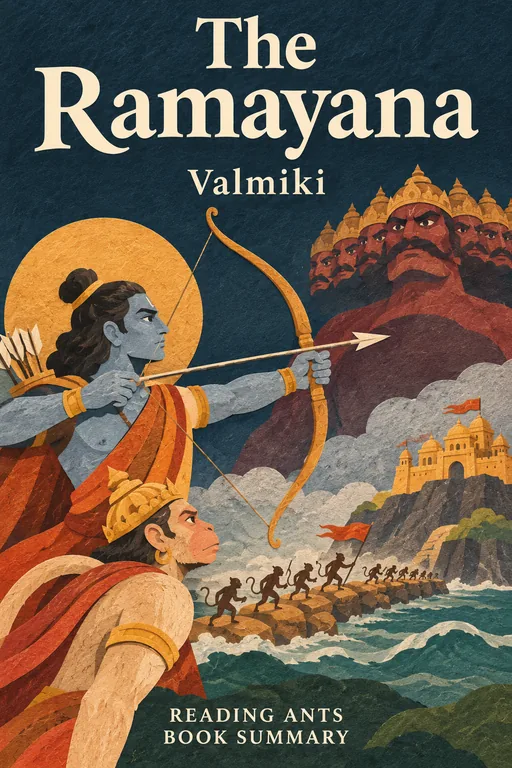
The Ramayana
Valmiki
The virtuous prince Rama is exiled from his kingdom, and when his beloved wife Sita is kidnapped by the demon king Ravana, he rescues her with the help of his loyal brother and an army of monkeys, with the devoted Hanuman as its great hero.
🎭 Epics, Drama & Poetry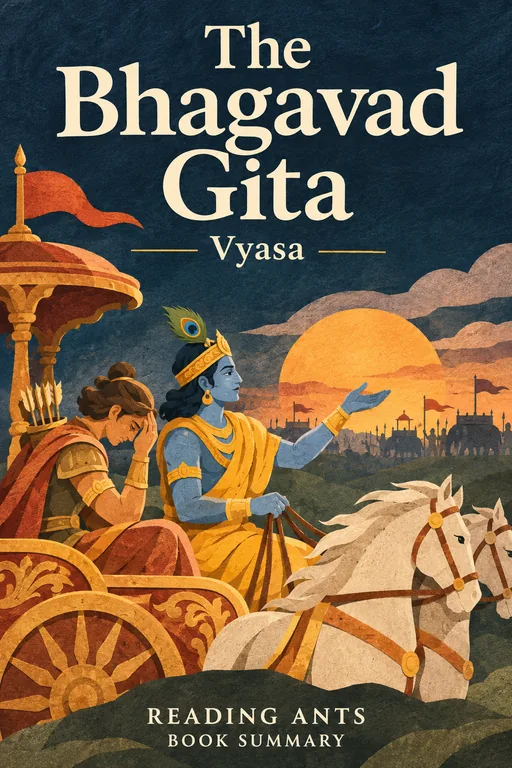
The Bhagavad Gita
Vyasa
On the eve of a great battle, the warrior Arjuna despairs, and the god Krishna, serving as his charioteer, teaches him about duty, the soul, selfless action and devotion.
🕊️ Philosophy & Religion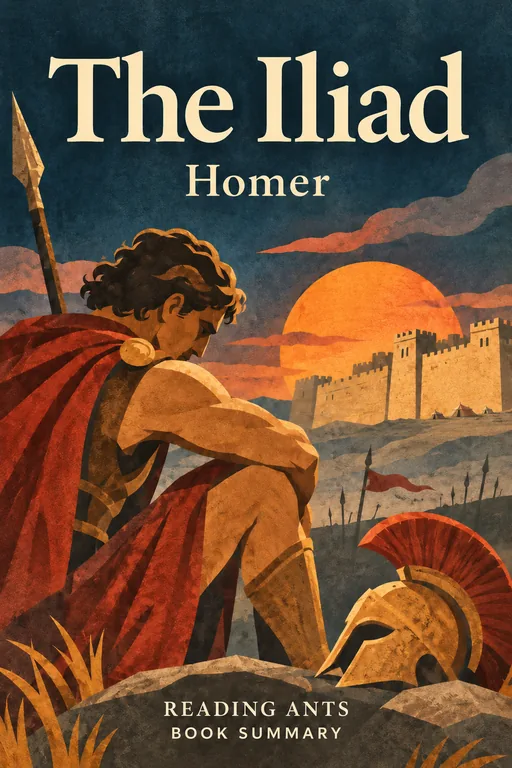
The Iliad
Homer
During the final year of the Trojan War, the great Greek warrior Achilles withdraws from battle in anger, and only the death of his dearest friend drives him back to fight, leading to terrible loss and a moment of shared human grief with his enemy.
🎭 Epics, Drama & Poetry
The Odyssey
Homer
After the Trojan War, the clever hero Odysseus struggles for ten years against monsters, gods and temptations to return home to his faithful wife and son, then must win back his house from the men trying to steal it.
🎭 Epics, Drama & Poetry
The Epic of Gilgamesh
Anonymous
A proud, powerful king of ancient Mesopotamia gains a true friend, loses him to death, and journeys to the edge of the world in search of eternal life, only to learn that what lasts is the life and legacy we leave behind.
🎭 Epics, Drama & Poetry
Hamlet
William Shakespeare
A grieving prince of Denmark learns from his father's ghost that his uncle murdered the king to take the throne, and his struggle to decide whether and how to take revenge leads to madness and death.
🎭 Epics, Drama & PoetryWant something different?
Pick another topic and we will show you three books to start with.