 Reading Ants
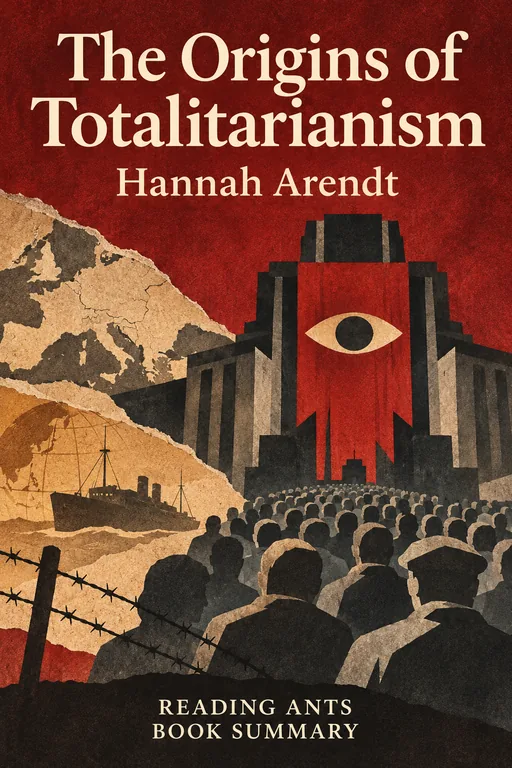
The Origins of Totalitarianism
Hannah Arendt examines how antisemitism, imperialism and the breakdown of society in Europe prepared the ground for the totalitarian regimes of Nazi Germany and Stalin's Soviet Union, and what made these regimes new and uniquely terrible.
Overview
The Origins of Totalitarianism was first published in 1951 by Hannah Arendt, a German-born Jewish political thinker who had fled Nazi Germany and lived in France and then the United States. The book is long and difficult, and has three parts: Antisemitism, Imperialism and Totalitarianism. Arendt does not say that the earlier developments caused the later ones in a simple way. Instead, she traces “elements” that crystallized into a new form of government that aimed to control every part of human life. Her ideas remain influential in debates about freedom and tyranny.
Full Summary
1. Antisemitism and the nation-state
The idea: In the first part, Arendt studies the position of Jewish people in Europe in the nineteenth and early twentieth centuries. She shows how many Jews were wealthy or influential in relation to governments, but had no political power of their own, which made them targets of resentment when the old order broke down. She discusses events such as the Dreyfus affair in France, in which a Jewish army officer was falsely accused of treason, to show how modern antisemitism became a political tool.
In real life: When a group is blamed for the problems of a society, it is often because it is visible, and defenseless in the ways that count.
2. Imperialism and race thinking
The idea: The second part describes how European expansion into Africa and Asia in the late nineteenth century brought new ideas and practices, including the belief in natural racial hierarchies, and rule by officials who answered to no one. Arendt argues that this experience of lawless power overseas returned to Europe and helped to prepare people to accept similar treatment of other human beings at home. She also describes how the nation-state weakened.
In real life: Habits of treating some people as less than fully human can spread from one place to another.
3. Stateless people and the right to have rights
The idea: After the First World War, millions of people became refugees or lost their citizenship. Arendt points out that human rights, which were supposed to belong to everyone, turned out to be meaningless for those who had no state to protect them. She introduces the idea that the first right is the right to belong to a political community, which she calls the right to have rights.
In real life: A person without papers may find that no one is responsible for protecting them, no matter what is said about universal rights.
4. Masses, loneliness and ideology
The idea: In the third part, Arendt discusses how totalitarian movements gain followers among people who feel disconnected and who have lost their place in society. In such conditions, she argues, individuals feel superfluous and seek something that gives them a sense of meaning and belonging. Ideologies that claim to explain all of history and to predict its outcome have a strong appeal. The movement then demands total loyalty.
In real life: A lonely person may be drawn to a group that promises certainty and friendship, even if its ideas are harmful.
5. Terror and the camps
The idea: Arendt says that totalitarian regimes are different from older dictatorships because they do not aim only to control behavior, but to remake human beings and to destroy the individual’s capacity to think and act on their own. Terror is used not only against opponents but against everyone, and concentration camps become places where this is tested. She shows how propaganda, secret police and constant change keep people off balance.
In real life: When rules change constantly and no one knows what is allowed, people give up trying to resist.
6. Lies, loyalty and the breakdown of common sense
The idea: Arendt explores how totalitarian propaganda creates a fictional world and demands that people accept it, even in the face of clear evidence. Loyal followers learn to ignore their own experience, and the distinction between truth and falsehood is eroded. She suggests that the danger is not only the lies themselves but the loss of a shared reality in which people can think together.
In real life: If you can no longer agree on basic facts, it is hard to discuss anything.
Why It Matters
The Origins of Totalitarianism is considered one of the major works of political thought of the twentieth century. It helped to define the concept of totalitarianism, and to separate it from ordinary dictatorship or tyranny. Its ideas about statelessness, the right to have rights, loneliness and the role of ideology are used in discussions of refugees, human rights, propaganda and extremism. The book was widely read in the Cold War, and has had renewed attention in periods of political crisis, when people have asked how freedoms can be lost. It also shows how a thinker tried to understand a catastrophe that she had lived through, with moral seriousness.
Key Takeaways
- Totalitarianism is new. It aims at total control, not just obedience.
- Rights need protection. Without membership in a political community, rights can be empty.
- Loneliness is dangerous. Isolated people are vulnerable to extremist movements.
- Ideology and terror work together. One offers the story and the other enforces it.
- Truth is fragile. When facts lose meaning, freedom is at risk.
What We Can Learn
You can take from this book a sense of why shared facts and open institutions are valuable. Notice when groups are blamed for every problem, and ask what is behind it. Support those who are refugees or stateless, since their situation shows what happens without protection. Build communities in which people feel they belong and can think for themselves. And remember that clear thinking and conversation are a form of resistance. This is a demanding book, and it is worth taking time to read slowly.
Criticism and Counterpoints
Critics have raised many objections. Some historians say that Arendt’s link between antisemitism, imperialism and totalitarianism is too loose, and that her account of the history is uneven, with more attention to some countries than to others. Others say that her treatment of the Soviet Union is thinner than her treatment of Nazi Germany, that she leaned heavily on antisemitic sources, or that she overstated the role of scientific racism in colonial rule. The book’s style is difficult, and some of its claims are speculative rather than based on evidence. Her ideas about the “banality” of evil in a later book also led to controversy. Still, the work is valued for its insight.
Who Should Read It
This book is for serious readers of politics, history and philosophy, and for students who want to understand the nature of dictatorship. It is long, dense and sometimes dark. Many readers begin with selections, particularly the third part. Those who prefer a simple narrative history should start with a general history of the period.
Want the whole book?
A summary is a taste, not the meal. Here is where to find the full book.
You reached the end 🎉
Nicely done. Mark this one as read, and we will suggest what to read next.
Read this next
Eichmann in Jerusalem
Hannah Arendt
Hannah Arendt reports on the trial of the Nazi official Adolf Eichmann in Jerusalem and argues that he was not a monster but a thoughtless bureaucrat, which led her to the idea of the banality of evil.
🏛️ History
On Tyranny
Timothy Snyder
Historian Timothy Snyder draws twenty practical lessons from the history of fascism, communism and other dictatorships of the twentieth century, to help ordinary citizens defend freedom in democratic societies today.
🏛️ History
The Rise and Fall of the Third Reich
William L. Shirer
Journalist William Shirer tells the story of how Adolf Hitler came to power in Germany, built a dictatorship, started the Second World War and carried out genocide, until the regime's defeat in 1945.
🏛️ History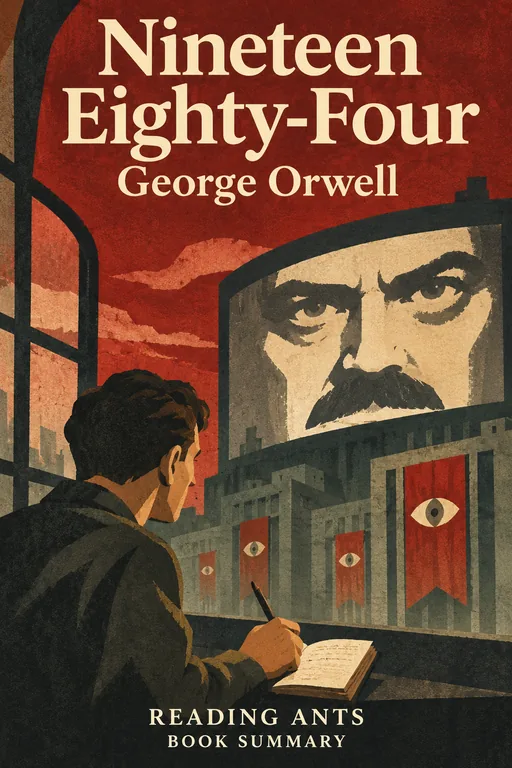
Nineteen Eighty-Four
George Orwell
In a future Britain ruled by an all-seeing Party, one man secretly rebels by keeping a diary and falling in love, and discovers just how completely a totalitarian state can crush the human mind.
📜 Classics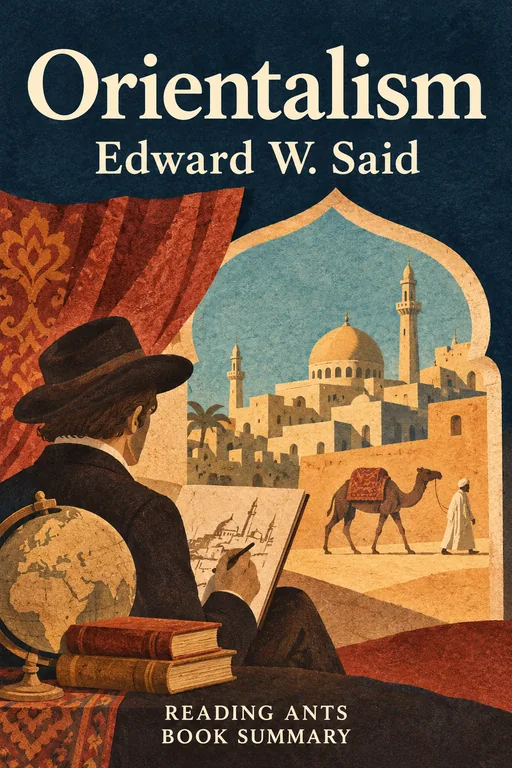
Orientalism
Edward W. Said
Edward Said argues that Western writers, scholars and governments created an image of "the Orient," especially the Middle East, as exotic, backward and in need of rule, and that this image served European power.
🏛️ History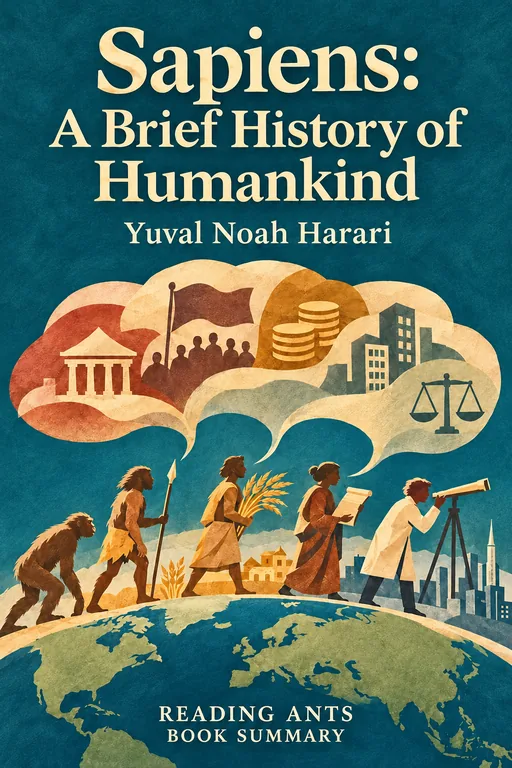
Sapiens: A Brief History of Humankind
Yuval Noah Harari
Humans came to rule the planet not because we are the strongest animals but because we can believe in shared stories (gods, nations, money, companies) that let millions of strangers cooperate.
🏛️ HistoryWant something different?
Pick another topic and we will show you three books to start with.