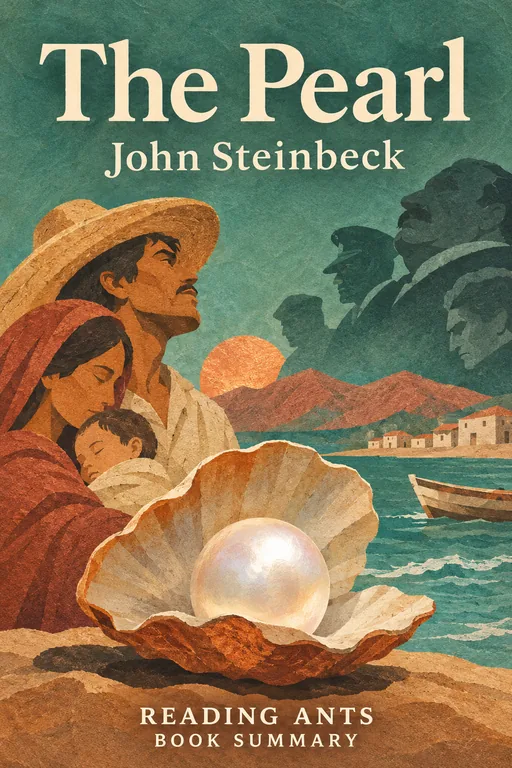
The Pearl
A poor Mexican pearl diver finds an enormous pearl that he hopes will change his family's life, but the greed and cruelty it awakens in others bring disaster.
Overview
The Pearl is a short novel by John Steinbeck, published in 1947, based on a Mexican folk tale that he had heard on a trip to Baja California. Told in simple, poetic language, it is a parable about wealth, greed and social injustice. Its hero, Kino, lives with his wife and baby son in a village by the sea in La Paz, and his discovery of a great pearl seems like a stroke of fortune. Steinbeck was known for writing about the poor, and the book shows his sympathy for the powerless and his distrust of the powerful.
Main Characters
- Kino: a young pearl diver, strong, proud and hopeful.
- Juana: his wife, brave and wise, who senses danger before he does.
- Coyotito: their baby son, whose illness begins the story.
- The doctor: a rich man in the town, who refuses to treat the poor.
- The pearl buyers: dealers who conspire to cheat Kino.
- Juan Tomás: Kino’s brother, who stands by him.
- The priest: the village priest, who speaks of gratitude.
Full Summary
The scorpion
Kino lives in a brush house near the sea with his wife, Juana, and their baby son, Coyotito. One morning, as they are starting their day, a scorpion crawls down the rope of the baby’s hanging cradle. Kino tries to catch it, but the baby shakes the rope, the scorpion falls into the cradle and stings him. Juana sucks the poison, and the villagers gather, urging Kino to take the child to the doctor in the town. The doctor, who lives in a fine house, turns the family away because they are poor. The family is humiliated, and the baby’s life is at risk.
The great pearl
That day, Kino dives for oysters, hoping to find a pearl to pay the doctor. He finds one that is enormous, the largest that he has ever seen, perfect and shining. The news spreads, and the village is thrilled. Kino dreams of what the pearl will bring, such as a proper marriage in the church, clothes, a rifle and, above all, an education for Coyotito. The doctor, who now has an interest, comes to the house, pretending that he is a friend, and he treats the baby, while trying to learn where the pearl is hidden.
Greed awakens
That first night, a thief tries to steal the pearl, and Kino fights him off. The next day the pearl dealers, who are all secretly working for one buyer, offer far too little, and Kino angrily refuses and decides to take it to the capital. Juana says that the pearl is evil, and begs him to throw it into the sea, but he refuses, believing that it is his only chance to rise from poverty. His pride and his hope blind him.
The attacks
More attackers come, and Kino kills one of them in self-defense. He finds that his canoe has been damaged, so that he cannot leave by sea, and that his house has been looted and burned. The family hides at the home of Kino’s brother, Juan Tomás. They decide to flee at night, through the mountains to the capital, but they are pursued by trackers. Kino knows that he has become a hunted man, and Juana remains by his side, loyal and brave, and carrying the baby. The pearl, which was to bring happiness, has made them fugitives.
The mountains
In the mountains, the family hides in a cave, as the trackers close in. Kino decides that the only way to stop the trackers is to attack them in the dark, and he creeps down toward their camp. One of the trackers hears a cry and fires toward it, thinking that it is a coyote pup. Kino kills all three men, but then he discovers that the shot has killed Coyotito. In the silence that follows, Kino and Juana return to the town, carrying the child.
The sea
Kino and Juana walk back into the village, with the body of their son, and the people watch them in silence. Kino carries the rifle, and Juana walks behind him. At the water’s edge, Kino takes the pearl from his clothes, looks at it, and sees in its surface the disasters that have come upon his family. He throws it back into the sea, and it sinks. The tale ends with the pearl lost, and the music of the sea in their ears.
Why It Matters
The Pearl is one of Steinbeck’s best-known works, and it is widely read in schools, thanks to its short length and clear message. It works as a parable, showing how wealth can corrupt and how a society that exploits the poor creates tragedy. The book also demonstrates Steinbeck’s skill at writing in a simple, almost fable-like style, with music, color and symbolism. It has been adapted for film, and for the stage, and it continues to prompt discussions of greed, inequality and the cost of ambition. Because it is so short, it is often a reader’s first encounter with Steinbeck, and it leads many to his longer novels.
Key Takeaways
- Greed can destroy. The pearl brings out the worst in people.
- Poverty makes people vulnerable. The doctor and dealers exploit Kino.
- Hope can blind. Kino refuses to see the danger.
- Family is what matters. The loss of Coyotito shows the real cost.
- Not all wealth is good. The pearl is a curse as much as a blessing.
What We Can Learn
You can learn from Kino’s story to think about what really matters in life, and to ask whether the things that we hope for will truly bring happiness. The book also shows how systems can exploit those with little power, and why fairness and education are important. Juana’s wisdom reminds us to listen to those who warn us. If you read it, think about what the pearl might stand for, and what you would do in Kino’s place. You could also talk with a friend about how a stroke of luck can change relationships, and how to stay generous when something valuable comes your way.
Criticism and Counterpoints
Some readers find the story too simple, and the characters more like symbols than people, with the villains all one-dimensional. Others feel that the pessimistic message, in which every effort to rise leads to ruin, is excessively fatalistic. Some readers also note that Steinbeck, as an outsider, may not be able to represent fully the people he writes about. The abrupt tragedy of the baby’s death may be disturbing, especially to young readers.
Who Should Read It
This book is for readers from about eleven or twelve, with some guidance, and for anyone who likes short, powerful stories. It takes only an hour or two to read, and works well in a group. Sensitive readers should know that the ending is sad.
Want the whole book?
A summary is a taste, not the meal. Here is where to find the full book.
You reached the end 🎉
Nicely done. Mark this one as read, and we will suggest what to read next.
Read this next
Of Mice and Men
John Steinbeck
Two traveling farmworkers during the Great Depression, quick-witted George and the huge, gentle but mentally disabled Lennie, dream of owning their own small farm, but their dream ends in tragedy.
📜 Classics
The Grapes of Wrath
John Steinbeck
Driven off their Oklahoma farm by drought and the banks during the Great Depression, a poor family travels west to California in search of work, only to find exploitation and hunger, yet they hold on to their dignity and compassion.
📜 Classics
The Old Man and the Sea
Ernest Hemingway
An old Cuban fisherman who has gone eighty-four days without a catch hooks a giant marlin far out at sea and fights it for three days, only to lose it to sharks, yet he returns home undefeated in spirit.
📜 Classics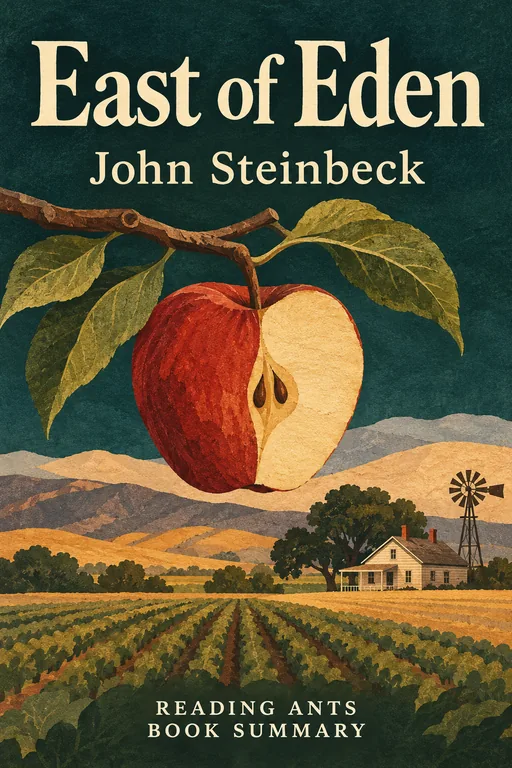
East of Eden
John Steinbeck
Over several decades in California's Salinas Valley, the Trask and Hamilton families repeat the Bible's story of Cain and Abel, and the novel asks whether people are doomed by their inheritance or can choose their own path.
📜 Classics
Pride and Prejudice
Jane Austen
Quick-witted Elizabeth Bennet and the proud, wealthy Mr. Darcy badly misjudge each other, and only by facing their own faults do they find their way to love.
📜 Classics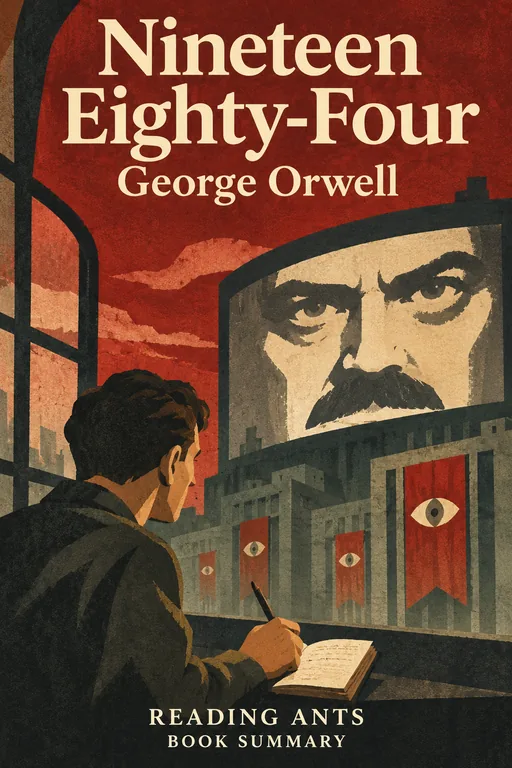
Nineteen Eighty-Four
George Orwell
In a future Britain ruled by an all-seeing Party, one man secretly rebels by keeping a diary and falling in love, and discovers just how completely a totalitarian state can crush the human mind.
📜 ClassicsWant something different?
Pick another topic and we will show you three books to start with.