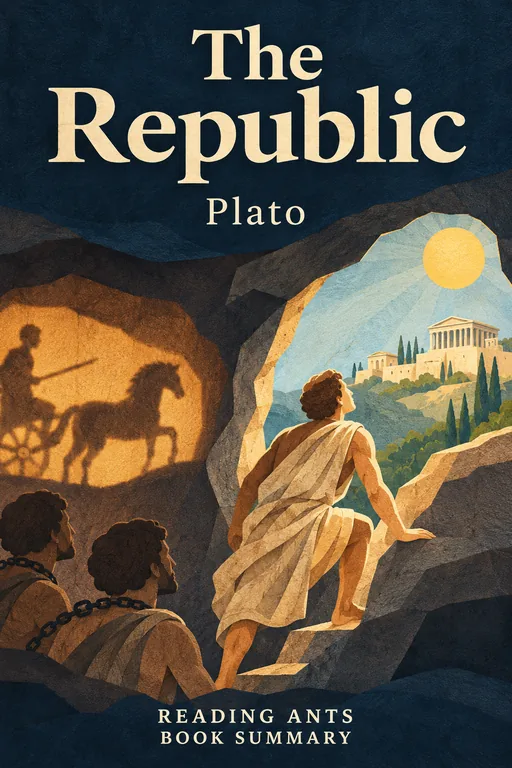
The Republic
Original title: Πολιτεία του Πλάτωνα
Plato, through the character of Socrates, asks what justice is and imagines an ideal city, arguing that a just person and a just state are ruled by wisdom, with reason guiding the whole.
Overview
The Republic is a dialogue written around 375 BC by the Greek philosopher Plato, in which his teacher Socrates discusses justice with friends in Athens. It has ten books, and it is one of the most influential works of philosophy ever written. The conversation starts with a simple question, “What is justice?” and expands into questions about the best form of government, the education of citizens, the nature of knowledge and the afterlife. Plato uses stories and images, including the famous Allegory of the Cave, to make difficult ideas clear. Although often called a work of politics, it is as much about what makes a human soul healthy.
Full Summary
1. What is justice?
The idea: The dialogue begins at a dinner party in Piraeus, the port of Athens. Socrates and others consider definitions of justice, such as telling the truth and repaying debts, or helping friends and harming enemies. Socrates shows that each definition has problems. A sharp challenge comes from Thrasymachus, who claims that justice is simply the advantage of the stronger, meaning that rulers make laws for their own benefit. Socrates argues against this, saying that a good ruler cares for those he rules.
In real life: We still ask whether laws are fair or only serve those with power.
2. The challenge of Glaucon and the city in speech
The idea: Glaucon, Plato’s brother, restates the challenge: people practice justice only out of fear of punishment. He tells the story of the Ring of Gyges, a ring that makes its wearer invisible. If you had it, would you still act justly? Socrates responds that to study justice, they should look at it on the larger scale of a city, and so they build in thought an ideal city. They begin with a simple community of people with different skills, which grows more complex and needs guardians to protect it.
In real life: The story of the ring asks whether we are good only because we might get caught.
3. Education of the guardians
The idea: Socrates argues that the guardians of the city must be carefully educated, through music, poetry and physical training, to develop character. He proposes censoring stories that show gods and heroes acting badly, since children imitate what they hear. The guardians should live simply, without private property, and be loyal to the city. The discussion shows Plato’s belief that education shapes the soul and that society depends on it.
In real life: Debates about what children should read or watch go back to this question.
4. The three parts of the city and the soul
The idea: The city has three classes: rulers who govern with wisdom, auxiliaries who defend with courage, and producers who provide for material needs. A just city is one in which each does its own work. Socrates applies the same pattern to the soul, which has reason, spirit and appetite. A just person is someone in whom reason rules, with spirit as its ally, and appetite under control. Justice is thus a kind of inner harmony.
In real life: A person who lets desire overrule judgment, for example by spending money they need for essentials, shows the imbalance Plato describes.
5. Philosopher-kings and the Form of the Good
The idea: Socrates declares that cities will have no rest from trouble until philosophers rule, or rulers become philosophers, because only those who know what is truly good can govern well. He explains the Forms, perfect and unchanging realities behind the changing things we see, with the Form of the Good at the top, compared to the sun that gives light and life. He offers the Divided Line to show levels of knowledge, from imagination to understanding.
In real life: We often expect leaders to have expertise, such as a pilot or a doctor, and Plato says that governing needs knowledge too.
6. The Allegory of the Cave
The idea: In one of the most famous images in philosophy, Socrates describes prisoners chained in a cave since childhood, facing a wall where they see only shadows cast by objects behind them, which they take for reality. If one prisoner is freed and sees the outside world and the sun, he will be dazzled but eventually understand the truth. If he returns to tell the others, they may mock and even kill him. The cave stands for our ordinary beliefs, and the journey out for education and philosophy.
In real life: Learning something new can feel uncomfortable because it challenges what we thought was real.
7. Imperfect governments and the final myth
The idea: Later books describe how the ideal city decays into lesser forms of government: timocracy, oligarchy, democracy and tyranny, each matched by a type of soul. Plato argues that democracy, with its extreme freedom, can slide into tyranny. The book ends with the Myth of Er, a story of a soldier who comes back from death and describes how souls choose their next lives, to show that justice matters beyond this life and that we should choose wisely.
In real life: Plato’s warning that too much freedom without wisdom can invite demagogues is still debated.
Why It Matters
The Republic shaped the Western tradition of philosophy, politics and education. Thinkers from Aristotle to modern writers have responded to its ideas about justice, the state and knowledge. The Allegory of the Cave is often used to explain how people can mistake appearances for truth, and it has been referenced in many works of literature and film.
It also set the questions that political philosophy still asks: What makes a society just? Who should rule? How should we raise our children? Studying it is a way into the roots of such debates.
Key Takeaways
- Justice is harmony. In both the soul and the city, each part does its work.
- Reason should rule. Wisdom must guide desires and emotions.
- Education shapes society. What we learn forms who we are.
- The truth may be hidden. Most of us see only shadows of it.
- Power needs wisdom. Rulers should know what is good.
What We Can Learn
The book invites us to question whether we are good for its own sake. The Ring of Gyges is a thought experiment each of us can ask: how would we act if no one could see?
It also encourages us to examine our assumptions. The Allegory of the Cave suggests that much of what we take for granted may be partial, and that learning can change how we see the world.
Finally, it shows the value of careful discussion. Socrates does not simply state answers but tests ideas through questions, a habit worth practicing.
Criticism and Counterpoints
Many readers find Plato’s ideal city disturbing: it has censorship, strict class divisions, the lack of private family life for guardians and a ruling elite that is not elected. Critics, such as the philosopher Karl Popper, have argued that it points toward totalitarianism. Others reply that Plato was not offering a blueprint, but an exercise to understand justice in the soul.
Aristotle, Plato’s student, rejected the theory of Forms and the abolition of the family and property. Feminist scholars note that Plato argues women could be guardians, which was radical, while also treating them in some ways as inferior. It is a book to argue with as much as to admire.
Who Should Read It
This book suits older teenagers and adults who enjoy big questions. Its length and style can be demanding, but some sections, such as the Cave and Ring of Gyges, can be read on their own. A modern translation with notes is helpful.
Want the whole book?
A summary is a taste, not the meal. Here is where to find the full book.
You reached the end 🎉
Nicely done. Mark this one as read, and we will suggest what to read next.
Read this next
Nicomachean Ethics
Aristotle
Aristotle argues that the best human life is one of flourishing, achieved by building good character through habit, finding the balance between extremes, using practical wisdom and cultivating friendship.
🕊️ Philosophy & Religion
The Prince
Niccolo Machiavelli
A Renaissance diplomat advises rulers to judge their actions by results rather than morality, arguing that a successful leader must sometimes be cunning and ruthless to win and keep power.
⚖️ Politics & Society
Meditations
Marcus Aurelius
The private notebook of a Roman emperor, reminding himself daily to accept what he cannot control, to act with justice and kindness, and to remember that life is short.
🕊️ Philosophy & Religion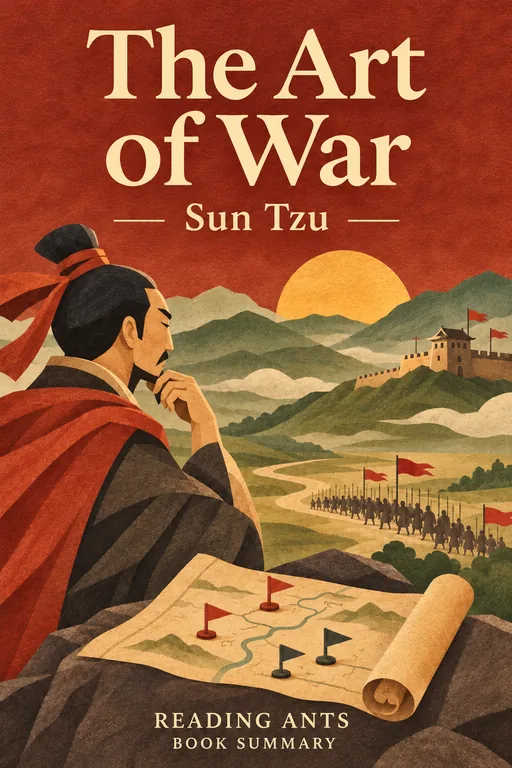
The Art of War
Sun Tzu
The greatest victory is the one won without fighting, achieved through careful planning, knowing both yourself and your opponent, and using deception, flexibility and timing.
🕊️ Philosophy & Religion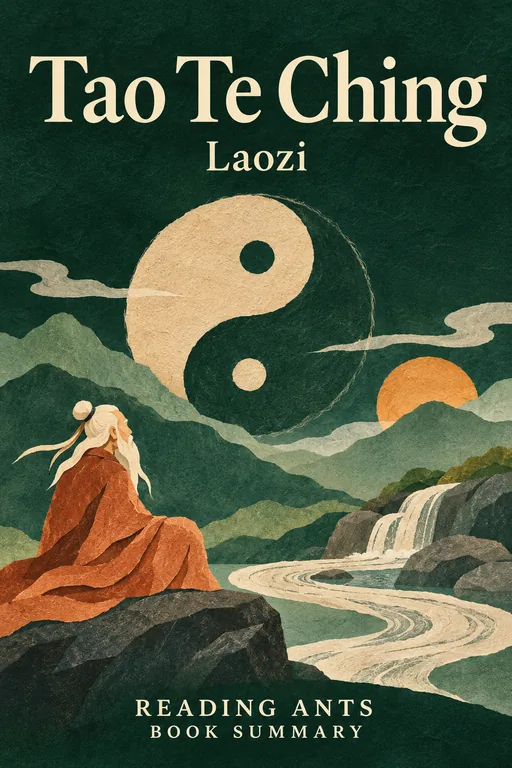
Tao Te Ching
Laozi
The deepest wisdom is to live in harmony with the Tao, the natural way of the universe, by being humble, gentle and simple, and by acting without force.
🕊️ Philosophy & Religion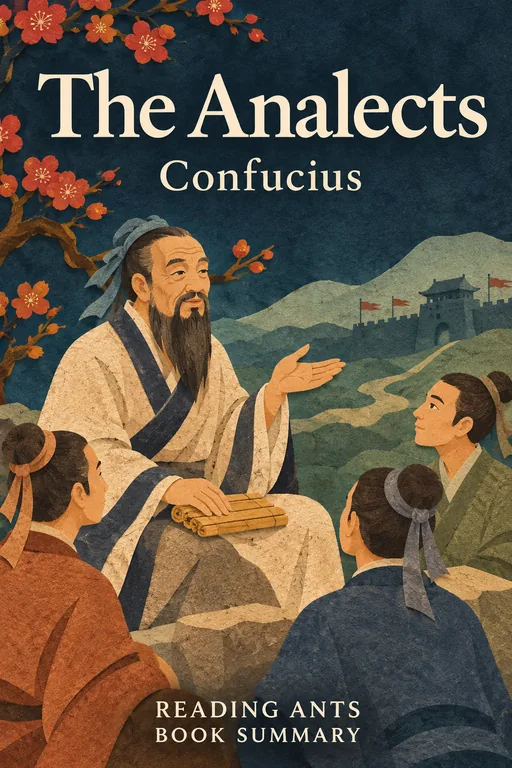
The Analects
Confucius
A good life and a good society are built on personal virtue: being kind, respectful and honest, learning constantly, honoring family, and leading others by example rather than by force.
🕊️ Philosophy & ReligionWant something different?
Pick another topic and we will show you three books to start with.