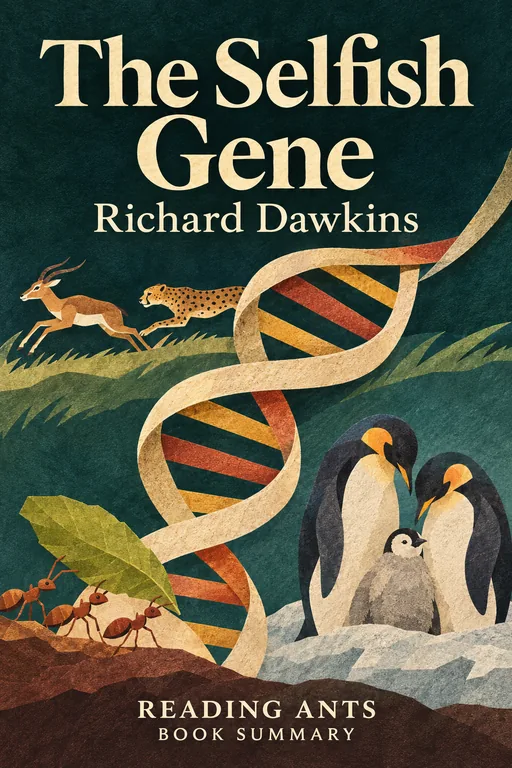
Evolution is best understood from the point of view of genes, which act as if they were "selfish," using bodies as survival machines to make more copies of themselves, and this explains both competition and surprising acts of cooperation in nature.
Overview
The Selfish Gene is one of the most influential popular science books ever written. Richard Dawkins, a British biologist at Oxford, set out to explain a powerful new way of thinking about evolution that had developed among biologists in the 1960s and 1970s. Instead of asking how evolution benefits a species or even an individual, Dawkins asks how it benefits genes. Genes, he argues, are the true units of natural selection: the ones that build bodies good at surviving and reproducing get copied into the next generation. This “gene’s-eye view” helps explain puzzles such as why animals sometimes help others at their own cost. The book also introduced the word “meme.”
Full Summary
1. Genes are the replicators
The idea: Dawkins imagines the beginning of life, when molecules in the early seas happened to form that could make copies of themselves: replicators. Those that copied more accurately, quickly or stably became more common. Over billions of years, these replicators built ever more elaborate “survival machines” around themselves to protect them. Today, the replicators are genes, and the survival machines are bodies: plants, animals and us. Individuals die, but genes can be passed on for countless generations.
In real life: Your body won’t last forever, but some of the genes in it may have existed in your ancestors for millions of years, and may continue in your children and grandchildren.
2. “Selfish” is a metaphor
The idea: Dawkins explains that genes don’t have thoughts or desires. Calling them “selfish” is a way of saying that genes which promote their own survival and copying become more common, whatever the effect on others. A selfish gene doesn’t necessarily make a selfish animal. Sometimes the best way for a gene to spread is to make its carrier cooperative or even self-sacrificing.
In real life: When we say a company “wants” profits, we don’t mean the building has feelings. It’s a shorthand for how the system behaves. Dawkins uses “selfish” in the same way.
3. Helping relatives helps your genes
The idea: Why would an animal risk its life for others? Dawkins explains the idea of kin selection, developed by the biologist W. D. Hamilton. Close relatives share many of the same genes. A gene that makes an animal help its brothers, sisters or offspring can spread, because those relatives likely carry copies of the same gene. The closer the relationship, the more help we would expect.
From the book: Dawkins discusses social insects like bees and ants, where worker females never reproduce but devote their lives to helping the queen, their mother. Because of the way their genes are inherited, workers can be very closely related to their sisters, which helps explain this extraordinary cooperation.
In real life: Parents making great sacrifices for their children, and grandparents helping raise grandchildren, fit naturally with this idea.
4. Strategies that win: game theory
The idea: Dawkins uses game theory to explain animal behavior. In a simple model, some animals behave like “hawks,” always fighting, and others like “doves,” backing down. Neither strategy wins completely, and populations reach a balance, called an evolutionarily stable strategy, a concept developed by John Maynard Smith. Later editions discuss the Prisoner’s Dilemma and the strategy “tit for tat”: start by cooperating, then copy whatever the other player did last time.
From the book: In a later edition, Dawkins describes computer tournaments organized by the political scientist Robert Axelrod, in which many strategies competed in repeated Prisoner’s Dilemma games. Simple, “nice,” forgiving strategies like tit for tat did remarkably well.
In real life: Friendships often work like tit for tat: we help people who help us, forgive small mistakes, and stop helping those who repeatedly take advantage of us.
5. You scratch my back
The idea: Cooperation can also evolve among unrelated individuals through reciprocal altruism, an idea developed by Robert Trivers: helping others pays off if they help you in return later. This works best when individuals meet repeatedly and can remember who cheated.
From the book: Dawkins discusses vampire bats, which sometimes share blood meals with hungry roost-mates, and are more likely to share with those who have shared with them before.
In real life: Neighbors who lend each other tools or watch each other’s homes build trust over time. Someone who never returns favors soon stops receiving them.
6. Families and the battle of the sexes
The idea: The gene’s-eye view also explains conflicts within families. Parents and children share genes but not perfectly, so children may “want” more care than parents are willing to give. Males and females may also have different strategies, because of differences in how much each invests in offspring, such as eggs versus sperm, pregnancy and care.
In real life: A baby bird squawking louder than its siblings to get more food, or children competing for their parents’ attention, reflect this tension.
7. Memes: a new replicator
The idea: Near the end of the book, Dawkins suggests that a second kind of replicator now exists: cultural ideas, which he names “memes.” Tunes, catchphrases, fashions and ideas spread from brain to brain, copying, changing and competing like genes. Humans, he argues, are the only animals who can rebel against their selfish replicators, because we can think about the future and choose to cooperate.
In real life: An internet trend that spreads around the world in days is a meme in Dawkins’s original sense, an idea that copies itself through people.
Why It Matters
The Selfish Gene changed how scientists and the public understand evolution. It popularized the gene-centered view of natural selection and made complex ideas from Hamilton, Trivers and Maynard Smith accessible to millions. It has sold more than a million copies, been translated into many languages, and in a 2017 poll by the Royal Society it was voted the most inspiring science book of all time.
The book’s influence extends beyond biology. Its use of game theory influenced economics and political science, and its coining of the word “meme” gave the world a term now used everywhere, especially for viral images and jokes online. It also made Dawkins one of the best-known scientists and public intellectuals of his time.
Key Takeaways
- Genes are the units of selection. Evolution favors genes that build successful survival machines.
- Selfish genes can create kind animals. Cooperation and sacrifice can benefit genes.
- Relatives share genes. Helping family members can spread one’s genes.
- Cooperation can be a winning strategy. Nice, forgiving strategies often succeed over time.
- Culture evolves too. Ideas, or memes, spread and compete like genes.
What We Can Learn
The book helps us understand why cooperation is so powerful. Strategies based on kindness, trust and forgiveness, but also on not being exploited, tend to succeed in the long run, in friendships, teams and businesses.
It also reminds us that understanding our biology doesn’t mean we must obey it. Dawkins argues that humans can choose to be generous and fair, even if our genes evolved through competition.
Finally, the idea of memes encourages us to think about the ideas we spread. Before sharing a rumor or a piece of news online, it is worth asking whether it is true and whether it deserves to be copied.
Criticism and Counterpoints
The book’s title has often been misunderstood as claiming that people are naturally selfish, or that selfishness is good, which Dawkins says he never meant. Some critics argue that the metaphor itself encourages this confusion.
Scientifically, biologists such as Stephen Jay Gould argued that natural selection acts on individuals and groups, not just genes, and that the gene-centered view is too simple. Debates about “group selection” and how much genes determine behavior continue. Others have criticized the idea of memes as too vague to be scientific. Some readers also find that Dawkins’s later public attacks on religion color how they see his scientific work.
Who Should Read It
This book is ideal for teens and adults curious about evolution, animal behavior and why living things act as they do. It is clearly written but requires careful reading in places. Readers new to evolution might start with a simpler introduction before tackling it.
Want the whole book?
A summary is a taste, not the meal. Here is where to find the full book.
You reached the end 🎉
Nicely done. Mark this one as read, and we will suggest what to read next.
Read this next
On the Origin of Species
Charles Darwin
All living things are related and have slowly changed over immense periods of time, shaped by natural selection, the process by which individuals better suited to their environment survive and pass on their traits.
🔬 Science
The Blind Watchmaker
Richard Dawkins
Richard Dawkins argues that the complex, designed-looking features of living things are the result of natural selection acting cumulatively over vast time, a process with no foresight, which he calls a blind watchmaker.
🔬 Science
Behave
Robert M. Sapolsky
Neuroscientist Robert Sapolsky asks why humans do the best and worst things they do, and answers by working backward in time, from the second before an act to the seconds, hours, years and millennia that shaped it.
🧩 Mind & Psychology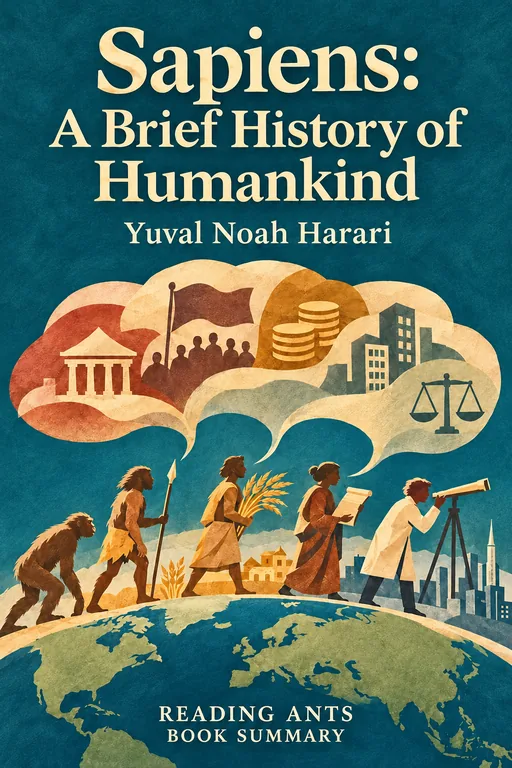
Sapiens: A Brief History of Humankind
Yuval Noah Harari
Humans came to rule the planet not because we are the strongest animals but because we can believe in shared stories (gods, nations, money, companies) that let millions of strangers cooperate.
🏛️ History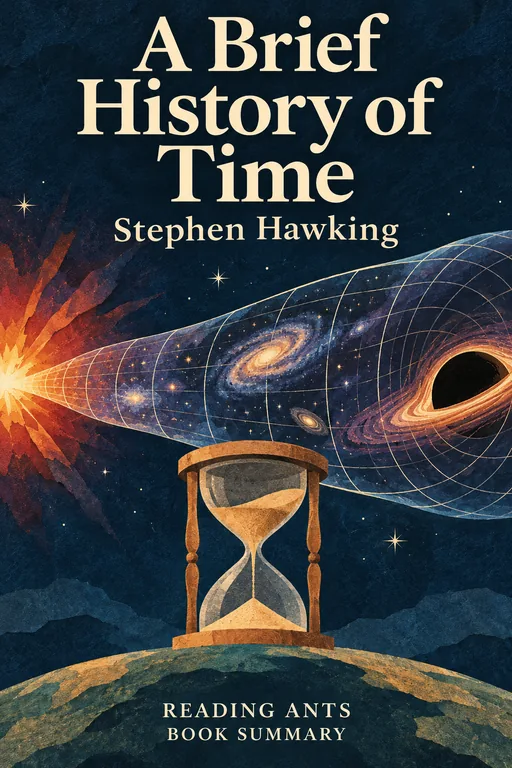
A Brief History of Time
Stephen Hawking
One of the world's greatest physicists explains, with almost no math, what we know about the origin, structure and fate of the universe, from the Big Bang to black holes and the nature of time itself.
🔬 Science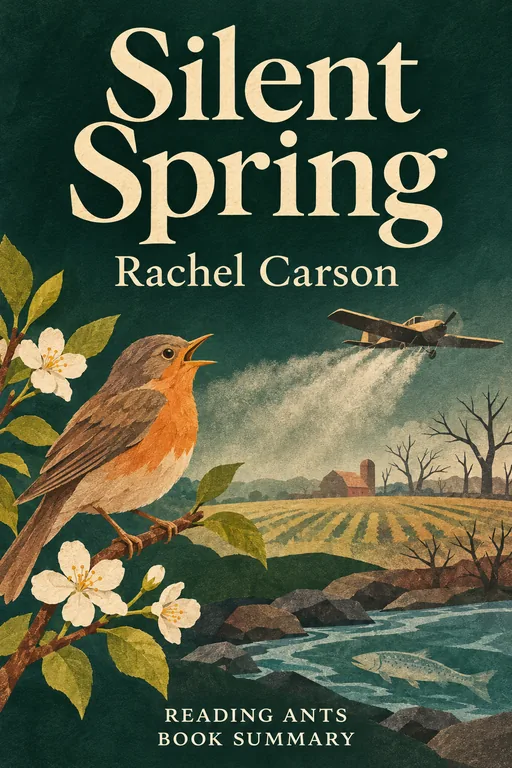
Silent Spring
Rachel Carson
The careless spraying of powerful chemical pesticides like DDT was poisoning birds, fish, soil, water and people, and humans must learn to live with nature instead of waging war on it.
🔬 ScienceWant something different?
Pick another topic and we will show you three books to start with.