 Reading Ants
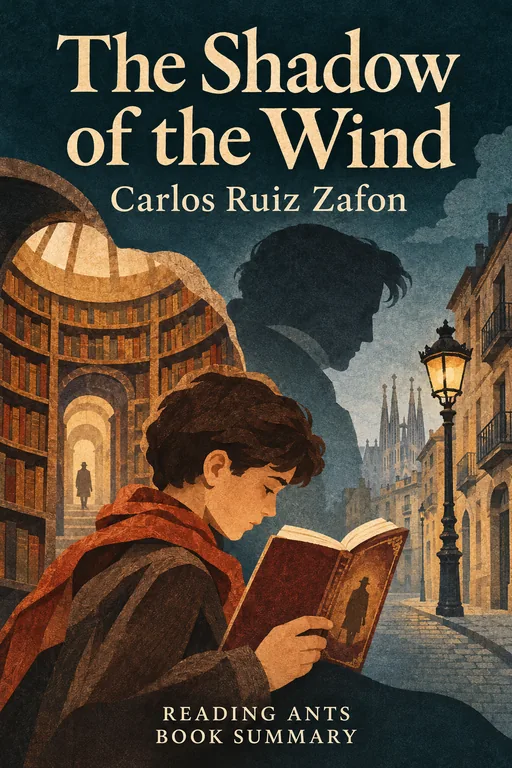
The Shadow of the Wind
Original title: La sombra del viento
A Barcelona boy's devotion to a forgotten novel draws him into the tragic history of its author and a struggle over whether stories and people can escape the past.
Overview
In postwar Barcelona, bookseller’s son Daniel Sempere selects a mysterious novel from the Cemetery of Forgotten Books. He loves The Shadow of the Wind and searches for its author, Julián Carax, only to learn that someone is destroying every copy of Carax’s work. Daniel’s investigation grows into a gothic story of forbidden love, family secrets, political violence and repeating lives. With the witty Fermín Romero de Torres as his friend, he follows clues through mansions, prisons and the city’s book trade. Carlos Ruiz Zafón celebrates reading while showing that stories can preserve both truth and dangerous fantasies. The novel also asks whether learning the past helps people avoid repeating it.
Main Characters
- Daniel Sempere: a bookseller’s son whose search shapes his youth.
- Julián Carax: a forgotten novelist marked by lost love and family secrets.
- Fermín Romero de Torres: Daniel’s loyal, humorous friend and a survivor of political persecution.
- Beatriz Aguilar: Daniel’s friend and eventual beloved.
- Nuria Monfort: a publishing employee who knows much of Carax’s hidden history.
- Inspector Fumero: a cruel police officer who uses political power for personal revenge.
- Penélope Aldaya: Julián’s youthful love.
- Tomás Aguilar: Daniel’s mechanically gifted best friend and Bea’s brother.
Full Summary
The Chosen Book
In 1945, Daniel’s father takes him to the secret Cemetery of Forgotten Books, where each visitor protects one neglected volume. Daniel chooses a novel by Julián Carax and becomes absorbed in it. When he tries to find Carax’s other books, he discovers they are rare because a scarred man calling himself Laín Coubert has been burning them. Coubert is the devil in Carax’s novel.
Daniel’s curiosity brings him to people connected with Carax. He meets the unpleasant bookseller Gustavo Barceló and Barceló’s blind niece Clara, with whom the adolescent Daniel becomes infatuated. His idealized love ends painfully, teaching him that imagination can hide what is directly before him.
Fermín and the Investigation
Daniel and his father rescue Fermín, a homeless man with great intelligence and comic energy, and employ him in their shop. Fermín had been imprisoned and tortured during the civil conflict and dictatorship. He recognizes Inspector Fumero as a dangerous figure from his past.
Together Daniel and Fermín trace Carax’s life. Julián grew up poor and attended an elite school through the support of the wealthy Ricardo Aldaya. He befriended Aldaya’s son Jorge and fell secretly in love with Jorge’s sister Penélope. Julián hoped to escape with her to Paris, but she never appeared at their planned meeting. Believing himself abandoned, he left Spain and wrote novels that found few readers.
A History Repeats
Daniel grows close to Bea, Tomás’s sister, despite her expected marriage to another man. Their secret relationship begins to resemble Julián and Penélope’s forbidden love. Daniel is both drawn to the parallel and endangered by it. Someone watches him, while Fumero uses threats and violence to shut down questions about the past.
The investigation leads toward the abandoned Aldaya mansion, a decaying place surrounded by frightening stories. Daniel gradually understands that the novel’s gothic legends conceal human crimes. Families protected reputation by controlling daughters, hiding births and erasing shame. Political violence later gave already cruel people greater power.
Penélope’s Fate
Nuria Monfort, who once worked with Carax’s publisher and loved Julián, provides the fullest account. Julián and Penélope were unknowingly half-siblings, both fathered by Ricardo Aldaya, which made their love impossible in a way they never learned. When Penélope’s pregnancy was discovered, her family imprisoned her in the house. She died in childbirth and her baby did not survive, and Julián did not learn the truth at the time.
Julián eventually returned and discovered what had happened. Broken by grief, he adopted the identity of his fictional devil and began destroying his own books. Erasing his work seemed like erasing the self that had hoped for love. Nuria tried to protect him and was killed after Fumero closed in on the secret.
The Mansion
Daniel and Bea meet at the Aldaya mansion, where the buried story becomes present danger. Fumero tracks them there. Julián, who has also watched Daniel’s search, emerges not simply as a monster but as a damaged man who has sometimes protected the younger couple. Daniel’s life offers him a vision of what his own might have been.
During the confrontation, violence erupts and Daniel is wounded by a gunshot. Daniel and Julián fight Fumero together, and the inspector dies. Daniel survives after a long recovery. The pattern between the two love stories has not ended in exactly the same tragedy: knowledge, friendship and sacrifice have opened another path.
Remembering Instead of Burning
Daniel marries Bea, and they have a son named Julián. Fermín also builds a new life, though the wounds of the past do not vanish. The Sempere bookshop continues, sustained by relationships as much as commerce.
Years later, Daniel takes his son to the Cemetery of Forgotten Books, repeating his father’s loving ritual. Carax does not need to be forgotten or frozen inside his tragedy. Daniel helps return his work to readers, and Julián quietly finds a future beyond Barcelona. The ending replaces destruction with guardianship: painful stories survive not so that people must repeat them, but so they may understand and transform them.
Why It Matters
The novel became an international gateway to modern Spanish popular fiction by combining literary mystery, family saga, romance and gothic adventure. Its Barcelona is both a real city scarred by civil war and dictatorship and an imagined maze where buildings retain memory. The Cemetery of Forgotten Books offers a memorable image of reading as stewardship: every neglected book needs someone to keep it alive.
Zafón also examines the danger of confusing life with a beloved story. Daniel’s search helps uncover crimes, but his tendency to cast himself inside Carax’s tragedy can mislead him. The later generation does not simply repeat the earlier one because friendship and recovered testimony change what is possible. In societies where fear has silenced witnesses, preserving stories can be a form of resistance, provided those stories serve living people rather than turn suffering into romantic scenery.
Key Takeaways
- Books create relationships across time. Daniel’s chosen novel connects readers, writers and guardians who never expected to need one another.
- Hidden history remains active. Family secrecy and political repression shape the present even when younger people know little about them.
- Romantic patterns can deceive. Daniel’s life resembles Carax’s, but treating resemblance as destiny risks repeating harmful choices.
- Friendship enables truth. Fermín’s courage, humor and knowledge make Daniel’s investigation possible.
- Remembering can interrupt repetition. Learning Carax’s history helps Daniel reach a different ending.
What We Can Learn
Reading can begin curiosity, but investigation also requires listening to people whose experiences do not fit our favorite theory. Daniel succeeds because he builds relationships and follows testimony, not because one dramatic clue explains everything. The novel encourages us to protect vulnerable cultural spaces (libraries, bookshops and archives) where neglected voices can remain available.
It also warns against making another person’s tragedy part of our own romantic identity. Similar circumstances do not demand identical choices. When family or public history is painful, learning it can create options rather than trap us in fate. Finally, Fermín demonstrates that humor may restore dignity after cruelty without denying what occurred.
Criticism and Counterpoints
The novel’s elaborate coincidences, secret identities and mirrored romances can feel overly arranged. Women often suffer or provide clues within stories driven by male obsession, and some relationships are described through possessive romantic conventions. The gothic treatment of torture and political violence may also turn historical trauma into suspense.
Its warm celebration of books sometimes risks suggesting that readers are morally special, although several book lovers behave badly. Readers should not treat its portrait of postwar Barcelona as comprehensive history; the city is deliberately heightened into a literary labyrinth.
Who Should Read It
Choose this if you enjoy atmospheric mysteries, old bookshops, hidden family histories and large emotional plots. It is best for mature teens and adults. Readers avoiding murder, torture, sexual material or abusive relationships should approach carefully, and those who dislike coincidence-heavy gothic storytelling may not enjoy it.
Want the whole book?
A summary is a taste, not the meal. Here is where to find the full book.
You reached the end 🎉
Nicely done. Mark this one as read, and we will suggest what to read next.
Read this next
The Name of the Rose
Umberto Eco
A Franciscan friar investigates deaths in a medieval abbey, where the struggle to control books and laughter proves more dangerous than any supernatural curse.
🌍 World Literature
The Book Thief
Markus Zusak
Death narrates how a foster child in Nazi Germany steals books, learns the power of words and forms loving bonds that war eventually destroys.
🎒 Young Adult
The Master and Margarita
Mikhail Bulgakov
The Devil arrives in 1930s Moscow with a cat, a fanged assistant and a naked witch, and turns the city upside down, while a persecuted writer and his devoted lover try to save a novel about Pontius Pilate from oblivion.
🌍 World Literature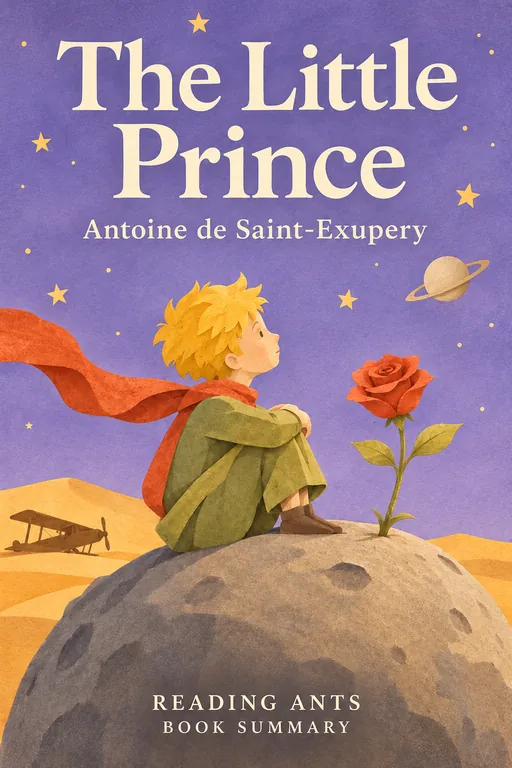
The Little Prince
Antoine de Saint-Exupery
A pilot stranded in the desert meets a small boy from a tiny planet, who teaches him that the most important things in life, like love and friendship, can only be seen with the heart.
🌍 World Literature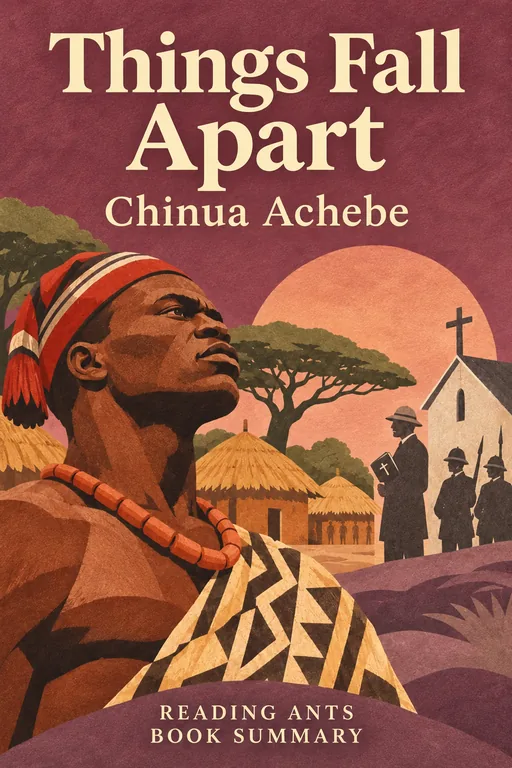
Things Fall Apart
Chinua Achebe
Okonkwo, a proud and fearsome leader in an Igbo village in Nigeria, struggles against his own fears and against the arrival of British missionaries and colonial rulers, who change his world forever.
🌍 World Literature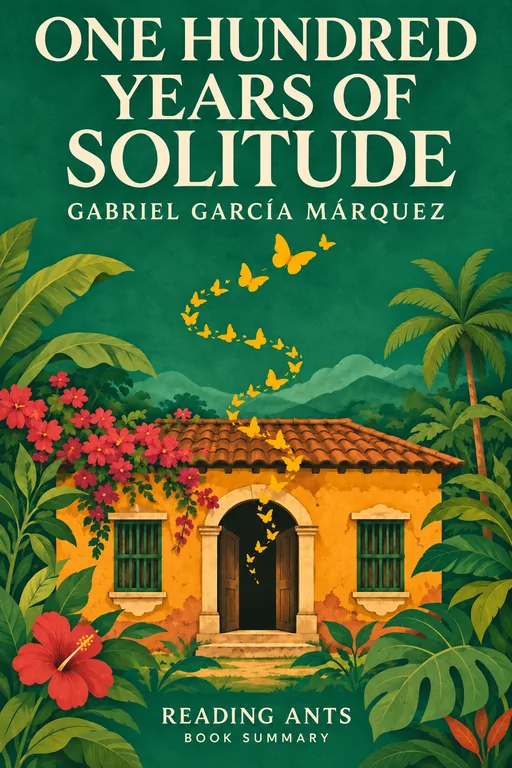
One Hundred Years of Solitude
Gabriel Garcia Marquez
Seven generations of the Buendía family live, love, fight and repeat the same mistakes in the magical Colombian town of Macondo, from its founding to its final destruction.
🌍 World LiteratureWant something different?
Pick another topic and we will show you three books to start with.