 Reading Ants
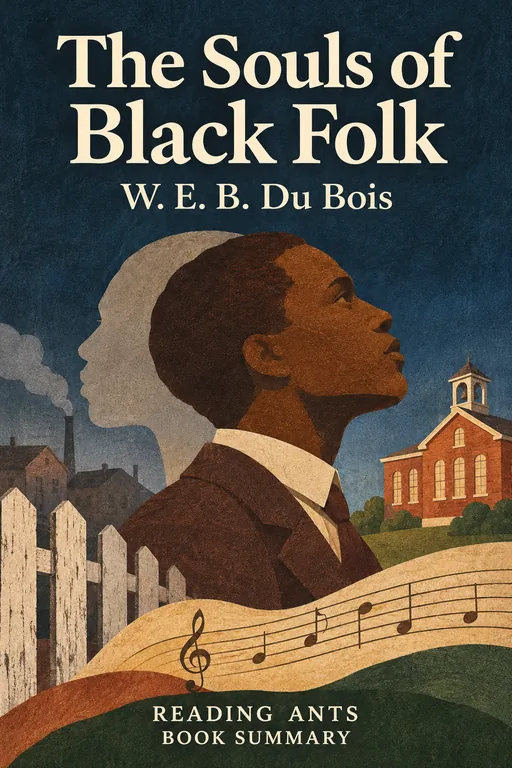
The Souls of Black Folk
In fourteen eloquent essays, W. E. B. Du Bois examines the lives, struggles and hopes of Black Americans at the start of the twentieth century, and argues that the great problem of the age is the color line.
Overview
The Souls of Black Folk was published in 1903 by W. E. B. Du Bois, a sociologist and historian, and the first African American to earn a doctorate at Harvard. He was a professor in Atlanta, and later a founder of the NAACP. The book is a collection of essays, some of them revised from earlier articles, which mix history, sociology, autobiography and music. Each chapter opens with a verse of poetry and a bar of music from the Sorrow Songs. Du Bois wrote it at a time when Black Americans faced segregation, disenfranchisement and violence, and when debates were taking place about the best path forward.
Full Summary
1. The color line and double consciousness
The idea: Du Bois begins by saying that the problem of the twentieth century is the problem of the color line, the division between the races. He describes the experience of being Black in America as being behind a veil. He introduces the idea of double consciousness: the sense of always looking at oneself through the eyes of others, and of being both an American and a Black person, two souls and two thoughts in one body. He says the aim is to merge this double self into a better and truer self.
In real life: A person who often feels watched and judged by others may find it hard to feel at ease.
2. The freedmen and the unfulfilled promise
The idea: Du Bois discusses the history of the years after the Civil War, and the Freedmen’s Bureau, which was set up to help the newly freed people with food, schools and justice. He says that it achieved good, but was soon undermined. The hope of land and equal rights was not fulfilled, and a new system of oppression took its place. He argues that the failure to give the freed people the means to rise was a national tragedy.
In real life: Freedom without resources is hard to use, like being given a ticket without a way to get to the station.
3. A critique of Booker T. Washington
The idea: In a famous chapter, Du Bois criticizes Booker T. Washington, the most prominent Black leader of the day. While acknowledging Washington’s achievements, Du Bois says that his policy of accommodation, which stressed industrial training and economic progress while accepting political inequality and segregation, was harmful. He insists that Black Americans must demand the right to vote, civic equality and the education of their youth, including higher education to produce leaders.
In real life: Two people may share a goal, but disagree on whether to be patient or to push.
4. Education and the talented tenth
The idea: Du Bois defends the value of a liberal education, and the need to cultivate a class of well-trained Black men and women who could lead their communities. He speaks of “the talented tenth,” a minority who could uplift the rest. He also describes his experience as a teacher in a small school in rural Tennessee, and the dedication of students who wanted to learn despite poverty. He argues that education is about developing people, not only job skills.
In real life: A school that nurtures many students’ talents benefits the whole community.
5. The Black Belt and the lives of ordinary people
The idea: Several chapters describe his travels in Georgia, where he studied the conditions of tenant farmers in the countryside. He writes with feeling about the poverty, debt and lack of opportunity under the crop-lien system, and about the dignity and humor of people. He also describes the death of his infant son, and the grief of a father who sees that the child has been spared a life under the veil. These passages bring the abstract analysis down to a human scale.
In real life: Statistics can show the problem, and a story can show what it means to a family.
6. The sorrow songs
The idea: The last chapter celebrates the spirituals, which Du Bois calls the sorrow songs, as the most beautiful expression of human experience born on American soil. He says that they carry the memory of slavery, the longing for freedom and a message of hope. He argues that African Americans have given the nation a gift of music, labor and spirit, and that the country cannot be complete without them. The book ends with a short prayer, the Afterthought, that its words will stir people toward righteousness.
In real life: A song can hold feelings and history that words alone may not express.
Why It Matters
The Souls of Black Folk is a landmark in American literature and social thought. It gave powerful expression to the experience of Black Americans, and introduced concepts, such as the veil and double consciousness, that remain central. Du Bois went on to help found the NAACP, and the book has influenced the civil rights movement and generations of writers, scholars and activists. It also helped to establish the field of sociology as a tool for studying race. Its mixture of data and poetry, of analysis and emotion, has made it a classic, and it continues to be read in schools and universities.
Key Takeaways
- The color line shaped the century. Race divided American life.
- Double consciousness is a burden and a gift. It creates both strain and insight.
- Political rights and education are essential. Economic progress alone is not enough.
- Leadership requires education. Du Bois urged training for leaders.
- Black culture is part of America. Its music and spirit enriched the nation.
What We Can Learn
You can use the book to think about how the way others see you affects you, and how to hold on to your own sense of self. Consider how different people might respond differently to injustice, and why. Value education for its own sake, and for the sake of community. Listen to the music and stories of different groups to understand their experience. Read other writers on the same topics, such as Booker T. Washington, and make up your own mind. And remember that the book is about both pain and dignity.
Criticism and Counterpoints
Some critics say that Du Bois’s idea of the talented tenth is elitist, and that it assumes that educated leaders should guide the masses. He later revised this view himself. Others note that his tone toward some rural Black people is condescending, and that the book reflects the gender norms of its time, though he later became a supporter of women’s rights. Supporters of Booker T. Washington say that Du Bois was unfair, and that Washington worked in a dangerous climate and secretly supported legal challenges. Some find the style ornate. Overall, the book is regarded as a masterpiece.
Who Should Read It
This book is for readers interested in American history, sociology and literature, and for anyone who wants to understand the roots of racial inequality. It is rich and moving, and the essays can be read one at a time. The language of the early twentieth century may feel formal, but it rewards patience.
Want the whole book?
A summary is a taste, not the meal. Here is where to find the full book.
You reached the end 🎉
Nicely done. Mark this one as read, and we will suggest what to read next.
Read this next
Up from Slavery
Booker T. Washington
Booker T. Washington tells how he rose from an enslaved childhood in Virginia to found the Tuskegee Institute in Alabama, and explains his belief that education, hard work and practical skills offered the best path to progress for Black Americans.
👤 Real Lives
The Warmth of Other Suns
Isabel Wilkerson
Isabel Wilkerson tells the story of the Great Migration, in which about six million Black Americans left the South for cities in the North and West, through the lives of three people who made the journey.
🏛️ History
Twelve Years a Slave
Solomon Northup
Solomon Northup, a free Black man from New York, tells how he was kidnapped in 1841, sold into slavery in Louisiana and kept there for twelve years until he was rescued and returned to his family.
👤 Real Lives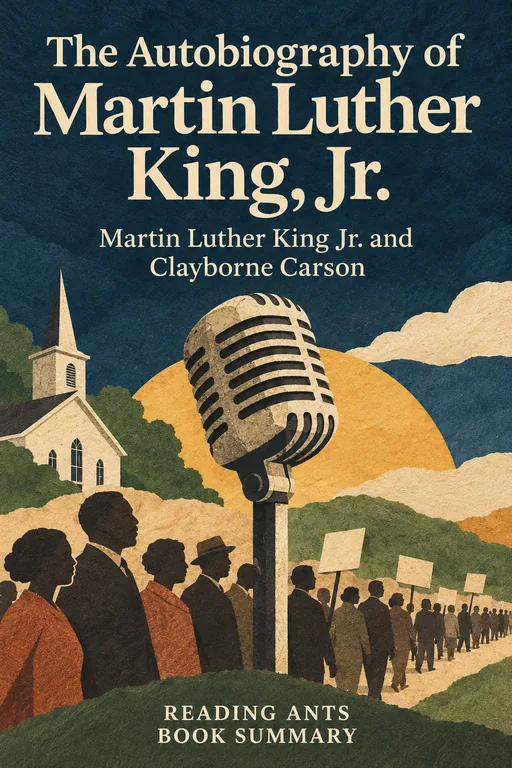
The Autobiography of Martin Luther King, Jr.
Martin Luther King Jr. and Clayborne Carson
Historian Clayborne Carson assembles Martin Luther King Jr.'s own words from his letters, sermons, speeches and writings into a single life story, from a boyhood in Atlanta to the Memphis strike where he was killed.
👤 Real Lives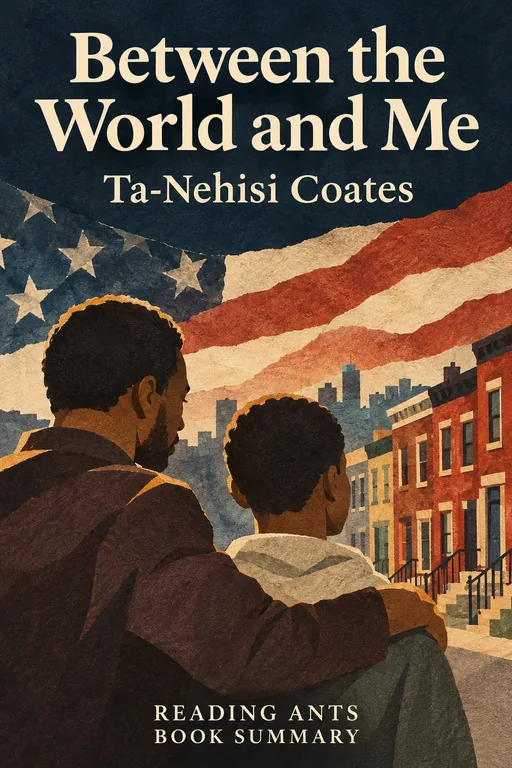
Between the World and Me
Ta-Nehisi Coates
In a letter to his teenage son, Ta-Nehisi Coates describes what it means to live in a Black body in America, and reflects on fear, history and the struggle to be free.
⚖️ Politics & Society
The Prince
Niccolo Machiavelli
A Renaissance diplomat advises rulers to judge their actions by results rather than morality, arguing that a successful leader must sometimes be cunning and ruthless to win and keep power.
⚖️ Politics & SocietyWant something different?
Pick another topic and we will show you three books to start with.