 Reading Ants
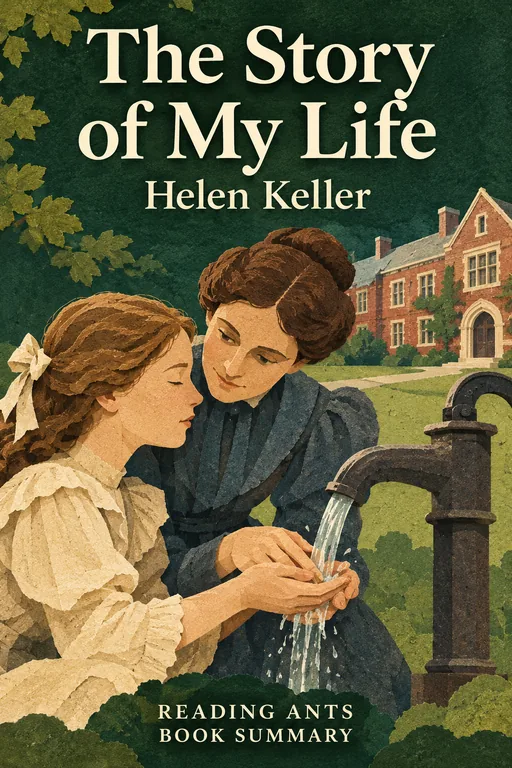
Helen Keller, left deaf and blind by illness as a baby, tells how her teacher Anne Sullivan opened the world to her through language, and how she went on to study at Radcliffe College.
Overview
The Story of My Life was published in 1903, when Helen Keller was twenty-two and a student at Radcliffe College. Born in 1880 in Tuscumbia, Alabama, she lost her sight and hearing at nineteen months after an illness, and grew up in a world of silence and darkness. The book recounts her wild childhood, the arrival of her teacher Anne Sullivan, her slow and joyful discovery of language, and her education. It was written with the help of Sullivan and the editor John Macy, and includes letters and notes. The book has been translated into dozens of languages and remains a classic of inspirational autobiography.
Full Summary
1. Before language
The idea: Helen was a bright, curious baby, but after an illness at about nineteen months, she became deaf and blind. As she grew, she was frustrated, since she had no way to express her wishes except for signs and gestures, and she often had angry outbursts. She describes herself as a wild and willful child, who once locked her mother in a pantry, and recalls the feeling of being lost in a thick fog with no way to find her direction. Her family, afraid for her future, sought help from specialists and eventually from Alexander Graham Bell, who suggested the Perkins Institution for the Blind, a school in Boston.
In real life: A child who cannot communicate may act out not from badness but from the need to be understood.
2. The coming of Anne Sullivan
The idea: In March 1887, when Helen was almost seven, Anne Sullivan, a young teacher from the Perkins Institution, who was herself partly blind, came to live with the family. Sullivan began spelling words into Helen’s hand using the manual alphabet, but at first Helen did not grasp that the finger movements had meaning. Helen calls the day Sullivan arrived the most important day of her life. Sullivan’s patience, firmness and affection began to change her from a wild child to a student.
In real life: A good teacher doesn’t only explain facts but creates the moment in which a student can understand.
3. The breakthrough at the pump
The idea: The most famous scene in the book comes a few weeks later, when Sullivan took Helen to a water pump and spelled “water” into one hand while cold water ran over the other. Suddenly Helen understood that everything had a name. She describes how her mind awoke, and she wanted to learn the names of everything she touched, and her soul was filled with light, hope and joy. In the following months, she learned hundreds of words, then sentences, and began to read raised print and to write.
From the book: The moment she understood that the word was the thing, she says, was a kind of birth, and nothing was the same again.
In real life: Learning a first word, or a first idea, can open a whole new way of seeing, which is why early learning matters so much.
4. Learning to speak and to read
The idea: Helen was not satisfied with the manual alphabet and wanted to speak. She was taught by Sarah Fuller to feel the vibrations of her teacher’s throat and lips, and she worked hard for years to make her voice understood, though it was never clear to everyone. She also learned to read Braille and raised print, and she loved books, which she calls her best friends. Through reading she traveled in imagination to the places and times she could never see. At one point she wrote a story for a friend that was accused of being copied, a painful episode that shook her confidence for a time.
In real life: Perseverance can lead to progress even when results are imperfect, and mistakes can be a way of learning.
5. School, college and ambition
The idea: Helen studied at schools for the deaf and prepared for college at a school in Cambridge, Massachusetts, where Sullivan sat beside her and spelled lessons into her hand. Her goal was to attend Radcliffe, the women’s college linked to Harvard. She passed the entrance exams and entered in 1900. College was demanding, with books not available in raised print and little time for her own thoughts, but she was determined. (After the memoir appeared, she graduated with honors in 1904, becoming the first deaf-blind person to earn a bachelor’s degree.)
In real life: Great achievements are usually the result of long preparation and the help of supportive people.
6. Friends, nature and joy
The idea: In the final sections, Helen writes about her friendships with famous people, including Bell, writers and scientists, and about her love of nature, which she experienced through touch, smell and the movement of the air. She describes how she felt the vibrations of music and found beauty in a world others thought empty. She expresses gratitude to those who had helped her and an optimistic view of life, convinced that darkness and silence need not stop anyone from finding happiness.
In real life: We can learn to notice more by paying attention to senses we usually overlook, such as touch and smell.
Why It Matters
The Story of My Life made Helen Keller world famous and showed that people with disabilities could learn, write and lead meaningful lives, changing public attitudes at the time. It became an inspiration for generations of readers and was the basis for the play and film The Miracle Worker.
Keller went on to become an author, lecturer and activist, speaking for the rights of people with disabilities and for other causes. The book remains valued for its direct account of how language opens the mind, which is still discussed by educators and parents.
Key Takeaways
- Language unlocks the mind. Understanding words changed everything for Helen.
- Teachers can transform lives. Anne Sullivan’s patience was central.
- Persistence pays. Years of effort allowed her to speak and graduate.
- Disability need not limit spirit. She found joy and purpose.
- Gratitude helps. She valued books, nature and friendship.
What We Can Learn
The book reminds us how powerful it is to be able to communicate. Helen’s frustration before she had words shows why patient listening and teaching matter for anyone who struggles to express themselves.
It also teaches us the value of persistence. Helen’s long hours of study, her challenges at college and her determination to speak show that big goals are reached through steady work.
Finally, the book encourages us to be grateful for the ordinary things we may overlook, such as seeing, hearing and reading, and to take an interest in the experiences of people who live differently from us.
Criticism and Counterpoints
Modern readers note that the book reflects the attitudes of its time and that Helen’s own words were sometimes shaped by her teachers and editors, so it is not always clear which expressions are purely hers. Some of her descriptions of color and sight draw on reading rather than direct experience, which led critics in her own time to question whether she understood what she wrote.
Others point out that the book offers an uplifting, polished view that leaves out her later political activism, including her support for socialism and women’s rights, which she became known for as an adult. The episode of the accusation of copying was also complex: when she was eleven, a short story she wrote, “The Frost King,” was found to closely resemble Margaret Canby’s “The Frost Fairies,” and she was questioned by officials of the Perkins Institution, though she said she had not knowingly copied it. Even so, it remains a moving and well-loved book.
Who Should Read It
This book suits readers of almost any age, from children who can read longer books to adults. The language is somewhat old-fashioned. It can be read aloud, and it is a good starting point for talking about disability and learning.
Want the whole book?
A summary is a taste, not the meal. Here is where to find the full book.
You reached the end 🎉
Nicely done. Mark this one as read, and we will suggest what to read next.
Read this next
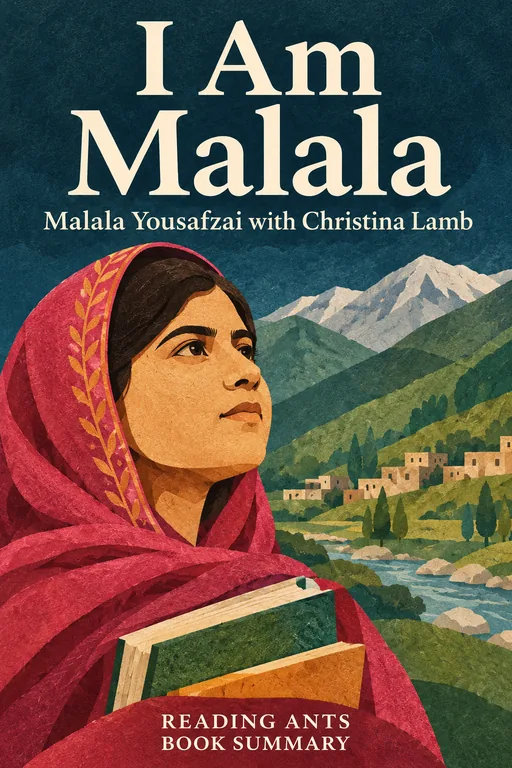
I Am Malala
Malala Yousafzai with Christina Lamb
Malala Yousafzai tells how a girl who loved school stood up for girls' education in Pakistan's Swat Valley, was shot by the Taliban at age fifteen, survived, and became a global voice for children's right to learn.
👤 Real Lives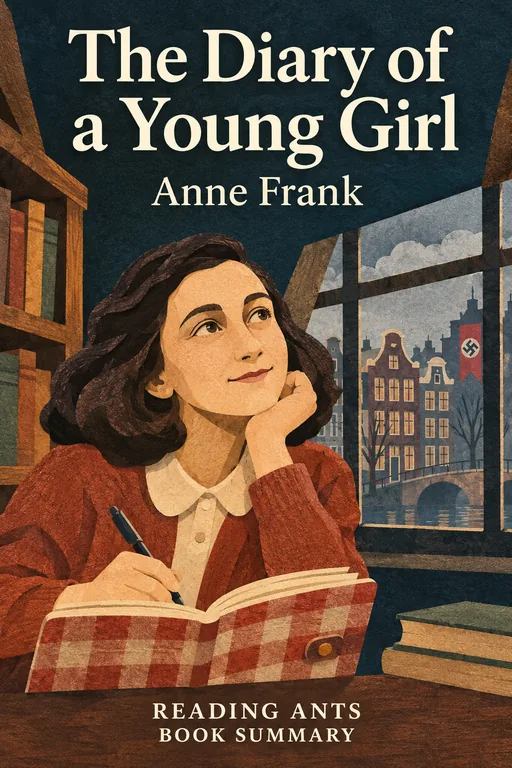
The Diary of a Young Girl
Anne Frank
A Jewish teenage girl hiding from the Nazis in a secret apartment in Amsterdam records two years of fear, family quarrels, first love and big dreams in a diary that became one of the most famous books in the world.
👤 Real Lives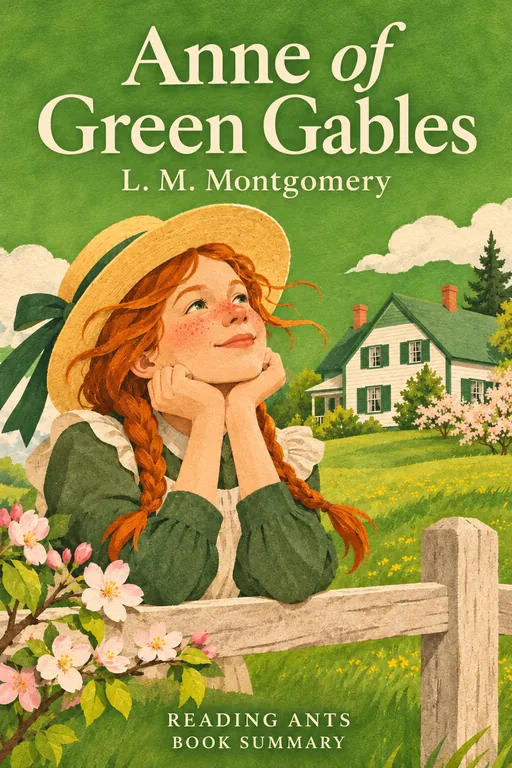
Anne of Green Gables
L. M. Montgomery
A talkative, imaginative red-haired orphan is sent by mistake to an elderly brother and sister who wanted a boy, and she wins their hearts and fills their quiet farm with life.
🧸 Children's Books
Born a Crime
Trevor Noah
Trevor Noah, the comedian, recounts growing up in South Africa as the child of a Black mother and a white father at a time when their relationship was a crime, and pays tribute to the mother who raised him.
👤 Real Lives
Man's Search for Meaning
Viktor E. Frankl
A psychiatrist who survived the Nazi concentration camps explains that even in the worst suffering, people can choose their attitude, and that finding a reason to live is what gives us the strength to endure.
👤 Real Lives
Long Walk to Freedom
Nelson Mandela
Nelson Mandela tells his own story, from a village childhood to twenty-seven years in prison to becoming South Africa's first democratically elected president, and shows how patience, courage and forgiveness helped end apartheid.
👤 Real LivesWant something different?
Pick another topic and we will show you three books to start with.