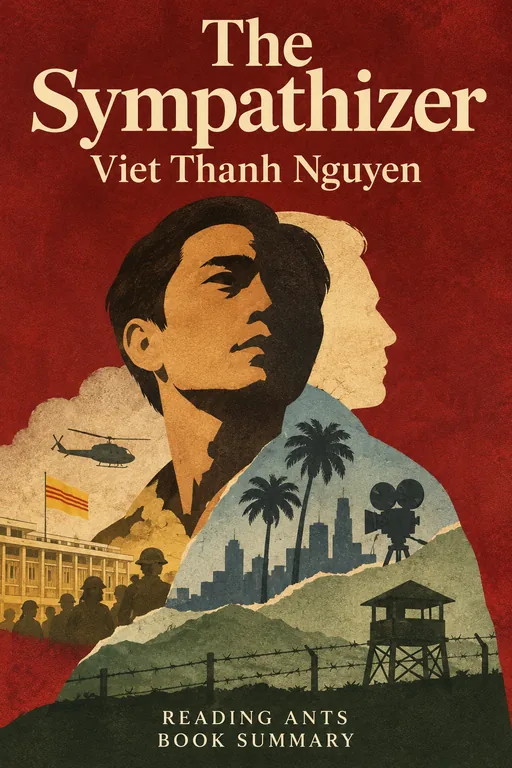
The Sympathizer
A half-French, half-Vietnamese Communist spy, working as an aide to a South Vietnamese general, flees to California after the fall of Saigon, continues to spy on the exiles, and writes his confession from a re-education camp.
Overview
The Sympathizer is a novel by Viet Thanh Nguyen, published in 2015, which won the Pulitzer Prize for Fiction in 2016. It is narrated by an unnamed man, a “man of two minds,” who is a captain in the South Vietnamese army and a secret agent of the Viet Cong. The story begins with the last days of Saigon in 1975, then follows the narrator to Los Angeles, where he mingles with exile communities, and finally returns to Vietnam. The book is a spy novel, a satire of Hollywood and a moral exploration of loyalty. It offers a Vietnamese viewpoint on a war that Western fiction has often described through American eyes.
Main Characters
- The Captain (narrator): a bastard son of a French priest and a Vietnamese mother, who is a double agent.
- Bon: his blood brother and friend, a South Vietnamese soldier.
- The General: the South Vietnamese leader whom the narrator serves.
- The Commissar: the burn-disfigured official who oversees the re-education camp, and who turns out to be Man.
- Man: the narrator’s blood brother and handler, who works for the Viet Cong and is later revealed to be the Commissar.
- Sofia Mori: a Japanese American woman with whom the narrator has an affair.
- The Auteur: an American film director, based on Francis Ford Coppola.
Full Summary
The Fall of Saigon
The novel opens in April 1975, as Saigon is about to fall. The Captain, who is the General’s aide, helps to organize an evacuation of the General’s staff and family. He is also a spy for the Viet Cong, sending reports to his handler, Man. At the airport, there is chaos, and in one terrible incident, the evacuees are fired upon, and Bon’s wife and young son are killed, which the narrator cannot forget. He and Bon escape with the General on a plane.
Los Angeles
In California, the General opens a liquor store and plans a counterrevolution to reclaim Vietnam. The Captain, who works in a refugee community, spies on him, reporting to his handlers by coded letters. He has an affair with a Japanese American woman and develops a taste for America, though he feels alienated. He is asked to advise on the making of a Hollywood film about the Vietnam War, The Hamlet, and watches with satire as the film’s makers turn the war into a spectacle.
The Film
The Captain, who hopes to make the film more truthful, works as an adviser on the set in the Philippines. He learns that Hollywood is not interested in Vietnamese voices: Vietnamese actors are given only screams and silent roles. In one scene, he is injured when an explosion goes off. His bitter amusement turns to rage. The episode shows the way that America tells the story of the war, with Vietnamese people as backdrop.
The Mission
The General plans a clandestine invasion of Vietnam, to be launched from Thailand, and the Captain goes along, against Man’s orders, to protect Bon. Bon, who is a loyal soldier, comes too. The mission is a disaster. In America, before the mission, he had helped to kill a South Vietnamese major whom he had framed as the suspected spy, and had shot Sonny, a newspaper editor, and he is haunted by both deaths.
Capture
The Captain is captured in Vietnam, and is placed in a re-education camp, where he is made to write and rewrite a confession for the camp’s commandant, which becomes the book that we are reading. When his drafts are rejected, he is brought before the Commissar, a man disfigured by burns who turns out to be Man, his old friend and handler. He is tortured, in a long, harrowing scene, and is made to confront the empty slogans that both sides repeat. The ordeal brings back a repressed memory: he once watched a woman being raped and did not intervene. He suffers and begins to unravel.
The Boat
In the end, the Captain realizes that he has lost his belief in the revolution, as well as the other side, and that he has become a person who sympathizes with everyone and belongs to no one. He leaves Vietnam by sea as a refugee. The novel closes with the narrator, who has come to see that to be a man of two minds is also to see how empty the slogans of both sides can be, and he understands a famous revolutionary motto about freedom in a new sense. His double life as a spy inside the exile community has cost him friends and his sense of self, and the novel presents his divided identity as both a gift for seeing clearly and a wound that does not heal.
Why It Matters
The Sympathizer is regarded as a landmark of Asian American literature and one of the most important novels about the Vietnam War written by a Vietnamese author. It won not only the Pulitzer but also the Edgar Award for best first novel, and was adapted into a 2024 HBO miniseries. Nguyen, who came to America as a child refugee, has become a leading voice in discussions of memory and war.
The novel is also a powerful corrective to the American-centered way that the Vietnam War is often remembered, and offers readers a chance to see it from the other side.
Key Takeaways
- Loyalty is complicated. The narrator is torn between two causes.
- War stories reflect who tells them. Hollywood omits Vietnamese voices.
- Identity can be divided. The narrator belongs to two worlds.
- Violence leaves a moral mark. Killing haunts him.
- Ideals can be corrupted. Both sides betray their causes.
What We Can Learn
The novel invites us to recognize how history is told, and to ask whose perspective has been left out. This can make us more careful about the stories that we consume.
It also shows that political causes, however noble, can lead to cruelty, and that holding one’s own beliefs requires constant honesty.
Finally, it suggests that being able to see more than one side can be both a burden and a source of wisdom.
It also reminds us that anyone who tries to understand an enemy risks being accused of betrayal, and that empathy is often punished in times of war.
Criticism and Counterpoints
Some readers find the novel dense, long-winded and too clever, with a style that mixes satire, philosophy and thriller in a way that can be disorienting. Others criticize the portrayal of women, who are mostly objects of desire or victims, and the graphic depictions of rape and torture. Some Vietnamese Americans have disagreed with its portrayals of the exile community.
A few find the plot loose, and the long confession in the last section too abstract. Still, it is widely acclaimed.
Who Should Read It
This book is for mature readers. It contains graphic violence, torture and sexual assault. It is a demanding but rewarding read for those interested in history, politics and identity.
Some knowledge of the Vietnam War helps.
Want the whole book?
A summary is a taste, not the meal. Here is where to find the full book.
You reached the end 🎉
Nicely done. Mark this one as read, and we will suggest what to read next.
Read this next
The Quiet American
Graham Greene
In French colonial Vietnam in the early 1950s, a jaded British journalist, Thomas Fowler, watches an idealistic young American, Alden Pyle, cause harm with his good intentions, and must decide whether to betray him.
📜 Classics
Heart of Darkness
Joseph Conrad
A sailor named Marlow tells his friends of a journey up the Congo River to find a mysterious ivory trader named Kurtz, and of the horror and moral darkness he finds at the end of it.
📜 Classics
Invisible Man
Ralph Ellison
An unnamed young Black man moves from the South to Harlem and passes through one false identity after another, until he realizes that he is invisible to a society that sees only what it expects, and he retreats underground to write his story.
📜 Classics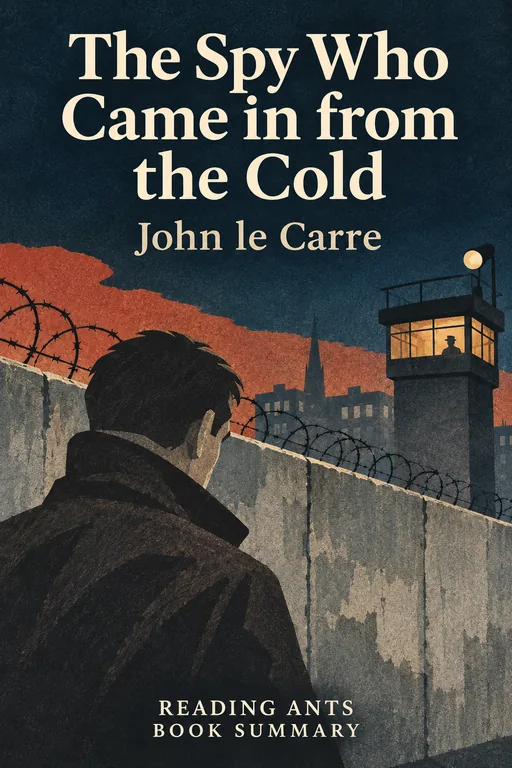
The Spy Who Came in from the Cold
John le Carre
A weary British agent named Alec Leamas pretends to defect to East Germany as part of a complicated plot, and discovers that the people on his side are as ruthless as their enemies.
🔍 Mystery & Thriller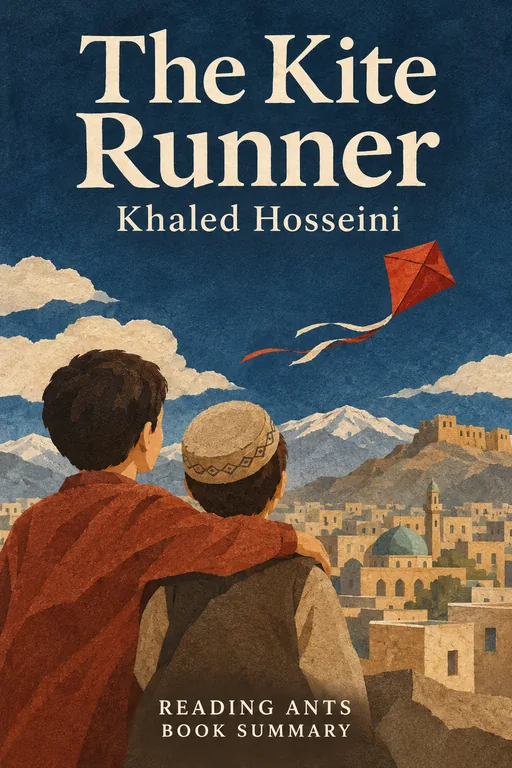
The Kite Runner
Khaled Hosseini
A wealthy boy in Kabul betrays his loyal best friend on the day of a kite tournament, and decades later, after fleeing to America, he returns to a Taliban-ruled Afghanistan to try to make things right.
✨ Modern Fiction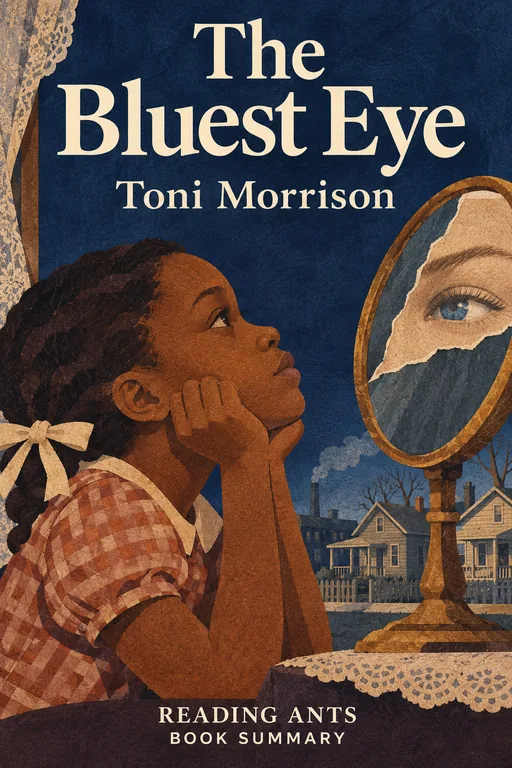
The Bluest Eye
Toni Morrison
In 1940s Ohio, a poor Black girl named Pecola Breedlove, who believes that she is ugly, prays for blue eyes, and the community's failure to protect her leads to tragedy.
✨ Modern FictionWant something different?
Pick another topic and we will show you three books to start with.