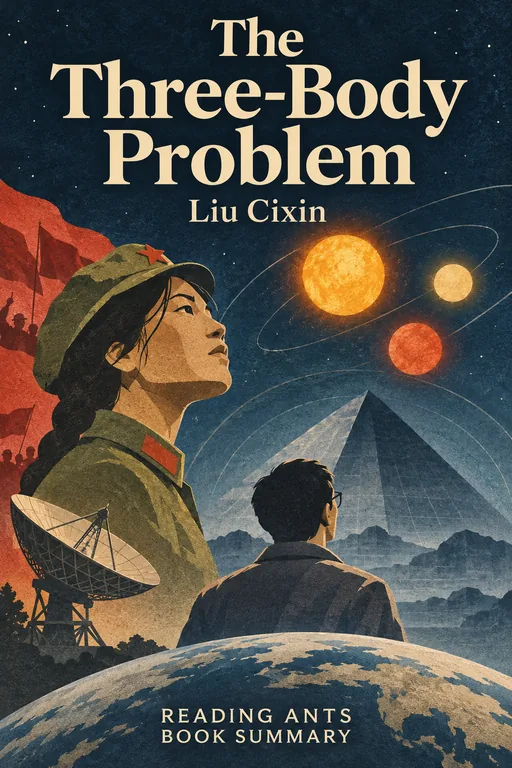
The Three-Body Problem
Original title: 三体
A scientist investigating suicides and impossible experimental results uncovers a secret human movement preparing for an alien civilization whose arrival could end human independence.
Overview
The Three-Body Problem begins during China’s Cultural Revolution and expands into a first-contact mystery with consequences for the whole planet. Decades after astrophysicist Ye Wenjie witnesses political brutality, nanomaterials researcher Wang Miao becomes involved in an investigation of scientists’ deaths. A countdown appears in his vision, experiments produce impossible results, and a virtual-reality game depicts a world with chaotic suns. These puzzles connect to Trisolaris, an unstable alien world seeking a new home, and to humans who have invited its civilization to Earth. Liu Cixin combines scientific ideas, detective suspense and political history while asking why someone might lose faith in humanity, and whether technological superiority gives any civilization a right to conquest.
Main Characters
- Ye Wenjie: an astrophysicist whose traumatic history shapes humanity’s first contact with Trisolaris.
- Wang Miao: a nanomaterials researcher drawn into the mystery surrounding scientific collapse.
- Shi Qiang: a blunt, observant police officer known as Da Shi.
- Yang Dong: Ye’s daughter, a physicist whose death is part of the investigation.
- Mike Evans: a wealthy environmentalist who becomes a committed ally of Trisolaris.
- Shen Yufei: a scientist connected to the Three Body organization and game.
- The Trisolarans: an advanced civilization from a planet trapped in an unpredictable three-star system.
Full Summary
A Message from Red Coast
During the Cultural Revolution, young Ye Wenjie sees her physicist father killed in a political struggle. Branded by her family background and betrayed by others, she is eventually sent to Red Coast Base, a secret installation searching for extraterrestrial signals. Her scientific ability makes her useful, though leaving the base is restricted.
Ye discovers a way to use the sun to amplify a radio transmission. She receives a reply from a distant pacifist warning her not to answer because doing so will reveal Earth’s location to a civilization able to invade. Bitter about human destruction of people and nature, Ye responds anyway, inviting outside power to intervene.
The Countdown
Decades later, Wang Miao is asked to help a joint military-police investigation. Prominent scientists have died by suicide, and basic research appears to be failing. Wang joins an organization called the Frontiers of Science and meets figures who suggest that physics itself may no longer be reliable.
A mysterious countdown appears in Wang’s photographs and then directly in his vision. It stops only when he suspends his nanomaterials research. After a warning that the universe will flicker for him, Wang asks an astronomer to observe the cosmic microwave background and sees it seem to flicker according to a coded pattern. The experiences are designed to make human science feel powerless and supernatural.
The Three Body Game
Wang enters a virtual-reality game set on a world whose civilizations repeatedly rise and collapse. The planet alternates unpredictably between stable eras and chaotic eras. People dehydrate their bodies to survive extremes, while thinkers try calendars, machinery and mathematics to predict the movement of the suns.
Wang realizes that the world belongs to a three-star system. The gravitational three-body problem makes long-term motion chaotic, and no permanent calendar can save the planet. The game recruits people capable of understanding and sympathizing with Trisolaris. Eventually its inhabitants decide that survival requires migration to another world.
Earth’s Secret Allies
The game leads Wang to the Earth-Trisolaris Organization, whose members hope the aliens will destroy, reform or replace human civilization. Ye is revealed as a central leader. The factions’ different aims show that shared allegiance does not mean shared motives. Some have abandoned humanity entirely, while others imagine that occupation will cure injustice.
Mike Evans operates a ship that communicates with Trisolaris and stores crucial records. Authorities use Wang’s nearly invisible nanomaterial strands across a canal to slice the ship apart while preserving its data, killing those aboard. The recovered messages expose both the conspiracy and the approaching danger.
Sophons and the Invasion
The messages reveal why experiments have become unreliable. Trisolaris has unfolded protons from higher dimensions into huge flat surfaces, etched circuits into them, folded them back, and sent these quantum-entangled “sophons,” which act as intelligent computers, to Earth. They can monitor activity and disrupt particle accelerators, blocking advances humanity might otherwise make before the alien fleet arrives centuries later.
The sophons also generate countdowns and visual effects that terrorize scientists. Their surveillance allows Trisolaris to learn human plans almost instantly. What seemed supernatural is targeted interference by technology beyond current human understanding. Humanity still has time to prepare, but its enemy intends to keep fundamental science at its present level.
Bugs That Survive
Trisolaran messages dismiss humans as bugs, and the insult deepens the investigators’ despair. Da Shi takes Wang and other scientists into the countryside and shows them insects thriving despite humanity’s long efforts to eliminate them. Bugs are individually vulnerable but extraordinarily difficult to destroy as a whole.
The comparison restores perspective rather than promising victory. Humanity now knows an invasion is coming, science is constrained and some humans support the enemy. It also has centuries, practical ingenuity and a reason not to accept the conquerors’ judgment. The immediate mystery closes while a much longer struggle begins.
Why It Matters
The novel brought contemporary Chinese science fiction to a much larger international readership. It combines specifically Chinese political history with a cosmic problem, rejecting the idea that globally ambitious science fiction must begin from a Western setting. Ye’s decision makes historical trauma part of the planetary danger without reducing her to a simple villain.
The sophons create a frightening strategic situation: knowledge itself can be blockaded. The book asks whether civilization deserves loyalty after behaving terribly, but challenges the fantasy that a more advanced outside power must be morally superior. Technological and ethical advancement are not the same.
Key Takeaways
- Trauma reshapes political hope. Ye seeks judgment from outside humanity rather than trusting reform from within.
- Advanced technology can resemble magic. The countdown exploits the gap between what observers see and understand.
- Science needs trustworthy evidence. Corrupting experiments attacks confidence in reality itself.
- Despair invites authoritarian solutions. Some allies surrender responsibility to a power they barely know.
- Weakness is not helplessness. Da Shi’s insects become a model of persistence.
What We Can Learn
When evidence seems impossible, ask whether observation is being manipulated. Wang advances by connecting personal experiences with a broader investigation rather than assuming madness or magic. The story also warns against idealizing distant groups: lack of information makes it easy to project justice onto unknown powers.
Justified anger at human wrongdoing does not justify handing control to unaccountable authority. Reform is difficult, but conquest is not reform. Da Shi’s practical thinking also complements specialized knowledge. Complex crises need scientists, investigators, organizers and people who keep others grounded when fear turns uncertainty into surrender.
Criticism and Counterpoints
Some characters function more as carriers of scientific ideas than as fully developed people. Women are central, but several are connected to despair, extremism or idealized moral positions. Broad judgments about humanity can make political trauma serve a cosmic thought experiment.
Its science is imaginative fiction, not a forecast, and explanations may overwhelm character-focused readers. This volume deliberately leaves major conflicts unresolved because it begins a trilogy; later revelations should not be treated as part of this novel’s ending.
Who Should Read It
This suits teens and adults who enjoy hard science fiction, mysteries, political history and large speculative ideas. Readers seeking warm character relationships may find it emotionally cool. It includes suicide, murder, Cultural Revolution violence and an approaching threat to humanity.
Want the whole book?
A summary is a taste, not the meal. Here is where to find the full book.
You reached the end 🎉
Nicely done. Mark this one as read, and we will suggest what to read next.
Read this next
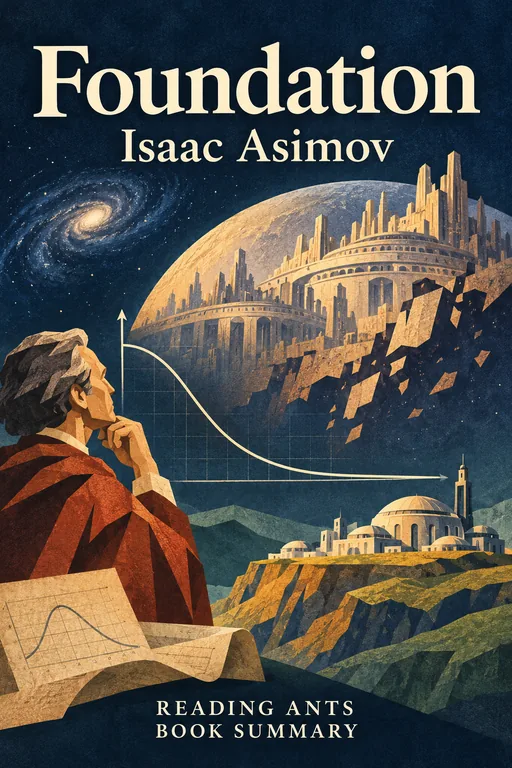
Foundation
Isaac Asimov
A mathematician predicts that the vast Galactic Empire will fall, and sets up a small colony of scientists at the edge of the galaxy to shorten the coming dark age from thirty thousand years to one thousand.
🚀 Sci-Fi & Fantasy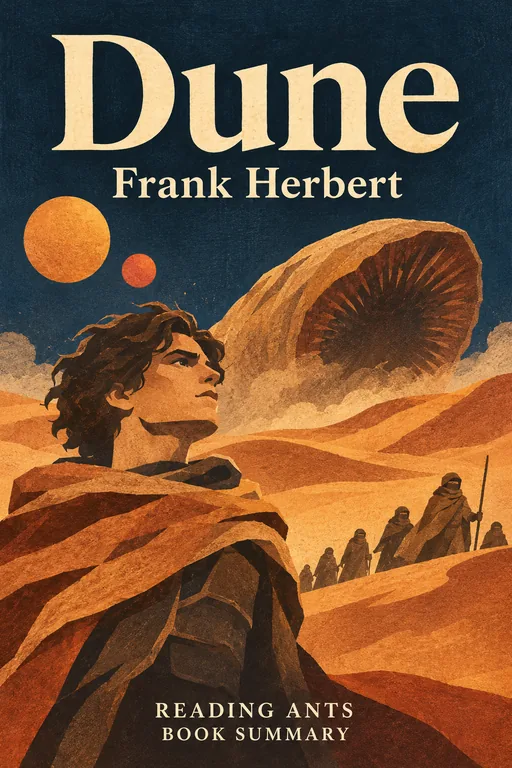
Dune
Frank Herbert
When his noble family is betrayed and destroyed, young Paul Atreides escapes into the deserts of the planet Arrakis and rises to lead its native people, the Fremen, in a revolution that will change the universe.
🚀 Sci-Fi & Fantasy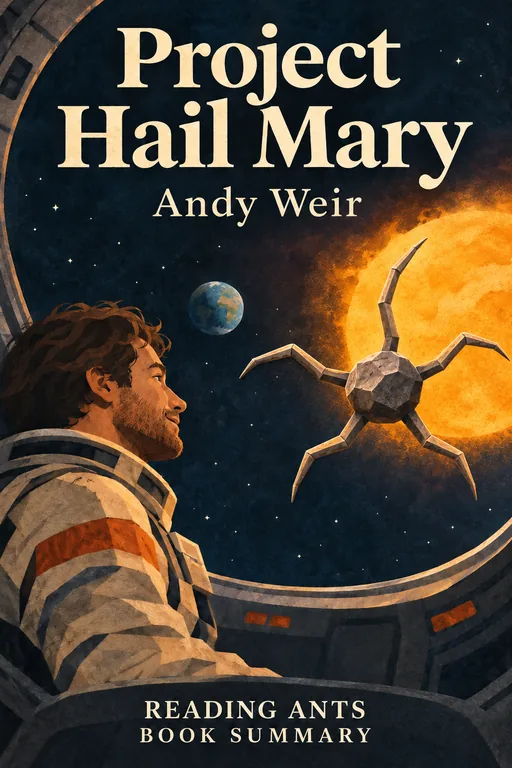
Project Hail Mary
Andy Weir
A man wakes up alone on a spaceship with no memory, slowly discovers that he is humanity's last hope to stop a microbe that is dimming the sun, and finds an unexpected friend among the stars.
🚀 Sci-Fi & Fantasy
The Little Prince
Antoine de Saint-Exupery
A pilot stranded in the desert meets a small boy from a tiny planet, who teaches him that the most important things in life, like love and friendship, can only be seen with the heart.
🌍 World Literature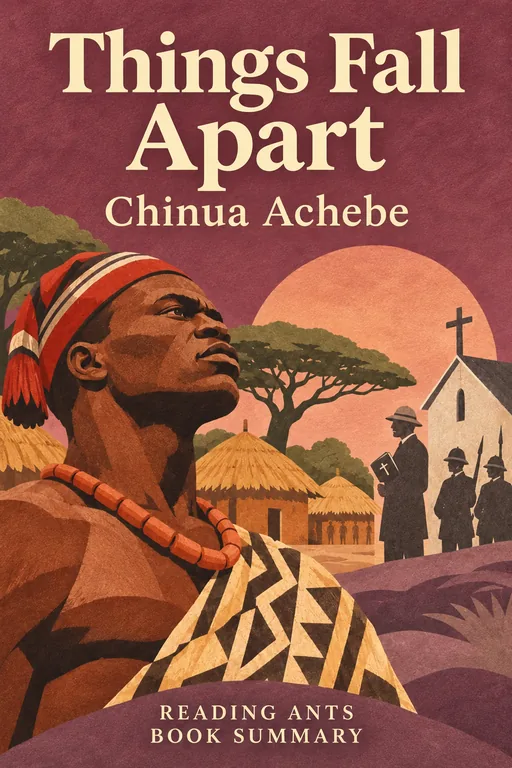
Things Fall Apart
Chinua Achebe
Okonkwo, a proud and fearsome leader in an Igbo village in Nigeria, struggles against his own fears and against the arrival of British missionaries and colonial rulers, who change his world forever.
🌍 World Literature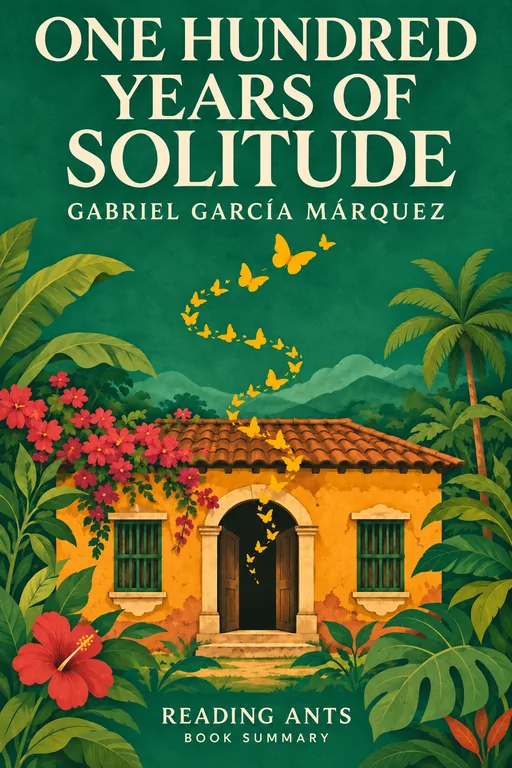
One Hundred Years of Solitude
Gabriel Garcia Marquez
Seven generations of the Buendía family live, love, fight and repeat the same mistakes in the magical Colombian town of Macondo, from its founding to its final destruction.
🌍 World LiteratureWant something different?
Pick another topic and we will show you three books to start with.