 Reading Ants
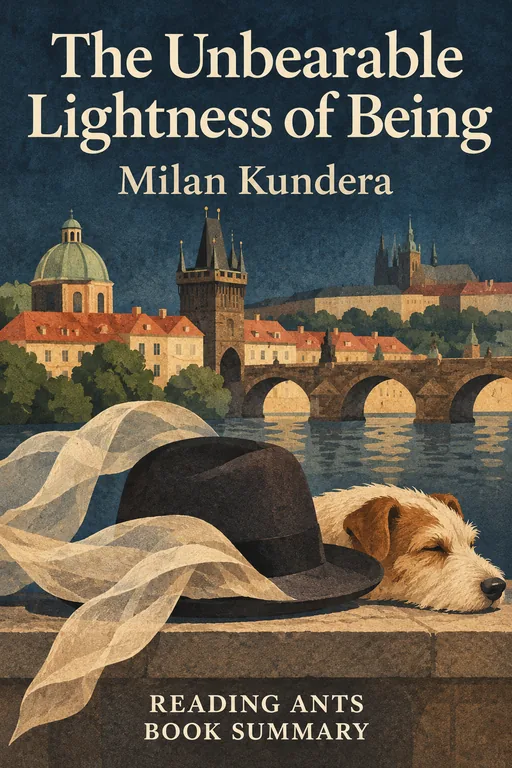
The Unbearable Lightness of Being
Original title: Nesnesitelná lehkost bytí
Through the intertwined lives of a Prague surgeon, his wife and his lovers, the novel asks whether a life that happens only once can have weight or meaning.
Overview
The Unbearable Lightness of Being is a philosophical novel by the Czech writer Milan Kundera, first published in 1984, after he had left Czechoslovakia. It is set mostly in Prague, in the 1960s and after the Soviet invasion of 1968, with some scenes in Switzerland. It mixes a love story with essays about fate, love, politics and the body. The core question is whether choices matter if we only live once, or whether a life is “light,” with no lasting consequence. The book contains adult content and is aimed at older readers.
Main Characters
- Tomas: a gifted surgeon and a man who cannot stop having affairs.
- Tereza: a young woman from a small town who loves Tomas, and is hurt by his infidelity.
- Sabina: an artist and one of Tomas’s lovers, who prizes freedom and hates kitsch.
- Franz: a Swiss professor who loves Sabina and is idealistic.
- Karenin: the family dog, a loyal and gentle companion.
Full Summary
A Chance Meeting
Tomas, a surgeon in Prague, is divorced and enjoys a light life of many brief affairs. During a visit to a small town, he meets Tereza, who works as a waitress. A series of chances brings her to Prague, where she turns up at his door. He lets her stay, and he finds himself in a love he did not plan.
Tereza is deeply sensitive and tormented by jealousy, since she knows that Tomas continues to see other women. He loves her, but he cannot give up his casual affairs. The novel calls this the clash between lightness and weight.
Sabina and Tereza
Among Tomas’s lovers, the closest is Sabina, an independent painter, who understands his way of living. The two become friends as well as lovers. Sabina helps Tereza by giving her work as a photographer, and Tereza finds a new confidence in her art.
Yet Tereza keeps having bad dreams about Tomas’s infidelities, and she feels that she is a burden to him. She believes that her body is just one among many, and that nothing makes her special. Tomas, for his part, wants to reassure her, and he tries to calm her fears, but he cannot change who he is. Their love is real, but it is also full of pain.
The Invasion
In 1968, Soviet tanks enter Prague to crush the reform movement known as the Prague Spring. Tereza photographs the invasion and the crowds. After this, the couple moves to Switzerland, where Tomas has a job, and Sabina is also living there.
But Tereza finds exile hard, and she feels lost, homesick and out of place in a foreign country, where nobody knows what has happened to her homeland. She decides to return to Prague, and Tomas, after much thought, follows her, giving up his safe life. He tells himself that it is a free choice, but he knows that the weight of love has pulled him back.
Life Under Pressure
Back in Czechoslovakia, Tomas loses his position as a surgeon after he refuses to sign a political statement. He becomes a window washer, a job that lets him meet many women. The authorities pressure him, and he refuses to be used by either them or the dissidents.
Meanwhile, Sabina, in Switzerland and later in America, is involved with Franz, a professor who admires her, but she leaves him because she finds his earnestness too heavy. Franz later gets caught up in a political cause and dies in a violent attack abroad.
The Countryside
Tomas and Tereza leave Prague for a village, where they live a quiet life working on a collective farm. Here Tereza finds peace for the first time, and Tomas, who has given up much, finds that he is happy. Their dog, Karenin, grows old and falls ill, and Tereza cares for him lovingly until he dies.
In the final scene, the couple spend a happy evening dancing in a small hotel. The book also reveals that the couple die soon afterward in an accident, though it dwells on their last evening with tenderness rather than on the accident itself.
Why It Matters
The novel became an international success and made Kundera one of the best-known European writers of his time. It is a major work about life under communism, with its small cruelties, its informers and its loss of privacy. It is also a rare example of a novel that thinks in essays, using the story to explore ideas about memory, love, the body and history. A film version was released in 1988, which brought it to an even wider audience. Many readers return to its themes about what is light and what is heavy in a life.
Key Takeaways
- We only live once. Without a second chance, it is hard to know whether our choices were right.
- Love and sex are different. Tomas shows how a person can love one and desire many.
- Kitsch hides reality. Sabina distrusts easy, sentimental images that make everyone feel good.
- Politics invades private life. Under a dictatorship, even love is shaped by the state.
- Simple loyalty has value. Karenin the dog shows a kind of love without games.
What We Can Learn
The book encourages us to ask what we truly value, and whether we are living in a way that matches our values. A life without commitments can seem free, but it can also feel empty, while a heavy duty can give meaning but also pain. Most people need a balance of the two.
It also shows how jealousy and fear can damage relationships, and how honest talk and kindness can help. Finally, Kundera suggests that we should be wary of slogans and easy emotions, in politics and in daily life. It is better to look at what is real, even when it is complicated.
Criticism and Counterpoints
Some critics say that Kundera treats his female characters mainly through male desire, and that Tomas’s behavior is excused too easily. Others find the long essay passages interrupt the story, or feel the philosophy is hard to follow. Some readers dislike its frank sexual content. Yet many others praise its wit and its blend of ideas and feelings. Some also say that the narrator’s constant comments, and the way that the book jumps in time and between characters, can make the story feel more like a lecture than a novel, though that is part of Kundera’s chosen style.
Who Should Read It
This book is for mature readers who like novels of ideas and enjoy thinking about love, politics and philosophy. It suits those who are interested in Central Europe’s history. It may not be right for younger readers because of its adult content, or for readers who want a simple, fast-moving plot.
Want the whole book?
A summary is a taste, not the meal. Here is where to find the full book.
You reached the end 🎉
Nicely done. Mark this one as read, and we will suggest what to read next.
Read this next
Nausea
Jean-Paul Sartre
A lonely historian in a French port town is overcome by a sickening awareness that things simply exist, without reason, and he searches for a way to live with this.
🌍 World Literature
The Trial
Franz Kafka
A respectable senior bank officer is arrested one morning for a crime nobody will name, and is dragged through a vast, senseless legal system that he can neither understand nor escape.
🌍 World Literature
The Metamorphosis
Franz Kafka
A hardworking traveling salesman wakes one morning to find himself transformed into a monstrous insect, and his family's love for him slowly turns to disgust and neglect.
🌍 World Literature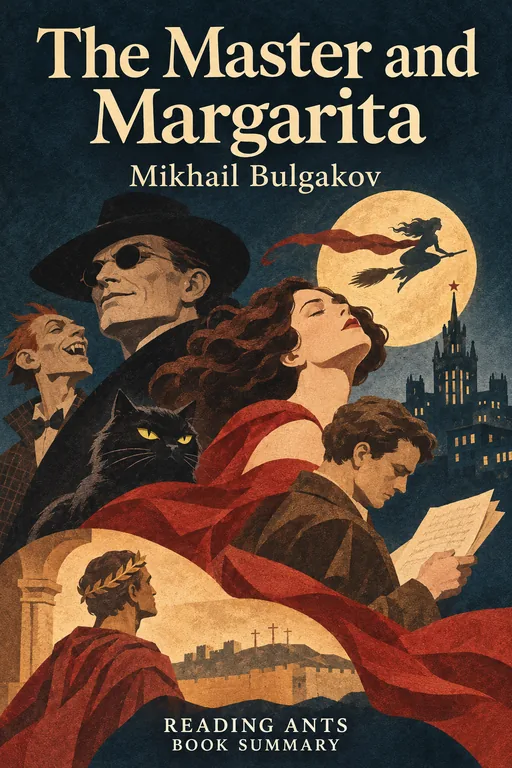
The Master and Margarita
Mikhail Bulgakov
The Devil arrives in 1930s Moscow with a cat, a fanged assistant and a naked witch, and turns the city upside down, while a persecuted writer and his devoted lover try to save a novel about Pontius Pilate from oblivion.
🌍 World Literature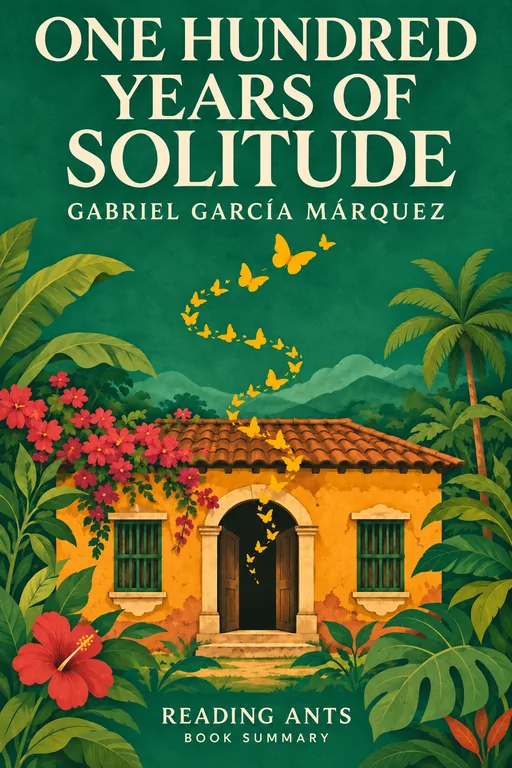
One Hundred Years of Solitude
Gabriel Garcia Marquez
Seven generations of the Buendía family live, love, fight and repeat the same mistakes in the magical Colombian town of Macondo, from its founding to its final destruction.
🌍 World Literature
The Little Prince
Antoine de Saint-Exupery
A pilot stranded in the desert meets a small boy from a tiny planet, who teaches him that the most important things in life, like love and friendship, can only be seen with the heart.
🌍 World LiteratureWant something different?
Pick another topic and we will show you three books to start with.