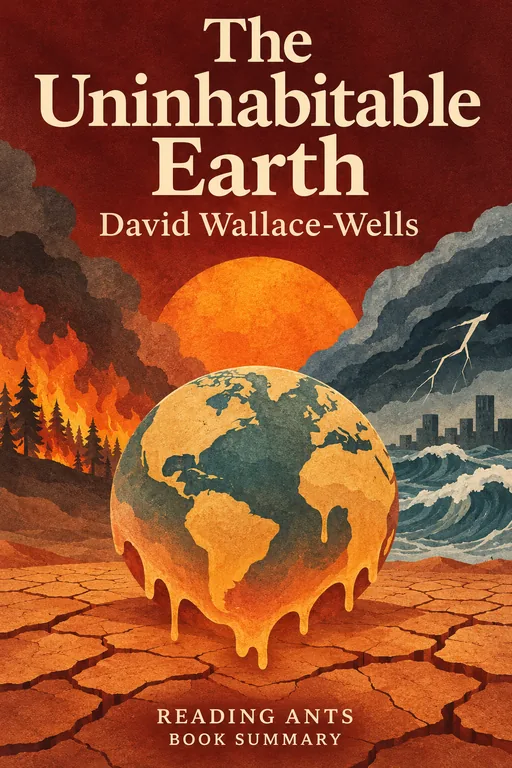
The Uninhabitable Earth
Journalist David Wallace-Wells sets out, without softening, the range of harms that unchecked global warming could bring, from heat and hunger to disasters and conflict, in order to make readers understand the stakes of the choices we make.
Overview
The Uninhabitable Earth: Life After Warming was published in 2019 by David Wallace-Wells, a journalist who wrote for New York magazine. It grew from a widely read and controversial article in 2017, which described worst-case scenarios. The book is organized in four parts. The short first part, “Cascades,” sets out the scale of the problem. The second part, “Elements of Chaos,” goes through the many kinds of impact that climate change could have, and the third, “The Climate Kaleidoscope,” looks at how the crisis connects with technology, politics and culture. A brief final part, “The Anthropic Principle,” asks what we will choose to do. The author draws on scientific reports and interviews, and writes with urgency.
Full Summary
1. Why it is worse than you think
The idea: Wallace-Wells begins by saying that most people do not grasp how serious the problem is. More than half of the carbon ever released by burning fossil fuels has been emitted in just the last few decades, he says, which means that the worst of the damage is a product of our own era. He argues that people tend to think of climate change as slow and distant, but its effects are already visible, and could get far more severe within the lifetimes of those alive now, depending on our decisions.
In real life: A problem that builds quietly may be much closer than it seems.
2. Heat, hunger and drowning
The idea: The author describes some of the main threats. Higher temperatures can cause deadly heat waves, in which some regions become dangerous to live in. Crop yields may fall as the world warms, and food supplies may be threatened. Melting ice sheets could raise sea levels and flood coastal cities, where many millions live. He gives figures from scientific studies, and notes that the rate of ice loss is hard to predict, with uncertainty on the speed.
In real life: A summer that is hotter than anything on record can be dangerous for people without cooling.
3. Wildfire, storms, disasters and disease
The idea: The book also discusses extreme weather: larger and more frequent wildfires, stronger hurricanes, droughts and floods. Warming oceans and acidification threaten coral reefs and fisheries. Melting permafrost could release ancient diseases and more greenhouse gases, as stored carbon is exposed. Wallace-Wells lists how each of these effects may combine with others, so that the impacts multiply, and the total is more than the sum.
In real life: A drought followed by a fire and then a flood can devastate a region.
4. Economic collapse and conflict
The idea: The author argues that climate change will have large economic costs, damaging infrastructure and productivity, and could be more costly than many models have assumed. He also describes the link to conflict and migration, noting that drought was one factor in tension leading up to the war in Syria, though it is one among many. He suggests that millions of people could be forced to move, and that this will test political systems.
In real life: When a farm no longer produces food, the family may have to leave.
5. Climate and our stories: denial, technology and politics
The idea: In a later part, Wallace-Wells examines how we have talked and thought about the issue. He says that the denial campaigns of the oil industry were a serious wrong, but that blaming them alone is too simple, since inertia, the pull of near-term gains and the difficulty of a global problem also slow action, and that faith in future technology can be a way of putting off action. He also discusses how we think about the end of the world, and how climate change affects politics, culture and religion.
In real life: Assuming that someone will invent a solution later can make it easier to put off acting now.
6. What we can still decide
The idea: The final part emphasizes that the outcome is not fixed. The degree of warming depends on how quickly we cut emissions, and every degree matters. The author is critical of fatalism, and describes himself as optimistic in a qualified way, since even a much-changed future is better than the worst outcomes. He argues that individual lifestyle choices matter little unless they are scaled up by politics, and says that the future is a matter of collective choices.
In real life: Slowing down before a bend in the road can decide whether you make the turn safely.
Why It Matters
The Uninhabitable Earth grew out of one of the most-read articles in the history of New York magazine, and added to the growing public concern about climate change. It was a prominent mainstream book on worst-case outcomes, and it prompted debate about how to communicate the problem, between those who say that fear motivates action and those who say that it may cause despair. It also pushed readers to look beyond rising seas to the many other effects of warming, such as heat, hunger, wildfire, disease and conflict, and to see how they can feed on each other. The central message, that the scale of change is large but that our choices matter, remains important.
Key Takeaways
- Climate change is already happening. Impacts are visible now.
- The risks are many. Heat, food, water, storms, health and conflict are connected.
- Cascading effects multiply harm. Impacts can feed on each other.
- Our choices still matter. Every degree of warming makes a difference.
- Action must be collective. Governments, companies and citizens all have a part.
What We Can Learn
You can use the book to understand what is at stake, and to consider what actions you can take, such as using less energy, eating more sustainably and supporting climate policies. Talk with friends and family about the issue, in a calm way. If you feel anxious, remember that action, and community, are a good response, and consider discussing your feelings with someone. Be critical of misinformation on both sides, and look at reputable scientific sources. And think about how your choices, in careers and as a citizen, can make a difference.
Criticism and Counterpoints
Some climate scientists criticized the original 2017 article, and some reviewers the book, for overstating worst-case possibilities and for giving less weight to likely outcomes, and scientists also disputed the article’s description of Arctic methane. Others said that the tone of doom could cause fatalism or anxiety. Some of the science cited has probably been updated since 2019, and readers should check recent figures. The author discusses the uncertainty in the models, and describes himself as optimistic in a qualified way. Some critics also say that the book gives more attention to disaster than to solutions.
Who Should Read It
This book is for adult and older teenage readers who want a sobering overview of climate risk. It can be distressing, and some readers may prefer to read it with a more solution-focused book. Those who feel overwhelmed should balance it with information on what can be done.
Want the whole book?
A summary is a taste, not the meal. Here is where to find the full book.
You reached the end 🎉
Nicely done. Mark this one as read, and we will suggest what to read next.
Read this next
How to Avoid a Climate Disaster
Bill Gates
Bill Gates argues that the world must reach net-zero greenhouse gas emissions by 2050, and lays out a practical plan that depends on new technology, lower "green premiums," smart policy and large investment.
🔬 Science
Not the End of the World
Hannah Ritchie
Data scientist Hannah Ritchie argues that, although environmental problems are serious, they can be solved, and that being realistic and hopeful, rather than doomy or dismissive, is the way to be the first generation to build a sustainable world.
🔬 Science
Silent Spring
Rachel Carson
The careless spraying of powerful chemical pesticides like DDT was poisoning birds, fish, soil, water and people, and humans must learn to live with nature instead of waging war on it.
🔬 Science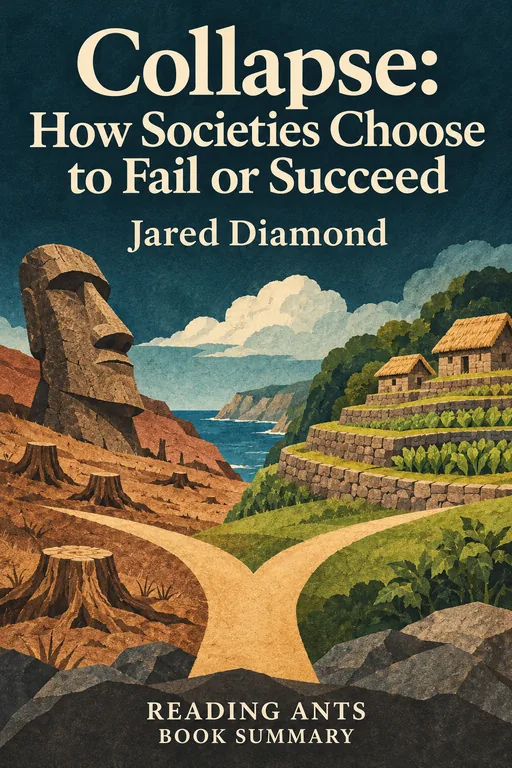
Collapse: How Societies Choose to Fail or Succeed
Jared Diamond
Jared Diamond studies societies that collapsed and societies that survived, and argues that environmental damage, climate change, enemies, trade and the way a society responds to problems decide whether it fails or succeeds.
🏛️ History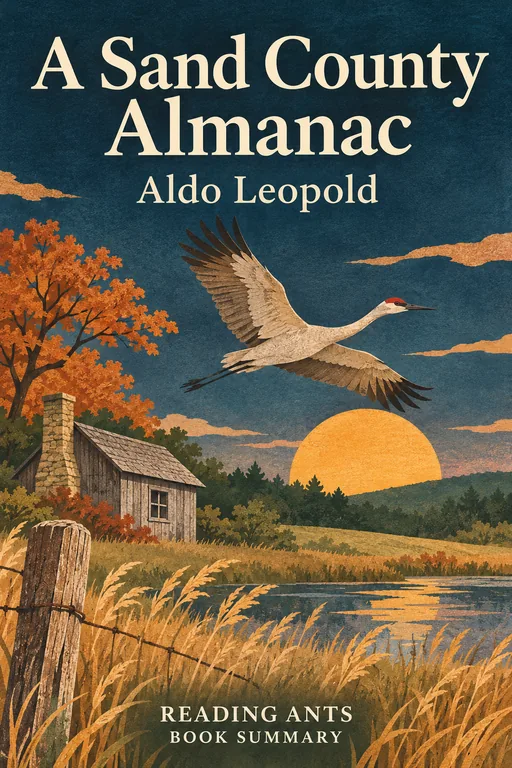
A Sand County Almanac
Aldo Leopold
Forester and ecologist Aldo Leopold describes a year on a worn-out Wisconsin farm and his travels, and argues for a "land ethic," a view in which humans are members of the community of the land, with a duty to care for it.
🔬 Science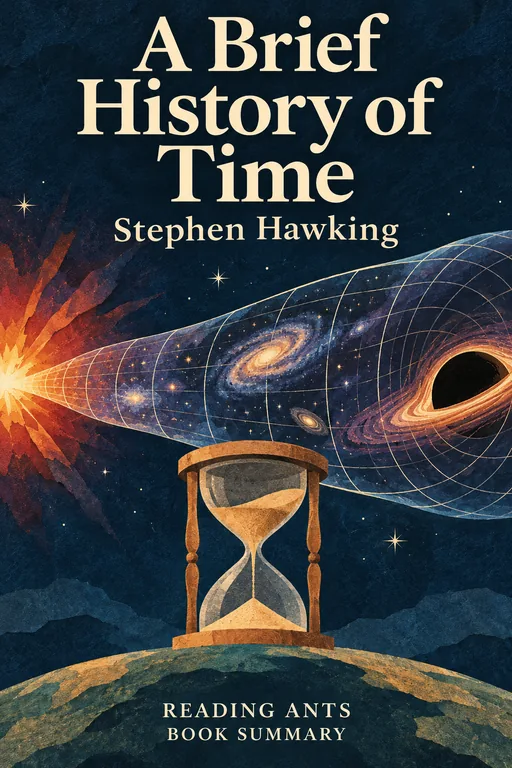
A Brief History of Time
Stephen Hawking
One of the world's greatest physicists explains, with almost no math, what we know about the origin, structure and fate of the universe, from the Big Bang to black holes and the nature of time itself.
🔬 ScienceWant something different?
Pick another topic and we will show you three books to start with.