 Reading Ants
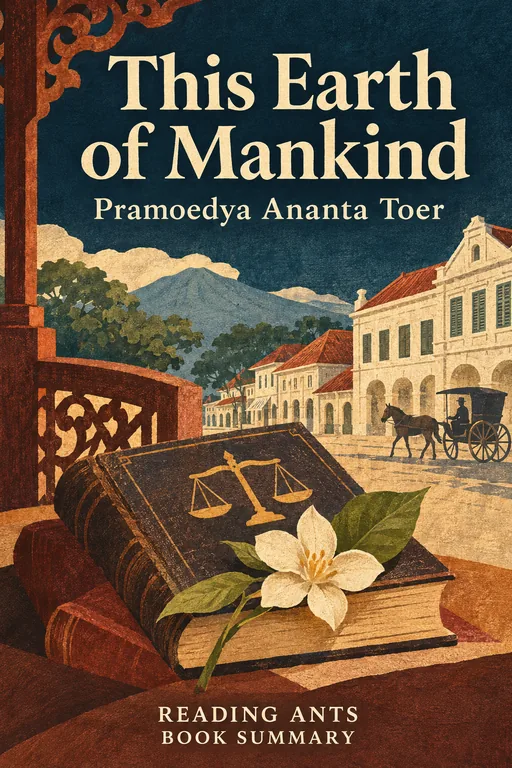
This Earth of Mankind
Original title: Bumi Manusia
A bright young Javanese student in the Dutch East Indies falls in love with the daughter of a remarkable woman, and learns, through the law and the loss of his wife, how colonial rule denies dignity to the people it governs.
Overview
This Earth of Mankind is the first book of the “Buru Quartet” by the Indonesian writer Pramoedya Ananta Toer. It is set in Surabaya, on the island of Java, around the year 1900, when Indonesia was the Dutch East Indies. Pramoedya first told the story orally to fellow prisoners on Buru Island, where he was held as a political prisoner for years, and wrote it down there while still imprisoned. The manuscript was smuggled out, and the book was published in 1980 and banned by the Indonesian government in 1981. The book tells of the awakening of a young man, and of a nation.
Main Characters
- Minke: a young Javanese student at a Dutch school, who is gifted and sensitive, and who writes for newspapers.
- Nyai Ontosoroh: a strong, intelligent woman, the “concubine” of a Dutchman, with no legal rights, who runs his business.
- Annelies Mellema: Nyai’s beautiful daughter, who is shy and fragile.
- Herman Mellema: a Dutch businessman, Annelies’s father, who has fallen into decline.
- Jean Marais: a French painter and a friend of Minke, who is kind and humble.
- Robert Mellema: Annelies’s brother, who is cruel and proud of his European blood.
- Kommer: a journalist, who encourages Minke to write.
Full Summary
A Student of Two Worlds
Minke is one of the few native students at a Dutch high school, because his father is a high official. He is proud of his education, and he admires European science and literature. He is also aware that the Dutch look down on him and on all Javanese people.
A friend takes him to visit the house of the Mellemas, a wealthy family with a big farm and dairy. There he meets Annelies, a young woman of striking beauty, and her mother, Nyai Ontosoroh, who is commanding.
Nyai Ontosoroh
Nyai explains how she became a “nyai,” a concubine. As a young girl, she was sold by her father to a Dutchman, in exchange for a promotion. Though she was treated as a servant, she learned Dutch, read, and took over the management of the business, which she made prosper.
She now raises her children and runs the farm. Her husband, who has fallen into decline and dissolution, is a shadow of a man. Nyai is proud, and she is determined that her daughter will not be a victim.
Love
Minke visits more often, and soon he and Annelies fall in love. Annelies is gentle but needs care. Nyai, who sees how much they love each other, welcomes Minke. They marry according to Islamic law, which is a way for Minke to protect her.
Meanwhile, Minke continues to write articles for newspapers, using a pen name, and he finds that his writing has an influence. He is also warned by friends of the danger of being too close to the Mellema family.
Scandal
One night, Herman Mellema is found dead in a brothel. Nyai and Minke are drawn into an investigation, and the Dutch press makes the most of a scandal. Minke is humiliated, and his school expels him.
Soon after, a relative of Herman Mellema arrives from the Netherlands, claiming that, under Dutch law, he is the legal guardian of Annelies and the heir to the estate. The Dutch court, which does not recognize Nyai’s rights, as she is a native woman, rules against her.
The Trial
Nyai, Minke and their friends fight in court. Nyai makes a passionate speech, in which she says that she is a human being and that she has a right to defend her family. Minke writes and publishes defenses, and some Europeans join the cause.
But the law is clear: native marriages are not recognized, and Annelies is a minor under Dutch guardianship. She is ordered to be sent to the Netherlands. Annelies, who is frail, falls ill, and she is taken away by force.
Loss
Annelies is taken on a ship to Europe, and Minke is unable to stop it. Her sad fate is told later in the series. Nyai, who has lost her daughter, remains defiant, and tells Minke that they have fought as well as they could, and that they have lost with their heads held high.
The book ends with Minke, who has learned that he must use his pen, and his mind, for his people. The story continues in the next volume.
Why It Matters
This Earth of Mankind is often considered the greatest work of modern Indonesian literature, and Pramoedya has been mentioned many times as a candidate for the Nobel Prize. The book was banned in Indonesia for years, and its author was imprisoned for his political views. The story of how it was first told to fellow prisoners is a powerful sign of the strength of storytelling. It is also a major postcolonial text, which shows how law and race were used to control a people. The Buru Quartet has been translated into dozens of languages.
Key Takeaways
- Colonialism is built on unequal law. Nyai and Annelies are denied rights because of race.
- Education can awaken. Minke begins to see what is wrong in his society.
- Women can be strong. Nyai is a model of courage.
- Writing is a weapon. Minke uses his pen to fight.
- Dignity is worth defending. The characters insist on being treated as human.
What We Can Learn
The book shows us how unjust systems can seem normal to those who benefit from them, and it encourages us to look for the voices of those who are excluded. It reminds us that law and justice are not always the same thing.
It also teaches the power of knowledge and writing, and of speaking out. Nyai’s story shows that an ordinary person, even without privilege, can show remarkable strength and intelligence. Finally, the novel invites us to think about the history of our own countries, and the stories of those who have been silenced.
Criticism and Counterpoints
Some readers find the pace slow and the political lessons obvious. The book’s characters, particularly Annelies, can seem idealized and passive. Some critics find that Minke is too perfect, and that his Javanese identity is less deeply explored. Others point out that the book is the first of four, and that it does not fully resolve its story. The translation can also be uneven in places. Some readers also say that the lessons in colonial history are sometimes given in long speeches, which can slow down the story, and that Minke’s romantic feelings are described in an old-fashioned way.
Who Should Read It
This book is for readers who like historical novels and who are interested in colonialism, justice and Southeast Asia. It is a good first step into Indonesian literature. Those who want a quick plot may find it slow, but it is rich and moving.
Want the whole book?
A summary is a taste, not the meal. Here is where to find the full book.
You reached the end 🎉
Nicely done. Mark this one as read, and we will suggest what to read next.
Read this next
Noli Me Tangere
Jose Rizal
A young Filipino returns home from Europe full of hope for reform, and finds that the Spanish friars and officials who rule the islands will destroy anyone who threatens their power.
🌍 World Literature
Things Fall Apart
Chinua Achebe
Okonkwo, a proud and fearsome leader in an Igbo village in Nigeria, struggles against his own fears and against the arrival of British missionaries and colonial rulers, who change his world forever.
🌍 World Literature
The God of Small Things
Arundhati Roy
In Kerala, India, a pair of twins grows up in a divided family where a forbidden love across caste lines leads to a tragedy that haunts them for the rest of their lives.
✨ Modern Fiction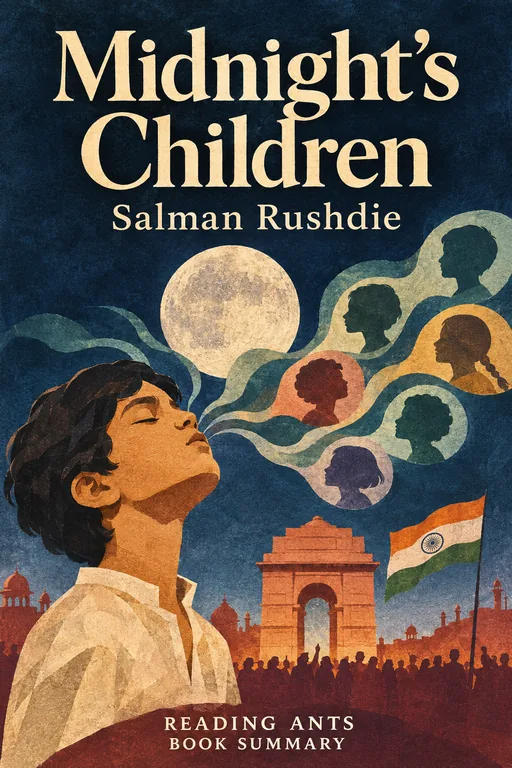
Midnight's Children
Salman Rushdie
Born at the exact moment India became independent, a boy named Saleem Sinai discovers that his life is mysteriously linked to the nation's history, and tells his story as a wild mix of family saga, politics and magic.
✨ Modern Fiction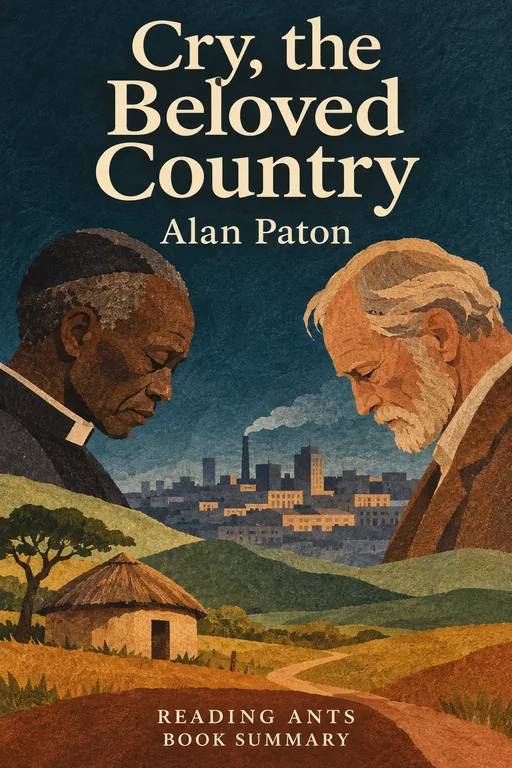
Cry, the Beloved Country
Alan Paton
A rural Zulu priest travels to Johannesburg to find his lost son and sister, and discovers that his son has murdered a white man, a tragedy that draws two grieving fathers from opposite sides of South Africa's racial divide into an uneasy bond.
📜 Classics
The Little Prince
Antoine de Saint-Exupery
A pilot stranded in the desert meets a small boy from a tiny planet, who teaches him that the most important things in life, like love and friendship, can only be seen with the heart.
🌍 World LiteratureWant something different?
Pick another topic and we will show you three books to start with.