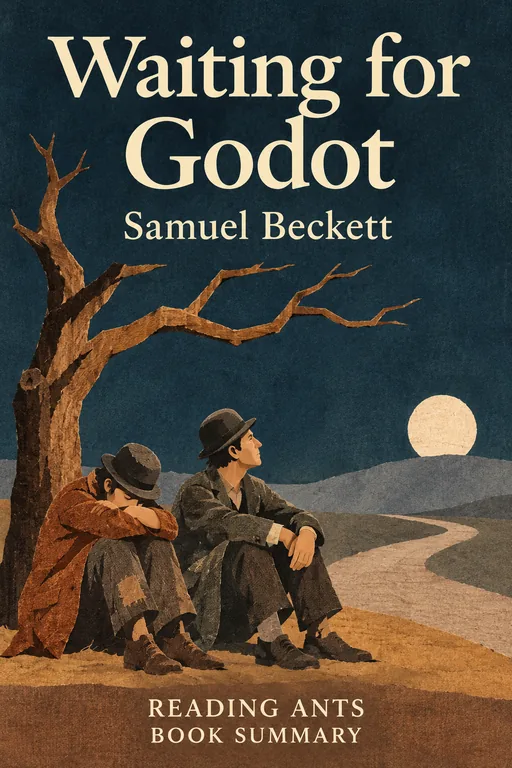
Waiting for Godot
Original title: En attendant Godot
Two tramps wait beside a lonely tree on a country road for a mysterious man named Godot who never arrives, passing the time with games, quarrels and strange encounters in a play about hope, boredom and the meaning of existence.
Overview
Waiting for Godot is a play by the Irish writer Samuel Beckett, written in French and first published in 1952 and first performed in Paris in 1953; Beckett later translated it into English himself. It is one of the most famous and influential plays of the twentieth century. It has very little plot. Two men, Vladimir and Estragon, wait on a bare country road with a single tree for someone called Godot, whom they have never met and who keeps sending word that he will come tomorrow. While they wait, they talk, argue, eat a carrot, consider hanging themselves, and meet a cruel master named Pozzo and his servant, Lucky. Nothing seems to happen, twice. The play is a key work of the “Theatre of the Absurd,” which explores the idea that life may have no clear meaning.
Main Characters
- Vladimir (Didi): a thoughtful, anxious man who insists they must wait.
- Estragon (Gogo): his tired, forgetful companion, who often wants to leave.
- Pozzo: a pompous, domineering traveler.
- Lucky: Pozzo’s servant, tied by a rope around his neck.
- The Boy: a messenger who brings word from Godot.
- Godot: the mysterious figure who never appears.
Full Summary
Act One: The Waiting Begins
On a country road beside a bare tree, at evening, Estragon struggles to take off his boot. Vladimir joins him. The two are old friends, poor and homeless, and they have come to this spot to wait for someone named Godot. They are not sure who he is, what he looks like, or even whether this is the right place or the right day. Estragon keeps suggesting they leave, and Vladimir keeps reminding him that they can’t, because they are waiting for Godot.
To pass the time, they talk about the Bible, argue, make up and complain. They wonder whether to hang themselves from the tree, but they can’t decide who should go first, and they worry the branch might break, so they decide to do nothing.
Pozzo and Lucky
A loud, self-important man named Pozzo arrives, driving his servant, Lucky, with a rope tied around Lucky’s neck. Lucky carries heavy bags and a stool. Pozzo eats chicken while Vladimir and Estragon watch hungrily, and he talks grandly about himself. When Vladimir protests at the cruel treatment of Lucky, Pozzo explains that he is taking Lucky to the market to sell him.
Pozzo orders Lucky to entertain them by dancing and then by thinking aloud. Lucky bursts into a long, breathless monologue, a jumble of half-sentences about God, science and human decline, until the others knock him down and silence him by taking off his hat. Pozzo and Lucky leave.
The Messenger
A Boy arrives with a message from Mr. Godot: he will not come this evening, but he will surely come tomorrow. The Boy says he works for Godot looking after the goats. Night falls suddenly, and the moon rises. Estragon suggests they leave, and Vladimir agrees. But, as the act ends, they do not move.
Act Two: The Next Day
The next day, at the same place, the tree has grown a few leaves. Estragon has been beaten during the night and remembers almost nothing of the previous day. Vladimir tries to remind him about Pozzo and Lucky. They pass the time again with games: they swap hats, pretend to be Pozzo and Lucky, insult each other and make up. Estragon sleeps and Vladimir sings him a lullaby.
Pozzo and Lucky Return
Pozzo and Lucky return, but they have changed. Pozzo is now blind, and Lucky is mute. They both fall down and cannot get up. Vladimir and Estragon try to help and fall down too. Pozzo doesn’t remember meeting them before and becomes angry when Vladimir asks when he went blind. He says that one day we are born and one day we die, and that life is only a brief moment, as short as the instant between birth and the grave. Then he and Lucky stumble off.
Tomorrow
The Boy arrives again with the same message: Mr. Godot will not come today, but he will come tomorrow. The Boy says he doesn’t remember meeting Vladimir the day before, and it is left unclear whether he is the same boy. Vladimir, distressed, begs him to tell Godot that he saw them.
Alone again, the two men consider hanging themselves once more, using the cord that holds up Estragon’s trousers, but it breaks, and his trousers fall down. They decide to come back tomorrow and bring a better rope, and that they will hang themselves then, unless Godot comes. Vladimir asks if they should go. Estragon agrees. But as the curtain falls, they do not move.
Why It Matters
Waiting for Godot changed the history of theater. When it was first performed, many audiences were confused or angry, because it broke every rule of drama: there is no real plot, no clear ending and no explanation of who Godot is. Yet it quickly became one of the most important plays of the twentieth century, and a critic famously described it as a play in which nothing happens, twice.
Beckett won the Nobel Prize in Literature in 1969. The play became a central work of the Theatre of the Absurd, influencing writers such as Harold Pinter and Tom Stoppard. It has been performed all over the world, including in prisons, where inmates found deep meaning in its themes of waiting and hope. The phrase “waiting for Godot” now describes waiting for something that may never arrive.
Key Takeaways
- Life may have no clear meaning. The characters wait for answers that never come.
- Hope keeps people going. Despite everything, they keep waiting.
- Friendship helps us endure. Vladimir and Estragon depend on each other.
- Time can feel endless. Repetition shows how monotonous life can be.
- Inaction can trap us. The characters always decide to leave but never move.
What We Can Learn
Waiting for Godot invites us to think about how we spend our time. Are we waiting for something to happen, someone to rescue us or the perfect moment, instead of taking action ourselves?
It also shows the value of companionship. Vladimir and Estragon argue constantly, but they stay together and look after each other. Friends can make even the hardest and dullest times bearable.
Finally, the play encourages us to find meaning in small things: a conversation, a joke, a shared carrot. Even when life seems uncertain, we can choose how to fill our days.
Criticism and Counterpoints
Many people find the play boring, frustrating or meaningless at first, because of its lack of action and its repetitive dialogue. Some critics at the time dismissed it as nonsense. Others argue that its apparent emptiness is exactly the point, and that it is often very funny, drawing on music-hall comedy and clowning.
Critics and audiences have endlessly debated who or what Godot represents: God, death, hope or nothing at all. Beckett himself refused to explain, saying that if he had known who Godot was, he would have said so in the play. Some readers find this lack of answers rewarding, while others find it unsatisfying.
Who Should Read It
This play suits older teens and adults who are interested in theater, philosophy and unusual storytelling. It is best seen performed, where its humor becomes clear. Readers who like clear plots and answers may find it challenging, but it rewards an open mind.
Want the whole book?
A summary is a taste, not the meal. Here is where to find the full book.
You reached the end 🎉
Nicely done. Mark this one as read, and we will suggest what to read next.
Read this next
The Stranger
Albert Camus
An emotionally detached office worker kills a man on an Algerian beach and discovers that society condemns him as much for refusing its expected feelings as for the murder itself.
🌍 World Literature
No Exit
Jean-Paul Sartre
Three dead people are locked together in a room that turns out to be hell, and discover that, with no torturer needed, they torment one another.
🎭 Epics, Drama & Poetry
The Myth of Sisyphus
Albert Camus
Camus asks whether life is worth living in a universe without clear meaning, and answers that we should accept the absurd, live with full passion and revolt, and imagine Sisyphus as happy.
🕊️ Philosophy & Religion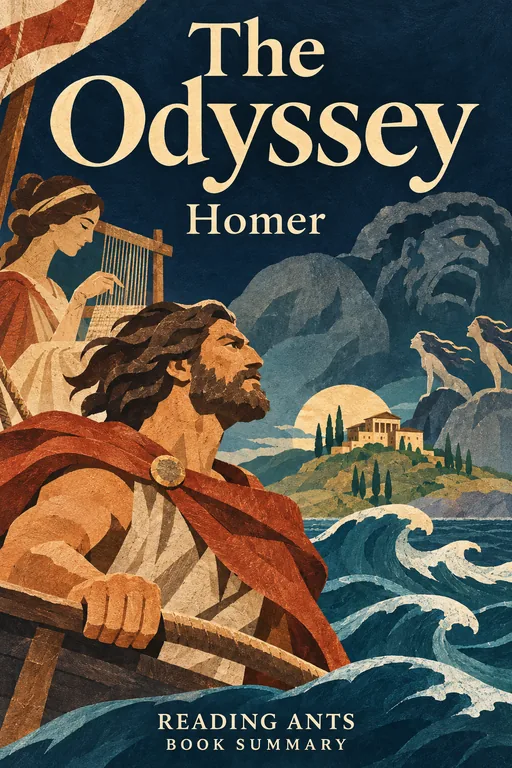
The Odyssey
Homer
After the Trojan War, the clever hero Odysseus struggles for ten years against monsters, gods and temptations to return home to his faithful wife and son, then must win back his house from the men trying to steal it.
🎭 Epics, Drama & Poetry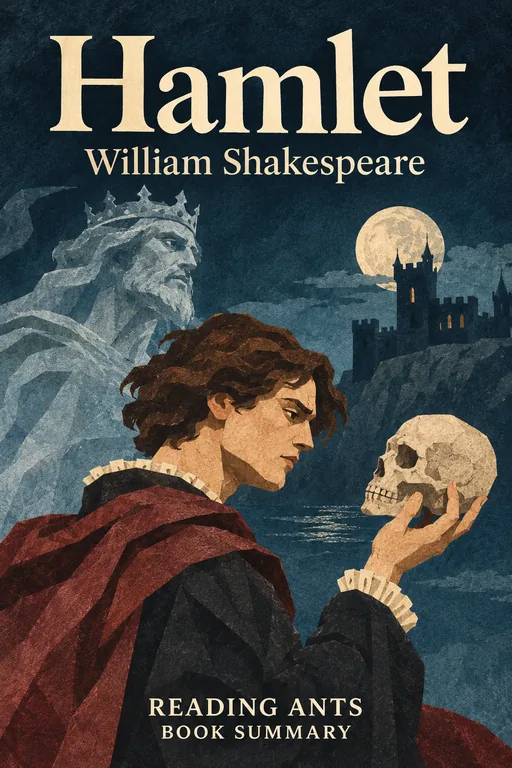
Hamlet
William Shakespeare
A grieving prince of Denmark learns from his father's ghost that his uncle murdered the king to take the throne, and his struggle to decide whether and how to take revenge leads to madness and death.
🎭 Epics, Drama & Poetry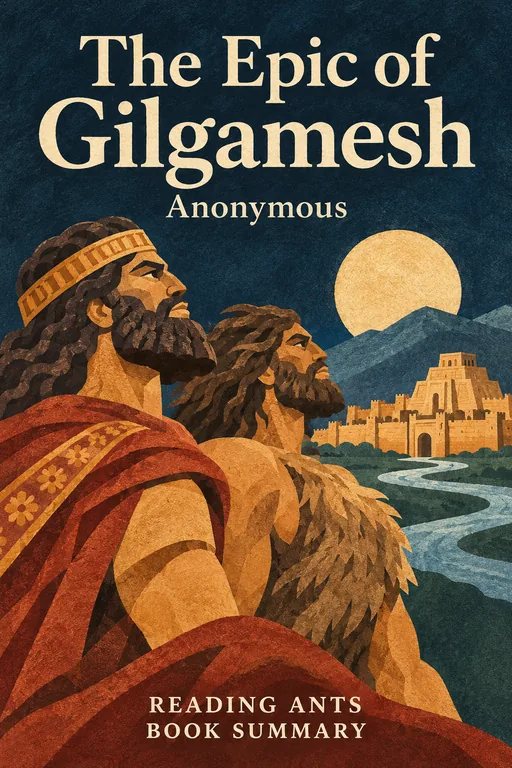
The Epic of Gilgamesh
Anonymous
A proud, powerful king of ancient Mesopotamia gains a true friend, loses him to death, and journeys to the edge of the world in search of eternal life, only to learn that what lasts is the life and legacy we leave behind.
🎭 Epics, Drama & PoetryWant something different?
Pick another topic and we will show you three books to start with.