 Reading Ants
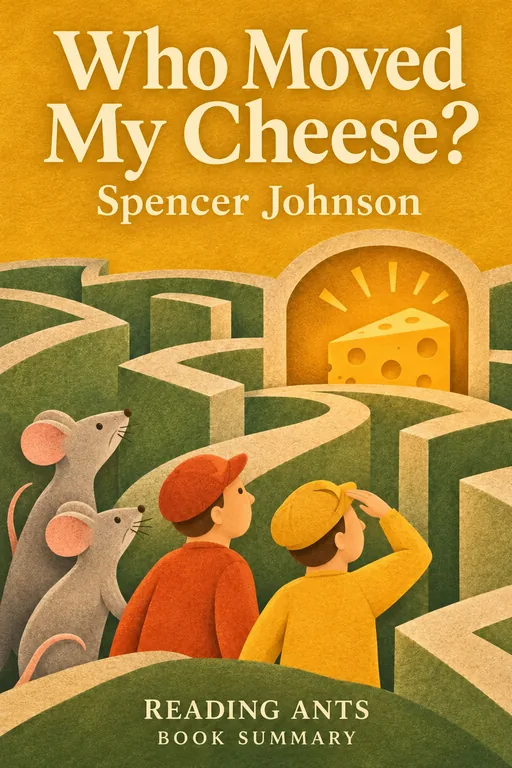
This short parable about two mice and two little people in a maze teaches that change is inevitable, and that those who notice it early and adapt, instead of clinging to the past, find new "cheese."
Overview
Who Moved My Cheese? An Amazing Way to Deal with Change in Your Work and in Your Life was written by Spencer Johnson, an American physician and author who also co-wrote The One Minute Manager, and published in 1998. The book is a very short story, about a hundred pages with large type and illustrations, told within a frame in which former classmates meet at a reunion and one tells the parable. Cheese is a metaphor for what we want in life, such as a job, a relationship, money or health. The book became a huge bestseller, particularly in business circles, and has been given by managers to employees during times of change.
Full Summary
1. The reunion
The idea: The framing story takes place at a gathering of old school friends, who are dealing with changes in their lives and jobs. Some are anxious and resistant, and one named Michael, who has learned something useful, tells the others a story to help. The story is about four characters who live in a maze, searching for cheese. This frame shows that the story is meant to be applied to real life, and that listeners may react differently to it.
In real life: People often become more open to new ideas when they hear them as a story and not as advice.
2. The four characters
The idea: The characters are two mice, Sniff and Scurry, and two “littlepeople,” about the size of mice but with human characteristics, Hem and Haw. Sniff sniffs out change early, Scurry scurries into action, Hem denies and resists change, and Haw learns to adapt in time. The mice use simple methods, trial and error, while the littlepeople use complex beliefs and emotions, which both help and get in the way. Each stands for a typical way people respond to change.
In real life: In any class or team, some people move quickly when things change, while others hesitate or complain.
3. Finding Cheese Station C
The idea: All four find a large supply of cheese at Cheese Station C. The mice carry on with their routine, running the maze each morning to check. The littlepeople, however, settle in, make the place a part of their identity and begin to take the cheese for granted. They do not notice that the supply is getting smaller. This shows how comfort can make us complacent, when we assume that things will stay the same.
In real life: A person who stays in the same routine for years may miss early signs that a job or industry is changing.
4. The cheese is gone
The idea: One day, the cheese is gone. Sniff and Scurry, who had noticed the supply shrinking, immediately set out to find new cheese. Hem and Haw are shocked and angry, asking who moved the cheese and why it isn’t fair. Hem refuses to leave, insisting that he is entitled to the cheese, and he and Haw go back every day, hoping it will return. Their reaction shows how denial and a sense of entitlement keep us stuck.
In real life: When a store closes or a program ends, some people complain for a long time before they begin to look for alternatives.
5. Haw changes
The idea: After a while, Haw realizes that nothing will change unless he does. He laughs at his fear, and begins to write down lessons on the walls of the maze, such as that fear holds us back and that moving on is better than staying with old cheese. He goes into the maze, finds small bits of cheese and then, eventually, a large new supply at Cheese Station N, where he finds Sniff and Scurry. Along the way, he imagines enjoying new cheese, and the picture gives him courage. He later returns to invite Hem to follow him, but Hem refuses, and the story ends with the sound of footsteps, leaving it open whether Hem is finally coming.
In real life: Imagining a better future can help us push through the fear of change.
6. The lessons and the conclusion
The idea: Haw’s sayings on the wall sum up the lessons: change happens, anticipate it, monitor it, adapt quickly, change, enjoy the change and be ready to change again. Back in the frame story, the former classmates respond differently: some are inspired, and one who is skeptical says he already knew it. Michael notes that the story is meant to be applied and that those who have used it have found it helpful.
In real life: Regularly checking our situation, such as how our skills compare with what is needed, helps us to adapt before a crisis.
Why It Matters
Who Moved My Cheese? sold more than twenty million copies, and was one of the best-selling business books of all time. It was used by companies worldwide to prepare employees for restructuring, mergers and new technology, and the phrase “moving the cheese” entered everyday language to describe sudden change.
Its success showed the appeal of a simple, memorable story as a way to communicate about change, and it helped create a market for business parables, short books that teach by story.
Because the text is so short, many people read it in under an hour, and it is often passed around in offices and families, which helped it spread through word of mouth for years after its release.
Key Takeaways
- Change is constant. Expect it and be ready.
- Notice early signs. Watch for small shifts before a crisis.
- Do not cling to the past. Old cheese will not return.
- Fear holds us back. Imagine the reward to move forward.
- Adapt and enjoy. Change can lead to something better.
What We Can Learn
The book teaches us to pay attention to small signals that things are changing, such as a shrinking market, a new technology or a change in our own needs. Early adaptation is easier than late panic.
It also shows how emotions affect our response. Anger and denial are natural, but staying stuck in them keeps us from solutions.
Finally, it reminds us that we can choose how to respond. Being flexible and curious, like Haw, can turn a loss into an opportunity.
Criticism and Counterpoints
Critics say the story is overly simple and patronizing, and that it treats workers like mice who must accept whatever management decides. Some argue that it has been used by employers to discourage questions or protest about layoffs and unfair changes, placing all responsibility on individuals to adapt, and ignoring the power of the organizations that move the cheese.
Others note that it provides few concrete steps, and that real change is much more complex. Some readers find the tone childish. Supporters say that the simplicity is the point, and that it can open a useful conversation about how we respond to change.
Who Should Read It
This book suits readers from about age ten up to adults. It is very short and easy to read in one sitting. It works well as a conversation starter, but readers may want to think critically about who is asking whom to change.
Want the whole book?
A summary is a taste, not the meal. Here is where to find the full book.
You reached the end 🎉
Nicely done. Mark this one as read, and we will suggest what to read next.
Read this next
Mindset: The New Psychology of Success
Carol S. Dweck
Psychologist Carol Dweck shows that people who believe abilities can grow, a growth mindset, learn, cope with failure and achieve more than people who believe their talents are fixed.
🌱 Self-Improvement
The One Minute Manager
Kenneth Blanchard and Spencer Johnson
A short story about a young man searching for a good boss teaches three quick habits, clear goals, immediate praise and immediate, fair correction, that can make people more productive and happier.
💼 Business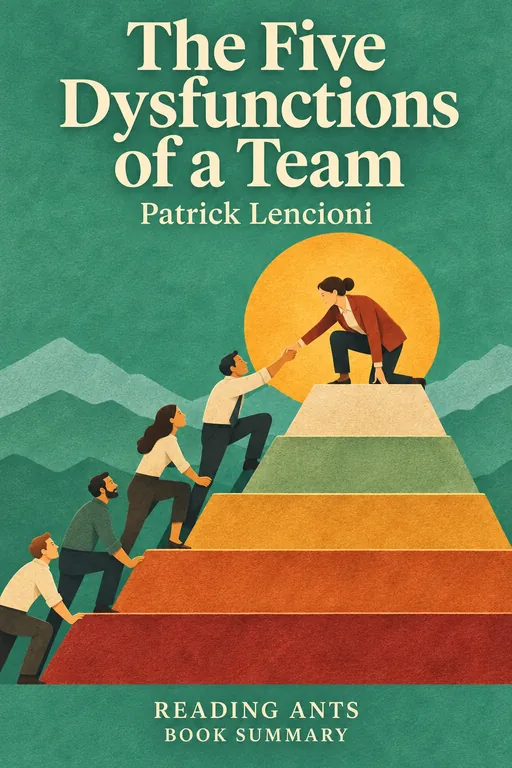
The Five Dysfunctions of a Team
Patrick Lencioni
Teams fail for five connected reasons, starting with a lack of trust, and the way to build a strong team is to fix them in order from the bottom of the pyramid up.
💼 Business
The Alchemist
Paulo Coelho
A young Spanish shepherd follows a recurring dream across the desert to the Egyptian pyramids in search of treasure, and learns that the journey toward one's dream is itself the greatest treasure.
🌍 World Literature
Atomic Habits
James Clear
Big changes in life come not from huge leaps but from tiny habits repeated every day, and you can build good habits (and break bad ones) by designing your life so the right choices are obvious, attractive, easy and satisfying.
🌱 Self-Improvement
The 7 Habits of Highly Effective People
Stephen R. Covey
Lasting success in life and work comes not from quick tricks or a charming personality but from good character, built through seven habits that move us from depending on others, to standing on our own, to working well with others.
🌱 Self-ImprovementWant something different?
Pick another topic and we will show you three books to start with.