 Reading Ants
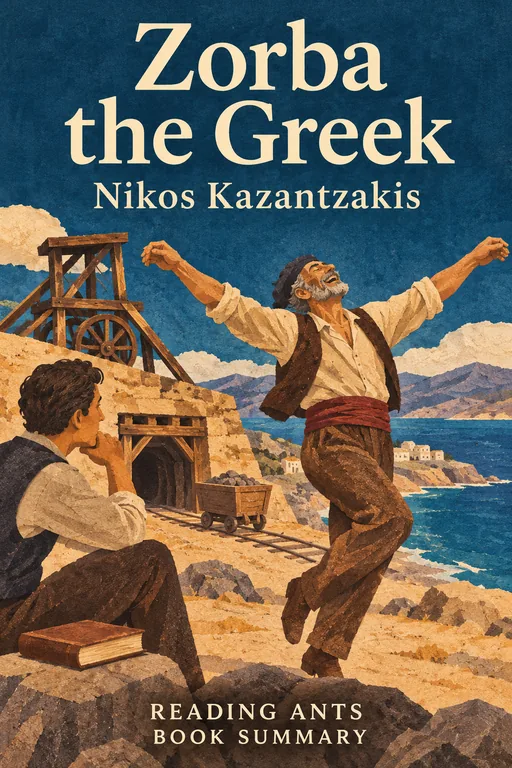
Zorba the Greek
Original title: Βίος και πολιτεία του Αλέξη Ζορμπά
A bookish young man and an earthy old worker, Alexis Zorba, run a mine in Crete, and Zorba teaches him how to live, to dance and to love life.
Overview
Zorba the Greek is a novel by the Greek writer Nikos Kazantzakis, published in 1946. It is set on the island of Crete, in the early twentieth century. The narrator, a young intellectual who is known only as “the boss,” is a man of books who feels that he has not truly lived. He meets Zorba, a man of passion, and the two begin an unusual friendship. The book is about two ways of life: thought and action. It became world-famous in part through a 1964 film.
Main Characters
- The narrator (the boss): a young, educated, shy Greek writer who has taken a lease on a disused lignite mine.
- Alexis Zorba: a big, loud, sixty-something man who has done many jobs, and who plays the santuri, a stringed instrument.
- Madame Hortense: an aging French woman, a former cabaret singer, who lives in a hotel in the village.
- The widow: a beautiful young woman who is the object of many of the village men’s desires.
- Pavli: a young villager who falls in love with the widow.
Full Summary
A Chance Meeting
In the port of Piraeus, the narrator is waiting to sail to Crete, where he plans to reopen an old lignite mine. He is a man who reads a great deal, and who is in a state of emptiness. An old man approaches him and offers to be his cook, and says that he can do any job. This is Zorba.
The narrator is charmed by the man’s energy, and takes him on as his foreman. They travel together to the island.
Life in the Village
In the village, they stay at a small hotel run by Madame Hortense, who was once a singer, and who has had many lovers. She is old and lonely, and she is delighted by Zorba’s flattering attention. He charms her, and they become lovers.
The narrator, who is quiet and thoughtful, watches Zorba’s way of living. Zorba dances, sings and plays the santuri, and he tells the story of his life, with all of its wives, jobs and wars. He teaches the narrator to enjoy the simple pleasures of food, wine and company.
The Mine and the Cable
Zorba and the workers begin to dig in the mine, and Zorba and the narrator plan to cut timber from a nearby monastery’s forest and to carry it down the mountain by cable. Zorba negotiates the deal with the monks, and he takes charge of building it.
Zorba works day and night, and the mine is a mix of success and failure. He has no patience for plans on paper, and he insists on doing things by hand and by instinct. The narrator, who has money but little practical sense, leaves most of the decisions to him. Zorba also keeps asking the narrator to stop reading and to live, and he tells stories of villages that he burned in war and of the women he has loved, without pride or shame.
The Widow
A young widow in the village attracts the attention of many men, including the narrator, who sleeps with her one night. Zorba urges him to love freely. But a young villager named Pavli, who loves the widow, kills himself when she rejects him.
The villagers, led by Pavli’s family, blame the widow, and they attack and kill her in a public place in the village. The narrator and Zorba are horrified, but are unable to stop it.
Death and Failure
Madame Hortense falls ill and dies. The villagers, who despise her, come to rob her house, as she lies dying. Zorba is deeply saddened. Soon after, the cable, which they have built for the timber, is tested before a crowd, including the monks. It collapses, and the whole enterprise is a failure.
The Dance
The two men sit on the beach, eat and drink, and then Zorba begins to dance. The narrator, who has lost his money and his hopes, feels free, and asks Zorba to teach him how to dance. They dance by the sea, and laugh.
The two men part, as friends. The narrator goes back to a life of writing. Years later, he receives a letter from a village in the Balkans, with news that Zorba has died.
Why It Matters
Zorba the Greek is the best-known novel by Kazantzakis, one of the greatest Greek writers of the twentieth century. The 1964 film, starring Anthony Quinn, brought the music and dance, the famous “sirtaki,” to the world. The book has become a symbol of the Greek spirit, passion and joy, though in a way that sometimes simplifies it. It is also a study of the clash between mind and body, and has influenced many readers who feel that they spend too much of their lives in books. Kazantzakis himself, who also wrote The Last Temptation of Christ and an epic sequel to Homer’s Odyssey, was nominated for the Nobel Prize several times, and his work is widely studied in Greece and abroad.
Key Takeaways
- Live fully. Zorba shows the value of passion and presence.
- Thought and action need each other. The narrator learns from Zorba, and Zorba also relies on his friend.
- Failure is not the end. Zorba dances after the collapse.
- Friendship can cross differences. The two men are opposites, yet they care for each other.
- Society can be cruel. The fate of the widow shows the dark side of village life.
What We Can Learn
Zorba reminds us that life is meant to be lived, and not only studied. It is useful to take a break from our worries and to enjoy the moment, whether with music, a meal or a conversation. We can also learn from people who are very different from us.
At the same time, the book is honest about the cruelty that can come from crowds, and it warns about judging and punishing those who are different. Finally, it shows that when we fail, we can still choose to respond with courage and humor.
Criticism and Counterpoints
Some readers find Zorba a romantic stereotype of the free, earthy man of the people, and they object to the way that he treats women, who seem to be objects in the story. The narrator is passive and sometimes cold, and the philosophical passages can be heavy. The depiction of the killing of the widow is disturbing and has been criticized as a convenient plot device. Others find the book too simple in its opposition between thought and life.
Who Should Read It
This book is for readers aged thirteen and up who like novels about friendship, philosophy and the joy of life. It is lively and often funny, though it contains some dark scenes. Those who enjoyed the film will find the book deeper.
Want the whole book?
A summary is a taste, not the meal. Here is where to find the full book.
You reached the end 🎉
Nicely done. Mark this one as read, and we will suggest what to read next.
Read this next
Siddhartha
Hermann Hesse
A gifted young man leaves teachers, wealth and family behind in search of enlightenment, only to discover through love, grief and a river that wisdom must be lived rather than borrowed.
🌍 World Literature
The Old Man and the Sea
Ernest Hemingway
An old Cuban fisherman who has gone eighty-four days without a catch hooks a giant marlin far out at sea and fights it for three days, only to lose it to sharks, yet he returns home undefeated in spirit.
📜 Classics
On the Road
Jack Kerouac
A young writer named Sal Paradise hitchhikes and drives across America and into Mexico with his exuberant, restless friend Dean Moriarty, searching for kicks, meaning and a sense of belonging.
📜 Classics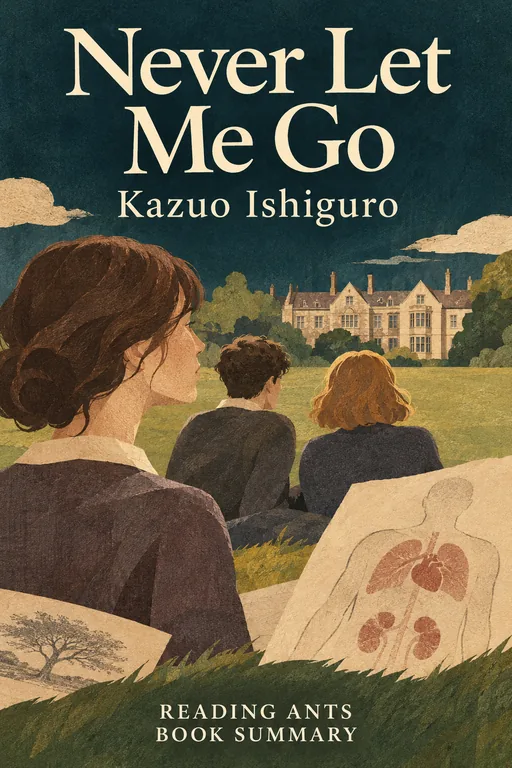
Never Let Me Go
Kazuo Ishiguro
Looking back on her childhood at an English boarding school, a young woman gradually reveals that she and her friends were created to donate their organs, and that they accept their fate without ever trying to escape.
✨ Modern Fiction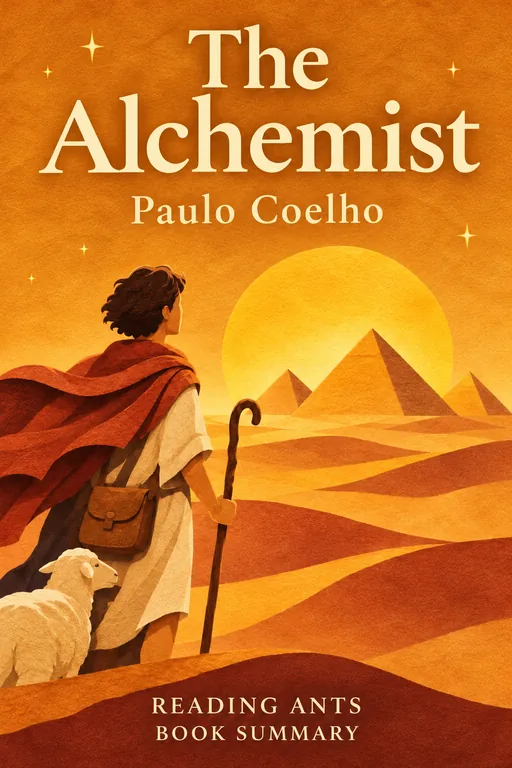
The Alchemist
Paulo Coelho
A young Spanish shepherd follows a recurring dream across the desert to the Egyptian pyramids in search of treasure, and learns that the journey toward one's dream is itself the greatest treasure.
🌍 World Literature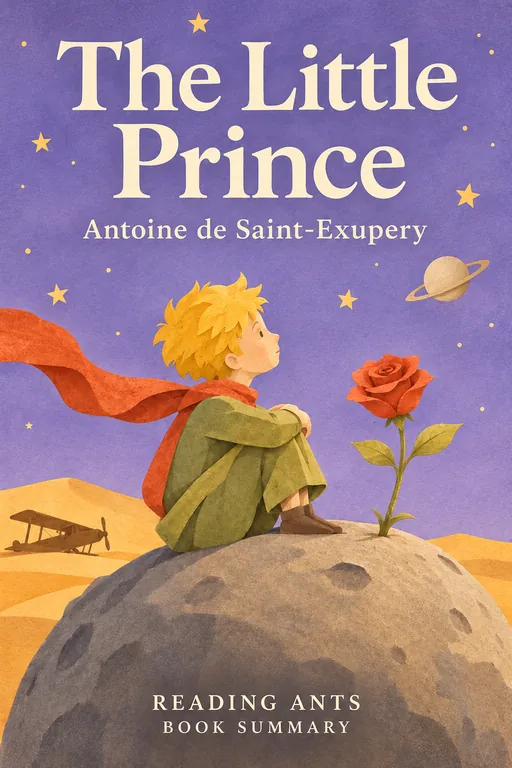
The Little Prince
Antoine de Saint-Exupery
A pilot stranded in the desert meets a small boy from a tiny planet, who teaches him that the most important things in life, like love and friendship, can only be seen with the heart.
🌍 World LiteratureWant something different?
Pick another topic and we will show you three books to start with.