 Reading Ants
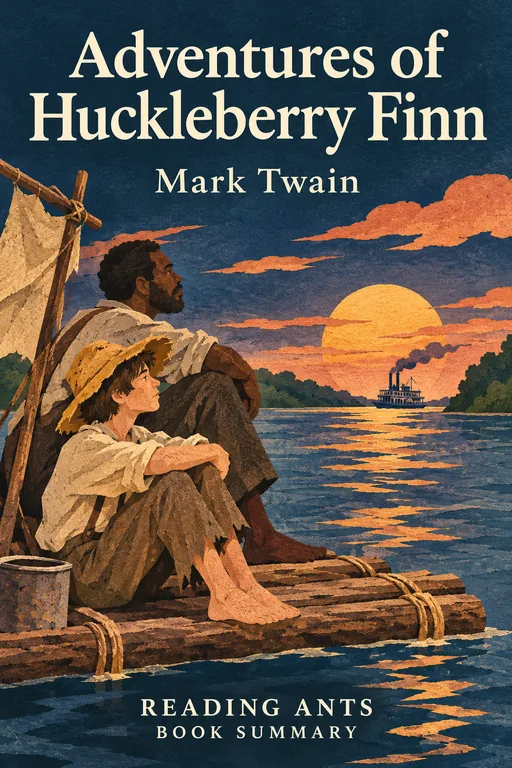
Adventures of Huckleberry Finn
A runaway boy and an escaped enslaved man float down the Mississippi River on a raft, and as they face swindlers, feuds and danger, the boy learns to follow his conscience rather than the racist rules of his society.
Overview
Adventures of Huckleberry Finn, published in 1884 in Britain and 1885 in the United States, is narrated by Huck Finn, a poor, uneducated boy from a small town on the Mississippi River in the 1830s or 1840s, before the American Civil War. Huck has been living with a kind widow who wants to “civilize” him, but when his violent, drunken father kidnaps him, Huck fakes his own death and escapes. On an island, he meets Jim, an enslaved man who has run away because he was about to be sold away from his family. Together they travel down the river on a raft toward freedom. Told in Huck’s own funny, vivid voice, the novel is a sharp satire of racism and hypocrisy and one of the most important books in American literature.
Main Characters
- Huckleberry Finn: a clever, independent boy with a good heart.
- Jim: an enslaved man escaping to freedom, kind and wise.
- Pap: Huck’s violent, drunken father.
- Widow Douglas and Miss Watson: the sisters who try to raise Huck; Miss Watson owns Jim.
- Tom Sawyer: Huck’s imaginative, adventure-loving friend.
- The Duke and the King: two con men who join Huck and Jim.
- The Grangerfords: a family locked in a deadly feud.
- The Wilks sisters: orphans the con men try to cheat.
Full Summary
Escape
After the adventures of The Adventures of Tom Sawyer, Huck has a fortune held for him by a judge and lives with the Widow Douglas, who tries to teach him manners and religion. Huck hates wearing shoes and going to school. Then his father, Pap, a cruel drunk, returns and demands Huck’s money. He kidnaps Huck and locks him in a cabin in the woods, beating him often.
Huck escapes by faking his own murder, using a pig’s blood to make it look as if robbers killed him. He paddles to Jackson’s Island in the Mississippi, where he discovers Jim, Miss Watson’s enslaved man, who has run away after hearing she plans to sell him downriver, far from his wife and children. Huck promises not to turn him in.
Down the River
When Huck learns that men are coming to search the island for Jim, the two set off on a raft, traveling at night and hiding by day. Their plan is to reach Cairo, Illinois, and then travel up the Ohio River to the free states. On the raft, they live peacefully, talking, fishing and watching the stars. Huck comes to see Jim as a friend and a wise, caring person, not as property.
But Huck is troubled. Everything he has been taught says that helping an enslaved person escape is a terrible sin. At one point, he decides to turn Jim in, but when men searching for runaways approach, he tricks them into leaving by pretending his family has smallpox.
In the fog, they miss Cairo and drift further south, deeper into slave territory. Later, a steamboat smashes the raft, and they are separated.
The Feud
Huck is taken in by the wealthy Grangerford family, who are locked in a decades-old feud with another family, the Shepherdsons. Nobody even remembers how it began. When a Grangerford daughter elopes with a Shepherdson, violence erupts, and several members of both families, including Huck’s friend Buck Grangerford, are killed. Horrified, Huck flees and finds Jim, who has repaired the raft.
The Duke and the King
Two con men join them on the raft, claiming to be a long-lost duke and the rightful king of France. Huck sees through them but plays along to avoid trouble. They cheat towns along the river with fake plays and scams. In one town, they pretend to be the English brothers of a man who has just died, hoping to steal the inheritance from his three orphaned nieces. Huck, moved by the kindness of the eldest sister, Mary Jane, secretly helps her uncover the fraud.
Later, the King betrays Jim, selling him to a farmer named Silas Phelps for a reward by claiming Jim is a runaway.
The Decision
Huck is torn. He writes a letter to Miss Watson telling her where Jim is, and feels relieved, as if he has done the right thing. But then he remembers Jim’s kindness, his friendship and the times Jim protected him. He tears up the letter, deciding that if helping Jim means he will go to hell, then he will go to hell. It is one of the most famous moments in American literature: Huck choosing his conscience over the rules of a racist society.
Tom Sawyer’s Scheme
At the Phelps farm, Huck is mistaken for Tom Sawyer, who is Mrs. Phelps’s nephew and expected for a visit. Then Tom himself arrives, and pretends to be his own brother. Tom eagerly agrees to help free Jim, but insists on turning the escape into a ridiculous adventure based on books he has read, with secret messages, rope ladders and pointless delays, while Jim stays locked in a shed.
During the escape, Tom is shot in the leg. Jim refuses to leave him and stays to help a doctor treat him, which leads to Jim’s recapture. Then Tom reveals that Miss Watson died two months earlier and freed Jim in her will. Tom knew all along that Jim was free, but wanted the adventure. Jim tells Huck that his father, Pap, is dead; it was Pap’s body they had seen in a floating house earlier. Aunt Sally (Mrs. Phelps) offers to adopt and civilize Huck, but he decides to head west to the Indian Territory, because he has been civilized before, and he can’t stand it.
Why It Matters
Adventures of Huckleberry Finn is often called the Great American Novel. Ernest Hemingway famously said that all modern American literature comes from it. It was one of the first major novels written entirely in American vernacular English, the everyday speech of ordinary people, which changed how American writers wrote.
The book is a powerful satire of slavery, racism, violence and religious hypocrisy in the American South. At the same time, it is one of the most frequently challenged books in American schools, because of its frequent use of a racial slur and its portrayal of Jim, which some see as stereotyped. These debates about how to teach the book have made it central to discussions about race, literature and education.
Key Takeaways
- Conscience matters more than rules. Huck follows his heart over his society’s laws.
- Friendship crosses racial lines. Huck’s bond with Jim challenges racist beliefs.
- Society can be hypocritical. Respectable people support slavery and violence.
- Freedom takes many forms. Huck seeks freedom from society, Jim from slavery.
- Experience teaches truth. Huck learns about humanity through his own adventures, not through lessons.
What We Can Learn
Huck’s story teaches us that sometimes the rules we are taught are wrong. Thinking for ourselves, and listening to our conscience, can lead us to do what is right even when others disagree.
It also shows the power of getting to know people as individuals. Huck’s prejudices begin to fall away as he spends time with Jim and sees his kindness, wisdom and love for his family.
Finally, the novel encourages us to be wary of tricksters and con artists, like the Duke and the King, who use lies to take advantage of others, and to stand up for people being cheated, as Huck does for the Wilks sisters.
Criticism and Counterpoints
The book’s repeated use of a racial slur, more than two hundred times, makes many readers uncomfortable and has led to its removal from some school reading lists. Critics such as Toni Morrison and others have discussed the complex portrayal of Jim, who is sometimes shown as wise and caring but at other times as a stereotyped, comic figure.
Many critics also find the final section, where Tom Sawyer turns Jim’s escape into a cruel game, disappointing, because it reduces Jim to a prop in boys’ play. Some see this as Twain’s satire of romantic adventure stories and of how white society treated Black freedom as a game. Others feel it undermines the novel’s moral power.
Who Should Read It
This novel suits older teenagers and adults, ideally with discussion of its historical context and racial language. Readers who love adventure, humor and American history will find it rewarding. Teachers often pair it with works by Black American writers for a fuller perspective.
Want the whole book?
A summary is a taste, not the meal. Here is where to find the full book.
You reached the end 🎉
Nicely done. Mark this one as read, and we will suggest what to read next.
Read this next
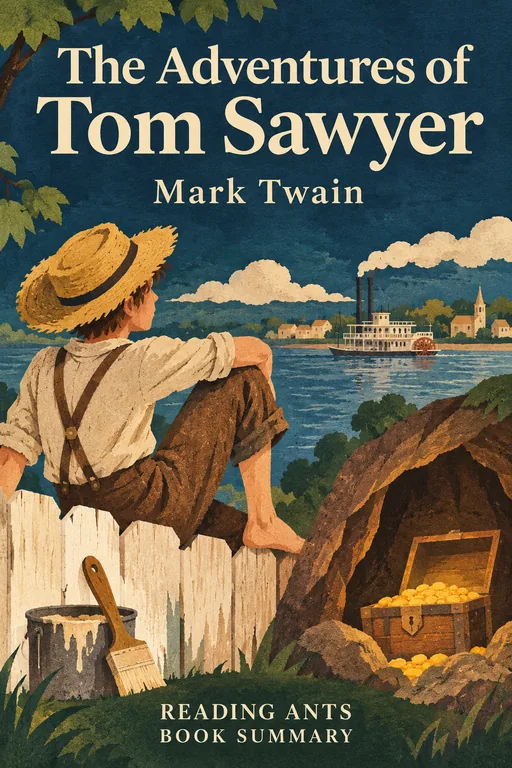
The Adventures of Tom Sawyer
Mark Twain
Tom Sawyer, a mischievous, imaginative boy in a small Mississippi River town, tricks his friends into doing his chores, witnesses a murder, runs off to be a pirate and eventually finds treasure in a cave.
📜 Classics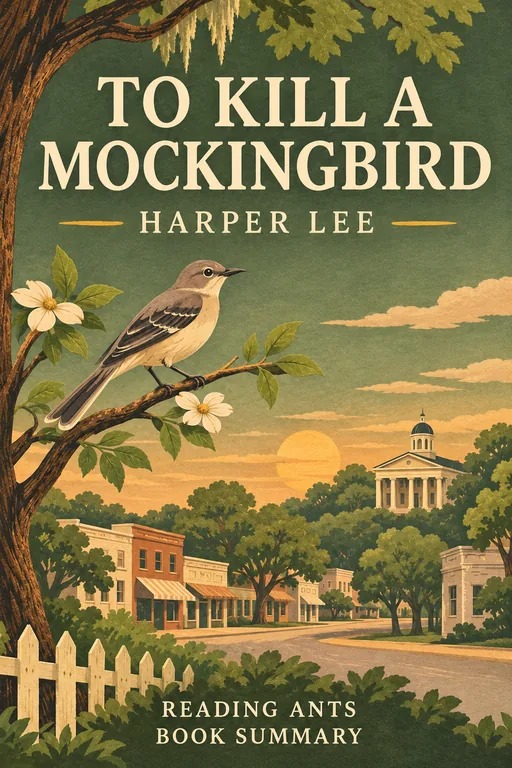
To Kill a Mockingbird
Harper Lee
In a small Alabama town in the 1930s, young Scout Finch watches her father, a lawyer, defend a Black man falsely accused of a crime, and learns hard lessons about prejudice, courage and seeing the world through other people's eyes.
📜 Classics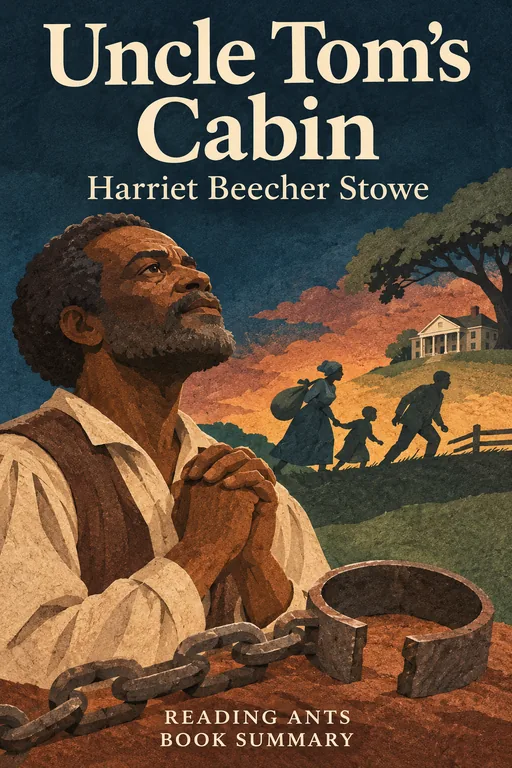
Uncle Tom's Cabin
Harriet Beecher Stowe
A devout, gentle enslaved man named Tom is sold from owner to owner and finally dies at the hands of a brutal master, while other enslaved people try to escape, in a novel that shocked America into facing the cruelty of slavery.
📜 Classics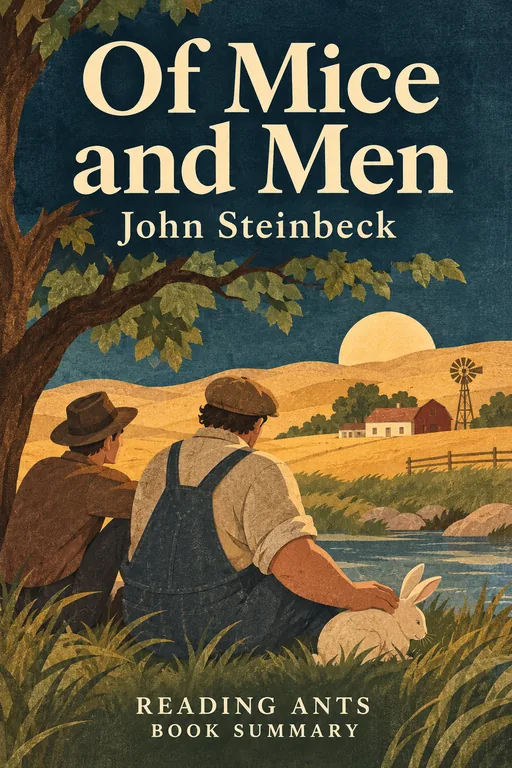
Of Mice and Men
John Steinbeck
Two traveling farmworkers during the Great Depression, quick-witted George and the huge, gentle but mentally disabled Lennie, dream of owning their own small farm, but their dream ends in tragedy.
📜 ClassicsThe Catcher in the Rye
J. D. Salinger
After being expelled from his boarding school, a lonely, sarcastic sixteen-year-old wanders New York City for three days, struggling with grief, phoniness and the frightening idea of growing up.
📜 Classics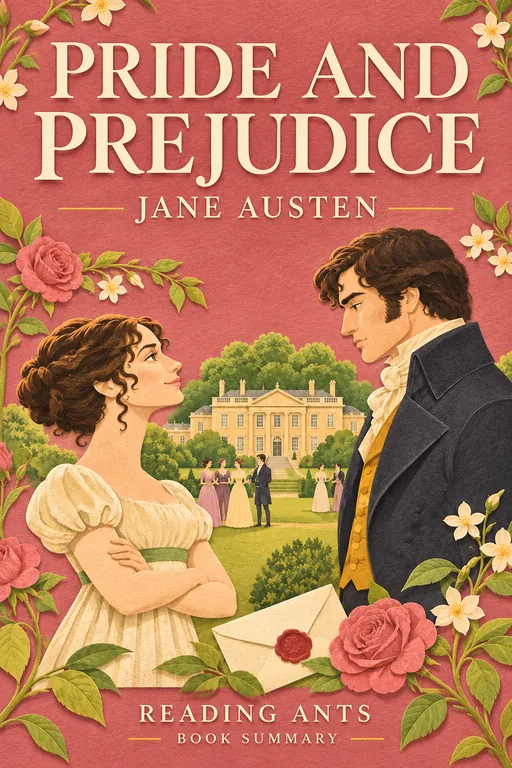
Pride and Prejudice
Jane Austen
Quick-witted Elizabeth Bennet and the proud, wealthy Mr. Darcy badly misjudge each other, and only by facing their own faults do they find their way to love.
📜 ClassicsWant something different?
Pick another topic and we will show you three books to start with.