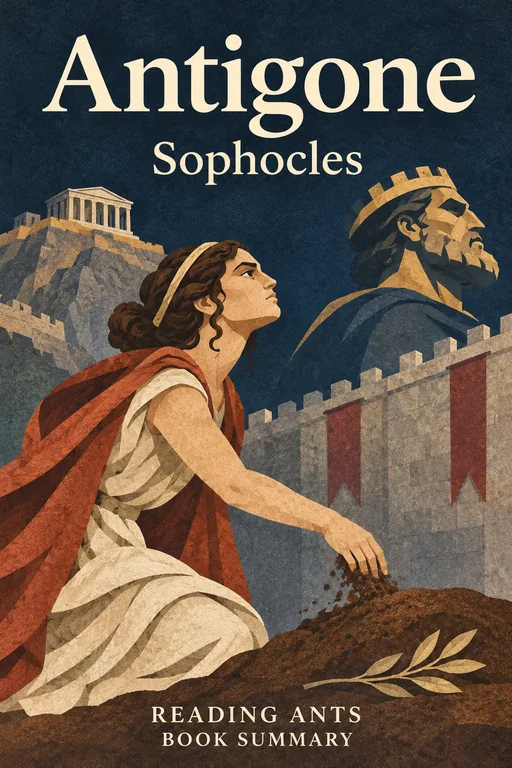
Antigone
Original title: Αντιγόνη
When her uncle Creon, the king of Thebes, forbids the burial of her dead brother, Antigone defies him in the name of the gods' law, and the clash of two kinds of duty ends in tragedy for them both.
Overview
Antigone is a Greek tragedy by Sophocles, first performed in Athens around 441 BC. It is one of the three Theban plays of Sophocles; it was written first, though in story order it comes last. It continues the story of the family of Oedipus, the former king of Thebes. After Oedipus’s sons, Eteocles and Polyneices, kill each other in a battle over the throne, Creon becomes king and orders that Eteocles be buried with honor, while Polyneices, who attacked the city, is to be left unburied as a traitor. Antigone, their sister, cannot accept this. The play is a powerful clash between the law of the state and the law of conscience and family, and has been discussed for over two thousand years.
Main Characters
- Antigone: the daughter of Oedipus, who is stubborn, brave and committed to her duty to her family.
- Ismene: her sister, who is cautious and afraid to defy the king.
- Creon: the new king of Thebes, who is firm, proud and fears weakness.
- Haemon: Creon’s son, who is engaged to Antigone.
- Tiresias: the blind prophet, who warns Creon.
- Eurydice: Creon’s wife.
- The Chorus: the elders of Thebes, who comment on the action.
Full Summary
The Decision
The play opens at dawn after the battle. Antigone tells her sister Ismene about Creon’s decree: Eteocles will receive a hero’s funeral, but anyone who buries Polyneices will be stoned to death. For the Greeks, an unburied body meant that the soul could not rest, and leaving it to be devoured by animals was a terrible dishonor. Antigone announces that she will bury her brother, whatever the cost. Ismene, frightened, refuses to help, and says that women are not meant to fight against men and the state. Antigone says that she will do it alone, and that she is not afraid to die for it.
Caught in the Act
Creon, in a speech to the chorus, declares that loyalty to the state comes before any personal tie, and that a good ruler must be obeyed in small things as well as large. A guard arrives, nervous, to report that someone has buried the body, covering it with dust. Creon is furious and threatens the guards. Later, the guard returns with Antigone, whom they have caught while she tried to bury her brother a second time. She does not deny it.
Antigone and Creon
Creon asks Antigone whether she knew the law, and she says that she did. She tells him that she follows the unwritten laws of the gods, which are older and more important than the decrees of a human king. She says that she would rather die than leave her brother unburied. Creon, enraged, calls her a rebel and says that no woman will rule him. When Ismene, regretting her silence, tries to share the blame, Antigone refuses to let her. Creon condemns Antigone to be walled up in a cave with a little food.
Haemon’s Plea
Haemon, Creon’s son, comes to speak to his father. He says that the people of Thebes secretly sympathize with Antigone, and that a wise man is willing to listen and change his mind. Creon refuses, saying that he will not take lessons from a young man, and the father and son quarrel bitterly. Haemon leaves, saying that his father will never see him again.
The Warning
The blind prophet Tiresias comes and tells Creon that the gods are angry, because the city has been polluted by the unburied body. Birds are bringing pieces of the corpse to the altars. He urges Creon to relent. Creon accuses him of being bribed, but Tiresias warns that Creon will lose a child of his own in payment for the living woman he has buried alive and the dead man he has left unburied. Frightened, Creon decides to free Antigone and bury Polyneices.
The Tragedy
But it is too late. When Creon reaches the cave, he finds that Antigone has hanged herself, and Haemon, after a failed attempt to stab his father, has stabbed himself. Creon returns to the palace carrying his son’s body, and there learns that his wife, Eurydice, has also killed herself, cursing him. Creon, broken, admits that he was wrong and wishes for his own death. The play ends with the chorus saying that wisdom is the greatest part of happiness, and that proud words are punished by great blows, which teach wisdom in old age.
Why It Matters
Antigone is one of the most performed and discussed plays in the history of drama. It has been adapted and reinterpreted in many languages and periods, including a version by the French playwright Jean Anouilh during the German occupation of France, and has been used by thinkers such as Hegel, who saw it as a clash of two rights. It has been taken as a model for civil disobedience, the idea that individuals may sometimes refuse to obey unjust laws.
The play also gave literature a lasting female heroine who stands against power, and has inspired many writers and activists.
Key Takeaways
- Conscience can clash with law. Antigone follows a higher duty.
- Pride and inflexibility cause ruin. Creon refuses to listen.
- Family and state both make claims. Both have a valid side.
- Listening is a sign of wisdom. Haemon and Tiresias warn Creon.
- Actions have consequences. Creon loses his family.
What We Can Learn
The play invites us to ask when it is right to disobey a law. Antigone’s argument is that some duties, such as caring for the dead, are more basic than any ruler’s order, which is a question that societies still debate.
It also shows the danger of rulers who refuse advice. Creon’s pride makes him ignore the pleas of his son, the prophet and the people, and it leads to disaster.
Finally, it demonstrates that being right is not enough; people also need to be willing to listen and to consider others’ feelings.
Criticism and Counterpoints
Some readers find Antigone stubborn and her refusal of Ismene’s help harsh, and think that Creon’s concern for order is not unreasonable. Others note that in the play, Creon is not a simple villain, and that he believes that he is protecting the city after a civil war. Scholars debate whether Sophocles meant to favor Antigone or to show both sides.
Feminist readings see Antigone as a symbol of women’s defiance of male authority, while others point out that she accepts the family roles of her time. The language and customs of ancient Greece can also be hard to follow without notes.
Who Should Read It
This play suits teenagers and adults. It is short and powerful, and a good first Greek tragedy. A modern translation with notes helps with the names and the background to the Theban story.
Want the whole book?
A summary is a taste, not the meal. Here is where to find the full book.
You reached the end 🎉
Nicely done. Mark this one as read, and we will suggest what to read next.
Read this next
Oedipus Rex
Sophocles
A wise and respected king determined to save his city from a plague investigates an old murder, and discovers the horrifying truth that he himself fulfilled a prophecy by killing his father and marrying his mother.
🎭 Epics, Drama & PoetryMedea
Euripides
When her husband Jason abandons her for a princess, the sorceress Medea, an outsider in Corinth, takes terrible revenge, and kills her own children to destroy him.
🎭 Epics, Drama & Poetry
Hamlet
William Shakespeare
A grieving prince of Denmark learns from his father's ghost that his uncle murdered the king to take the throne, and his struggle to decide whether and how to take revenge leads to madness and death.
🎭 Epics, Drama & Poetry
The Republic
Plato
Plato, through the character of Socrates, asks what justice is and imagines an ideal city, arguing that a just person and a just state are ruled by wisdom, with reason guiding the whole.
🕊️ Philosophy & Religion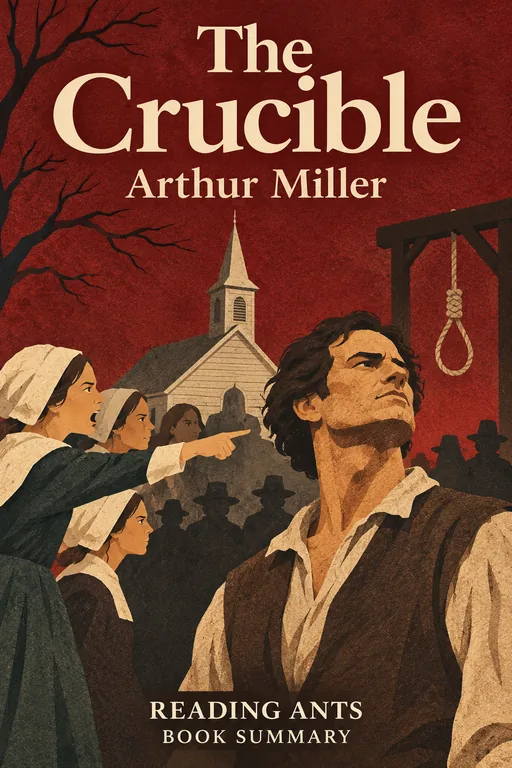
The Crucible
Arthur Miller
In 1692 Salem, Massachusetts, a group of girls accuse their neighbors of witchcraft, and fear, jealousy and religious certainty spiral into a wave of false accusations and hangings that one honest farmer refuses to join.
🎭 Epics, Drama & Poetry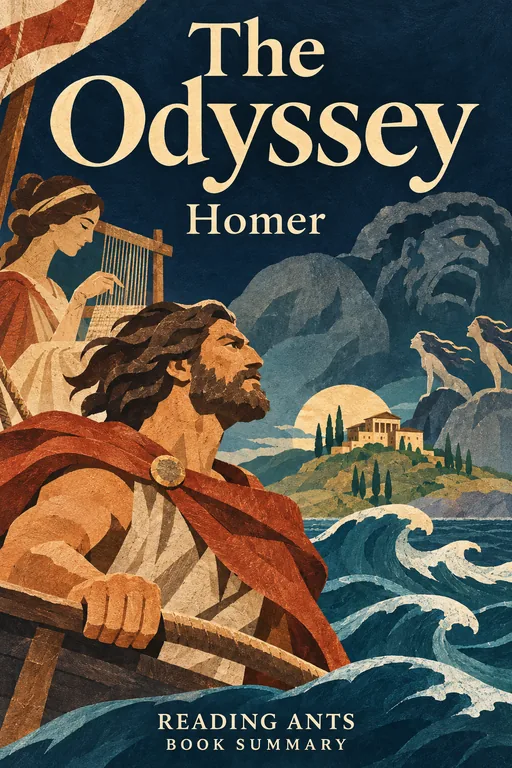
The Odyssey
Homer
After the Trojan War, the clever hero Odysseus struggles for ten years against monsters, gods and temptations to return home to his faithful wife and son, then must win back his house from the men trying to steal it.
🎭 Epics, Drama & PoetryWant something different?
Pick another topic and we will show you three books to start with.