Medea
Original title: Μήδεια
When her husband Jason abandons her for a princess, the sorceress Medea, an outsider in Corinth, takes terrible revenge, and kills her own children to destroy him.
Overview
Medea is a tragedy by the ancient Greek playwright Euripides, first performed in Athens in 431 BC. It draws on the myth of Jason and the Argonauts, and takes place after the events of the quest for the Golden Fleece. The play is notable for its sympathy for a woman who has been wronged, and for the shocking nature of her response. It questions the way that the Greeks treated women and foreigners, and it is one of the most powerful and disturbing of the surviving Greek tragedies. It is a short play, set throughout in front of Medea’s house in Corinth.
Main Characters
- Medea: a passionate, clever woman from Colchis, with magical powers, who is a foreigner in Greece.
- Jason: the Greek hero, her husband, who has left her for a political marriage.
- Creon: the king of Corinth, who fears Medea.
- Glauce: Creon’s young daughter, who is to marry Jason.
- Aegeus: the king of Athens, who offers Medea refuge.
- The Nurse: Medea’s old servant, who laments her mistress’s fate.
- The Chorus: the women of Corinth, who sympathize with Medea.
Full Summary
The nurse’s lament
The play opens outside Medea’s house in Corinth. The Nurse describes how Medea, a princess from a distant land, fell in love with Jason, helped him win the Golden Fleece, led the daughters of Pelias to kill their father, and left her home to follow him to Corinth. Now Jason has deserted her for the daughter of the king, Creon. Medea is in despair, weeping and refusing to eat, and cursing him. The Nurse fears that she is capable of anything, and worries about her children, who are in the house.
Medea and Creon
Medea comes out and speaks to the women of Corinth, saying that she is a foreigner without a home, and that women have a worse life than men. The women sympathize with her. Then Creon arrives, and, afraid that she will take revenge, orders her and her sons into exile. Medea begs for one day, saying that she wants to arrange for the children’s future. Creon, reluctantly, grants it. She says nothing of her plans, but, once he has gone, she reveals to the chorus that she means to kill her enemies.
Jason’s arguments
Jason arrives, and Medea reproaches him for his betrayal. He defends himself, saying that he is marrying the princess to secure a better life for his family, and that he owes her nothing, since it was Aphrodite who helped him. He also offers help for her and the boys in exile, but Medea refuses it, scornfully. She sees that he has no remorse. Jason leaves, irritated that she will not accept his offer, and warns that she will only bring more trouble on herself.
Aegeus
A visitor arrives, Aegeus, king of Athens, who is returning from the oracle of Delphi, where he has been asking about his lack of children. Medea tells him her story, and he offers her a safe place in Athens, if she can reach it. In exchange, she promises to help him to have children with her knowledge of drugs. He swears an oath to protect her. Now that she has a refuge, Medea can carry out her plan, and she tells the chorus what she is going to do.
The revenge
Medea pretends to relent, and asks Jason to forgive her. She asks him to plead with the princess for the boys to be allowed to stay, and sends her sons to carry gifts, a beautiful robe and a golden crown, for the princess, saying that she wants to make peace. The gifts have been treated with poison. A messenger arrives, to report that Glauce put on the robe and crown, and that, in a moment, she was in agony, and died horribly. Her father, Creon, who tried to save her, also died. The chorus is horrified, but Medea welcomes the news.
The children and the escape
Medea has already told the chorus that she will kill her sons too. When the boys come back with word that the gifts were accepted, she wavers at the sight of their faces, but her wish for revenge and her fear that her enemies will kill them anyway win out. After the messenger’s report she goes into the house, and the chorus hears the children cry out. Jason, who has come to rescue his sons, arrives, to find them dead. Medea appears above, in a chariot drawn by dragons, sent by the Sun, holding the bodies, and refuses to let him touch them. She flies away to Athens, leaving him alone.
Why It Matters
Medea is one of the most performed and influential of the Greek tragedies, and it has been adapted countless times in drama, opera, film and fiction. It challenges the audience to consider a woman’s point of view in a society that gave women few rights, and to ask how far a person can be driven by betrayal. The play’s depiction of Medea as both victim and perpetrator is complex, and has led to many different interpretations, from feminist readings to those that emphasize her monstrous act. It raises questions about justice, revenge and the position of outsiders.
Key Takeaways
- Betrayal can drive extreme action. Medea’s revenge grows from her pain.
- Outsiders are vulnerable. As a foreigner and a woman, Medea has little protection.
- Revenge destroys the avenger. She loses her children.
- Reason and passion conflict. Medea fights with herself before she acts.
- Heroes may be flawed. Jason’s selfishness and ambition are exposed.
What We Can Learn
You can learn from the play how deep hurt and humiliation can lead people to terrible acts, and why it is important to treat others with fairness and honesty. The play also invites reflection on how societies treat those who are different, and on the rights of women. If you read it, you might think about whether Medea is a victim, a villain or both, and how an audience’s sympathy shifts. It is also a chance to think about the cost of revenge.
Criticism and Counterpoints
Some readers find Medea’s murder of her children unforgivable, and feel that the play’s sympathy for her is misplaced, while others think that Jason is not as bad as he is painted. Critics have debated whether the play is a feminist protest, or a warning against female passion, and whether Euripides invented the infanticide, since earlier versions of the myth may differ. Some find the sudden appearance of the dragon chariot, at the end, to be an awkward device. The play’s brutality is very hard for some audiences to bear.
Who Should Read It
This book is for mature readers from about sixteen who are interested in classical literature and drama. It is short and intense, and contains disturbing events. Readers who like it may go on to Antigone or Oedipus the King.
Want the whole book?
A summary is a taste, not the meal. Here is where to find the full book.
You reached the end 🎉
Nicely done. Mark this one as read, and we will suggest what to read next.
Read this next
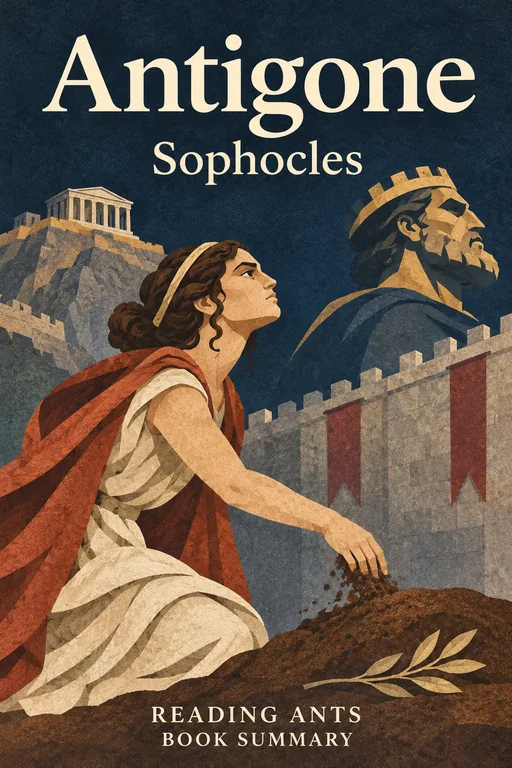
Antigone
Sophocles
When her uncle Creon, the king of Thebes, forbids the burial of her dead brother, Antigone defies him in the name of the gods' law, and the clash of two kinds of duty ends in tragedy for them both.
🎭 Epics, Drama & Poetry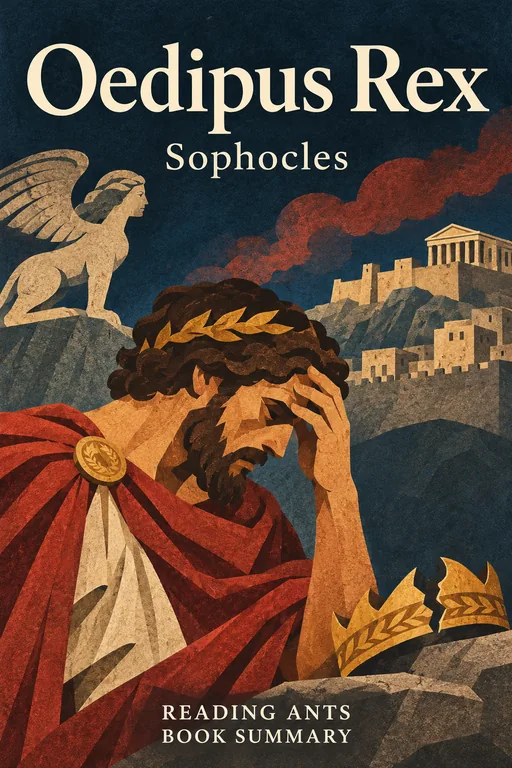
Oedipus Rex
Sophocles
A wise and respected king determined to save his city from a plague investigates an old murder, and discovers the horrifying truth that he himself fulfilled a prophecy by killing his father and marrying his mother.
🎭 Epics, Drama & Poetry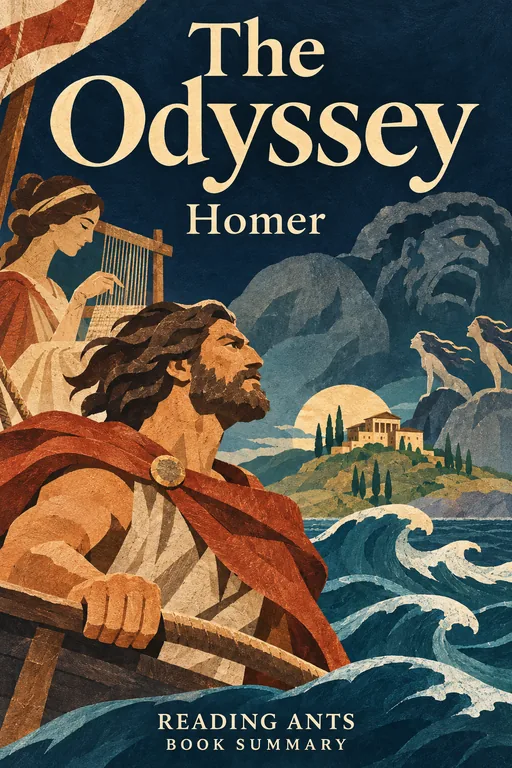
The Odyssey
Homer
After the Trojan War, the clever hero Odysseus struggles for ten years against monsters, gods and temptations to return home to his faithful wife and son, then must win back his house from the men trying to steal it.
🎭 Epics, Drama & Poetry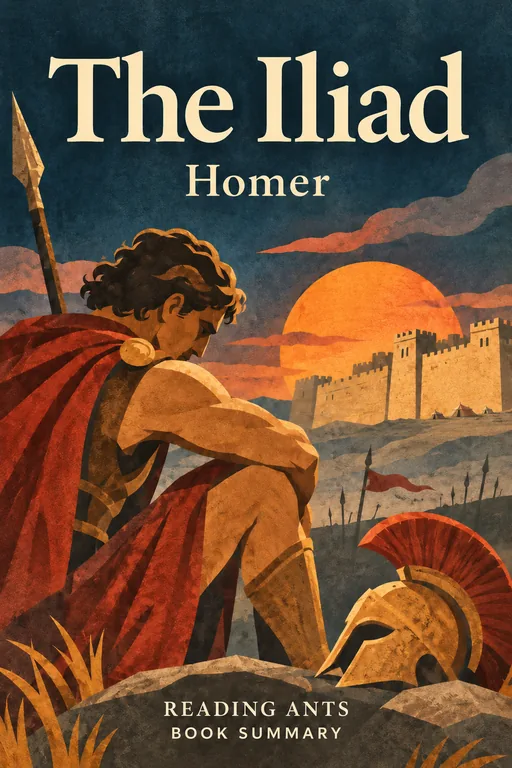
The Iliad
Homer
During the final year of the Trojan War, the great Greek warrior Achilles withdraws from battle in anger, and only the death of his dearest friend drives him back to fight, leading to terrible loss and a moment of shared human grief with his enemy.
🎭 Epics, Drama & PoetryHedda Gabler
Henrik Ibsen
A restless, clever general's daughter, newly married to a dull scholar, tries to control the lives of others from boredom and fear of scandal, and when she is trapped, chooses to end her own life.
🎭 Epics, Drama & Poetry
Hamlet
William Shakespeare
A grieving prince of Denmark learns from his father's ghost that his uncle murdered the king to take the throne, and his struggle to decide whether and how to take revenge leads to madness and death.
🎭 Epics, Drama & PoetryWant something different?
Pick another topic and we will show you three books to start with.