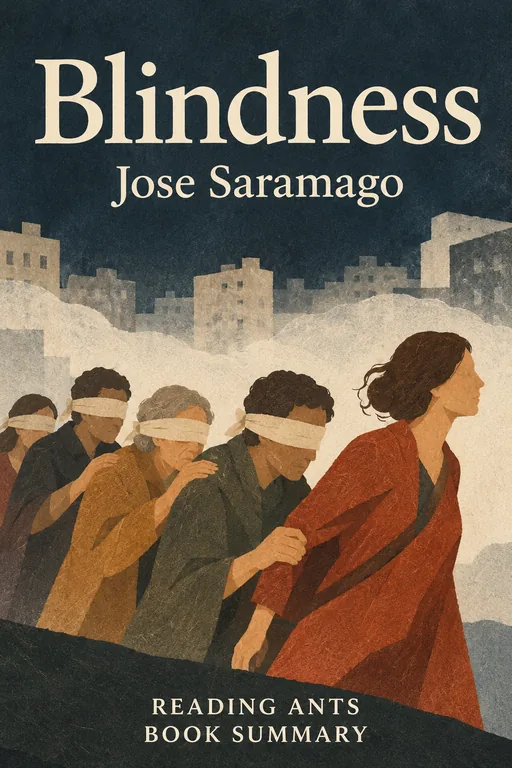
Blindness
Original title: Ensaio sobre a Cegueira
When a mysterious epidemic of blindness strikes a city, one woman who can still see helps a small group survive the collapse of order and human decency.
Overview
Blindness is a novel by the Portuguese writer Jose Saramago, published in 1995. It is set in an unnamed city, in an unnamed country, at an unspecified time. A man suddenly goes blind while driving, and the sickness spreads rapidly. Saramago, who won the Nobel Prize in Literature in 1998, uses a style with long paragraphs and few punctuation marks, in which characters have no names. The book is a dark fable about how thin the surface of civilization can be, and also about solidarity and compassion. It contains cruel and disturbing scenes and is for mature readers.
Main Characters
- The doctor: an eye doctor, who is among the first to be infected.
- The doctor’s wife: the only person who does not go blind, and who hides this fact.
- The first blind man: the driver who loses his sight at a traffic light.
- The girl with dark glasses: a young woman who works as a prostitute.
- The boy with the squint: a young boy who has been separated from his mother.
- The old man with the black eye patch: a kind old man who is already blind in one eye.
- The king of the third ward: a ruthless blind man who takes control of the food.
Full Summary
The White Sickness
In a busy city, a man sitting in his car is suddenly struck blind. He does not see darkness, but a bright white. A stranger offers to drive him home and then steals his car. The man’s wife takes him to an eye doctor, who finds no cause. That night, the doctor too loses his sight, and so does a series of people who have been in contact with the man.
The government, fearing a plague, sends the infected to a former mental hospital, where they are locked up under armed guard. The doctor’s wife, who is not blind, pretends to be, so that she can go with her husband.
The Asylum
The internees are put into wards, and soon the number grows. They are given food that is delivered at the gate, but no real help. There are no staff, no medicine and no cleaning. The soldiers outside are afraid to come near, and they shoot anyone who tries to leave.
The doctor’s wife has to watch the horror around her, but she can do little to change it. She helps her husband and a small group of friends, who become like a family, and she guides them as quietly as possible.
The King of the Third Ward
Conditions get worse as the asylum fills with blind people. A group of men in one ward, led by a man with a gun, seizes control of the food. They demand money and jewelry from the others, and then they demand women. The women of the other wards are forced to go to the thugs, in order to bring food back.
The doctor’s wife and the other women suffer greatly, and she decides that she must act. She takes a pair of scissors, and kills the leader of the gang. The novel has many acts of violence, and this one is also an act of liberation.
Fire
Soon afterward, one of the women who had been abused in the gang’s ward sets fire to it, and the flames spread through the whole asylum. The doors, which were locked, have no guards any more, and the soldiers are gone. The blind people find that they are free, and they walk out into a city where no one is in charge.
The doctor’s wife leads her small group through the streets, which are full of garbage, dead bodies and blind people who wander around searching for food. They find that the whole population has been struck, and that society has collapsed.
The Journey Home
The group makes its way to the doctor’s apartment, and they take shelter there. The doctor’s wife looks after them, bathing and feeding them, and sharing their stories. They begin to understand and trust one another, and they become a family.
They live together, and care for each other, while outside the city remains a wasteland.
Sight Returns
One day, as suddenly as it began, the blindness ends. People begin to see again. The first blind man, who was the first to be struck, is among the first to recover his sight. The group celebrates, and they weep for joy.
The doctor’s wife looks out on the city, which is coming back to life. She says that she believes the people did not really go blind, but that they were already blind, blind people who could see, but who did not look. The novel never explains why the blindness began or why it ended.
Why It Matters
Blindness is considered one of Saramago’s greatest works, and it helped him win the Nobel Prize. It is often compared to Camus’ The Plague and to Golding’s Lord of the Flies, as it uses an extreme situation to show what people are made of. It was adapted into a film in 2008, and it has been performed in theaters around the world. Its idea that a crisis can reveal who we truly are, and that moral blindness may be worse than physical blindness, has often been quoted, especially in times of epidemic and social crisis.
Key Takeaways
- Civilization is fragile. When systems fail, behavior can fall apart quickly.
- Solidarity saves. The small group survives because its members help each other.
- Moral blindness is real. People can fail to see the suffering around them.
- Women bear a heavy burden. The story shows the cruelty that women endure in such times.
- One person can make a difference. The doctor’s wife leads and protects.
What We Can Learn
The book reminds us to pay attention and to look at the people around us, including those who are often unseen. In a crisis, it is easy to retreat into fear, but the doctor’s wife shows that compassion and courage are possible.
It also teaches the importance of working together, and of treating people with dignity even when conditions are terrible. Finally, it invites us to ask ourselves whether we are “seeing” our world or just looking at it, and to take responsibility for what we notice.
Criticism and Counterpoints
Some readers find Saramago’s style, with no quotation marks and very long sentences, hard to follow. The book is extremely bleak, and its scenes of sexual violence and filth are very difficult. Some critics say that the allegory is heavy-handed, or that the story does not explain why the blindness begins and ends. Others feel that the portrayal of women, especially the victim role, is troubling. Others argue that this is a strength: that the book does not look away.
Who Should Read It
This book is for mature readers who are not afraid of dark themes, and who like allegories and unusual styles. It is not for young readers. Those who are sensitive to descriptions of violence and degradation should be careful, but many find the book powerful and humane in the end.
Want the whole book?
A summary is a taste, not the meal. Here is where to find the full book.
You reached the end 🎉
Nicely done. Mark this one as read, and we will suggest what to read next.
Read this next
The Plague
Albert Camus
When plague seals an Algerian city off from the world, ordinary people must choose between denial, private escape and the patient shared work of resisting suffering.
🌍 World Literature
The Road
Cormac McCarthy
A father and his young son walk through a burned, ash-covered America after an unexplained catastrophe, struggling to stay alive and to stay good in a world where hope has almost died.
✨ Modern Fiction
Lord of the Flies
William Golding
A group of British schoolboys stranded on a deserted island try to govern themselves, but fear and the desire for power slowly turn them into savages, revealing the darkness inside human nature.
📜 Classics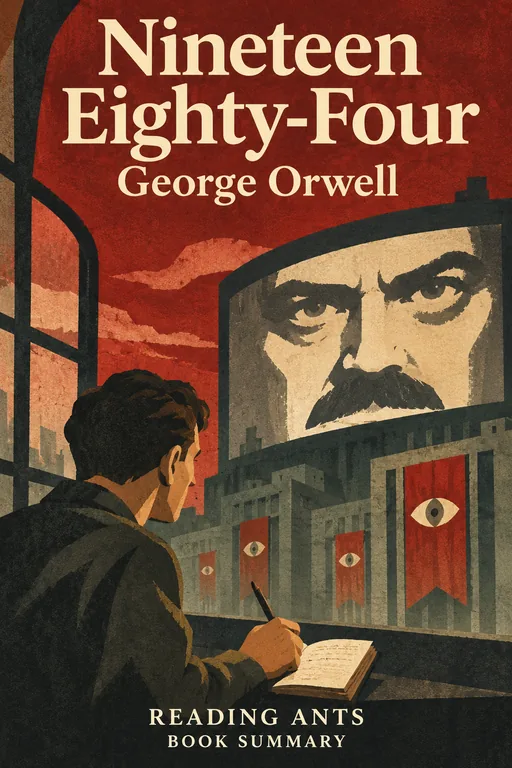
Nineteen Eighty-Four
George Orwell
In a future Britain ruled by an all-seeing Party, one man secretly rebels by keeping a diary and falling in love, and discovers just how completely a totalitarian state can crush the human mind.
📜 Classics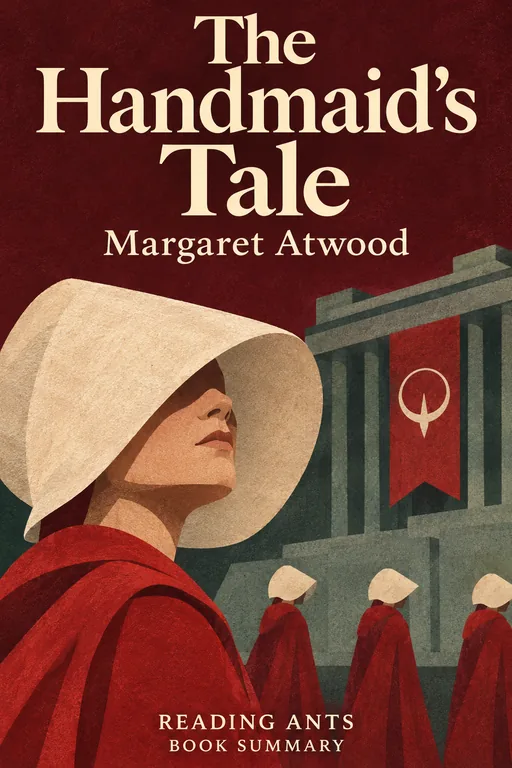
The Handmaid's Tale
Margaret Atwood
In a near-future United States taken over by a religious dictatorship that strips women of their rights, a woman forced to bear children for a powerful couple secretly remembers her old life and searches for a way to survive.
✨ Modern Fiction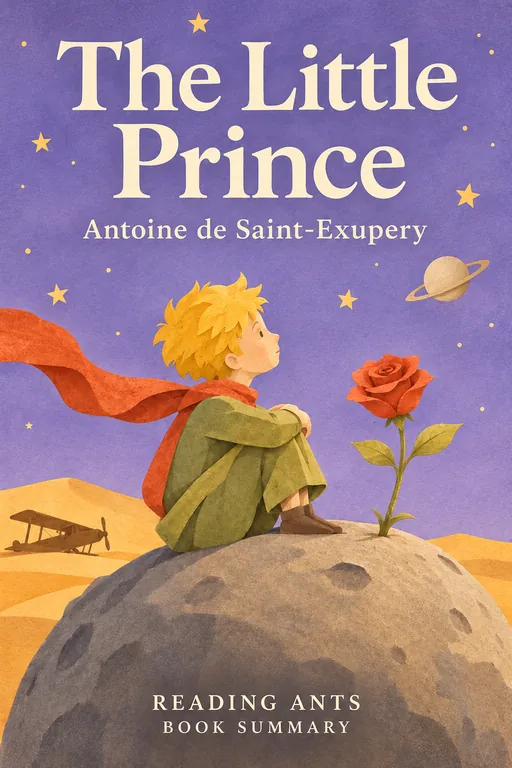
The Little Prince
Antoine de Saint-Exupery
A pilot stranded in the desert meets a small boy from a tiny planet, who teaches him that the most important things in life, like love and friendship, can only be seen with the heart.
🌍 World LiteratureWant something different?
Pick another topic and we will show you three books to start with.