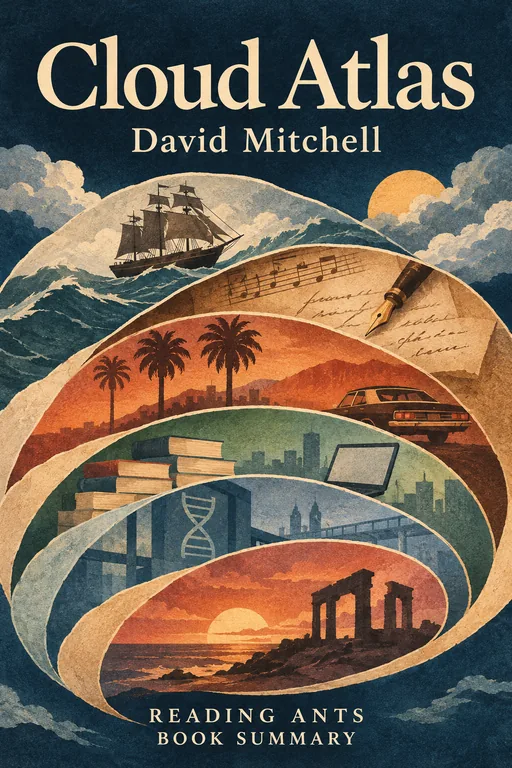
Cloud Atlas
Six nested stories, set from the nineteenth century to a far future, each discovered by the next narrator, show how the strong prey on the weak and how small acts of courage can echo through time.
Overview
Cloud Atlas is a novel by David Mitchell, published in 2004, and shortlisted for the Booker Prize. It is made up of six stories in different genres, each of which is interrupted halfway, so that the structure is like a set of Russian dolls: the first five stories are cut in the middle, the sixth is told in full, and then the others are completed in reverse order. The tales include a Pacific voyage in 1850, letters of a young composer in 1931, a thriller in 1970s California, a comedy about a publisher in the present day, a story of a clone in a dystopian future Korea and a post-apocalyptic tale from Hawaii. The book was adapted into a film in 2012 by the Wachowskis and Tom Tykwer.
Main Characters
- Adam Ewing: an American lawyer and notary traveling in the Pacific in 1850.
- Robert Frobisher: a young English composer in 1931 Belgium.
- Luisa Rey: a journalist in 1975 California who uncovers a conspiracy.
- Timothy Cavendish: a London publisher who is tricked into a nursing home.
- Sonmi-451: a “fabricant,” or clone, who becomes aware of her situation in a future Korea.
- Zachry: a goatherd living in Hawaii, after a collapse of civilization.
Full Summary
The Pacific Journal of Adam Ewing
In 1850, Adam Ewing, an American lawyer and notary, keeps a journal during a voyage across the Pacific, where he meets a Moriori man, Autua, who has escaped from slavery and hidden on the ship. He also meets a doctor, Henry Goose, who pretends to be a friend but is slowly poisoning him for his money. The journal is cut off in mid-sentence, at the point when Ewing is being tended by the doctor.
Letters from Zedelghem
In 1931, Robert Frobisher, a young English composer, leaves Cambridge in disgrace and becomes the assistant of a famous elderly composer, Vyvyan Ayrs, in Belgium. He writes letters to his lover, Rufus Sixsmith, and discovers the first half of Ewing’s journal. He works on his own piece, the Cloud Atlas Sextet, but his own life is in trouble, as he becomes entangled in the family of Ayrs. His letters are interrupted by a dramatic turn.
Half-Lives: The First Luisa Rey Mystery
In 1975, a journalist, Luisa Rey, meets an elderly scientist, Rufus Sixsmith, who warns her about a dangerous nuclear reactor, and is killed. Luisa finds Frobisher’s letters, and with them, a copy of the Cloud Atlas Sextet. She pursues a conspiracy by an oil company and a corrupt nuclear plant, fleeing from a hit man. The story is told as a pulp thriller, and ends on a cliffhanger.
The Ghastly Ordeal of Timothy Cavendish
In the present, Timothy Cavendish, an aging London publisher, receives a manuscript of the Luisa Rey story, and, while on the run from gangsters to whom he owes money, is tricked by his brother into a nursing home, from which he cannot leave. The comedy follows his attempts to escape with some other residents, in a scene that resembles One Flew Over the Cuckoo’s Nest. His narrative is halted in its midst.
An Orison of Sonmi-451
In a future Korea, ruled by corporations, Sonmi-451 is a genetically engineered servant at a restaurant. She is educated by a rebel, and learns about the world outside. She is interviewed before her execution, and says that she has come to a belief that all beings should be treated as equals. Her testimony becomes a kind of religious text for the next world.
Sloosha’s Crossin’ an’ Ev’rythin’ After
In the far future, a Hawaiian goatherd, Zachry, tells his story, in a broken dialect. His people worship Sonmi as a goddess, and are visited by a technologically advanced woman, Meronym, one of the Prescients, who has come to study his people and the island’s surviving knowledge. Zachry, who is torn between suspicion and trust, goes with her up the mountain to the remains of an old observatory that she needs for her mission. Later, his community is attacked, and Zachry escapes with Meronym’s help. This is the only story that is told without interruption.
The Return
Each story is then continued in reverse order. Sonmi learns what really happens to fabricants who are “retired,” comes to suspect that the rebels who helped her are using her for their own purposes, and is executed, though her testimony survives. Cavendish escapes, Luisa survives and unmasks the conspiracy, Frobisher takes his own life after completing his work, and Ewing recovers, rejecting the slavery that he has seen. In the final lines, Ewing resolves to join the abolitionists, saying that a drop in the ocean is still part of the ocean.
Why It Matters
Cloud Atlas is among the most acclaimed experimental novels of the 2000s. Its structure, which links stories across centuries, has been praised for its ambition and ingenuity. It was a bestseller, and the film version, though divisive, increased its fame. Mitchell, who wrote it in his thirties, was named one of Time’s most influential people in 2007.
The book’s theme, that the powerful consume the weak, and that small acts of kindness can change the future, makes it a thought-provoking piece for readers who enjoy puzzles.
The novel has also been taught in courses that compare literature with film, since the 2012 adaptation made very different choices about how to link the stories, and readers often enjoy debating which version does it better.
Key Takeaways
- Power often consumes the weak. Each story shows a form of predation.
- Small acts can matter. A single act of courage ripples across time.
- Everything is connected. The stories are linked by echoes.
- Stories shape the future. Each narrator learns from the last.
- Humanity is one. Sonmi’s belief in equality links to Ewing’s.
What We Can Learn
The novel suggests that our actions, however small, have consequences that we may never see. This idea can encourage us to act with kindness and courage, even when it seems futile.
It also asks us to look critically at systems that treat people as disposable, such as slavery, corporations or exploitation, and to recognize their patterns across time.
Finally, it shows how reading and storytelling can pass on ideas across generations.
It also reminds us to read widely, since each narrator in the book is changed by encountering the words of someone who lived before.
Criticism and Counterpoints
Some critics find the novel a clever trick and not a deeply felt work, since the structure can feel like a gimmick and the characters thin. Others find the dialects, especially Zachry’s, hard to read. The sections vary in quality, and some readers like some more than others.
Some also criticize the film’s use of makeup to have actors play different races. The novel has also been called overly pessimistic about human nature. Still, many readers are enthralled.
Who Should Read It
This book suits mature readers. It is complex and varied, with violence and some mature content. Patient readers who like experiments in form will enjoy it.
It is a good choice for book groups, because its structure invites discussion.
Want the whole book?
A summary is a taste, not the meal. Here is where to find the full book.
You reached the end 🎉
Nicely done. Mark this one as read, and we will suggest what to read next.
Read this next
If on a Winter's Night a Traveler
Italo Calvino
A reader tries again and again to finish a novel, but each book breaks off after a few pages, leading him into a playful chase through the world of reading, writing and publishing.
🌍 World Literature
The Handmaid's Tale
Margaret Atwood
In a near-future United States taken over by a religious dictatorship that strips women of their rights, a woman forced to bear children for a powerful couple secretly remembers her old life and searches for a way to survive.
✨ Modern Fiction
Slaughterhouse-Five
Kurt Vonnegut
Billy Pilgrim, a World War II soldier who survived the firebombing of Dresden, becomes "unstuck in time," bouncing between his past, present and future, and finds meaning in the idea that all moments exist forever.
📜 Classics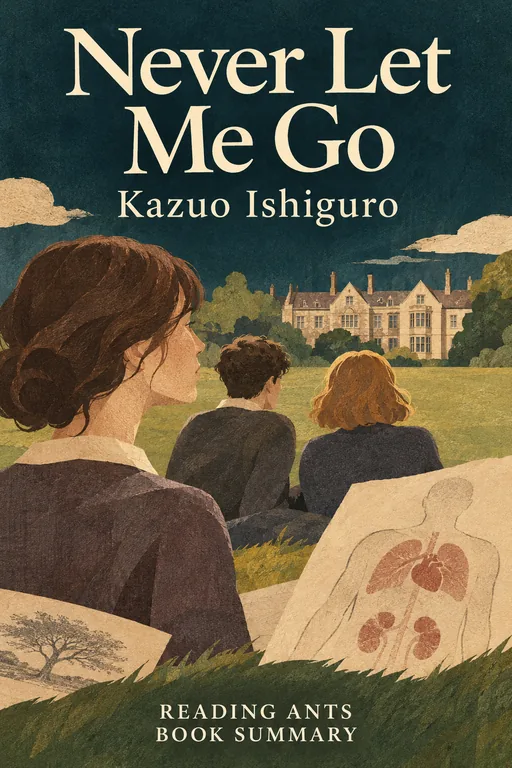
Never Let Me Go
Kazuo Ishiguro
Looking back on her childhood at an English boarding school, a young woman gradually reveals that she and her friends were created to donate their organs, and that they accept their fate without ever trying to escape.
✨ Modern Fiction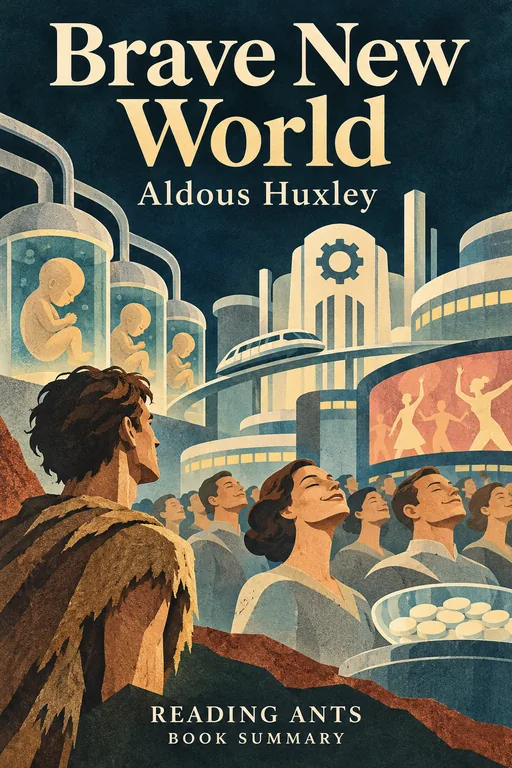
Brave New World
Aldous Huxley
In a future world where people are made in factories, programmed for their roles and kept happy with drugs and entertainment, a man raised outside the system discovers that this perfect comfort comes at the cost of everything that makes us human.
📜 Classics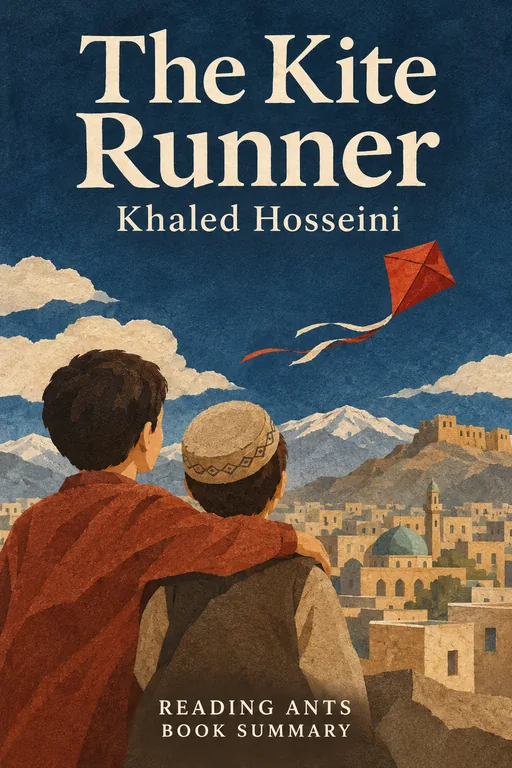
The Kite Runner
Khaled Hosseini
A wealthy boy in Kabul betrays his loyal best friend on the day of a kite tournament, and decades later, after fleeing to America, he returns to a Taliban-ruled Afghanistan to try to make things right.
✨ Modern FictionWant something different?
Pick another topic and we will show you three books to start with.