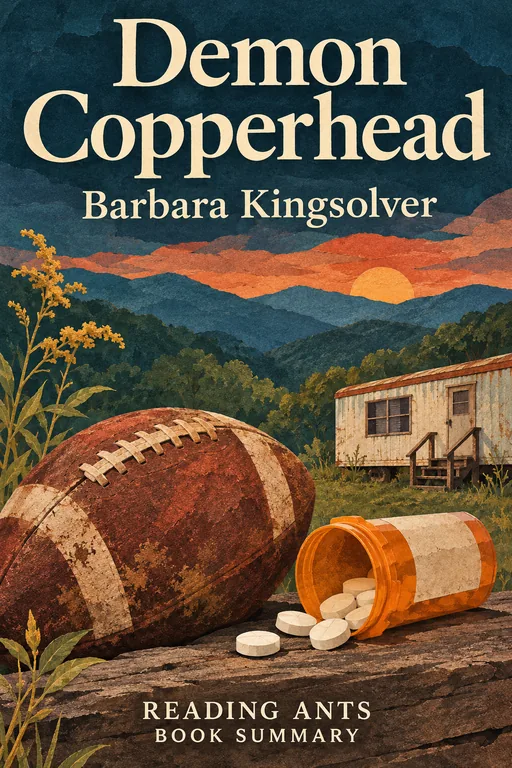
Demon Copperhead
Born to a teenage single mother in Appalachian Virginia, a red-haired boy nicknamed Demon Copperhead survives poverty, foster care, football and the opioid epidemic, telling his story in a wry, tough voice.
Overview
Demon Copperhead is a novel by Barbara Kingsolver, published in 2022, which won the Pulitzer Prize for Fiction in 2023 and the Women’s Prize for Fiction. It is a retelling of Charles Dickens’s David Copperfield, set in rural Lee County, Virginia, in the 1990s and 2000s. Demon, whose real name is Damon Fields, narrates, in a funny, hard-edged voice that is shaped by the mountain dialect. The novel follows the plot of Dickens, with the same stages of a boy’s life, but looks at the human costs of poverty, the failure of institutions and the opioid crisis that devastated the region.
Main Characters
- Demon Copperhead (Damon Fields): the narrator, a smart, funny, resilient boy and artist.
- Mom: Demon’s young, struggling mother, who battles addiction.
- Stoner: Demon’s cruel stepfather.
- Mr. and Mrs. Peggot and their grandson Maggot: neighbors who care for Demon; Maggot becomes his best friend.
- Coach Winfield (Coach): a football coach who is a father figure.
- Fast Forward and Tommy Waddell: friends and rivals.
- Dori: a young woman whom Demon loves.
Full Summary
Born in a Single-Wide
Demon is born in a single-wide trailer, to a teenage mother. His father, who drowned, is dead before he is born. He grows up as a good-natured, quick-witted boy, with red hair that attracts attention. His mother, who is a good-hearted person with an addiction, marries Stoner, a violent man. After his mother overdoses and is sent to rehab, Demon is placed in foster care; she later dies of a second overdose.
The first chapters are narrated with the humor of a boy who has learned to laugh at hardship. Demon describes the hills, the creek and the trailer park with affection, and the neighbors who help each other out. His mother loves him fiercely, though she is troubled, and he understands her far better than the adults who judge her.
Foster Care
Demon moves between several homes, some poor and some cruel. In one, he is made to work on a farm and eat little, and in another, he is left hungry and made to feel like a financial burden. A neighbor, Mrs. Peggot, offers kindness, but she and her husband are too old to adopt him. He eventually runs away, finds his paternal grandmother, and through her ends up in the home of Coach Winfield, the high school football coach. Demon learns how to protect himself, how to hide, and how to be funny to avoid harm. He draws pictures, which are a refuge. Demon observes how adults often fail to protect those in their care, and how a few, like Mrs. Peggot, make a difference by simple kindness.
Football
At a new school, Demon, who is slim and quick, is recruited by a football coach, who sees his talent. He becomes a star on the field, and his teammates take him in. Football gives him pride, a sense of family and a path to a scholarship. But an injury to his knee ends his hopes, and he is prescribed opioids to relieve the pain. He begins to rely on them.
On the field, he feels strong for the first time, and the team becomes a kind of family. The coach, who has troubles of his own, including a struggle with alcohol, pays attention to the boys’ lives, and Demon, who has been used to being invisible, is seen. His rivalry and friendship with other players, and a teacher who notices his drawing, give him a sense of self.
Addiction
Demon, who gets pills from a doctor and later from friends, slowly becomes addicted. The novel shows how the opioid epidemic, driven by pharmaceutical companies, drew in whole communities. Demon drifts through low-paid jobs, sells pills and mixes with other users, and friends he has made are among those caught up in the epidemic, with deaths that shake him badly before he seeks treatment. The story shows the human face of addiction without moralizing.
Loss
Demon’s life becomes a series of losses. A girl he loves, Dori, dies of an overdose, a death that devastates him. He loses jobs and friends. He is faced with a chance to leave the cycle, with the help of friends who care. He reaches a low point, and enters a rehabilitation program, where he finds support and begins to recover.
New Life
By the end, Demon has gotten clean, and found people who care about him, and he returns to drawing, the talent that has kept him going since childhood, and plans a graphic novel about the history of the Appalachian people, which his former teacher Annie later contacts him about publishing. The novel ends with a sense that, though the damage done to his family and region is great, there is hope, and that his voice is a form of survival.
Why It Matters
Demon Copperhead was one of the most acclaimed novels of its year, and a huge bestseller. It gave a human and vivid portrait of Appalachia, offering an alternative to stereotypes, and exposed the roles of drug companies and politicians in the opioid epidemic. It is seen as an answer to books like Hillbilly Elegy, which Kingsolver has criticized for ignoring the systemic causes of poverty.
Its structure, which follows David Copperfield, shows how Dickens’s concerns about child neglect and social injustice remain relevant today.
Critics often note that Kingsolver’s novel handles a very long and complicated story without losing its pace, and that Demon’s voice, funny and unsentimental, carries the reader through even the darkest episodes.
Key Takeaways
- Poverty and neglect shape lives. Demon’s chances are limited by a failing system.
- Addiction is a social crisis. Drug companies helped to create it.
- Resilience takes help. Demon survives through the kindness of a few.
- Stories can restore dignity. His voice defies stereotypes.
- Hope can survive despair. Demon recovers.
What We Can Learn
The novel invites us to look at addiction as a result of systems as well as individual choices, and to feel compassion for those who are caught in it.
It also shows how children in foster care can be failed, and how much difference one caring adult can make.
Finally, it reminds us that regions and people often portrayed in simple terms are complex, and that listening to their own voices is important.
It also suggests that stories told by people who have lived through crisis can teach us more than statistics.
Criticism and Counterpoints
Some critics found the novel overlong, and its closeness to David Copperfield sometimes forced, with characters who match Dickens’s too tidily. Others say that Demon’s narration, though vivid, sometimes sounds too polished, and that the dialect is hard to maintain. A few readers think that its politics are heavy-handed.
Some also feel that the depiction of addiction is relentless, and that the ending is too hopeful. Still, many consider it a major achievement.
Who Should Read It
This book is for mature readers. It contains child abuse, addiction and death, but also humor and compassion. Readers who enjoy long, voice-driven novels will find it rewarding, and it is rewarding to read alongside Dickens.
Want the whole book?
A summary is a taste, not the meal. Here is where to find the full book.
You reached the end 🎉
Nicely done. Mark this one as read, and we will suggest what to read next.
Read this next

David Copperfield
Charles Dickens
From a sad childhood of cruelty and poverty to adult success as a writer, David Copperfield tells his own life story, with unforgettable friends and villains along the way.
📜 Classics
The Poisonwood Bible
Barbara Kingsolver
In 1959, an American Baptist missionary named Nathan Price drags his wife and four daughters to the Belgian Congo, where his rigid zeal and the country's turmoil change all of their lives, as told by the women of the family.
✨ Modern Fiction
Hillbilly Elegy
J. D. Vance
J. D. Vance recalls growing up in a struggling Ohio steel town in a family from Kentucky's Appalachian hills, marked by poverty and addiction, and uses his story to reflect on the troubles of white working-class America.
⚖️ Politics & Society
The Glass Castle
Jeannette Walls
Jeannette Walls recounts a childhood with brilliant but irresponsible parents who moved constantly, left their children hungry and unsafe, and still gave them a sense of wonder, and how she and her siblings made their own way out.
👤 Real Lives
The Grapes of Wrath
John Steinbeck
Driven off their Oklahoma farm by drought and the banks during the Great Depression, a poor family travels west to California in search of work, only to find exploitation and hunger, yet they hold on to their dignity and compassion.
📜 Classics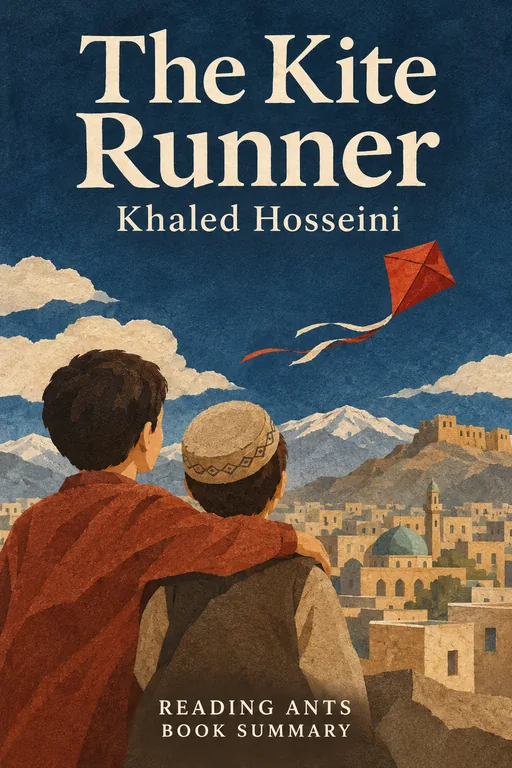
The Kite Runner
Khaled Hosseini
A wealthy boy in Kabul betrays his loyal best friend on the day of a kite tournament, and decades later, after fleeing to America, he returns to a Taliban-ruled Afghanistan to try to make things right.
✨ Modern FictionWant something different?
Pick another topic and we will show you three books to start with.