 Reading Ants
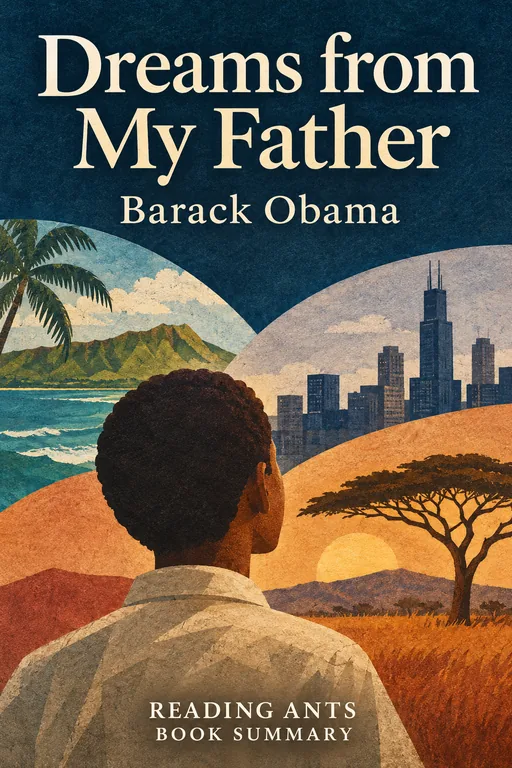
Dreams from My Father
In this memoir, written before he entered politics, Barack Obama describes growing up with a white mother from Kansas and an absent Kenyan father, and his search for a sense of identity and belonging, in Hawaii, Chicago and Kenya.
Overview
Dreams from My Father: A Story of Race and Inheritance was published in 1995, when Barack Obama was a young lawyer and a former community organizer. He wrote it as a personal journey, not as a political book. It is divided into three parts, called Origins, Chicago and Kenya. The author describes his childhood, the questions about race and identity that troubled him as a young man of mixed heritage, his work in a poor neighborhood in Chicago and his visit to his father’s homeland. Some characters in the book are composites, and the author says that some names have been changed.
Full Summary
A Boy Between Two Worlds
The memoir opens with a phone call that tells Obama his father has died in Kenya, and then goes back to the family’s story, starting with his father, a Kenyan student who came to Hawaii to study, met his mother, a white American, and married her. The father left when the boy was two, to study at Harvard, and later returned to Kenya, so that Barack saw him only once, at the age of ten. He grew up with the idea of a heroic and absent father. His mother remarried an Indonesian man, and the family moved to Jakarta, where Barack lived for several years and saw poverty at close range.
Hawaii and the Question of Race
At about ten, Barack returns to Honolulu to live with his grandparents, Toot and Gramps, who work, love him and also struggle to understand the world he is growing up in. He attends a good school, as one of very few Black students, and begins to feel the pressure of being seen as different. As a teenager, he wrestles with what it means to be Black in America, looks for role models in books and in music, and experiments with alcohol and drugs, which he later regrets. His mother, though far away at times, remains an important influence.
College and Searching
Obama studies at colleges in Los Angeles and New York, and becomes more serious, reading widely and thinking about politics and race. He recalls the phone call, described at the start of the book, that told him his father had died in a car accident in Kenya, which made the distance permanent. He feels a need to understand the man he never knew, and he is also drawn to the idea of working for change in communities. After graduating, he works in New York for a time, and then decides to become a community organizer.
Organizing in Chicago
In Chicago, Obama takes a job with a church-based group working in poor, mostly Black neighborhoods on the city’s south side, including Altgeld Gardens, where residents fight over asbestos in their housing, where factories have closed and many people are unemployed. The work is slow, and the progress is small, such as pressing the housing authority over asbestos and trying to bring an employment office within reach of residents. He meets leaders, pastors and residents, who teach him patience and about the role of faith and community. He learns about the difficulty of changing institutions, and the importance of listening. The experience gives him a sense of purpose.
The Journey to Kenya
After several years in Chicago, and before starting law school, Obama travels to Kenya to meet his father’s family. He meets his half-sister Auma, his half-brother Roy, his grandmother Sarah and many relatives, and hears stories of his father, who had been brilliant but who had a troubled life, falling into bitterness and drink after a promising start. The reality is different from the myth that he had held as a child. He visits his father’s grave. He comes to see his father as a real person, with strengths and failings.
Coming Home
By the end of the book, Obama has reconciled with his story. He accepts that the questions of identity do not have simple answers, and that his sense of belonging comes from the connections that he builds. He sees himself as part of a family that spans continents, and he feels more able to commit to a community. The epilogue reaches his wedding to Michelle, and the reader is left with a sense of someone who has begun to find his place.
Why It Matters
Dreams from My Father was not widely read at first. After Obama’s 2004 speech at the Democratic National Convention it was reissued and became a bestseller, and it remains a key text for understanding his thinking. The book is valued as a literary memoir, particularly for its reflections on race, identity and belonging, and for its honest portrait of a young man searching for a place. It offers readers a view of the United States through a person who crossed many boundaries. It also shows how personal experience can shape public ideals. Even for those who do not follow politics, it is a thoughtful story about family and identity.
Key Takeaways
- Identity is a journey. The author works to understand his mixed heritage.
- Absent fathers shape lives. The myth and the reality of his father both mattered.
- Community work teaches patience. Change comes slowly through listening and persistence.
- Race and class intersect. The book shows how they affect people’s chances.
- Understanding family heals. Learning his father’s story gave him peace.
What We Can Learn
The book encourages us to ask about our own roots, and to listen to relatives about their stories. If you feel caught between worlds, you can take comfort from seeing that many people have worked this out for themselves, and that belonging can be built. It also teaches the value of patient work in communities, where small steps matter. And it shows that people are more complex than the stories we hold of them: parents and heroes may have flaws, and that understanding does not diminish them.
Criticism and Counterpoints
Some readers have noted that the book mixes real events with composite characters and re-created dialogue, which the author acknowledges, and so it should not be read as a precise record. Others have said that it is polished and introspective in a way that reflects a writer who was preparing for a public life, or that it omits parts of his personal life. After he entered politics, critics and supporters used passages to support their views, which sometimes led to distortions. Literary critics, however, generally praise its honesty and craft.
Who Should Read It
This book is for readers who like thoughtful memoirs about identity, family and community, and for anyone interested in the early life of a major political figure. It is long and reflective, rather than fast-paced. Readers who prefer political history or policy will find it a different kind of book, and those who want a strictly factual autobiography should remember that some elements are composites.
Want the whole book?
A summary is a taste, not the meal. Here is where to find the full book.
You reached the end 🎉
Nicely done. Mark this one as read, and we will suggest what to read next.
Read this next
Becoming
Michelle Obama
Michelle Obama tells her story from a working-class childhood on the South Side of Chicago to her years as First Lady, and shares what she has learned about becoming oneself.
👤 Real Lives
Long Walk to Freedom
Nelson Mandela
Nelson Mandela tells his own story, from a village childhood to twenty-seven years in prison to becoming South Africa's first democratically elected president, and shows how patience, courage and forgiveness helped end apartheid.
👤 Real Lives
The Warmth of Other Suns
Isabel Wilkerson
Isabel Wilkerson tells the story of the Great Migration, in which about six million Black Americans left the South for cities in the North and West, through the lives of three people who made the journey.
🏛️ History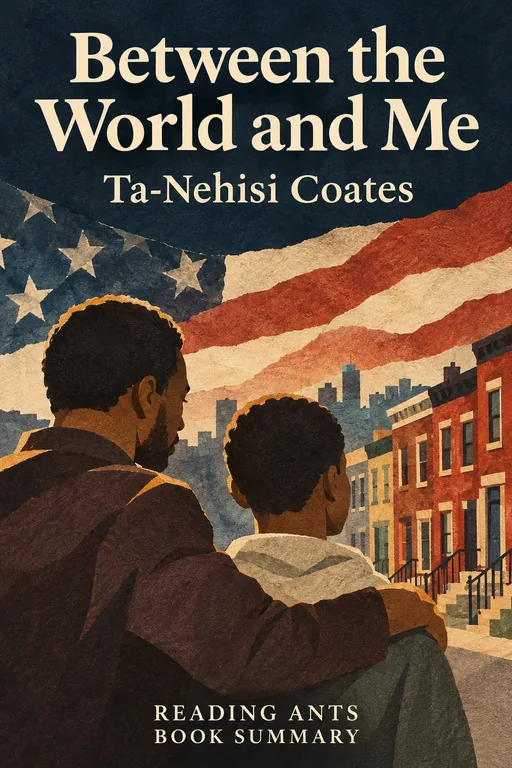
Between the World and Me
Ta-Nehisi Coates
In a letter to his teenage son, Ta-Nehisi Coates describes what it means to live in a Black body in America, and reflects on fear, history and the struggle to be free.
⚖️ Politics & Society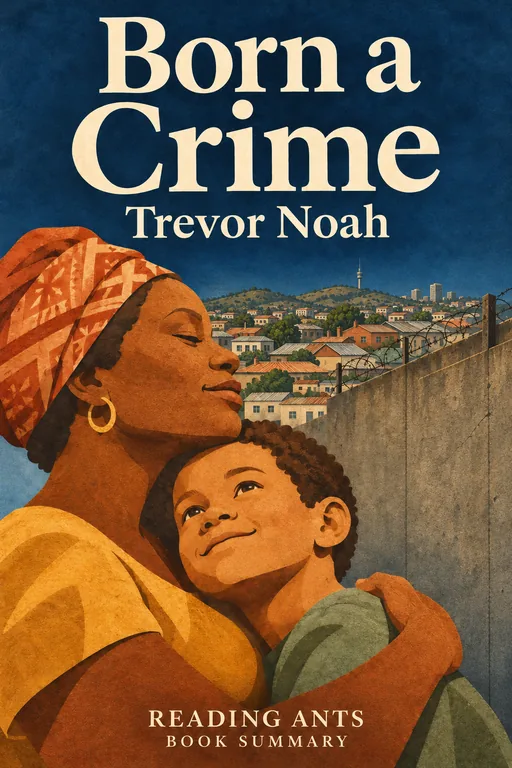
Born a Crime
Trevor Noah
Trevor Noah, the comedian, recounts growing up in South Africa as the child of a Black mother and a white father at a time when their relationship was a crime, and pays tribute to the mother who raised him.
👤 Real Lives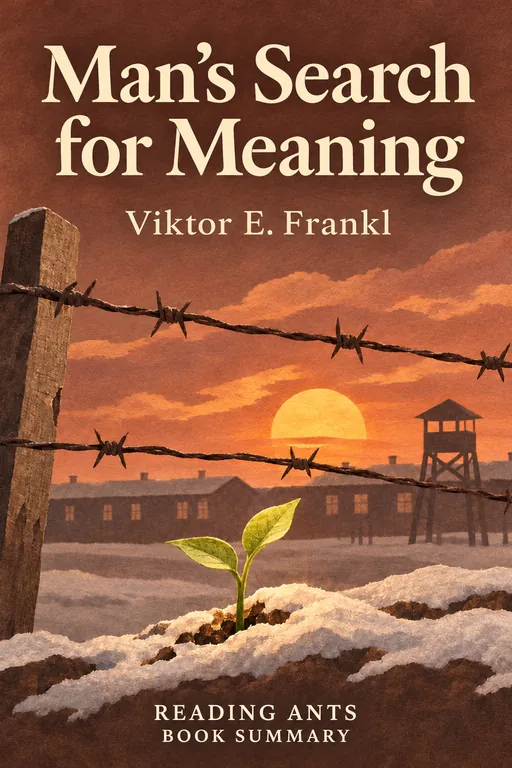
Man's Search for Meaning
Viktor E. Frankl
A psychiatrist who survived the Nazi concentration camps explains that even in the worst suffering, people can choose their attitude, and that finding a reason to live is what gives us the strength to endure.
👤 Real LivesWant something different?
Pick another topic and we will show you three books to start with.