 Reading Ants
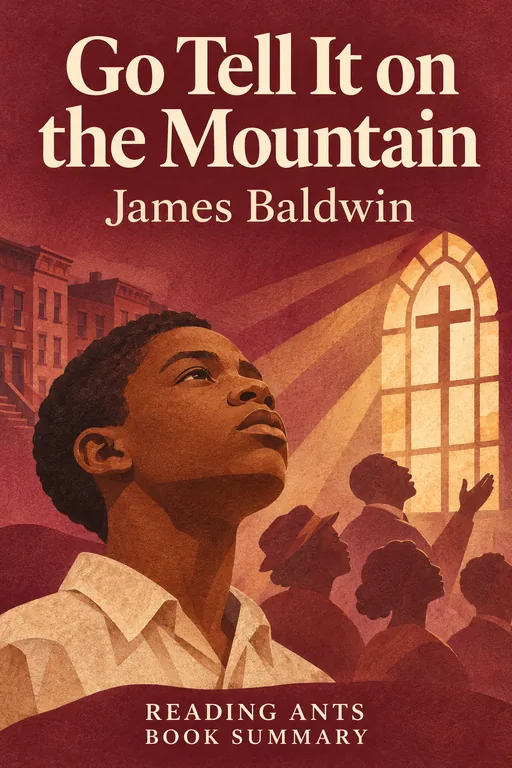
Go Tell It on the Mountain
On his fourteenth birthday in 1930s Harlem, a boy named John Grimes experiences a religious crisis in his church, while the novel reveals the painful histories of his stepfather, his aunt and his mother that shaped his family.
Overview
Go Tell It on the Mountain is the first novel by James Baldwin, published in 1953, and it is partly based on his own boyhood in Harlem, as the stepson of a strict preacher. The story takes place over one Saturday and Sunday, in the church of a small Pentecostal congregation, but it moves back in time through three long prayers to tell the stories of John’s relatives, going back to the South. The book is about faith, family, race and the search for self, written in a rich, biblical style.
Main Characters
- John Grimes: a fourteen-year-old, intelligent, sensitive and uncertain of his place.
- Gabriel Grimes: his stepfather, a stern preacher with a secret past.
- Elizabeth: John’s mother, loving and strong, who bears her own sorrow.
- Florence: Gabriel’s older sister, a hard, proud woman who has lived through disappointment.
- Roy: John’s younger brother, who is rebellious and is cut with a knife in a fight.
- Richard: the young man whom Elizabeth loved, John’s biological father.
- Esther: a woman with whom Gabriel had an affair years before.
Full Summary
John’s birthday
On the morning of his fourteenth birthday, John Grimes wakes in a small Harlem apartment, where his mother and siblings are preparing for the day. He knows that he is supposed to follow his father into the ministry, but he fears and hates his stepfather, who is harsh and scornful of him. John is clever, and his teachers say that he could go far, and he longs to escape the narrow world of the church. His mother gives him a little money, and he spends part of the day wandering through Central Park and down Fifth Avenue, and he goes into a movie theater. When he returns, Roy has been cut with a knife in a fight with neighborhood boys. Gabriel, furious, blames the women of the house, strikes Elizabeth and beats Roy. Later John goes to the church to help clean it before the evening service, with an older boy named Elisha, and he struggles with feelings that the church calls sinful.
Florence’s prayer
That evening, in the church, as the congregation prays, John falls into a trance. The story moves into the prayer of Florence, his aunt, who is gravely ill. She recalls her youth in the South, where her mother always put Gabriel’s future ahead of her own, and how she left for the North although her mother was ill. In New York she married Frank, who drank and was careless with money, and he left her for another woman. She has lived with bitterness, and she hates her brother, believing that he has no right to be a preacher. She also remembers a letter from Gabriel’s first wife, Deborah, which tells of her suspicion that he had fathered a child outside marriage.
Gabriel’s prayer
The next prayer is that of Gabriel, who tells of his own past, as a young man in the South, who was a sinner before he found God. After a wild youth he was saved, gave up drinking and became a preacher, and he later married Deborah, a woman whom no one else would marry after she had been attacked by a group of white men. But he also had an affair with a woman named Esther, who became pregnant and died giving birth to his son, Royal. Gabriel never acknowledged the boy, who was raised by Esther’s mother, and in the end Royal was killed in a fight in Chicago. Gabriel has never openly confessed this, and he is proud and hard on others, to hide his own guilt.
Elizabeth’s prayer
The third prayer is that of Elizabeth, John’s mother. She tells of her love for Richard, a young man who dreamed of a better life, and with whom she ran away to New York. Before she could tell him that she was pregnant, he was wrongly arrested for theft and badly beaten by the police. He was freed, but he killed himself soon afterward, before John was born. Elizabeth, alone with her child, met Florence at work, and Florence introduced her to her brother Gabriel, a widower who had recently come north. Elizabeth hoped that he would give her and her son protection and stability, and she married him, though he never showed John the love that she had wished for. She lives with sadness and loyalty.
John’s conversion
Back in the church, John, who has been lying on the floor, feels himself falling, as if into a pit, as the congregation prays over him. He struggles with images of sin and salvation, and with the voices of his family. In his visions he faces his sins, his hopes and his doubts, and he hears a voice telling him to get up. At last he feels that he has been saved. When he comes to himself, he finds that morning has come and that he has lain there all night. The church is glad for him, but Gabriel seems unconvinced.
Morning
As the group leaves the church in the early morning, Florence, who is dying, confronts Gabriel with Deborah’s letter. She accuses him of making Elizabeth and John pay for his own guilt, and she says that she will tell Elizabeth the truth. Meanwhile John talks with Elisha, who congratulates and encourages him as they walk toward home. John knows that his struggle is not over, and that the road before him will be hard, with racism and poverty. John and Gabriel end up facing each other uneasily at the door of the apartment. The novel closes with the sense that John has found his own voice, and, whatever faith he follows, he has gained courage to face his future.
Why It Matters
Go Tell It on the Mountain is widely regarded as one of the great American novels of the twentieth century, and a landmark of African American literature. It portrays the complexity of Black religious life, both its consolations and its harshness, and it connects the histories of one family to the larger history of migration and racism. Baldwin’s prose, influenced by the language of the King James Bible and of the church, is powerful and musical. The book also introduced themes that Baldwin would develop in his essays, such as the search for identity and the relationship between fathers and sons.
Key Takeaways
- Family histories shape the present. John’s world is built from his elders’ secrets.
- Faith can comfort and harm. The church is both refuge and prison.
- Racism leaves deep scars. Characters carry the damage of earlier violence.
- Identity is a struggle. John must find his own path.
- Fathers matter. The relationship between John and Gabriel is central.
What We Can Learn
You can learn from John that it is possible to find a voice and an identity, even when the people closest to you do not understand you, and that understanding the past can help us to understand ourselves. The book also shows how a community’s faith can be both a source of strength and a source of pain, and how guilt and secrecy can poison relationships. If you read it, you might think about the stories that older members of your family have not told, and about how they shaped your own life. It may deepen your empathy.
Criticism and Counterpoints
Some readers find the novel difficult, because of its dense, long sentences, its use of flashbacks, and its heavy religious imagery. Critics have also disagreed about the book’s view of the church: some read it as an ironic indictment of Christianity, and others as a stirring vindication of it. Some readers feel that Gabriel is closer to a type of the hypocritical preacher than a fully human figure, and the way the book treats its suffering women has been discussed. However, most critics regard it as a profound and moving work.
Who Should Read It
This book is for mature readers from about fifteen who enjoy literary fiction, history and stories of family and faith. It requires patience, but it is rewarding. Readers who like it may go on to Baldwin’s essays, such as The Fire Next Time, and his novel If Beale Street Could Talk.
Want the whole book?
A summary is a taste, not the meal. Here is where to find the full book.
You reached the end 🎉
Nicely done. Mark this one as read, and we will suggest what to read next.
Read this next
Beloved
Toni Morrison
A formerly enslaved woman living in Ohio after the Civil War is haunted by the ghost of the daughter she killed to save her from slavery, and by the painful memories she has tried to bury.
✨ Modern Fiction
Their Eyes Were Watching God
Zora Neale Hurston
Janie Crawford tells her best friend the story of her three marriages, as she moves from a girl taught to find security to a woman who finds love and her own voice in the Florida of the early twentieth century.
📜 Classics
The Color Purple
Alice Walker
Told in letters, the story follows Celie, a poor Black woman in rural Georgia who survives abuse and loss, and through the love of other women finds her voice, her independence and joy.
✨ Modern Fiction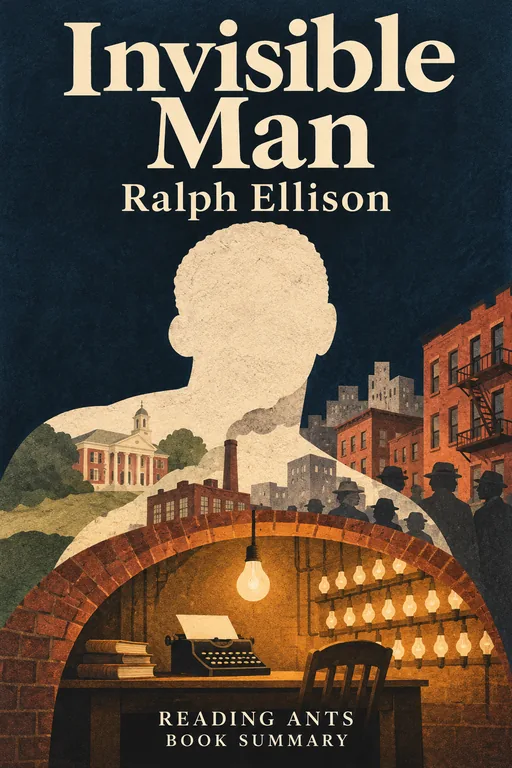
Invisible Man
Ralph Ellison
An unnamed young Black man moves from the South to Harlem and passes through one false identity after another, until he realizes that he is invisible to a society that sees only what it expects, and he retreats underground to write his story.
📜 Classics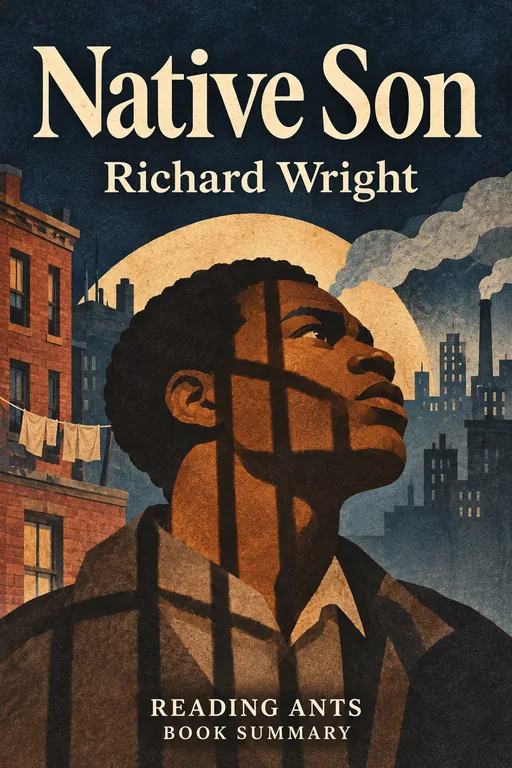
Native Son
Richard Wright
Bigger Thomas, a young Black man in 1930s Chicago who feels trapped by poverty and racism, accidentally kills a white woman and then commits another crime, and the novel shows how a society shaped him and then condemned him.
📜 Classics
Pride and Prejudice
Jane Austen
Quick-witted Elizabeth Bennet and the proud, wealthy Mr. Darcy badly misjudge each other, and only by facing their own faults do they find their way to love.
📜 ClassicsWant something different?
Pick another topic and we will show you three books to start with.