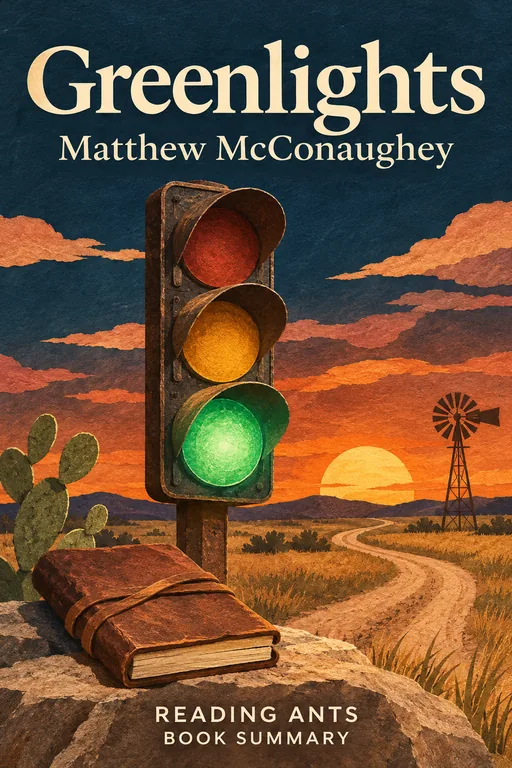
Greenlights
Actor Matthew McConaughey draws on decades of his own journals, with stories from a Texas childhood to Hollywood fame, to explain how he tries to catch the greenlights in life, including those that hide behind red and yellow ones.
Overview
Greenlights is a book by Matthew McConaughey, published in 2020. The author, who won an Academy Award for Best Actor in 2014, says that he kept diaries for decades, and he wrote much of the book while living alone in the desert for several weeks. He does not call it a memoir; he calls it an approach book, meaning a set of stories and ideas that readers can try on for themselves. The title refers to a metaphor: a green light means go, and red and yellow lights can be greenlights in disguise. In his telling, catching greenlights takes skill, timing and luck, and a person can also earn them or set up life so that they come more often. The book mixes stories, prayers, poems and short sayings in a casual, humorous voice, and it is not a conventional autobiography.
Full Summary
What Is a Greenlight?
McConaughey opens by looking back over the first fifty years of his life, which he treats as a kind of working record so far. He says that he has spent a long time trying to work out how to live well, and that the diaries he began keeping as a teenager gave him the raw material. He explains the title: a greenlight means to go, advance or continue, and red and yellow lights can sometimes hide greenlights. The book then moves through his life in eight parts, mostly in the order that it happened, and many of the parts begin with a specific date and moment.
Part One: Outlaw Logic
The first part deals with his family and the lessons of his early years. He grew up in Texas as the youngest of three brothers. His parents divorced twice and married each other three times, so the household was lively and sometimes stormy. His father had played college football and later ran an oil pipe supply business, and his mother was a former kindergarten teacher. From them he took basic rules about honesty, about not giving in to self-pity or saying that something cannot be done, and about owning what you do. The rules are simple and strict, and the stories show them being tested.
Parts Two and Three: Find Your Frequency, Dirt Roads and Autobahns
Here he writes about his teenage years and the year he spent in Australia as an exchange student, around 1988. He describes how living with a host family in an unfamiliar place made him more thoughtful and gave him time to look at himself. It is an early example of a red light that turned out to be useful. At the end of the 1980s he faced a choice about his future. He told his father that he did not want to go to law school, and his father’s answer was to commit fully to whatever he chose and not do it halfway. He traveled in Europe with friends, then went on to study film at the University of Texas at Austin. The part also covers his first film role, in Richard Linklater’s Dazed and Confused. He met the casting director Don Phillips and was cast as Wooderson, a part that was small at first and that he built into something memorable. The film launched his career, and the character’s lines followed him for years.
Part Four: The Art of Running Downhill
This part covers his early years in the film business. He lived for a time in a trailer park, where he met people from many walks of life and picked up ideas about minding your own business and respecting other people’s privacy. He writes about fame, about how it changed some relationships, and about prayer, including the difference between asking for what you want and asking for what you need.
Parts Five and Six: Turn the Page, The Arrow Doesn’t See the Target
The turning point is a period of searching. He describes travel, including a trip to Africa inspired by a recurring dream, which took him to Mali, home of the musician Ali Farka Touré, and taught him about accepting a challenge. He says that he found more growth in travel than in his work at that time. This part also covers a run-in with the law and the wild side of those years. The next part looks at love, family and fatherhood. He describes a dream of old age in which he looks back on a long life with children and with relationships behind him, and he reflects on how becoming a father changed him.
Part Seven: Be Brave, Take the Hill
In the best-known part he explains the break in his career. After years of romantic comedies, he was offered large sums to keep making them, and the offers grew into many millions. He turned them down and then waited, and for roughly two years the offers dried up while he held out for different work. He says that this was a period of living out of the spotlight. Then more serious parts came, including the lead in the small-budget film Dallas Buyers Club, for which he lost a great deal of weight and won the Academy Award, and a supporting role in The Wolf of Wall Street alongside Leonardo DiCaprio. Critics later called this change the McConaissance.
Part Eight: Live Your Legacy Now
The last part turns to marriage, faith and what he wants to leave behind. He describes marriage as something that deepens a person’s sense of self instead of erasing it, and he recalls a pastor’s advice that a marriage covenant includes God as a third party. He urges readers to act on their legacy today instead of waiting. He also writes about faith and about accepting what he cannot control. Throughout the book he presents all of this as his own approach, not as a set of rules for everyone.
Why It Matters
Greenlights debuted at number one on the New York Times nonfiction bestseller list and stayed there for a long run, and the author reads the audiobook himself. It offers a mix of celebrity stories and personal philosophy, which many readers found entertaining and inspiring. The book has also been seen as an example of how a famous person can reflect on failure and reinvention. It is relevant to anyone who has felt typecast, stuck or unsure of their direction, and its emphasis on choosing one’s attitude and taking responsibility is a common theme in self-help writing, delivered with a distinctive voice.
Key Takeaways
- Respond to setbacks. A red light may be a greenlight in disguise.
- Say no to the wrong things. Declining easy work opened the way to better work.
- Write it down. Keeping a journal gave him material to see patterns.
- Take responsibility. Own what you do, and do not blame others.
- Stay curious. Travel and reflection broaden perspective.
What We Can Learn
You can try a simple version of his habit: keep a journal, and review it from time to time. Notice the red lights in your life, such as failures, delays and rejections, and ask what they might be teaching you. Practice saying no to things that do not fit your values, even when they are tempting. Think about what you want your legacy to be, and whether you are acting on it today. Treat your own journal as a teacher: reading old entries can show which choices helped and which patterns you keep repeating. Remember that advice from a successful person reflects their own experience, and that you should adapt it to your own situation and listen to those who know you well.
Criticism and Counterpoints
Some reviewers say that the book’s poems and short sayings can feel corny, like greeting-card wisdom, or vague and circular. Others note that the advice is hard to relate to, since it is easy for a wealthy and successful actor to say that obstacles are gifts, when many people face more serious barriers. Supporters say that its conversational charm is its strength, and that it is meant to entertain as well as inspire.
Who Should Read It
This book is for fans of McConaughey, and for readers who like casual, upbeat books that mix stories with life philosophy. It includes some strong language and references to drug use and sex, so it is best for older teenagers and adults. Those who prefer a chronological life story or a more analytical approach to self-improvement may find it loose.
Want the whole book?
A summary is a taste, not the meal. Here is where to find the full book.
You reached the end 🎉
Nicely done. Mark this one as read, and we will suggest what to read next.
Read this next
Open
Andre Agassi
Tennis champion Andre Agassi reveals that he hated the sport that made him famous, and tells the story of a pushed childhood, a self-destructive peak, a dramatic fall and a hard-won comeback.
👤 Real Lives
Becoming
Michelle Obama
Michelle Obama tells her story from a working-class childhood on the South Side of Chicago to her years as First Lady, and shares what she has learned about becoming oneself.
👤 Real Lives
Born a Crime
Trevor Noah
Trevor Noah, the comedian, recounts growing up in South Africa as the child of a Black mother and a white father at a time when their relationship was a crime, and pays tribute to the mother who raised him.
👤 Real Lives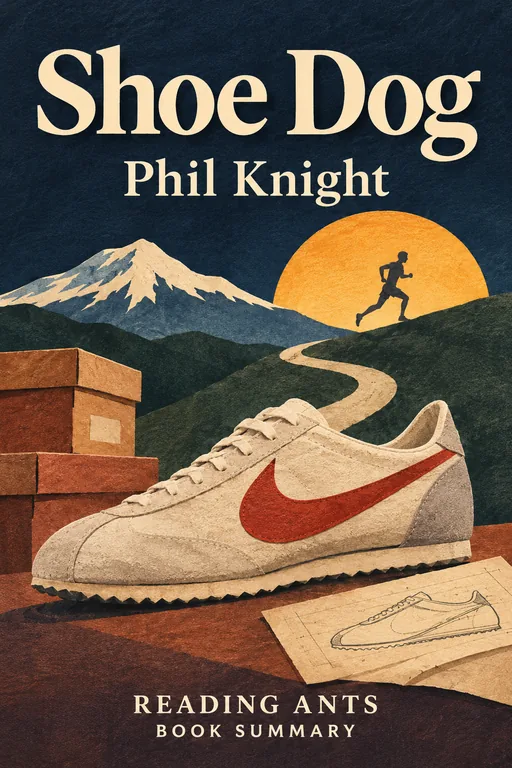
Shoe Dog
Phil Knight
The founder of Nike tells how a young runner with a borrowed idea and almost no money built a small shoe-importing business, through crisis after crisis, into one of the most famous brands in the world.
💼 Business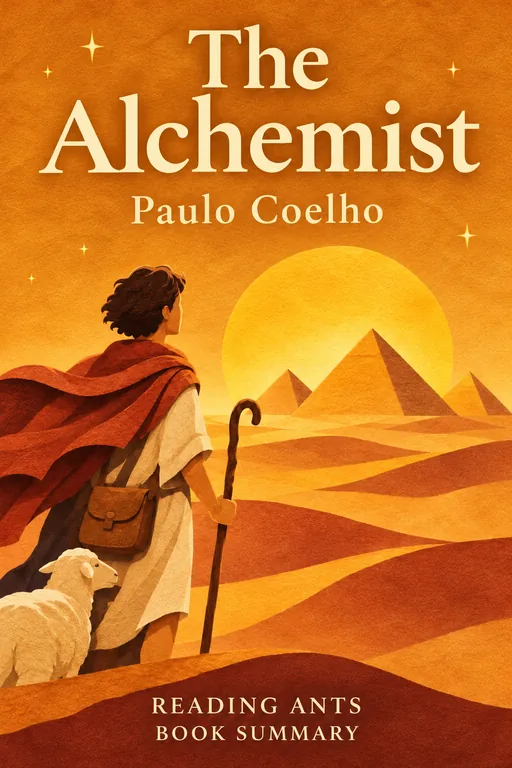
The Alchemist
Paulo Coelho
A young Spanish shepherd follows a recurring dream across the desert to the Egyptian pyramids in search of treasure, and learns that the journey toward one's dream is itself the greatest treasure.
🌍 World Literature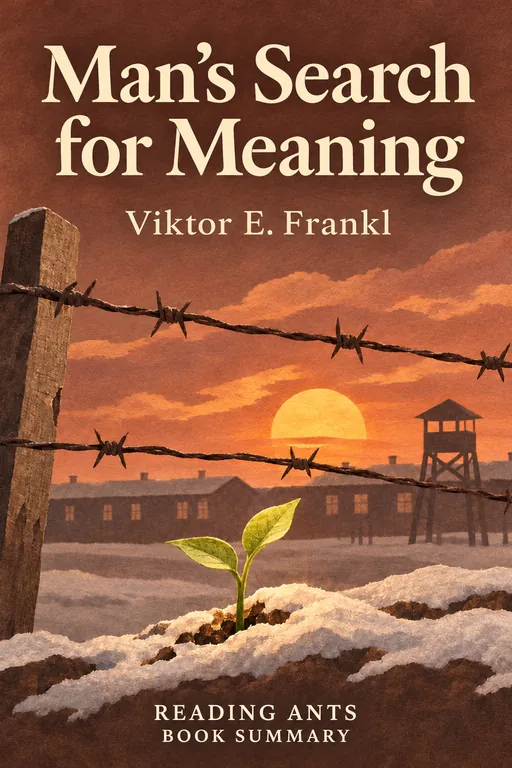
Man's Search for Meaning
Viktor E. Frankl
A psychiatrist who survived the Nazi concentration camps explains that even in the worst suffering, people can choose their attitude, and that finding a reason to live is what gives us the strength to endure.
👤 Real LivesWant something different?
Pick another topic and we will show you three books to start with.