Howards End
Through the intertwined fortunes of two cultured sisters, a wealthy business family and a poor clerk, Forster asks who will inherit England, and argues that only connection between people of different classes can heal a divided society.
Overview
Howards End is a novel by E. M. Forster, published in 1910, and many critics regard it as his finest. It is set in Edwardian England, a period of rapid change, with growing cities, industry and class tension. Three groups meet and clash: the Schlegels, who are intellectual and idealistic, the Wilcoxes, who are practical and materialist, and the Basts, who are poor and aspiring. A country house, Howards End, becomes the symbol of an England that might be saved. The novel’s famous epigraph, “Only connect,” expresses its main theme.
Main Characters
- Margaret Schlegel: a thoughtful, practical, and open-minded woman, who tries to bridge differences.
- Helen Schlegel: her younger sister, impulsive and passionate about justice.
- Henry Wilcox: a rich businessman, who is conventional and sure of himself.
- Ruth Wilcox: his wife, a gentle woman who owns the house and loves it.
- Charles Wilcox: Henry’s eldest son, a hard and unimaginative man.
- Leonard Bast: a young clerk, who yearns for culture and a better life.
- Jacky Bast: Leonard’s wife, a woman with a past.
Full Summary
Two families
The story begins with Helen Schlegel’s brief engagement to Paul Wilcox, the younger son of a prosperous family, which is broken off at once, causing awkwardness. Despite this, Margaret, the older sister, befriends Ruth Wilcox, who is frail and kind, and who lives for her family home, Howards End, a country house in Hertfordshire. Ruth and Margaret form a close bond. The Schlegels, who are orphans of German descent, live in London on a private income, and spend their time in talk, concerts and causes.
Ruth’s note
Ruth Wilcox dies, and, in a note, she says that she wants Howards End to go to Margaret. The Wilcox family reads it and, considering the idea ridiculous, burns it, deciding that the house shall stay in the family. Margaret does not hear of it until the very end of the story. Meanwhile, the Schlegels meet Leonard Bast, a young clerk, who is poor but eager to improve himself by reading and attending concerts. The sisters take an interest in him, and, on the basis of a chance remark by Henry Wilcox that the firm is unsound, they advise him to leave his job at an insurance company, which he does.
Margaret and Henry
Leonard’s new job fails, and he and his wife Jacky are reduced to poverty. Meanwhile, Henry Wilcox, who has become a widower, takes an interest in Margaret and proposes. She accepts, seeing his strengths as well as his limitations, and believing that she can help him to see more deeply. Helen, who is passionate about the poor, is furious at Henry’s indifference to Leonard’s fate, and at the idea that her sister will marry a man who stands for everything she distrusts.
The wedding and the revelation
At the country wedding of Henry’s daughter Evie, Helen brings Leonard and Jacky to the party, hoping to get Henry to help Leonard find work. There, Jacky recognizes Henry as a man with whom she once had an affair, and the truth comes out. Henry first accuses Margaret of having planned the exposure with the Basts and offers to release her from the engagement, but Margaret, though shocked, forgives him and the engagement stands. Helen vanishes, and the family worries about her. She has, in the meantime, had a brief encounter with Leonard, and is pregnant.
Howards End and the confrontation
Months later Helen is abroad and avoids her family, so Margaret and Henry go to Howards End hoping to meet her, and there Margaret finds her and learns that she is pregnant. Determined to help her, Margaret asks Henry to let Helen stay one night at the unoccupied house, but he refuses. Margaret insists on her sister’s rights, and breaks with Henry’s attitude. Margaret and Helen spend the night at Howards End, and the next day Leonard, filled with guilt, comes to the house. Charles Wilcox, who is angry, attacks Leonard with a sword, using its flat side. Leonard, who has a weak heart, collapses and dies. Charles is later sent to prison for manslaughter.
The inheritance
Henry, broken by the loss of his son and by the revelation of his own failings, is helpless, and Margaret takes care of him. He leaves Howards End to her, and she intends it to pass to Helen’s son, Leonard’s child. In the final scene, set more than a year later, Margaret, Henry and Helen live at Howards End. While the Wilcox family gathers indoors to hear Henry’s arrangements, Helen and her baby watch the hay being cut in the big meadow, and the story ends with her joyful news that the field is cut. The suggestion is that the future of England belongs to those who can put aside class and prejudice, and unite the inner and outer life.
Why It Matters
Howards End is widely regarded as one of the major English novels of the twentieth century. It is notable for its treatment of class, money and gender, and for its attention to the question of how people from different worlds can live together. The phrase “Only connect” has become a famous summary of Forster’s humanism. The house at the center of the story symbolizes the English countryside and its heritage, which is threatened by urbanization. The novel was adapted into an acclaimed film in 1992, and it continues to attract new readers.
Key Takeaways
- Connection bridges divides. The novel urges contact between classes and ways of life.
- Money shapes lives. Leonard’s poverty drives his fate.
- Idealism needs practicality. The Schlegels and Wilcoxes each lack something.
- Heritage is fragile. Howards End stands for a threatened England.
- Forgiveness matters. Margaret accepts Henry’s faults to preserve love.
What We Can Learn
You can learn from Margaret that understanding and compromise are often better than judgment, and that it is possible to value both thought and action. The novel also asks about the responsibilities of the comfortable toward the poor, and shows how careless advice from the well-off can ruin someone with fewer resources. Try to imagine life from the point of view of someone from a different background, and think about how you can build bridges. The theme of connection can apply to families, friendships and societies.
Criticism and Counterpoints
Some readers find the plot contrived, especially the coincidences that link the Wilcoxes and Basts, and the melodramatic climax. Others find the characters types, who stand for ideas, such as the practical Wilcoxes and the intellectual Schlegels, and not real people. Critics note that Leonard is portrayed with some condescension, and that the novel’s resolution, in which a middle-class woman inherits the house, avoids the larger social questions. A few readers also feel that the symbolism is heavy. Even so, the book’s moral seriousness and its beautiful prose have earned great respect.
Who Should Read It
This book is for mature readers from about fifteen who enjoy classic novels and social themes. It is slower and more serious than A Room with a View. Readers who appreciate it may continue with A Passage to India.
Want the whole book?
A summary is a taste, not the meal. Here is where to find the full book.
You reached the end 🎉
Nicely done. Mark this one as read, and we will suggest what to read next.
Read this next
A Room with a View
E. M. Forster
A well-brought-up young Englishwoman, Lucy Honeychurch, is torn between a conventional fiancé and a free-spirited young man whom she met in Italy, and must learn to trust her own feelings against the rules of polite society.
📜 Classics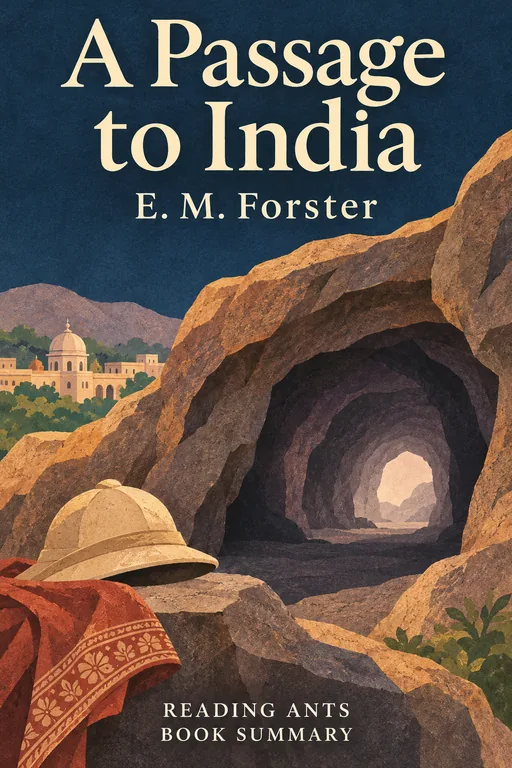
A Passage to India
E. M. Forster
In British-ruled India, a young Indian doctor is accused of assaulting an Englishwoman after an outing to the mysterious Marabar Caves, and the trial exposes how deep the gulf between the rulers and the ruled really is.
📜 Classics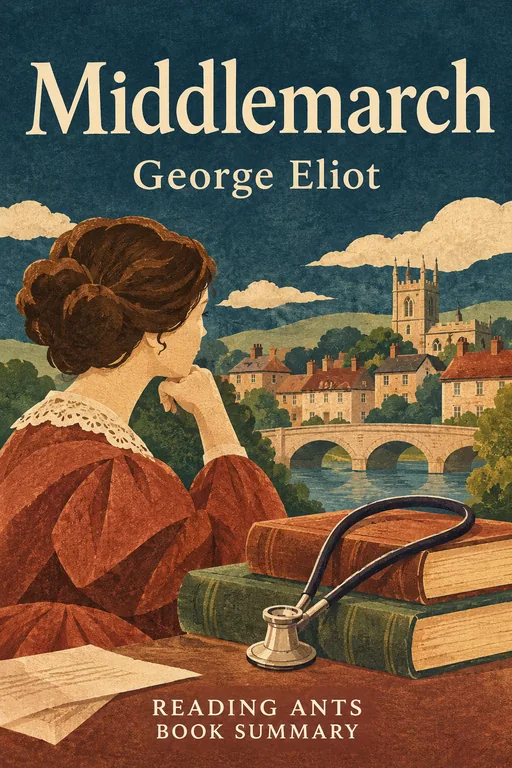
Middlemarch
George Eliot
In a provincial English town around 1830, several ambitious people, above all the idealistic Dorothea Brooke and the gifted doctor Tertius Lydgate, make marriages and choices that fall short of their dreams.
📜 Classics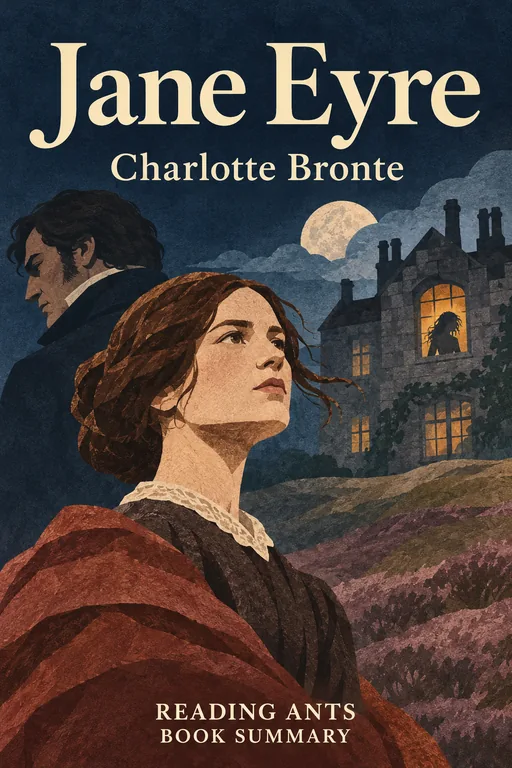
Jane Eyre
Charlotte Bronte
A poor, plain but fiercely independent orphan becomes a governess, falls in love with her brooding employer, discovers his terrible secret, and refuses to give up her self-respect even for love.
📜 Classics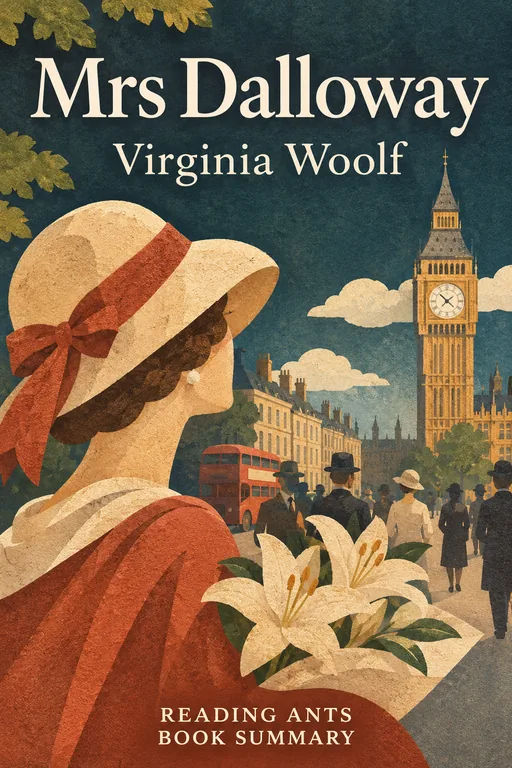
Mrs Dalloway
Virginia Woolf
On a June day in 1923, Clarissa Dalloway prepares to host a party in London, while the shell-shocked war veteran Septimus Smith moves toward a crisis, and the two lives touch only at the story's end.
📜 Classics
Pride and Prejudice
Jane Austen
Quick-witted Elizabeth Bennet and the proud, wealthy Mr. Darcy badly misjudge each other, and only by facing their own faults do they find their way to love.
📜 ClassicsWant something different?
Pick another topic and we will show you three books to start with.