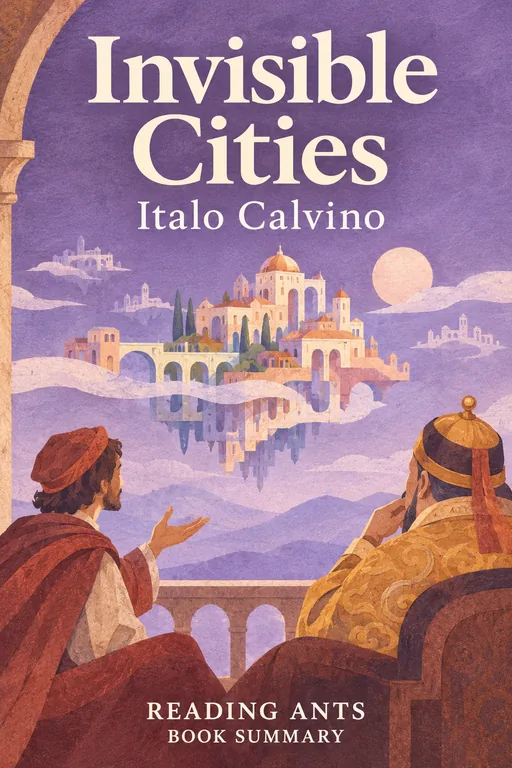
Invisible Cities
Original title: Le città invisibili
The explorer Marco Polo describes to the aging emperor Kublai Khan fifty-five imaginary cities, each a poetic meditation on memory, desire, time and the human mind, and in the end suggests how to live in a world that can seem like hell.
Overview
Invisible Cities is a short novel by the Italian writer Italo Calvino, first published in 1972. It consists of brief prose pieces, each describing a city with a woman’s name, and spoken by Marco Polo to the Mongol emperor Kublai Khan, who is troubled by the state of his empire. There are fifty-five cities in nine chapters, and they are grouped into eleven themes of five cities each, while the chapters are opened and closed by conversations between the two men. The book is not a conventional story, but a lyrical, playful work that invites the reader to think about cities, language and imagination.
Main Characters
- Marco Polo: the Venetian traveler, who tells of the cities he has seen, or says he has seen.
- Kublai Khan: the Mongol emperor, who is old, weary and doubtful about his empire.
- The cities: fifty-five invented places, each with a woman’s name, such as Zaira and Isidora.
- Venice: the city to which, Polo says, all the others are secretly related.
- The framing voice: a third-person narrator, who reports the conversations between the two men in the sections between the city descriptions.
- The reader: the person invited to imagine each city, and to find the patterns that link them.
Full Summary
The frame: the emperor and the traveler
Kublai Khan rules a huge empire, but he knows that it is decaying and that he will never truly understand it. He receives Marco Polo, who at first does not speak the emperor’s language, and so describes what he has seen with gestures and objects. As Polo learns the language, he describes, in more detail, the cities of the empire. Kublai Khan is not sure that he can believe everything he hears, but he is drawn in, and the two men begin a long conversation about what cities are, and what it means to describe them. Between the chapters, their talk returns again and again to memory, language and the value of travel.
Cities of memory and desire
The first groups of cities link places with human feelings. In the cities of memory, such as Zaira, the city does not tell its past, but holds it in its streets and corners, like the lines of a hand. In the cities of desire, such as Zobeide, a place can be built around a longing, since the city is founded by men who dream of a woman they chase through the night, and who build the city to trap her. Each description is brief and dreamlike, and often ends with a twist that reveals something about the human mind.
Cities and signs
Another group explores the way that cities are made of signs. In Tamara, a visitor sees that every object stands for something else, and the city can only be read as a set of symbols, and not as it really is. Other cities show how a place can be understood differently by those who live there and those who pass through. Polo suggests that cities are made of relationships, in space and time, and not of stones alone. The reader is drawn into the puzzle of interpretation.
Thin cities, trading cities, eyes, names and the dead
The “thin” cities are strange places, such as Octavia, which hangs over an abyss in a net, and Armilla, which has pipes but no walls. Other cities are cities of trade, where goods, words and memories are exchanged. Some cities are seen through the eyes, as in Valdrada, which is doubled in a lake, and others through their names. Some cities are linked to the dead, and are shaped by the relation between the living and those who are gone. These sections show the variety of ways that humans organize their lives, and suggest that every city is a kind of answer to a question about life and death.
Cities and the sky, continuous cities and hidden cities
Further groups describe cities that look up to the heavens, cities that sprawl endlessly, as if no city ever ends, such as Leonia, which is surrounded by its own heaps of garbage, and cities that hide something deeper. In the middle of the book, the emperor asks why Polo has never described his own home, and Polo answers that every time he describes a city he is saying something about Venice. As the book goes on, the emperor’s mood grows darker, and he sees the cities as a sign of the troubles of his own empire.
The last conversation
In the closing dialogue, Kublai Khan fears that the last landing place can only be an infernal city. Polo replies that the inferno of the living is not something to come, but is already here, formed by living together. There are two ways to escape suffering: to accept it and become part of it, or to seek, within the inferno, whatever is not inferno, and make it endure and give it space. The book ends with this challenge, and with the sense that imagination is a way of finding what is worth saving.
Why It Matters
Invisible Cities is one of the most admired works of postwar European fiction, and a favorite of architects, urban planners, poets and philosophers. It has inspired musicians, artists and even an opera, thanks to its dreamlike descriptions and its ideas about how places reflect minds. Calvino used a playful, structured form to explore deep subjects, such as the relationship between the real and the imagined, and between a place and its description. The book’s final lines are often quoted as a source of hope. It has been widely translated, and remains a landmark.
Key Takeaways
- Cities reflect minds. They are shaped by desires, memories and fears.
- Description changes what we see. Words and signs create the places we know.
- Every place may be one place. Polo hints that all cities are Venice.
- Imagination is a tool. It helps us to understand the world.
- Hope lies in what endures. We can protect what is not hell.
What We Can Learn
You can learn from the book to look at the places where you live with fresh eyes, and to think about how memory, desire and habit shape the way that you see them. It invites you to notice details, and to imagine other ways of arranging a city or a life. The final advice, to seek out and support what is good within a difficult world, is a practical response to despair. Try inventing your own invisible city, and describing it in a few lines, to see what it says about you.
Criticism and Counterpoints
Some readers find the book too abstract, with no plot or characters to follow, and the repetitive structure of brief descriptions wearying. Others feel that the cities blur together, and that the meaning is too elusive, or merely clever. A few critics have said that the book is more an intellectual exercise than a story with emotional power, and that the figure of Kublai Khan is thinly drawn. Others admire its beauty, and see the repetition as part of its musical structure. It is best read slowly, a few cities at a time.
Who Should Read It
This book is for readers from about fifteen who enjoy poetic, imaginative and experimental writing, and for those interested in cities, travel and philosophy. It is short and can be dipped into. Readers who like it may enjoy Calvino’s If on a Winter’s Night a Traveler, or Borges’s short stories.
Want the whole book?
A summary is a taste, not the meal. Here is where to find the full book.
You reached the end 🎉
Nicely done. Mark this one as read, and we will suggest what to read next.
Read this next
The Name of the Rose
Umberto Eco
A Franciscan friar investigates deaths in a medieval abbey, where the struggle to control books and laughter proves more dangerous than any supernatural curse.
🌍 World Literature
One Hundred Years of Solitude
Gabriel Garcia Marquez
Seven generations of the Buendía family live, love, fight and repeat the same mistakes in the magical Colombian town of Macondo, from its founding to its final destruction.
🌍 World Literature
Ficciones
Jorge Luis Borges
A collection of short, brilliant stories by Jorge Luis Borges that turn libraries, labyrinths, mirrors and dreams into puzzles about reality, time and infinity.
🌍 World Literature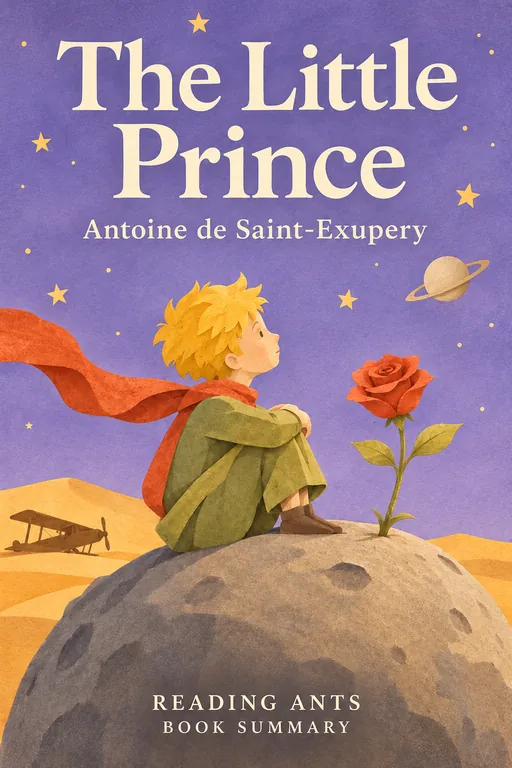
The Little Prince
Antoine de Saint-Exupery
A pilot stranded in the desert meets a small boy from a tiny planet, who teaches him that the most important things in life, like love and friendship, can only be seen with the heart.
🌍 World Literature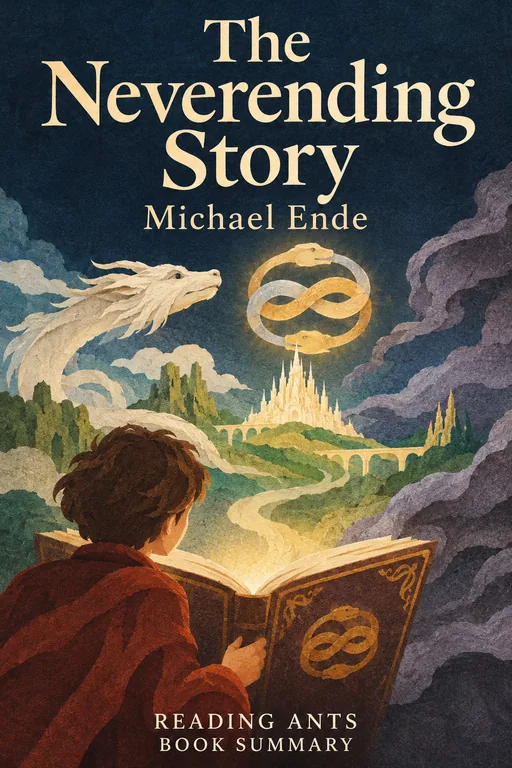
The Neverending Story
Michael Ende
A lonely, bullied boy reads a magical book and discovers that he is part of the story, with the power to save a dying fantasy world, if he can avoid losing himself.
🌍 World Literature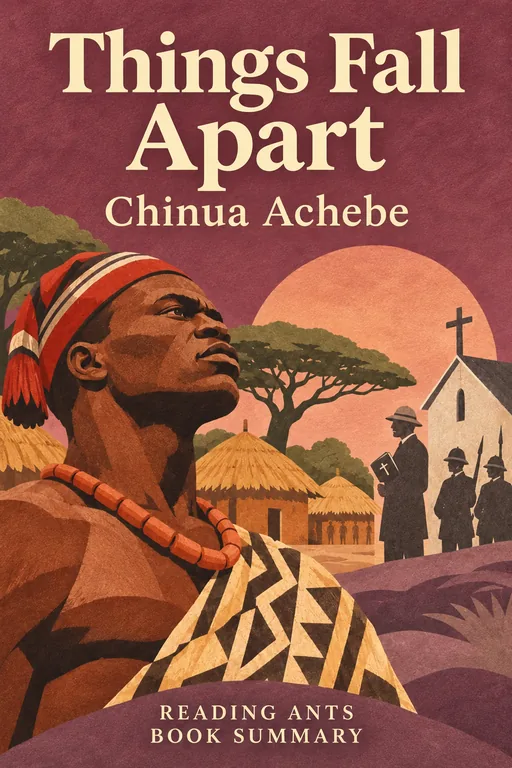
Things Fall Apart
Chinua Achebe
Okonkwo, a proud and fearsome leader in an Igbo village in Nigeria, struggles against his own fears and against the arrival of British missionaries and colonial rulers, who change his world forever.
🌍 World LiteratureWant something different?
Pick another topic and we will show you three books to start with.