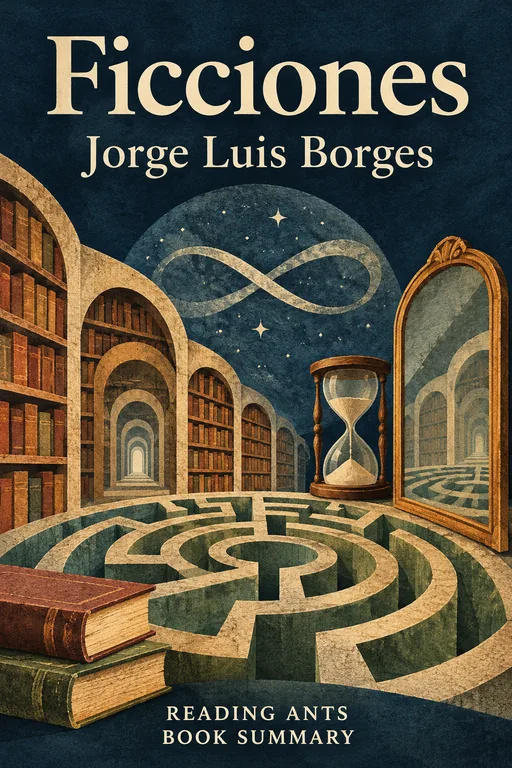
Ficciones
A collection of short, brilliant stories by Jorge Luis Borges that turn libraries, labyrinths, mirrors and dreams into puzzles about reality, time and infinity.
Overview
Ficciones (which means “Fictions”) is a collection of short stories by the Argentine writer Jorge Luis Borges. The collection was published in 1944, bringing together The Garden of Forking Paths (1941) and a newer section, Artifices. “The South” was added in an expanded edition in 1956. The stories are only a few pages long, but they are filled with ideas, written in a style that often imitates scholarly essays, book reviews or detective stories. Borges invents imaginary books, authors and worlds, and uses them to ask questions about knowledge, identity and time. The collection is among the most influential works of twentieth-century fiction.
Main Characters
Ficciones is a story collection, and it has no single set of characters. Some figures from the stories include:
- The narrator: often a learned, quiet man who is Borges himself, or a version of him.
- The librarians: the searchers who wander the endless Library of Babel.
- Funes: a young man who cannot forget anything.
- Pierre Menard: an imaginary French writer who tries to write Don Quixote again.
- The detective and the criminal: the rivals in “Death and the Compass,” a story in which a pattern of murders becomes a trap.
Full Summary
Tlon and the Invented World
In “Tlon, Uqbar, Orbis Tertius,” the narrator and a friend discover a mention of a strange country, Uqbar, in an encyclopedia. Further research shows that the country is the invention of a secret society, and it describes a whole world, Tlon, with its own languages, in one group of which there are no nouns, and a philosophy in which matter does not exist, only perception.
Soon, objects from Tlon begin to appear in the real world. The story ends with the sense that the real world is slowly being replaced by the imaginary one, and that the narrator is among the last to remember the difference.
Pierre Menard and the Library
In “Pierre Menard, Author of the Quixote,” a critic describes a French writer who sets out to write Don Quixote word for word, not by copying it, and not by pretending to be Cervantes, but through his own life and thought. He finishes only a few fragments, but they are identical to the original, and the critic argues that they are richer in meaning, because of their different context. It is a joke, and also a serious idea about how readers shape what they read.
“The Library of Babel” imagines a universe in the form of an infinite library, whose books contain every possible combination of a fixed set of letters and symbols, in a fixed format. Most are nonsense. Somewhere there is a book that tells the true story of the world, but nobody can find it. The librarians search in vain, and some go mad.
Dreams and Memory
In “The Circular Ruins,” a man comes to an abandoned temple in the jungle, and sets out to dream a man into existence. He succeeds, and then realizes, at the end, when fire threatens him, that he himself is also someone else’s dream.
“Funes the Memorious” tells of a young man who, after an accident, can remember everything, every leaf and every moment, but who struggles to think in general terms. The narrator suggests that thinking requires forgetting, and that to generalize, one must ignore details.
Labyrinths of Time
“The Garden of Forking Paths” is a spy story, narrated by Yu Tsun, a Chinese man who spies for the Germans in the First World War. To send a message to his chief, he decides to kill a scholar, Stephen Albert, because the name Albert will appear in the newspapers and reveal the target of an attack. Albert has solved the secret of a book written by Yu Tsun’s ancestor. This book is a novel in which all possible futures happen at once, and time forks at every moment.
“Death and the Compass” is a detective story, in which a clever detective follows a pattern of murders to a trap that has been set for him by his enemy.
Faith and Fate
Other stories deal with the theme of fate and chance. In “The Lottery in Babylon,” a lottery that began as a game grows to control every part of life, so that it is impossible to tell what is chance and what is design. “The Secret Miracle” tells of a writer who is about to be shot by the Nazis, and who asks God for a year to finish a play, and is granted it in a single moment between the order to fire and the bullets.
In “The South,” which was added in the 1956 edition, a man who is recovering from an illness is drawn into a knife fight, and the story leaves it uncertain whether it is real or a dream.
Why It Matters
Borges is one of the most important writers of the twentieth century, and Ficciones is his best-known book. It influenced a huge number of later writers, from Gabriel Garcia Marquez and Umberto Eco to Italo Calvino, and many others, and is often seen as an important forerunner of magical realism and of postmodern fiction. His ideas about infinity, the labyrinth and the library have entered the language, and inspired scientists, philosophers and computer programmers. He never won the Nobel Prize, which many consider a great oversight. The stories are also admired for their economy: in only a few pages, Borges can build a whole imaginary world and leave the reader thinking about it for years.
Key Takeaways
- Reality and imagination mix. Borges shows how ideas can shape what we call real.
- Knowledge has limits. The infinite library holds everything, but cannot be used.
- Time is a maze. Many possible futures exist at once.
- Reading is creative. Each reader remakes the book.
- Forgetting is necessary. Funes shows that a perfect memory would be a prison.
What We Can Learn
Borges teaches us to be curious about big questions, such as what a book is, how we know what we know, and what time means. He shows that a short story can hold as much thought as a long essay.
The stories can also encourage us to question our assumptions, and to remember that the world may be more mysterious than it appears. Finally, they remind us to value books and libraries, as places where many minds meet. Reading Borges can also be a lesson in patience and in paying attention to small details, since each sentence often hides a joke or an idea. A reader who takes the time to follow each puzzle will find the pleasure of discovery.
Criticism and Counterpoints
Some readers find the stories too intellectual and cold, with little emotion or detailed characters. Many of the references to imaginary books, and to real works of philosophy and literature, can be hard to follow. Others have said that Borges’s world is a closed one, concerned with literature and ideas more than with real life or politics. Some find the stories repetitive, as they return to the same themes. A few also say that Borges, who was a conservative in his politics in later life, is sometimes more interested in clever ideas than in the real struggles of people, though many readers feel that this is exactly what makes his work special.
Who Should Read It
This book is for curious readers who like puzzles, ideas and short, dense stories. Each story can be read in a few minutes, so it can be taken a little at a time. Those who prefer realistic stories, with strong feelings, might find it too abstract.
Want the whole book?
A summary is a taste, not the meal. Here is where to find the full book.
You reached the end 🎉
Nicely done. Mark this one as read, and we will suggest what to read next.
Read this next
If on a Winter's Night a Traveler
Italo Calvino
A reader tries again and again to finish a novel, but each book breaks off after a few pages, leading him into a playful chase through the world of reading, writing and publishing.
🌍 World Literature
The Name of the Rose
Umberto Eco
A Franciscan friar investigates deaths in a medieval abbey, where the struggle to control books and laughter proves more dangerous than any supernatural curse.
🌍 World Literature
Cloud Atlas
David Mitchell
Six nested stories, set from the nineteenth century to a far future, each discovered by the next narrator, show how the strong prey on the weak and how small acts of courage can echo through time.
✨ Modern Fiction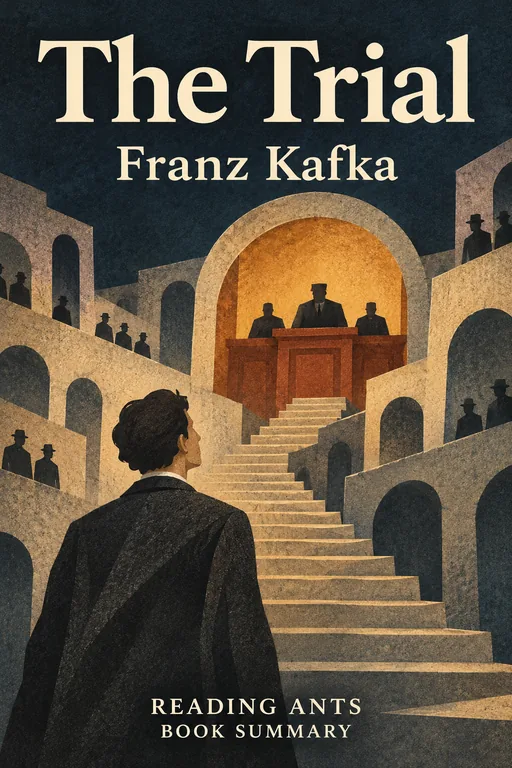
The Trial
Franz Kafka
A respectable senior bank officer is arrested one morning for a crime nobody will name, and is dragged through a vast, senseless legal system that he can neither understand nor escape.
🌍 World Literature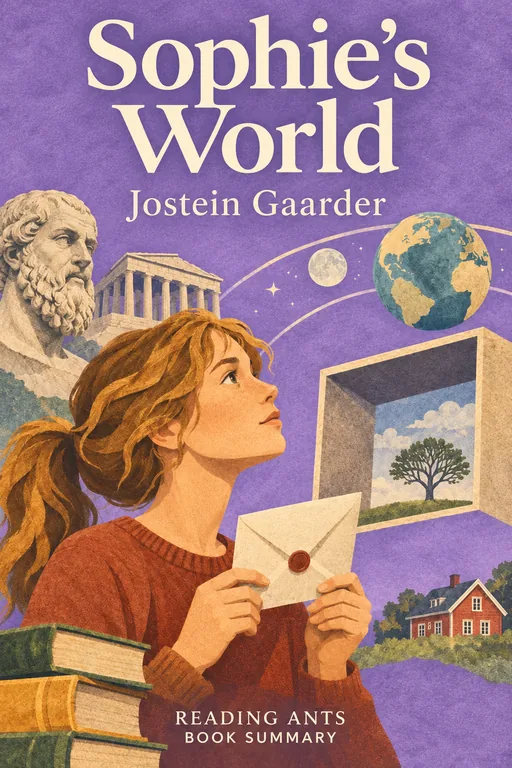
Sophie's World
Jostein Gaarder
A fourteen-year-old girl receives mysterious letters from a philosopher, and learns the history of Western thought while she begins to suspect that her own world is not what it seems.
🌍 World Literature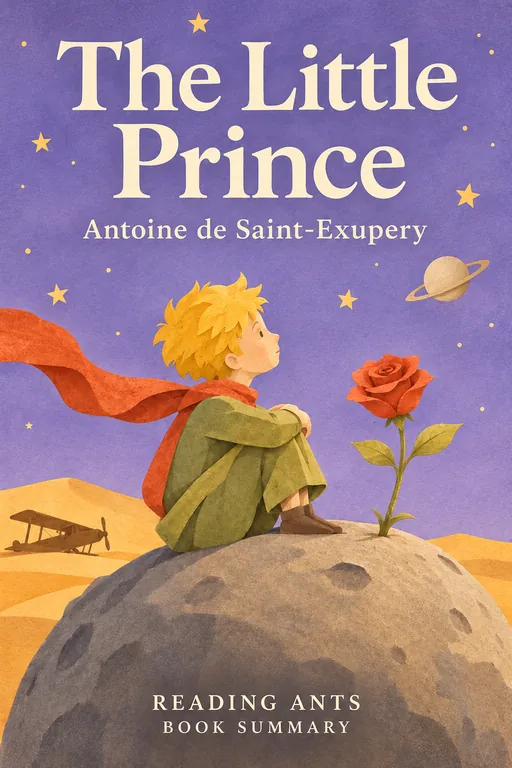
The Little Prince
Antoine de Saint-Exupery
A pilot stranded in the desert meets a small boy from a tiny planet, who teaches him that the most important things in life, like love and friendship, can only be seen with the heart.
🌍 World LiteratureWant something different?
Pick another topic and we will show you three books to start with.